

The Abridged version:
- The number of homeless patients seeking care in the Sacramento region’s emergency rooms has risen markedly over the last several years, sometimes stressing the system.
- Health systems, community organizations and governments have tried to ease the burden with street-based primary care, more emphasis on preventive measures and efforts to provide ongoing care.
- Mental health, substance abuse and skin conditions are among the most common primary medical issues.
Every day, Dr. Roel Farrales watches a growing number of homeless patients come into Mercy General Hospital’s emergency room after simple ailments blossom into a crisis.
“A lot of those things could be handled in urgent care or in preventative care, but then when they progress and become untreated for some time, it becomes an emergency visit,” said Farrales, emergency room medical director at the East Sacramento hospital.
The number of homeless patients seeking care in the region’s ERs has risen markedly over the last several years.
Unhoused patients accounted for 34,000 ER visits in the Sacramento region in 2024, up from about 21,000 visits in 2019, according to the state Department of Health Care Access and Information. The proportion of ER visits involving unhoused patients rose from about 2.2% in 2019 to 3.2% in 2024.
The rise in homeless ER patients came as state data showed a jump in the number of homeless K-12 students in the area, as local officials revised an estimate of Sacramento County’s homeless population upwards, and as the number of people dying of exposure to hot and cold weather increased across the region.
“The ER kind of becomes the default location for care if you have nowhere else to go,” said Rachael McKinney, president of Sutter Health’s Greater Sacramento Division.
Community looks for solutions
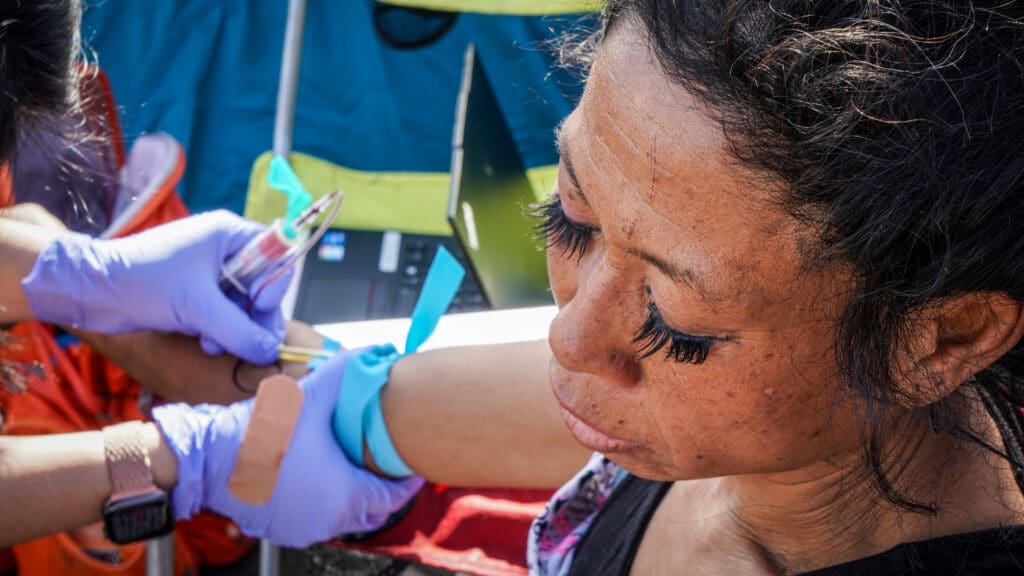
Hospitals, community organizations and government officials have banded together to try to solve the problem. They recently opened a recuperative care facility on Stockton Boulevard to help homeless people transition from the hospital back to the community, reducing the need for a bounce back to the emergency room. And several new “street medicine” teams provide care to unhoused people where they sleep and congregate.
“You want your patients to be able to follow up consistently with the same person, and that’s just never going to happen in an ER setting, because you’re probably going to see a different person every time that you go,” said Aubriana Smith, street medicine program manager at One Community Health.
:Unhoused patients present challenges
Mercy General treated about 2,500 homeless patients in its emergency room in 2024, more than double the number treated in 2019, state data shows.
Many unhoused patients who come to Mercy don’t have identification or transportation or a cellphone — all of the things needed to make regular appointments at a primary care clinic for preventive health care service, Farreles said.
Homeless patients often have more pressing needs — finding food and shelter — than taking care of emerging medical problems, Farreles said. Homeless patients with chronic conditions often have trouble finding a dry, safe place to keep medicines. Some patients need medication that should be refrigerated, such as diabetics using insulin.
While homeless people are coming in for a wide variety of ailments and injuries, they were more than four times as likely as the general population in Sacramento County to enter the ER with a primary diagnosis involving mental health or substance abuse, state data shows. They were twice as likely to arrive with a primary diagnosis related to skin disease.

Mental health, substance abuse are primary issues for one in five
Countywide, about 5,000 unhoused patients were given a primary diagnosis involving mental health or substance abuse when visiting an emergency room in 2024, state data shows. That accounts for about 18% of all ER visits involving homeless people. By comparison, about 4% of ER visits in the general population primarily involved a mental health diagnosis.
“There is a lack of psychiatric beds in the community, just based on the population and the need for that,” Farreles said.
Sutter Medical Center in downtown Sacramento employs a psychiatric response team with psychiatrists, physician assistants and social workers. Patients are often monitored and placed in safe rooms where they can’t hurt themselves or others until they are stable or can go to a better place for care.
“Quite honestly, the ER is not the best place for somebody that’s having a mental health crisis. It’s loud, it’s bright, there’s a lot of activity.”
Rachael McKinney, president of Sutter Health’s Greater Sacramento Division
Skin conditions also common
The high rate of homeless patients with dire skin conditions is often a result of living outside, Farreles said. About 8% of homeless ER patients in Sacramento County — roughly 2,200 people — presented with a primary diagnosis of skin disease in 2024, compared to about 4% of patients in the general population.
“In shelters or sometimes in these encampments, you’re living in close proximity with other patients or other people, and if there is some sort of a skin condition that may be somewhat contagious, it can easily pass amongst people,” he said.
Occasionally, homeless patients will come into the emergency room for conditions that are not urgent. These patients often can’t access primary care, and at times, they can clog emergency rooms, Farreles said. “That prevents me from seeing the heart attack or the stroke or the emergent condition just because of the volume.”
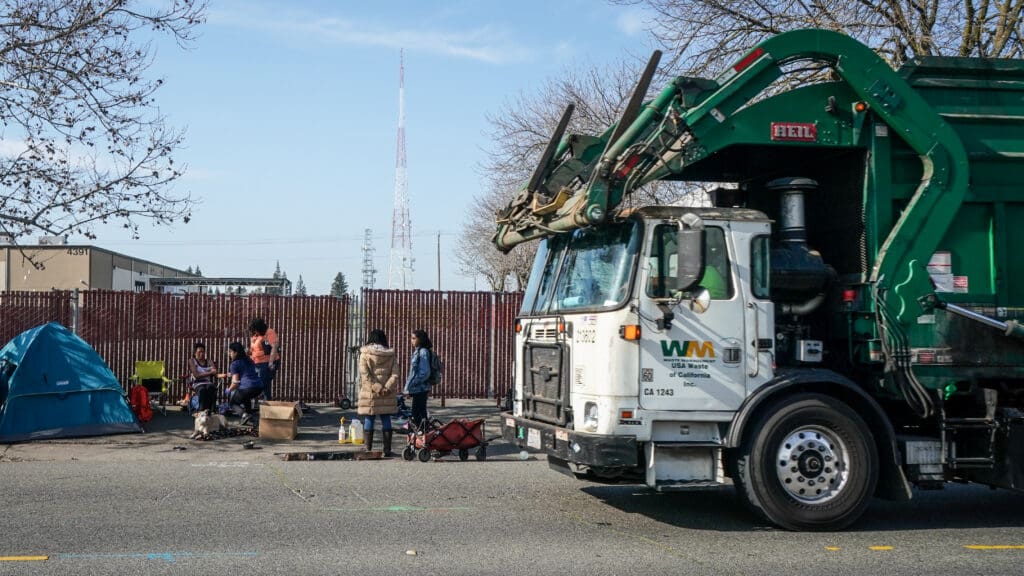
As traffic passes nearby, One Community Health’s Street Medicine team makes contact with individuals living on the street in North Sacramento on Feb. 6, 2026. (Martin Christian)
ER doctors push ongoing care
Farreles said Mercy General doctors feel a responsibility to help homeless patients stick to their treatment regimen. Finding resources for unhoused patients can slow down doctors.
“The emergency visit isn’t the end of their care as a human being or as a person,” he said. “So I try to plug them in with outside services. And that takes time talking to the social worker, giving them instructions, printing everything out for them here because they don’t have somewhere to view it on a phone.”
Dorrel Fore visited a local emergency room in August 2024, when he lived in an RV. A driver had carelessly pulled out of a gas station, Fore said, and hit Fore’s scooter, badly injuring his shoulder.
Emergency room doctors patched him up and diagnosed him with a sprain. It still bothers him, and he thinks he has a torn ligament. He’s had trouble navigating the health care system to deal with the injury due to “paperwork and stuff like that, bullcrap like that.”
Fore said he needs help beyond a quick visit to the clinic or emergency room and is hoping for an MRI. “An X-ray ain’t gonna show no torn ligaments, you know,” he said.
Street medicine team provides preventive care
Several organizations are trying to reduce the number of emergency room visits involving unhoused people by bolstering preventive and primary care.
One Community Health started its Street Medicine Team about a year ago. The team has grown to six members.
“Our clinicians are cross-trained to be able to provide psychiatric care and substance use treatment, and we have a social worker on our team,” Smith said. The social worker helps patients find housing, fill out paperwork to obtain disability payments and obtain employment.
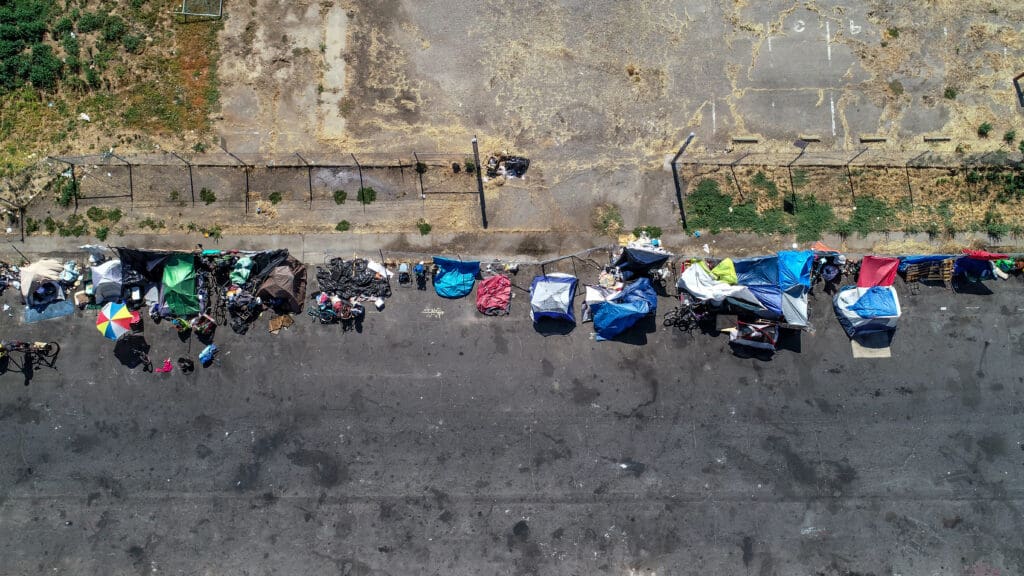
The team hosts a pop-up clinic at Loaves & Fishes once a week but mostly delivers services where they are needed. “We have several patients that live by the river, or they are staying in a tent on the side of the road, and so that is where we are,” Smith said.
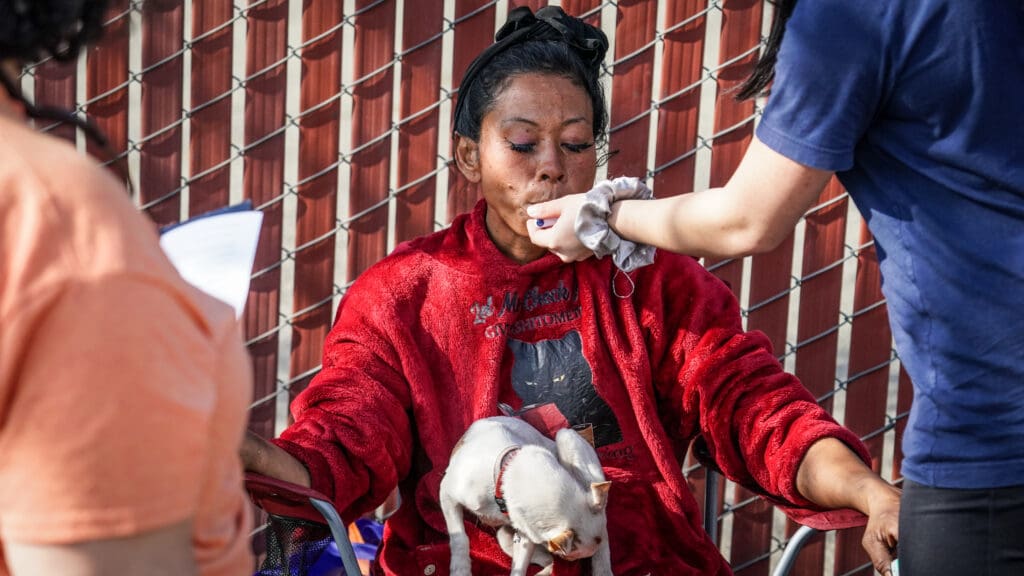
The street medicine team often uses long-acting injectables to treat unhoused patients who suffer from opioid use disorder, Smith said. With injectables, there are no pills to take on a schedule, or keep dry, or to protect from thievery.
Sign Up for the Morning Newsletter
The Abridged morning newsletter lands in your inbox every weekday morning with the latest news from the Sacramento region.
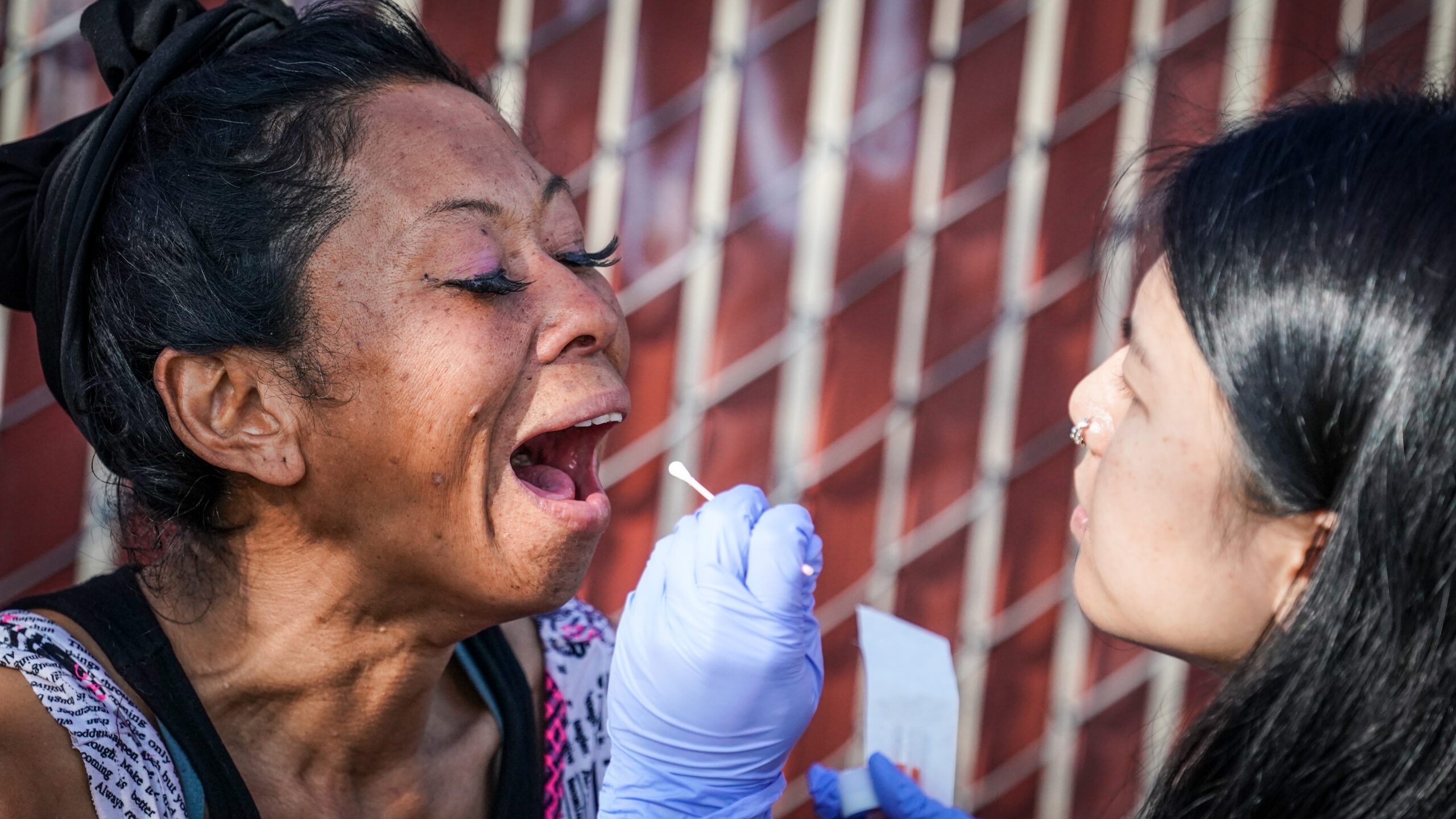
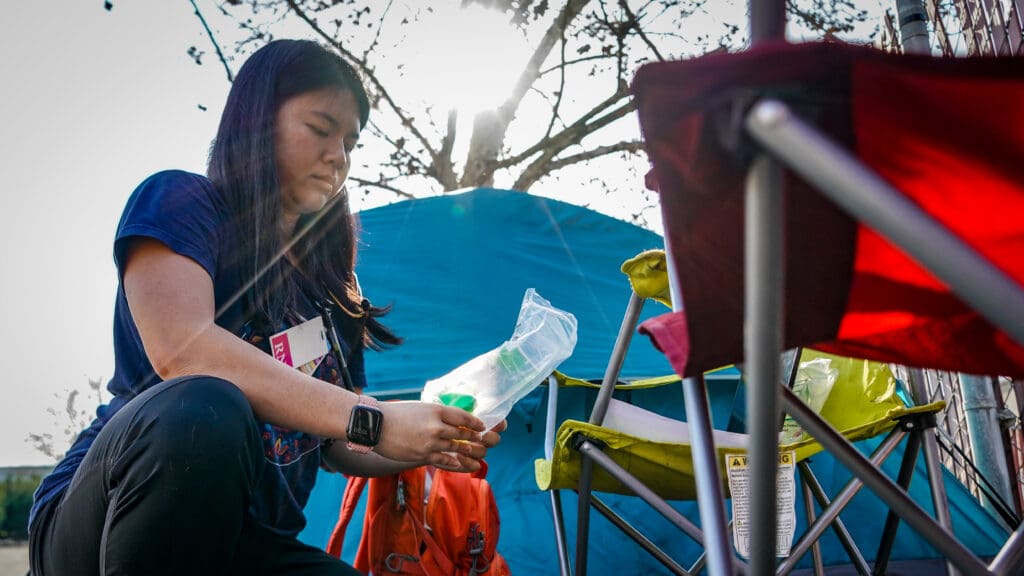
The team recently helped Ling Ling Lesley at her tent near an industrial part of North Sacramento. Lesley has been homeless for about four years. She tries her best to avoid the emergency room because they won’t let her three dogs come inside.
On a recent Friday, Lesley took a lab cup and some swabs into her tent while the medical team waited outside. They were testing her for a number of health conditions that are best treated early.
Lesley said she sometimes would cry herself to sleep and felt suicidal at one point. The street medicine team has since connected her with a therapist. She said “a good rapport” with her therapist has helped her recover. “When you open up, they can treat you better, right?” she said.
Medi-Cal can’t cover all costs
Sutter provides bus passes to the unhoused and others who don’t have a way to get where they need. They also have a closet that provides clothes to unhoused patients. They provide hospital patients with “navigators” who help them coordinate follow-up care.
Dignity Health, which operates Mercy General, supports similar programs. It also has provided more than $25 million in funding to a Homeless Health Initiative that has created temporary and permanent housing to the homeless.
The fees charged to unhoused patients don’t usually cover such expensive efforts.
Medi-Cal, the state’s public insurance program for low-income residents, usually pays for health care provided to unhoused people. But homeless patients often require lengthy visits to receive wraparound services, and providers are often reimbursed at the same rate for treating homeless patients as they earn for seeing patients in the general population.
“You might go out by the river and treat two patients in a four-hour period, and that’s the salaries of a social worker, two community health workers, an RN, an MP and then myself as program manager, kind of wrapping around those two patients,” Smith said. “The cost for that care is significantly more than if you were to see 12 patients that morning in the clinic.”
When asked if Medi-Cal reimbursements for homeless patients were enough to cover the costs of making sure they received adequate care, McKinney, the Sutter Health executive, said, simply, “No.”
Then she added: “As a not-for-profit health system, we’re going to take care of who needs us. But it does become more difficult and there will need to be trade-offs at some point if the reimbursement for the services we provide continues to decline and the costs associated with providing care continue to grow.”
Phillip Reese is a regular contributor, writing Numbers Matter for Abridged.