
The Abridged version:
- Industry groups say demand for pistachio products is higher than it’s ever been.
- In Yolo County, more acres are being planted with pistachio trees and a new processing facility has opened in Zamora.
- The crop is having a down year statewide, but trees in northern California are faring better than those farther south.
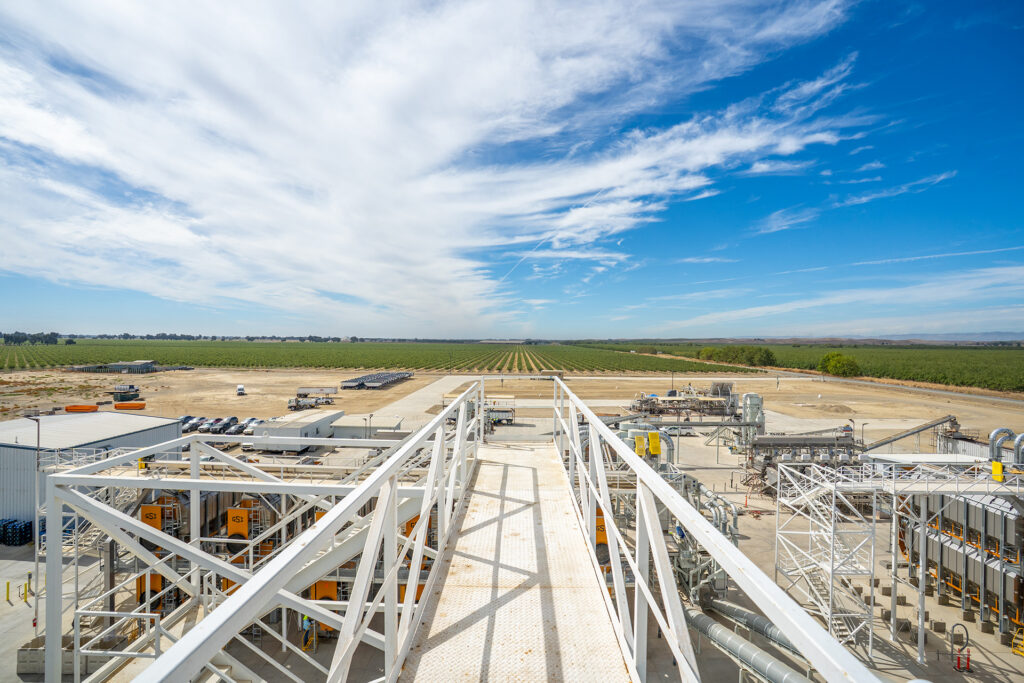
A few years ago, the plot of land at the corner of Road 95 and Road 13 in Zamora was a quiet, open field.
Now it bustles with activity.
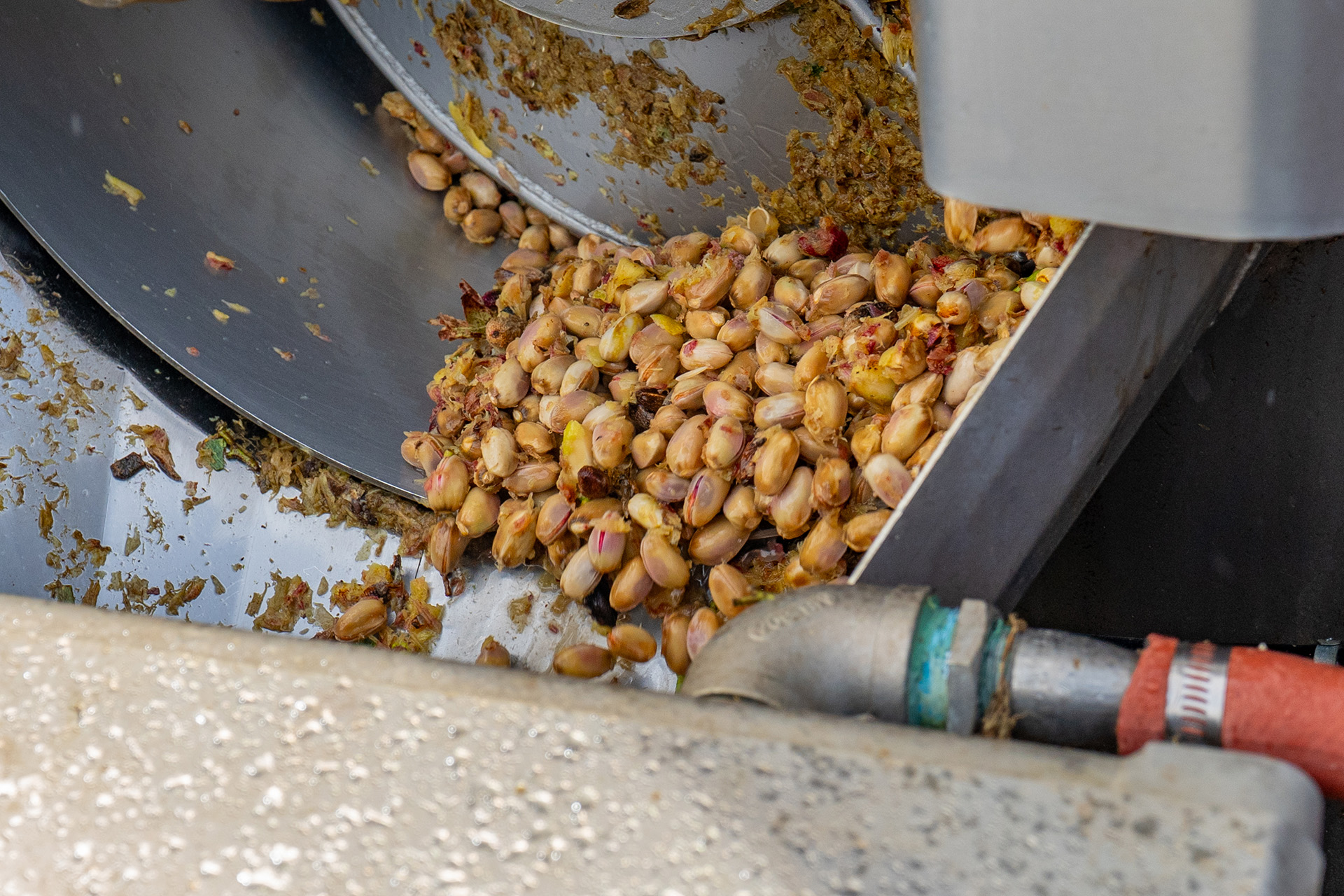
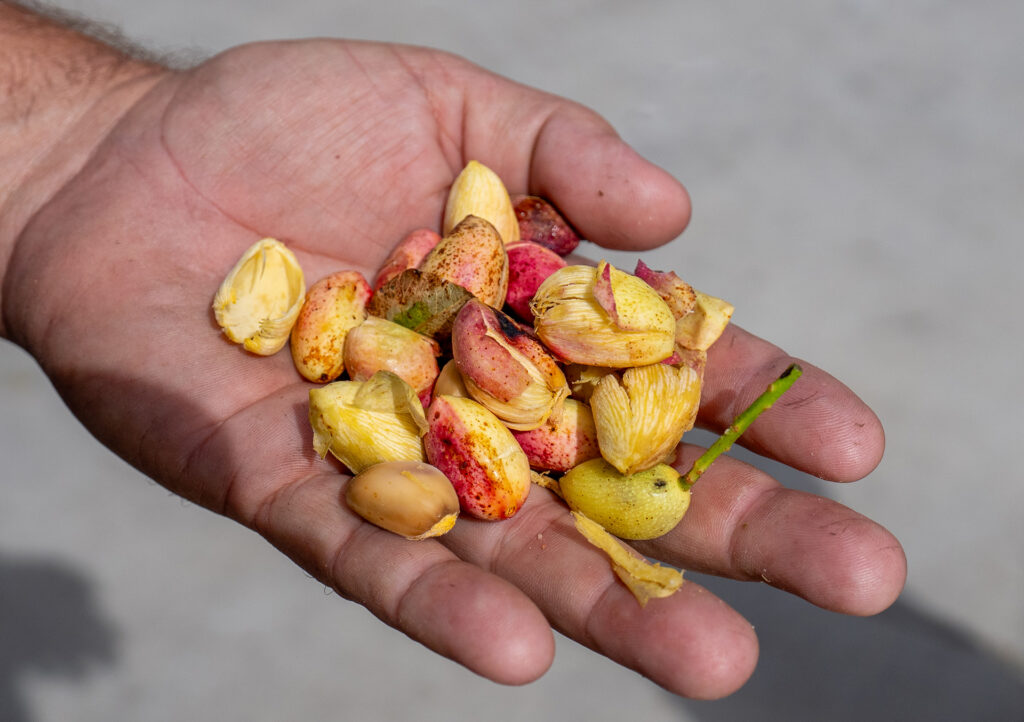
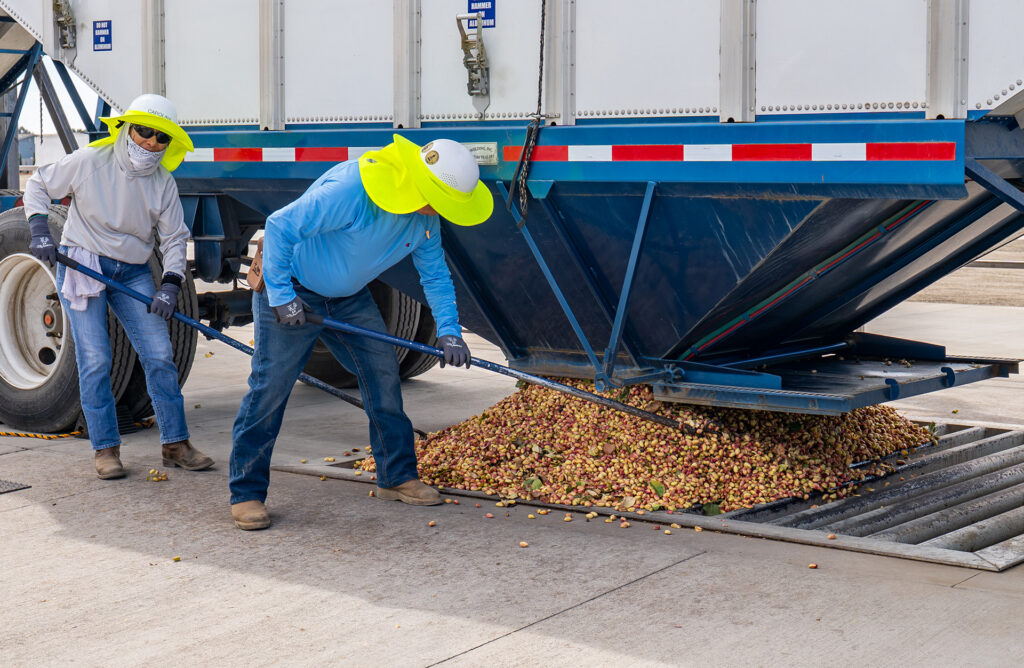
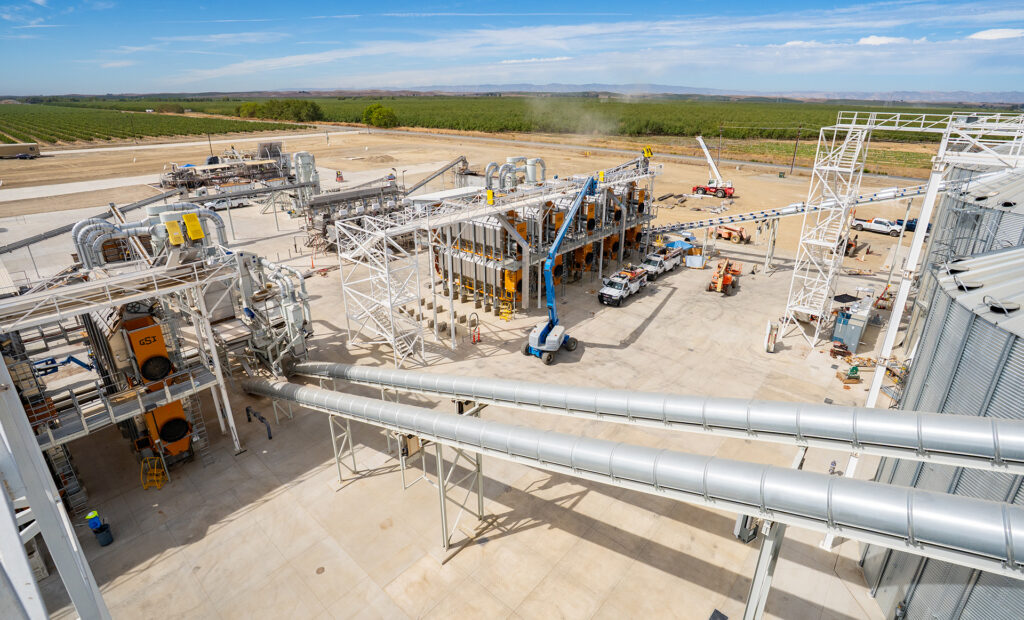
Trucks pull up filled with recently harvested purplish-green pistachios, unloading them through grates in the ground into a holding area. From there, they’re carried by conveyor belts through a process that hulls, sorts and dries them.
When the nuts come out the other side, they’ve been transformed into a product that is having a moment.
Snacking pistachios, Dubai chocolate, coffee drinks, ice cream, pistachio butter, brittle. There’s even an entire cookbook co-written by a James Beard Award-winning author populated only with recipes that use the nut.
“Demand is the highest it’s ever been,” said Joe Coelho, spokesperson for industry trade group American Pistachio Growers.
Sign Up for the Yolo County Newsletter
Stay in-the-know on all things Yolo! Weekly email with stories and insights from Yolo County reporter Daniel Hennessy.
To meet the moment, growers across the state have planted acres upon acres of pistachio trees.
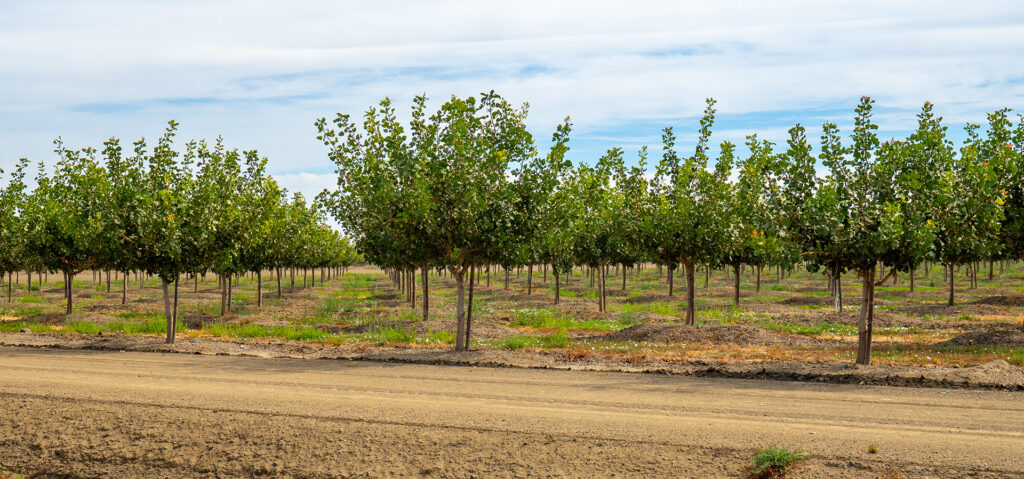
Traditionally, most of those farms and the infrastructure that supported them were farther south in the Central Valley. But recently, there has been a push to plant different varieties of trees in northern stretches of the valley, such as Yolo County.
The crops have had success, enough that Terra Bella-based industry giant Setton Farms opened its Zamora pistachio processing operation last year, then decided to double its size. Now 20 large, silver silos, each dozens of feet tall, hold heaping quantities of pistachios ready to be sold.
“We’re seeing pretty good results,” said Jeff Gibbons, grower services manager for Setton Farms. “Everybody loves pistachios.”
Booming crop
Pistachios haven’t always been a priority crop in California.
Gibbons started working in the industry in the 1980s, and he said that production back then was under 100 million pounds per year. That number has since exploded, with 1.6 billion pounds being harvested last year.
In Yolo County, more than $20 million worth of pistachios are now produced each year.
But “the demand has continued to exceed the supply,” Gibbons said.
That’s due in part to a marketing campaign that focuses on the benefits of eating pistachios for things like eye health, sleep, women’s health and protein.
“A lot of that demand is driven by the health claims,” Coelho said.
It’s also because of the nut’s booming international market, where the American Pistachio Growers trade group does two-thirds of its marketing.
That, along with droughts in other pistachio producing nations like Iran and Turkey, has led to 75% growth in recent years in the overseas market, Coelho said.
Off years, weather and water
As demand increases for California pistachios, the industry has not been immune to environmental pressures.
Pistachio trees are alternate bearing, meaning some years have a bumper crop while others produce fewer nuts. This harvest comes in a down year, so there will naturally be less supply.
But trees also like cold winters and a late heat wave in the Central Valley meant that many are producing even fewer nuts.
“It was blistering hot,” Coelho said. “That caused damage of varying degrees at the flower level for all varieties.”
That will inevitably affect the market.
“Our supply is way off,” Coelho said. “We should expect higher prices in general.”
Expanded operations
Years like this one are part of the reason the pistachio industry is looking northward. The damage from the winter heat wave was less severe in the northern part of the state than it was in the southern Central Valley.
“We haven’t seen any weather-related issues in Northern California,” Gibbons said.
That means that the trees, most of which are golden hills and lost hills varieties, are producing amounts that are more consistent with a typical off year.
As orchards in the southern part of the state continue to struggle with climate and access to water, northern areas with more surface water like the Sacramento Valley are becoming increasingly sought after.
Within the last couple of years, Setton Farms has expanded its presence in northern California by buying orchard land in Yolo County and erecting the processing facility near Zamora.
That has contributed in part to an increasing number of acres in the county being planted with pistachio trees. According to the latest available crop report data, the number of harvested pistachio acres in Yolo County increased by roughly 2,000 between 2023 and 2024.
In the past, most of those recently harvested pistachios were trucked to the southern part of the state to be processed.
Gibbons said that since pistachios are 37% moisture, they can degrade fast after harvest. Now local growers can have their crop processed within about half an hour instead of the previous six or seven hours it took to make the drive down south.
The eventual goal, Gibbons said, is for Setton to process half of the pistachios produced in northern California, a number that is already in the tens of millions of pounds.