

The Abridged version:
- The annual Pony Express Re-Ride, organized by the National Pony Express Association, ended its journey in Old Sacramento on Thursday with the appearance of a riderless horse, honoring a longtime rider who died this year.
- Over the course of 10 days, hundreds of riders on horseback transported letters from St. Joseph, Missouri, to Sacramento, re-creating the Pony Express route which operated for 18 months in the late 1800s.
- While many riders are returning participants, the organization added 10 new riders this year in California, nearly half of whom are under 25 years old.
For 46 years, thousands of horses have galloped day and night across eight states to reenact the Pony Express, the short-lived but revolutionary express mail service that employed young riders to transport mail from Missouri to California.
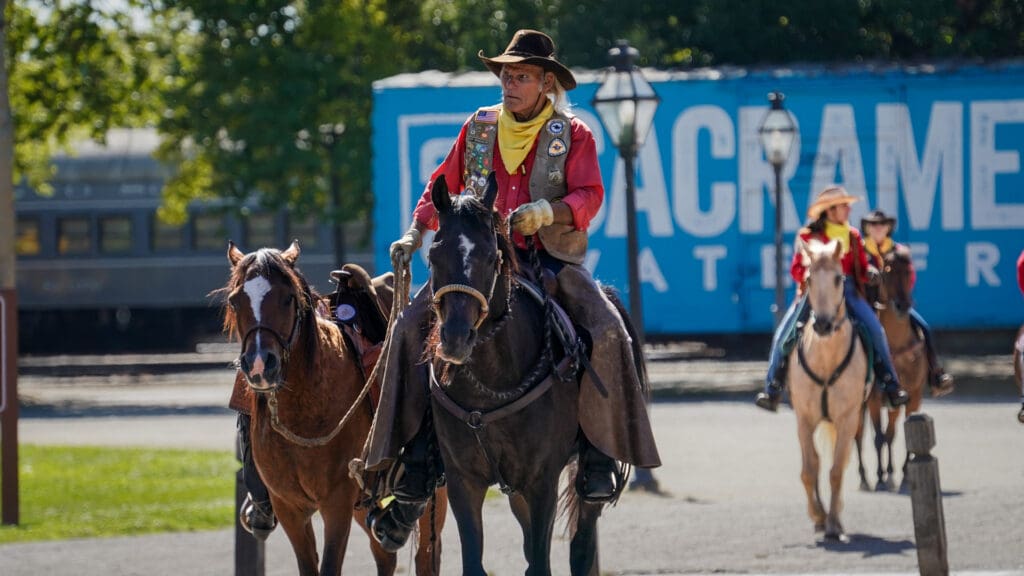
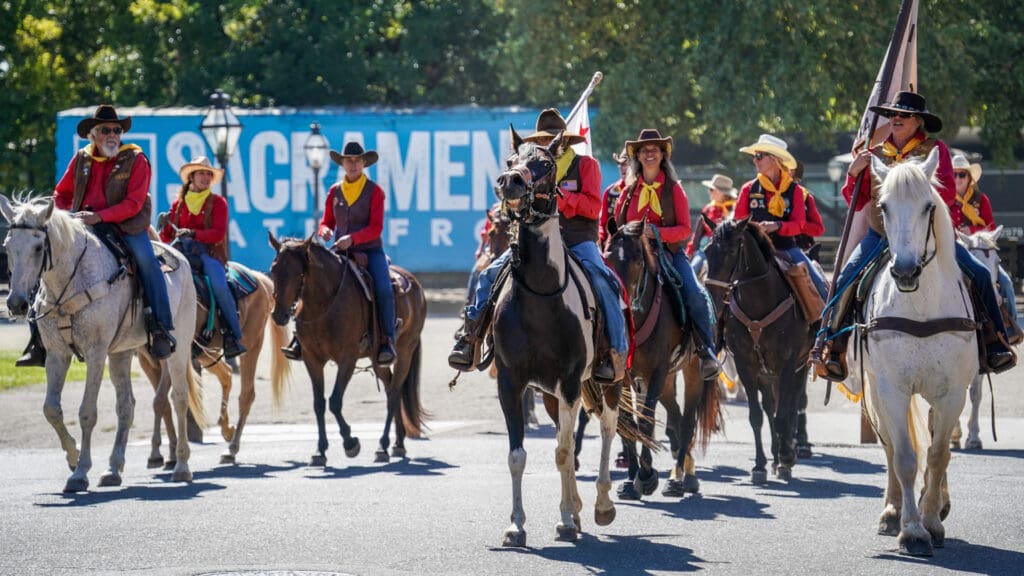
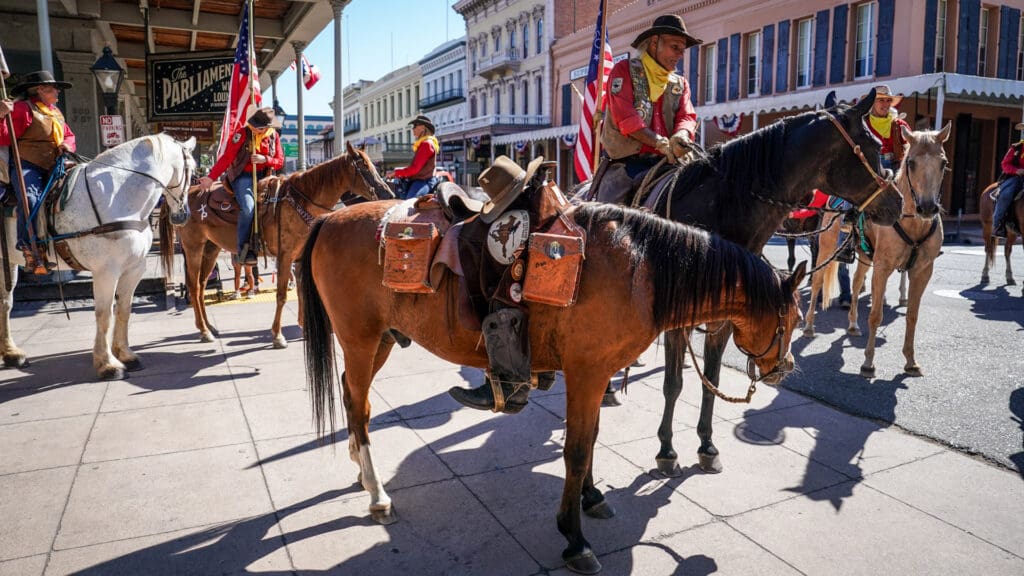
After 10 days, this year’s ride came to a conclusion on Thursday in California, passing through the Sierra Nevada mountain range in the early morning, traveling through Folsom and along the American River Parkway before ending at the Pony Express Statue in Old Sacramento, where a crowd gathered to welcome the final rider.
Throughout the journey, riders passed along a mochila, Spanish for knapsack, which carried over a thousand letters sent in by the public.
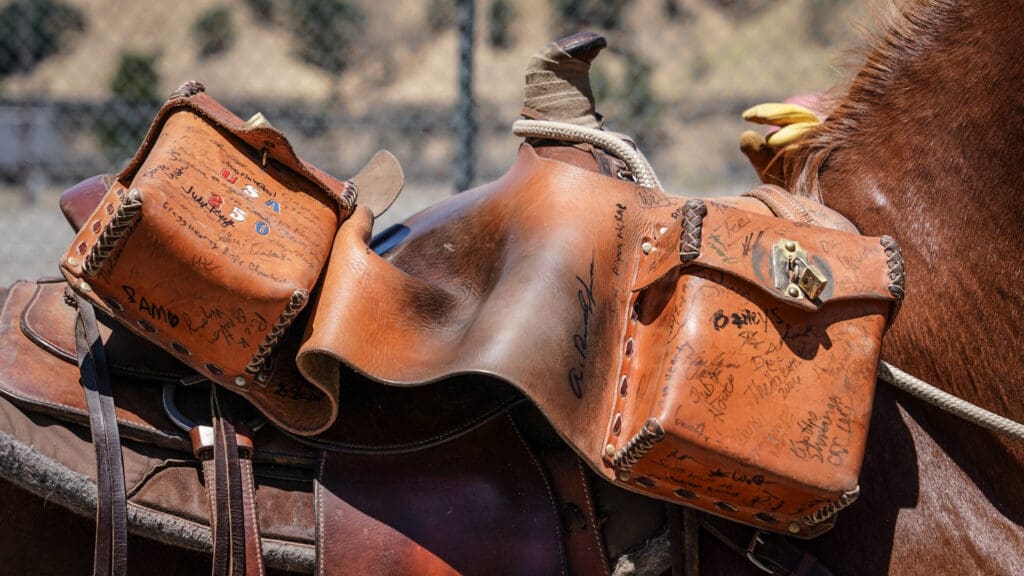
This year, the crowd in Old Sacramento witnessed something that does not happen often. Organizers brought in a riderless horse to pay tribute to longtime rider and Placerville resident Davey “Doc” Wiser, who had been involved with the National Pony Express Association for decades before his death in March.
About 100 people greeted the procession of California riders and their horses as they rode across the Jibboom Street Bridge to Old Sacramento. The riderless horse carried Doc’s hat.
A tremendous effort
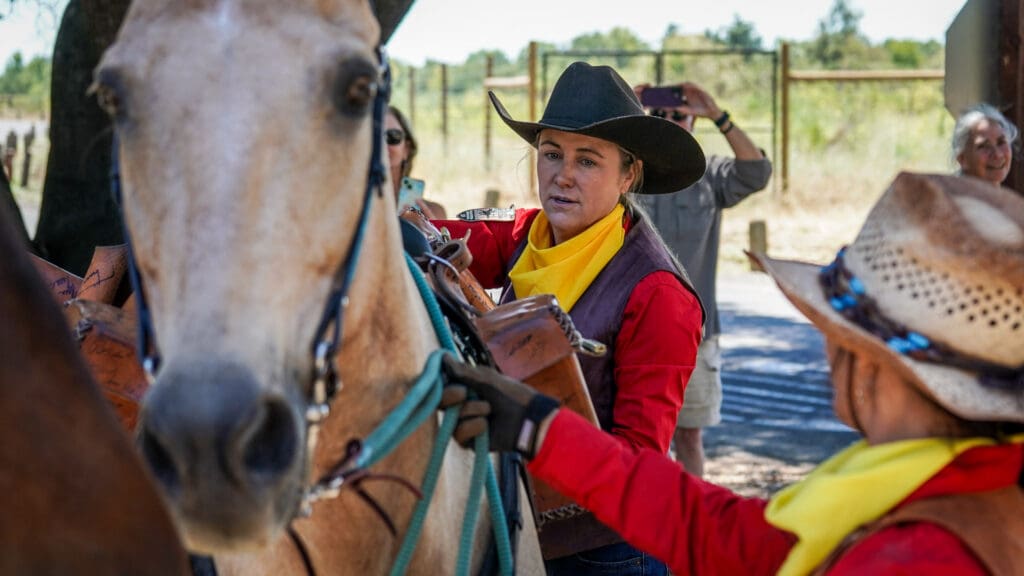
The Re-Ride is no small feat. It takes the work of hundreds of riders, event organizers, and individuals on the trail — all of whom are volunteers with the National Pony Express Association.
“It is a lot of work for our riders,” said Rich Tatman, California State President of the National Pony Express Association. “The day of the ride, they go out there, get the horse, get their trailer all ready, get their horse out of the pasture, wash him, clean him up, load him up, go get fuel, drive to their location, wait for two hours, the ride comes through, they do the ride, then they have to take it home.”
“We’ve had doctors, lawyers, police captains,” he said. “Just an abundance of different types of people and what they all bring to the association, all the different people. It makes it fun.”
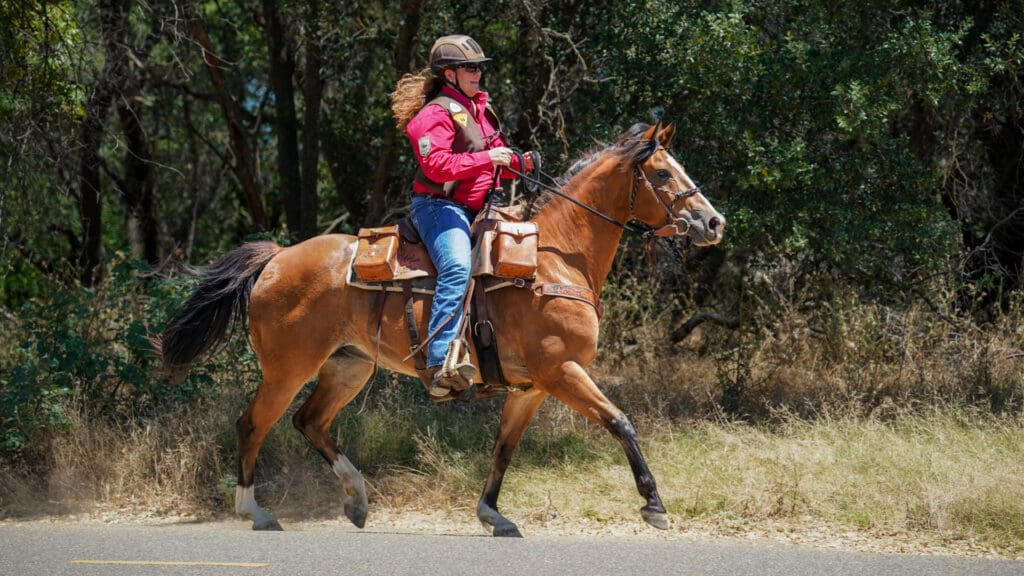
Many have been participating for years. Others are first-timers. Each year, about 600 to 700 riders participate in the event, riding segments of up to 4 miles each. They hand off the mochila full of letters to the next rider, who waits for two hours at their designated location.
“This year, I’ve got 10 new riders. I’m going to have to say about six of them are under 25,” said Tatman, who qualifies riders and organizes the ride schedule for California. “That’s a positive thing. I don’t know if they’re interested in the history. I don’t know if they’ll just do it for one year. But, they like the horses.”
Riders must be at least 14 years old during the Re-Ride year. The requirement reflects the young age of many riders during the original Pony Express, as the horses’ loads had to remain light.
Carrying on the history
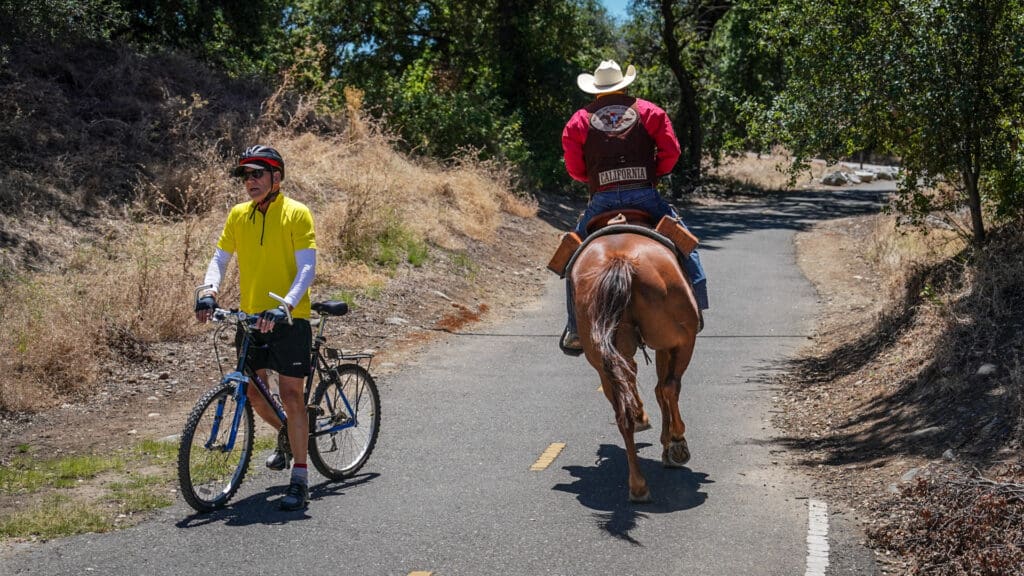
Gordon Crowder, who lives in Wilton in Sacramento County, has been participating in the reenactment for 15 years. This year, Crowder rode from Willow Creek in Folsom to the Nimbus Fish Hatchery, a journey that is 2.5 miles long and takes roughly 23 minutes.
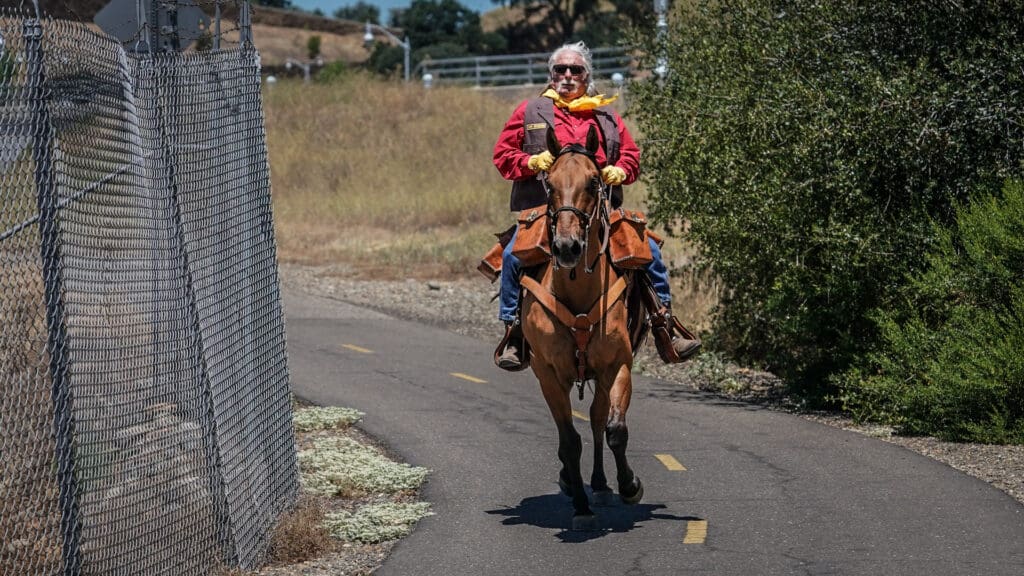
“On the ride, there are no lights. There’s no traffic. And you’re sitting on your horse and you’re thinking, so this is what it’s like back in 1860,” Crowder said.
He first came across the National Pony Express Association at a booth at the California State Fair. Crowder was introduced to horses by his wife and was a part of the Sacramento County Sheriff’s mounted unit for 25 years, but looking for something more to do.
Now 78, he continues to find the endeavor rewarding.
“It always surprises us when at midnight there’s people sitting in lawn chairs just waiting for us to come by,” he said. “It kind of adds to the fun of it to see people who appreciate it.”
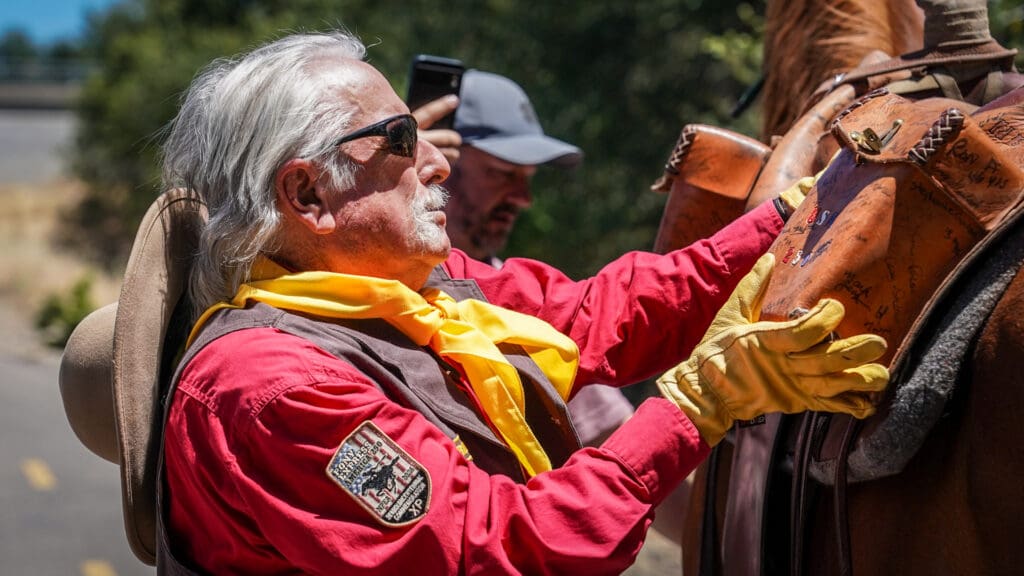
“Every time I drive across the Sierras, my thought is always about the Pony Express riders who had to traverse that without the benefit of roads and trails, as well as the people who came west in the wagons,” said Crowder. “We owe a huge debt to those people, and if we don’t do something to preserve that, like this reenactment, it fades from memory.”
Shelley Ho is a producer with PBS KVIE and a visual journalist with Abridged.