
The Abridged version:
- Studies have found ketamine as a useful tool in treating depression, post-traumatic stress disorder and other mental health ailments.
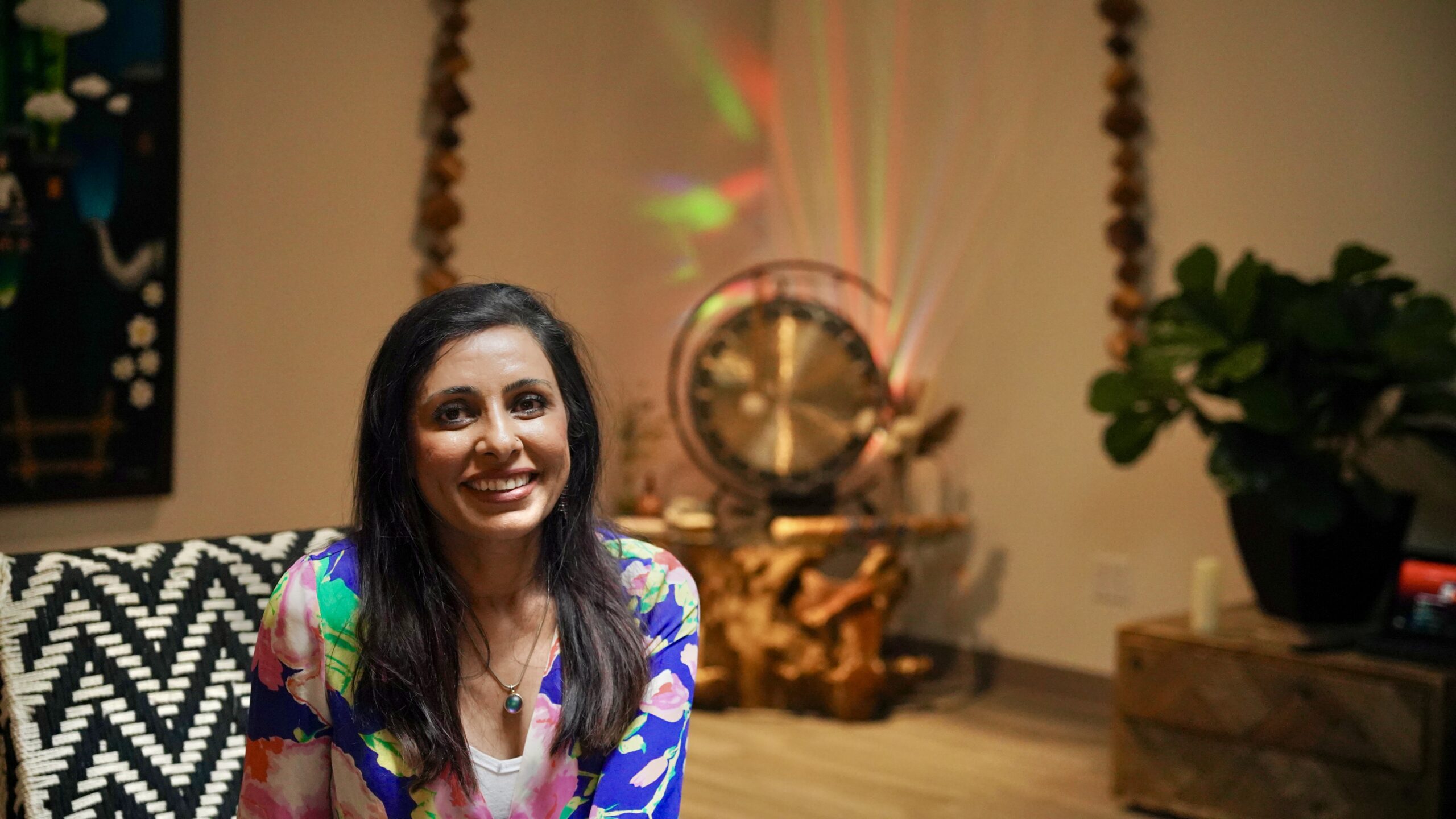
- Dr. Alya Ahmad runs ShaMynds, a Sacramento clinic that specializes in treating mental health disorders using ketamine.
- David Olson, Ph.D., of UC Davis, says ketamine and other psychedelic treatments have some advantages over more traditional treatment methods.
This story was reported by a member of the Abridged by PBS KVIE Community Reporters program. The Community Reporters program empowers local residents to report stories with guidance and support from the Abridged editorial staff.
Alya Ahmad had tried everything to help her mother Yasmin Zaman’s severe depression.
Even as a doctor, Ahmad was frustrated by the lack of options available back in 2019. Her mom had been through several antidepressants; none worked.
Choices looked bleak. “By the time the patient gets to the fourth drug,” Ahmad said, “the chance of success drops to about 7%. That’s where my mother was.”
Ahmad decided it was time to chart new territory. She turned to psychedelics.
The pediatrician had learned about studies of some psychedelic drugs like LSD and psilocybin mushrooms being used to treat diseases from post-traumatic stress disorder (PTSD) to depression. Ahmad had safely used one such drug, ketamine, as an emergency room physician and knew its safe use as a pediatric anesthetic (the drug is also used in veterinary procedures).
With street names like “special K” or “vitamin K,” club-goers continue to use ketamine recreationally for its trancelike euphoria. In too-high doses, it puts users into a “k-hole,” a potentially life-threatening out-of-body experience.
Ahmad and her mother decided oral ketamine therapy was worth a try.
Ketamine had been approved by the FDA in 1970 as a Schedule III medication, having accepted medical use and low to moderate risk for dependence or abuse.
Zaman swallowed the medication. They waited. “It feels good,” she said. They waited some more.
“Alya, I think you’ve got something here,” her mother said.
Keep up with Community Reporters
Stories from Abridged by PBS KVIE Community Reporters are regularly featured in our morning newsletter.
That experiment was the beginning of ShaMynds, an integrated healing center in Sacramento that offers ketamine-assisted therapy as one of several treatments for conditions ranging from depression to PTSD.
Drugs like psilocybin and LSD are still banned federally, although Oregon and Colorado allow the use of mushrooms.
ShaMynds, which has more than 800 active patients, is one of several clinics in Sacramento that offers ketamine to clients; Ahmad cautions that not all ketamine clinics are equal. Some, she said, are procedural centers that don’t provide onsite counseling, a crucial part of the treatment that allows patients to process their experience.
Treatment at ShaMynds typically involves precounseling, or “integration,” an intravenous infusion and a counseling session afterward. A patient’s intention is always at the center of treatment; how the client would like to focus their journey. The procedure from start to finish takes about 2 hours. Six to eight sessions complete a typical therapy plan and the cost runs $450 to $750.
“Patients usually describe the experience as having a sense of connection to something bigger than themselves,” Ahmad said. “The experience transcends time and gives a sense of internal and external connection, of love and empathy.”
Ahmad isn’t averse to recreational use of some hallucinogens when used in the right dose “with the right mindset and setting,” she said.
One of Ahmad’s patients, Felicia Johnson, had been coming to the center for three years after a long history of therapy and treatment. She experienced suicide attempts and depression that stemmed from an abusive past. Ketamine was the only thing that “broke through,” she said.
“You’re able to come to realizations about things, and able to face them,” she said, describing the experience as having her thoughts flying around in front of her. “It’s easier to access my inner child,” she said. “That space is usually highly protected and guarded.”
Some people imagine the FDA will simply legalize drugs like psilocybin mushrooms and LSD one day, but that’s not a likely path.
David Olson, Ph.D., founding director of the UC Davis Institute for Psychedelic Medicine and Neurotherapeutics, said researchers have tweaked compounds like psilocin engineered from mushrooms to eliminate the recreational trip associated with these drugs but leave their benefits intact.
Psychedelics can regenerate brain pathways
Olson noted that many psychiatric disorders correlate with brain cell atrophy, or “pruning” of brain cells, “particularly in the prefrontal cortex that controls emotions like fear, motivation and reward,” he said. That’s the same part of the brain that used to be obliterated in frontal lobotomies, a surgical fad in the ‘50s and ‘60s that destroyed brain tissue to treat psychiatric disorders.
Now, psychiatric disorders are being treated by regenerating brain pathways instead of destroying them. Ketamine and other psychedelics have been shown to rewire the brain in a sense, circuiting it around old, problematic pathways through a process called neuroplasticity. Olson took the research a step further by observing what he coined as “psychoplasticity,” restorative effects specific to the brain. While the brain never grows new neurons, shriveled brain cells can be plumped and rejuvenated and develop new “branches,” or dendritic arbors, Olson said.
He explained that although ketamine was FDA-approved in 1970, it was only used “off label,” outside its intended approval, to treat depression. An alternative molecule of the drug, esketamine, sold commercially as Spravato, was approved specifically to treat depression in 2019 in nasal spray form.
Meanwhile, conventional depression treatments have stalled. Prior to esketamine, “there really hadn’t been any innovation in neuropsychiatry since the advent of selective serotonin reuptake inhibitors (SSRIs) in the late 1980s,” Olson explained
“The big issue with the SSRIs is that they’re very slow acting,” he said. The drugs need to be taken daily for weeks to months to work. “Many people don’t respond to them. About a third of patients are resistant to treatment,” he noted. The drugs also can cause side effects like sexual dysfunction, headaches and nausea.
While antidepressants have to be taken every day for this effect, psychedelics were shown to have long-lasting benefits with just one dose.
A veteran’s journey in healing
Cedric Orange, from McClellan, considers himself an ambassador for ketamine therapy. The courteous, soft-spoken Texas native served in the Gulf War, and while on active duty around 1993, he had what he describes as a nervous breakdown.
Orange says today he recognizes that its roots were “unaddressed PTSD” and “medicine-resistant depression.” Today, he exudes a calmness and centeredness he attributes to meditation, ketamine and a new approach to life.
“I spent over 20 years taking pharmaceuticals for PTSD,” Orange said sitting in a hipster coffee shop on Liestal Alley. He went to ShaMynds for an appointment.
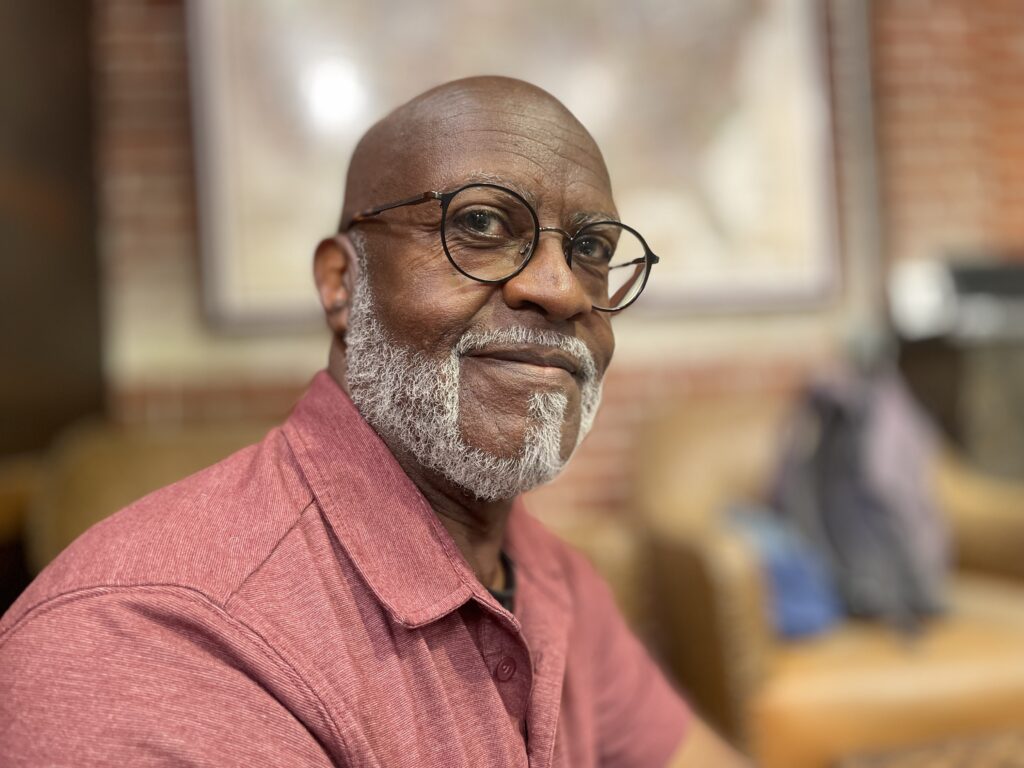
Before Orange received any ketamine, he underwent a careful intake process to ensure he was a good candidate.
“They started me out with a very low dose,” he said. During the ketamine journey he said he began to have psychedelic experiences, “memories and traumas that I had forgotten about.” Some were due to combat in the Gulf War. Some was leftover childhood trauma, he said.
“What I discovered through ketamine is that I could see those traumas when they began to come up,” he said. “And I can label it. I can give it a name. OK, that’s depression. I see you coming on.”
Orange said he learned there was a finite window of regeneration of brain pathways after each ketamine treatment, about 36 hours. His goal is to maximize that time with creative processes like art, which he says creates new pathways in his thinking.
Orange said he meets with a group of about six other veterans at the center to process their journeys together. He said he’s happy now.
“Man, when I talk to other veterans, I want them to be that same way,” he said. “I’m not a therapist or anything, but I can see where they’re stuck. And I say, ‘Hey, talk to somebody about it!’”
James Smith is a member of the Abridged Community Reporters program. A retired nurse investigator for the state of California, James studies French and bikes along the American River Parkway in his free time. He lives in Midtown with his husband of 26 years.