
The Abridged version:
- The population of Tahoe draba, a rare plant found only in the Tahoe area, has declined but may benefit from a snowy winter.
- Researchers found that warming temperatures and a lack of snow have reduced the prevalence of the plant.
- The plant’s small size may help it survive harsh environments, but it also leaves it vulnerable to foot traffic from people hiking through the Tahoe area.
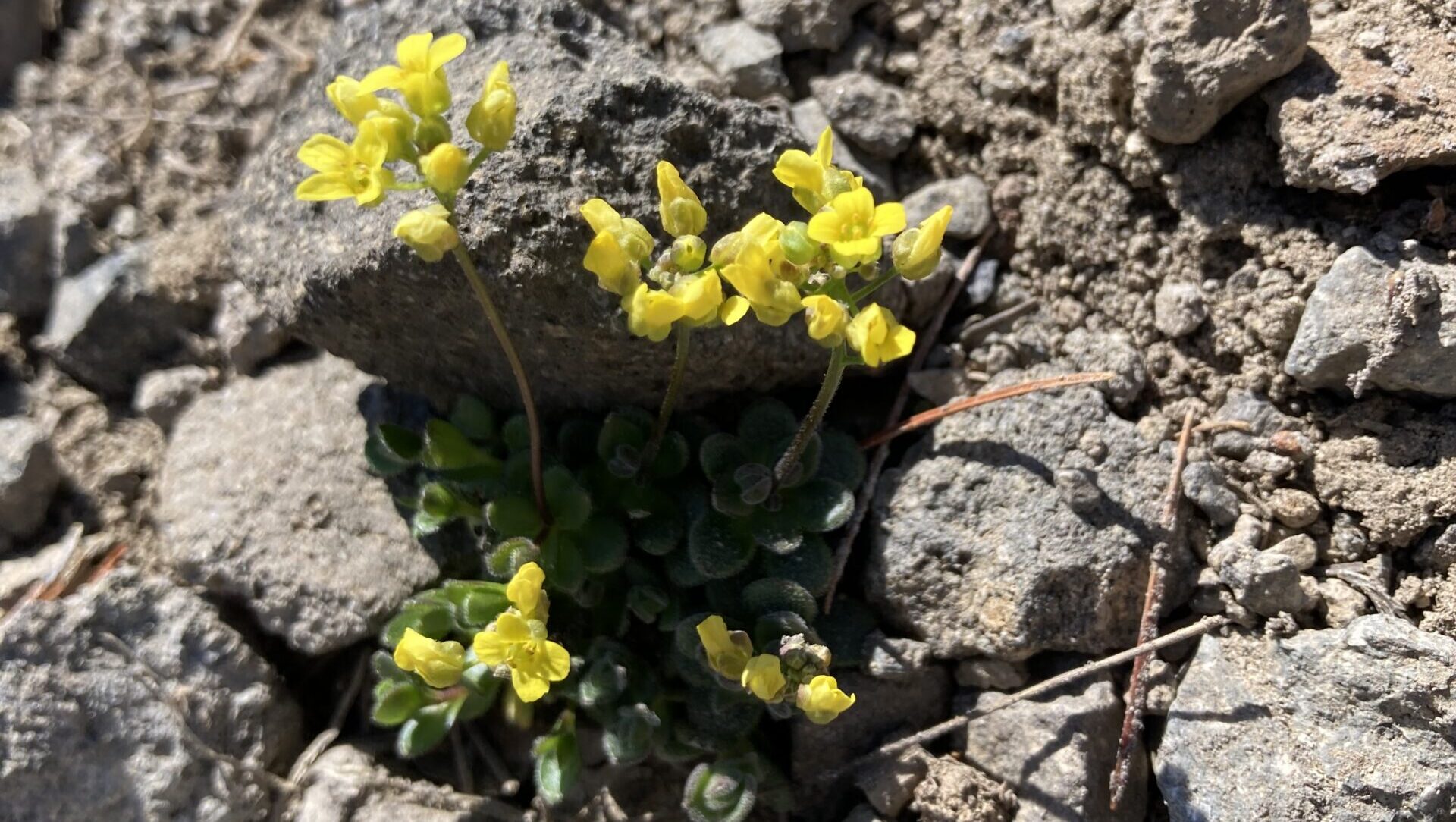
Barely larger than a quarter, a rare plant only found in the Lake Tahoe area has been on the decline. But it may find reprieve in the coming months.
Although the warm winter leading into this dry summer poses a risk for the species, the anticipation of a heavier snowfall, driven by a strong El Niño weather pattern expected this winter, could help revitalize the population of Tahoe draba, which is threatened by both climate change and human activity.
Sign Up for the Morning Newsletter
The Abridged morning newsletter lands in your inbox every weekday morning with the latest news from the Sacramento region.
The alpine plant, formally known as Draba asterophora, is part of the mustard family. Marked by yellow flower petals that pop up after winter’s end, the plant is endemic to the Tahoe area, meaning it cannot be found anywhere else. It often grows in areas where other plants struggle to take hold —usually on sandy, rocky slopes.
While it is unclear what role Tahoe draba plays in its surrounding ecosystem, Sage Ellis, now a doctoral student in Wyoming who researched the plant with the University of Nevada, Reno, said that is exactly why it is important to monitor the plant.
“There’s a need for someone to study these endemic plants, because we often don’t have the resources to do that,” she said. “They often go under the radar, and we don’t know what pollinates them, what eats them or their role in the environment.”
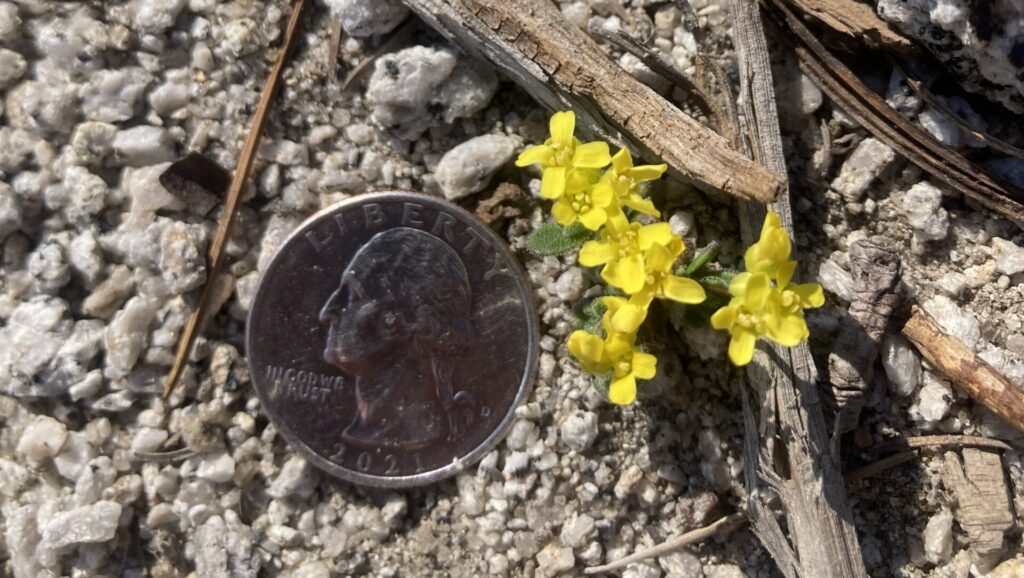
Anything but drab
Earlier this year, Ellis and UNR associate professor Robert Shriver published a paper detailing how they monitored Tahoe draba, picking up on the efforts that the U.S. Forest Service started in 2010-15. Their work represents monitoring from 2022-24.
Shriver said that the project originated with concerns about how ski areas and slope grading could be affecting the rare plant.
Ultimately, their research showed that warming temperatures and a lack of snow had major impacts on the populations they studied.
Alpine plants often rely on the snowpack to determine their growth cycles, Ellis said. Naturally, snow is a source of water, and as it melts during the warmer months, it provides a recharge to the plants, which will then rely on summer storms as the seasons change.
However, snow also provides an unusual role — while it is cold to the touch, it actually insulates the soil. Shriver said that the temperature monitors they placed near the draba they were studying showed that snowpack actually stabilized the soil’s temperature, preventing frost shock. Once the snow melts, the soil is exposed to the air and its temperature fluctuations.
Needs snow to grow
The small size of these plants likely helps them survive in harsh environments, as they make use of “microsites,” a term that scientists use to describe a pocket of space with unique characteristics compared to the rest of the environment.
“When you look up at a ridgeline, you see some areas that have snow and some areas that don’t,” Shriver said. “And those represent different microsites They might have more snow because they’re shaded, or because they’re on the leeward side, so snow blows over and collects there, and they have their own weather microsite that is important for these plants. We often found Tahoe draba in the small patches that were the last to melt out in the spring.”
That means climate change greatly affects the health of populations of plants like these.
After another “Snowmageddon” in 2022-23, the last few winters in Tahoe have been relatively dry, affecting both the tourist season and natural ecosystems. Shriver and Ellis both saw a better seasonal transition in 2022-23 for Draba asterophora compared to 2023-24’s transition.
Shriver and Ellis agree that the predictions for a heavier snow year, driven by El Niño, could bode well for the plants.
Presence of people
The very adaptation that might have helped draba survive the winters may also be what makes them hard to protect from another factor: human activity. One of the populations in Ellis and Shriver’s paper was a challenge to monitor because it was near a heavily used hiking trail.
“These plants are so small,” Ellis said. “When I sampled a site near a hiking trail, people would come off the trail to talk to me or they’d have their dogs with them, and it’s just so easy to trample (Tahoe draba) by accident.”
Shriver emphasized the importance of respecting signs that indicate rare or endemic plants in the area, especially when people are recreating in the backcountry.
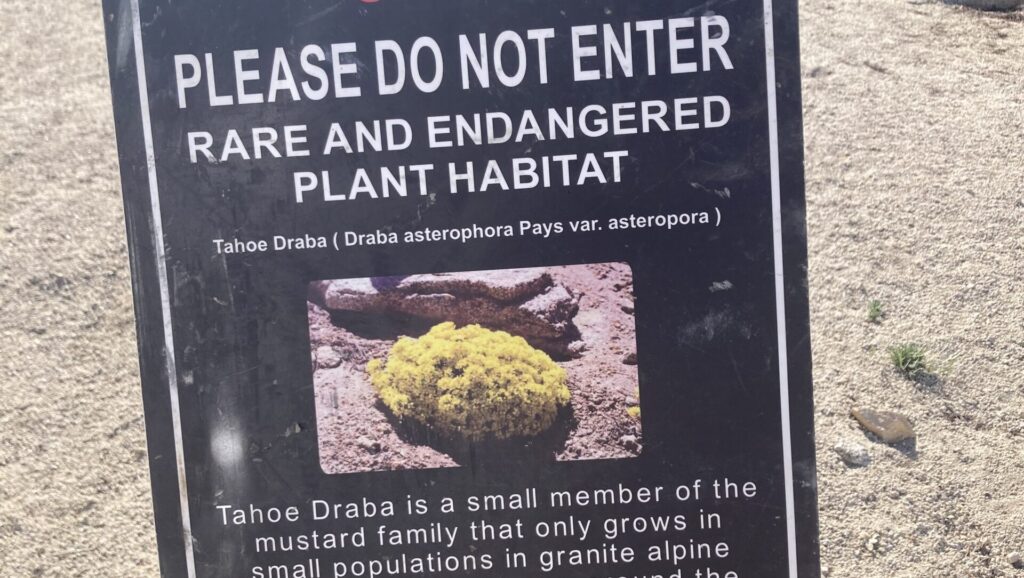
Surprisingly, in ski areas, the populations were doing well. That could be because of signs telling people not to disturb the areas where rare plants were present and because the ski areas the researchers monitored were not exposed to slope grading.
Those areas also had more baby seedlings show up, increasing the population. But that does not mean that translates to population sustainability. With dwindling numbers, is there anything to be done?
A real rarity
“There are lots of reasons why a plant is rare: It’s not necessarily always a decline, their habitats might just be less common,” Shriver said. “But knowing that informs the development of conservation plans.”
That’s where monitoring comes in.
Other rare, endemic plants like Tahoe yellow cress are better understood and often have planting efforts. But with a miniature plant that hasn’t had much study, Tahoe draba presents more problems.
Shriver said some ski areas have tried to replant or relocate draba, but it has proved unsuccessful.
There are no current plans in the works to monitor Tahoe draba year after year. The university’s recent monitoring work was made possible through the Tahoe license plate program. People can purchase Tahoe-themed license plates, and 96% of the proceeds go to projects aimed at protecting Lake Tahoe.
Shriver hopes to see more monitoring in the future to keep an eye on the health of their populations.
“It was helpful to have had this past monitoring done, and it was well-documented,” Shriver said. “That enabled our work to be done. Even if we’re not the ones to continue to monitor it, that previous work and documentation makes it less onerous for the future, and for future community contributions.”
Though Ellis is now pursuing a doctoral degree at the University of Wyoming, she said the project deeply affected her.
“Just because a population is small or we don’t know the economic benefits, I still think it’s worthwhile and informative for people to think about and conserve and be aware of them,” she said. “And just because it occurs in smaller numbers doesn’t mean it’s less impactful to the ecosystems or personal beauty when you’re out in the world.”