
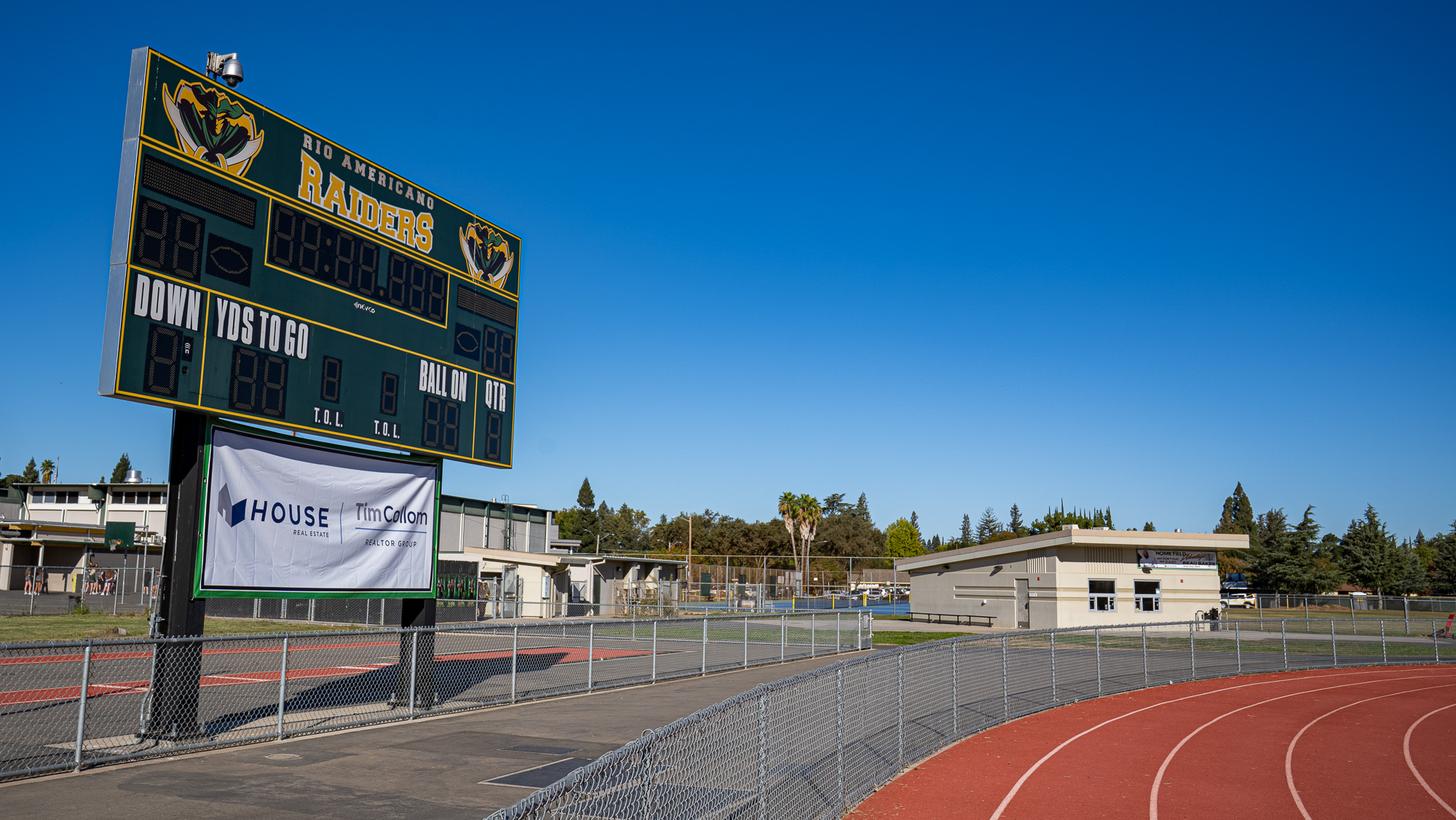
The Abridged version:
- The San Juan Unified school board voted to advance a contentious stadium improvement project for Rio Americano High School in Arden Arcade.
- Neighbors have criticized the proposed upgrades as harmful to the nearby American River Parkway. Families and students, meanwhile, have rallied for a bigger and brighter home field.
- School district officials estimate the project would cost about $8 million to $9.5 million out of the district’s facilities budget.
A highly debated high school stadium renovation is moving forward in south Arden Arcade, over the concerns of some neighbors and environmental advocates.
Trustees for the San Juan Unified School District evaluated the potential impacts of upgrading the Rio Americano High School stadium and determined the benefits for students outweighed the identified consequences.
As board members took up the issue Tuesday evening, supporters and opponents alike flooded the district meeting room and overflow space. Trustees unanimously approved advancing the project. Applause and cheers erupted from several students and parents in the audience.
As it is, the current Rio Americano field has limited uses. Home games for the Raiders are regularly relocated to neighboring campuses, such as El Camino High School. Graduation ceremonies take place off campus.
Major upgrades to make way for those and other events are long overdue, according to many students and parents. But a long line of speakers Tuesday took issue with the project, particularly due to the school’s location immediately next to the American River Parkway.
School district officials estimated the project cost at between $8 million and $9.5 million. The funds would come out of the district’s facilities budget, rather than any bond measure.
Changes on the table
Proposed enhancements include bleacher seating for about 2,575 spectators, permanent 80-foot stadium lights and a new press box. The changes would allow Rio Americano, with a student body of just under 2,000, to host its own home games, along with other large events.
“We’ve had assemblies where students were excluded because there’s not enough room,” said Mario De Bernardo, president of the Rio Americano Athletic Boosters.
De Bernardo said the school community is not ignorant of the parkway’s value, noting that many families moved to the area to be near the river. Yet district officials, he said, had sufficiently analyzed the environmental impacts.
Students and families have for several years advocated for stadium renovations. Their efforts were consistently blocked by opponents, including neighboring homeowners.
“This is for the parents, guardians, community, alumni and for our Rio Americano High School student population — the generations to come,” said Frank Camarda, the district’s chief operations officer.
‘Be a good neighbor’
In an almost 1,300-page environmental impact report, most effects of the project were determined to be less than significant. Others could be mitigated with strategies such as attendance caps and event curfews, according to the review.
There are unavoidable effects, though, namely increased sound levels during construction and at games once the field is finished.
Neighbors and environmental advocates appeared at Tuesday’s meeting, raising concerns about the increased noise, along with heavier traffic and anticipated wildlife disruptions. Many criticized the district’s review as inadequate and downplaying the possible consequences.
John Briggs, a 37-year resident of Sacramento County and board member of Save the American River Association, called for the board to hold off on advancing the project.
“You’re a neighbor,” Briggs told district leaders. “You ought to be a good neighbor.”
A unanimous decision
Trustee Zima Creason said she listened carefully to community concerns, both Tuesday evening and in the months leading up to this vote.
“These are one of those decisions … where you’re just not going to make everyone happy,” Creason said.
“I do deeply care about our environment, and I do greatly rely on the expertise of our team,” she added.
Fellow board members noted the difficulty of the decision — “It’s hard to know that you’re letting a portion of your constituency down,” said board President Tanya Kravchuk — but said the district had done its homework and followed proper procedure.