

The Abridged version:
- The Roseville Joint Union High School District revised its policy on cellphones in the classroom, following new state legislation. So far, the district said the change is a success.
- Students say their peers are paying more attention in class.
- Districtwide, there have been 169 cellphone-related incidents this fall, staff said. That number accounts for about 10% of all discipline incidents.
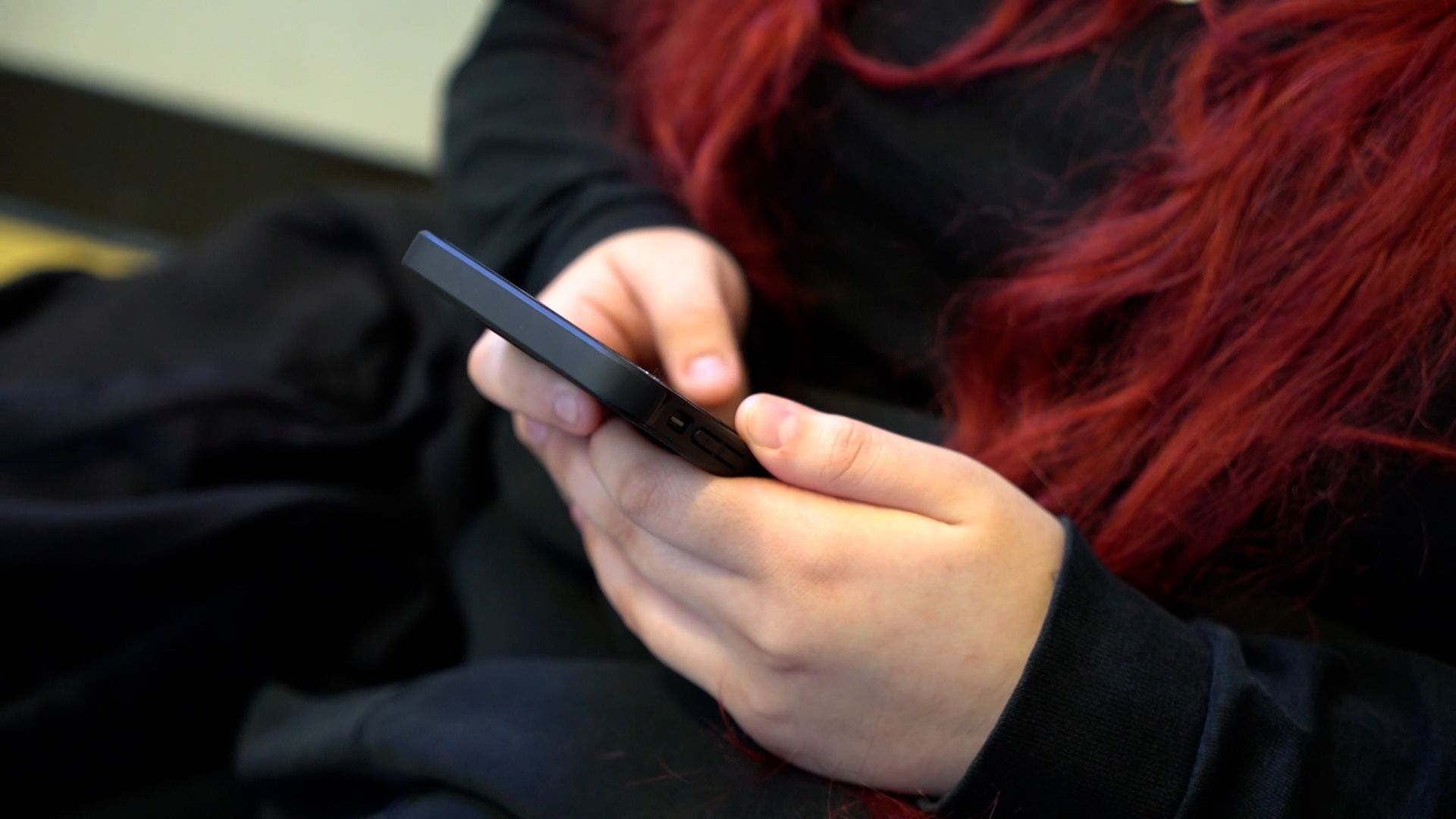
Three months into the school year, Roseville high schools say new cellphone restrictions are going over well with students and staff.
“It’s been night and day,” said Niko Themelis, a West Park High School senior and student representative on the Roseville Joint Union High School District board.
Themelis said he has witnessed his peers paying more attention in class, achieving at least one of the goals behind the state’s recent Phone-Free School Act.
The legislation, passed last year, gives districts until July 1, 2026, to design a policy reducing the use of cellphones, smartwatches and other communication devices on campus.
Restrictions in full effect this year
Students in the Roseville high school district may use their personal technology outside of instructional time, meaning during lunch or in between classes, according to board policy.
The district had existing rules on cellphone usage even before Gov. Gavin Newsom signed the state mandate last year, said Melanie Dopson, assistant superintendent of student services.
But under the state’s new directions, Roseville Joint Union revised its guidelines this summer and focused on enforcement across all campuses starting this school year.
“The Governing Board recognizes that the use of smartphones and other mobile communication devices on campus may be beneficial to student learning and well-being, yet could be harmful and disruptive of the instructional program in some circumstances,” the policy reads, language that is similar to many other district handbooks.
During class, phones are typically kept out of reach in backpacks, though teachers may allow students to pull their devices out as a lesson tool.
Some discipline still needed
Discipline for unauthorized phone use, Dopson said, begins with “several warnings.” Only after those verbal cautions do educators start doling out consequences.
So far this year, she said there have been 52 students disciplined districtwide under the cell phone policy — some multiple times — culminating in 169 reported incidents. Fifty-two students represent about 0.04% of the district’s population.
But, Dopson said, those cellphone-related incidents make up about one in 10 discipline measures taken across schools.
“So, our administrators are spending a good amount of time logging in incidents and giving consequences for cellphone behaviors in classrooms,” Dopson said.
The biggest offenders: sophomores and juniors, she said. Freshmen currently account for the fewest incidents.
School rules versus self-discipline
Brandon Dell’Orto, a history teacher at Granite Bay High School and president of the Roseville Secondary Education Association, said he traditionally viewed his role as an instructor preparing students for a higher education setting.
“My philosophy for the longest time was, well, I have to help get them ready for college as best I can,” Dell’Orto said in remarks to the board. “And that included things like, how do you handle the freedom of having a phone in a class that you’re taking when the professor is 17 rows in front of you?”
Dell’Orto said he would explain to students the need for self-discipline. If the only thing stopping the teens from turning to their phones was the threat of detention or suspension, “then we’ve kind of failed,” he said.
Phone usage in education is both a challenge and an opportunity, according to new research from the UCLA Center for the Transformation of Schools.
“Just like sleep or exercise, digital habits or using your phone in balanced ways is a habit that you need to build,” said Kathy Do, a researcher at the University of California, Los Angeles. “And students need support from adults building those healthy digital habits.”
Dell’Orto, though, said his approach has shifted of late toward a tougher stance, as devices seem to draw more and more of his pupils’ focus away from instruction. And, he said, he’s appreciated the district’s steps toward more uniform regulation.
“This is more of a consistent message,” Dell’Orto said. “But it’s going to take some time to be the new reality.”
A new reality for districts across the region
Much like emerging policies on the use of AI, cellphone rules vary by school and district across the Sacramento region.
Among those that have enacted new rules, the degree of restriction varies.
Some districts, like the Sacramento City Unified School District, allow students to only use their devices on campus before or after school hours. Otherwise, from first to last bell, phones should be turned off and stored out of sight, the policy states.
Others, including the Natomas Unified School District, make a distinction between older and younger students.
A recently updated policy by Natomas Unified bars students in grades eight and below from using their devices at any point during the school day. High schoolers in the district must put their phones away while in class but may be allowed to use them between instructional periods.
Savannah Kuchar is a reporter covering education. She came to Sacramento to be a part of the Abridged team and contribute to a crucial local news source.