
The Abridged Version:
- Sacramento-area schools are prioritizing locally-grown products thanks to a focus on children’s health, partnerships with farmers and Assembly Bill 778.
- AB 778 required California public institutions to purchase 60% of agricultural products from within the state, but exempted schools. Still, local districts are choosing to meet that threshold.
- Schools with full production kitchens have purchasing power and streamlined operations, but making the numbers work is still a challenge.
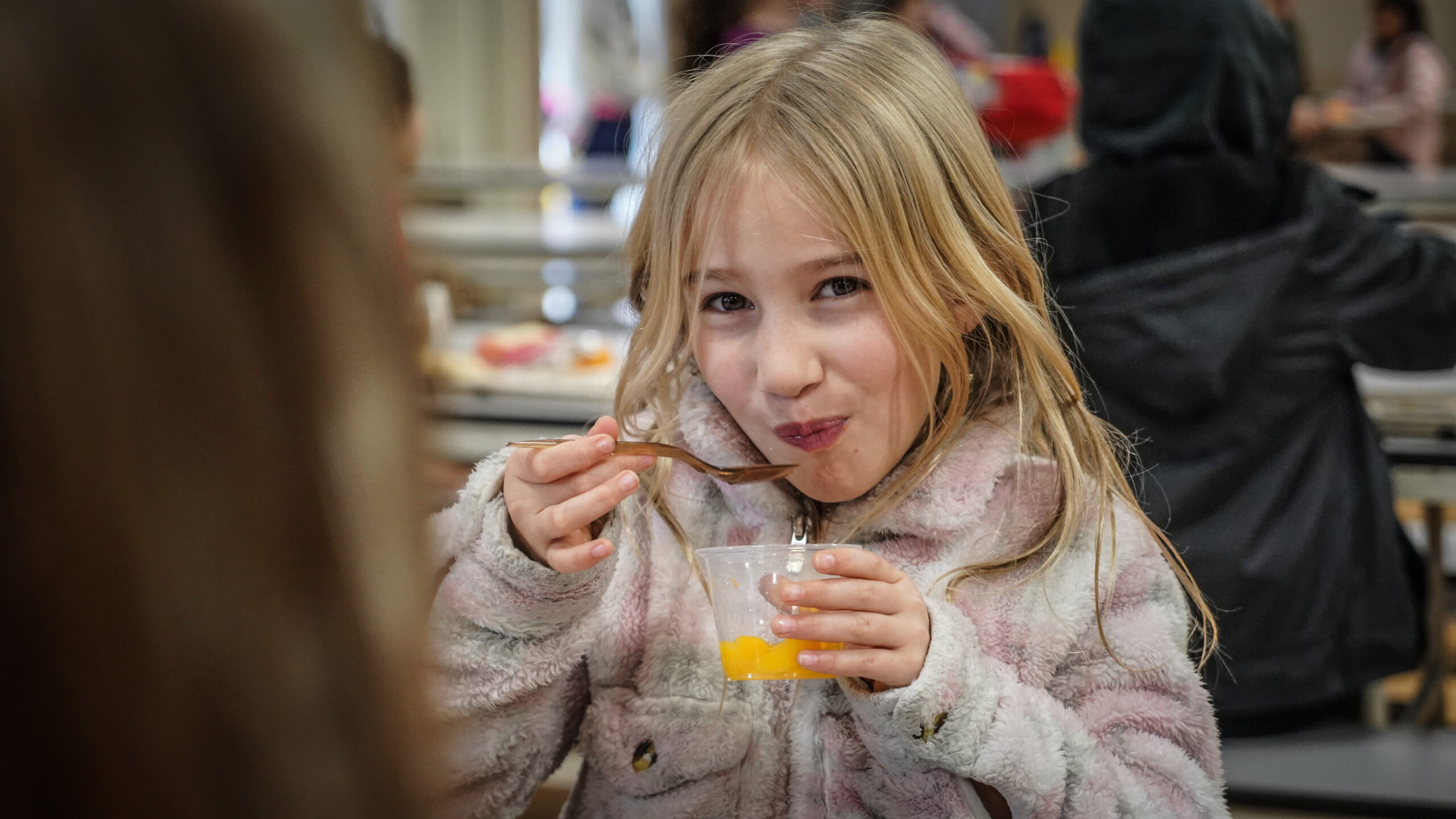
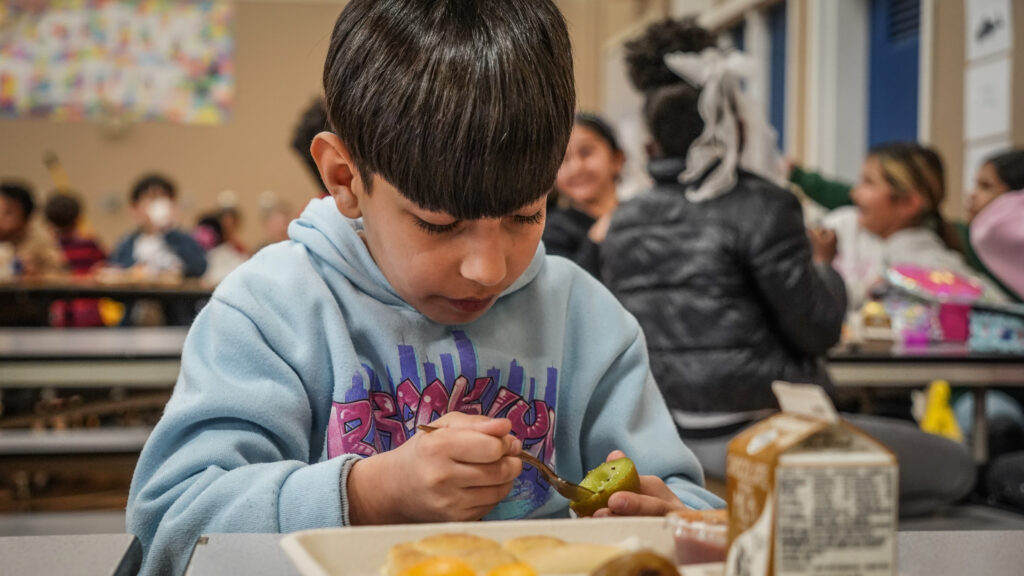
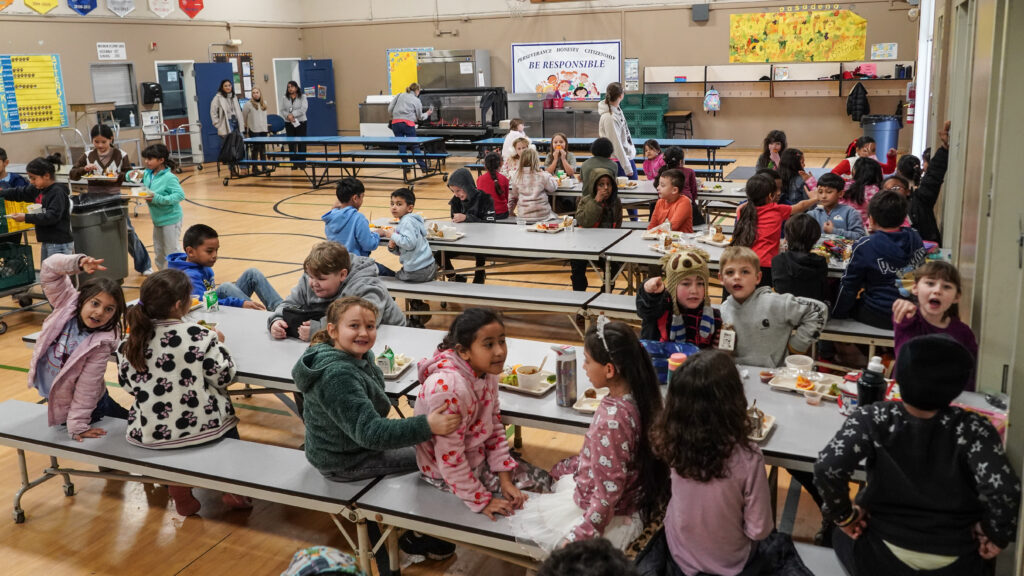
It’s noon on Jan. 22 at Pasadena Avenue Elementary School in Arden Arcade, where roughly 220 hungry kids in grades TK through fifth will be served lunch in the cafeteria. As the noise level rises, San Juan Unified School District director of nutrition services Sneh Nair shepherds children toward the chicken bowls or cheese pulls with marinara sauce, as well as the fully-stocked salad bar.
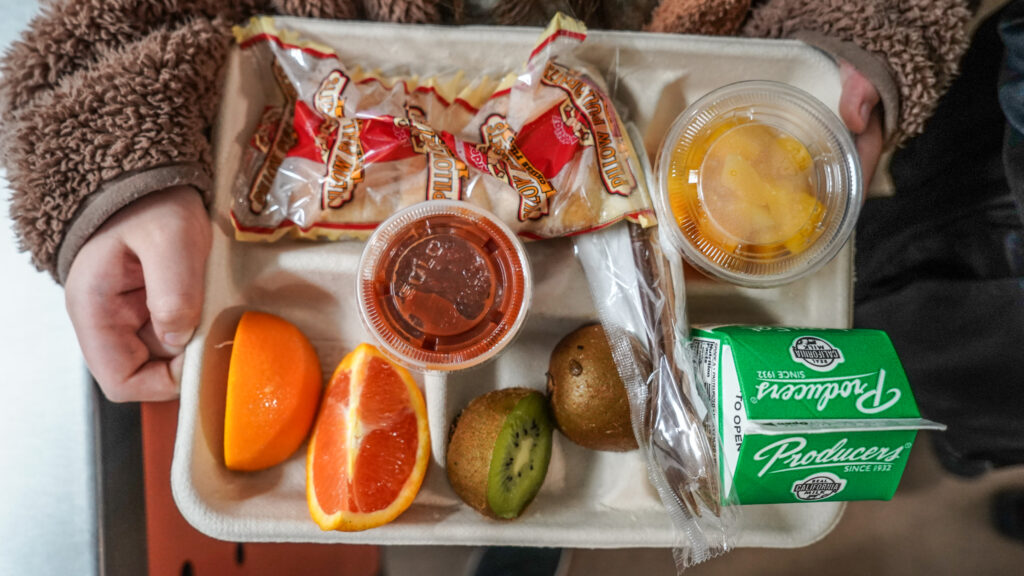
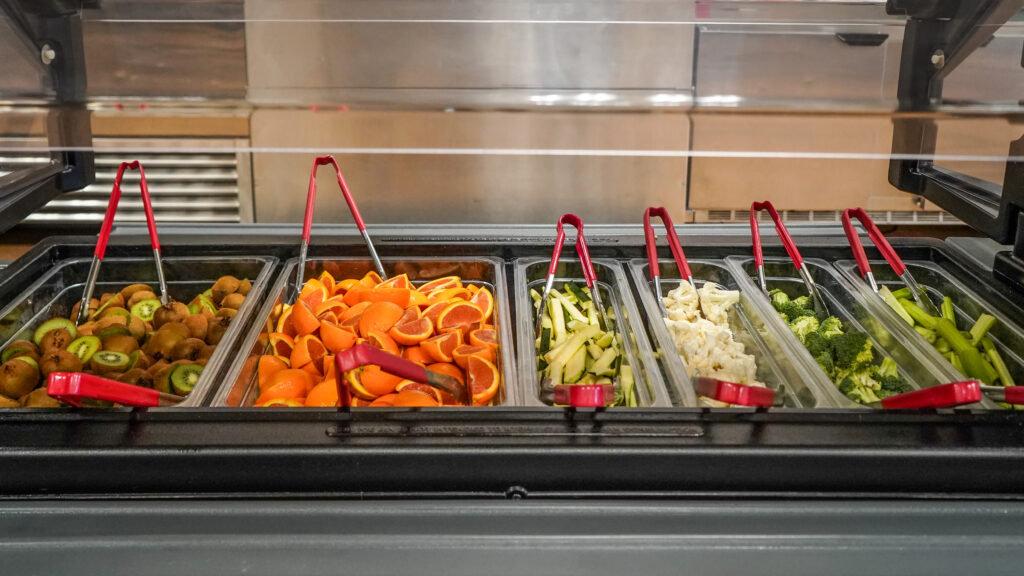
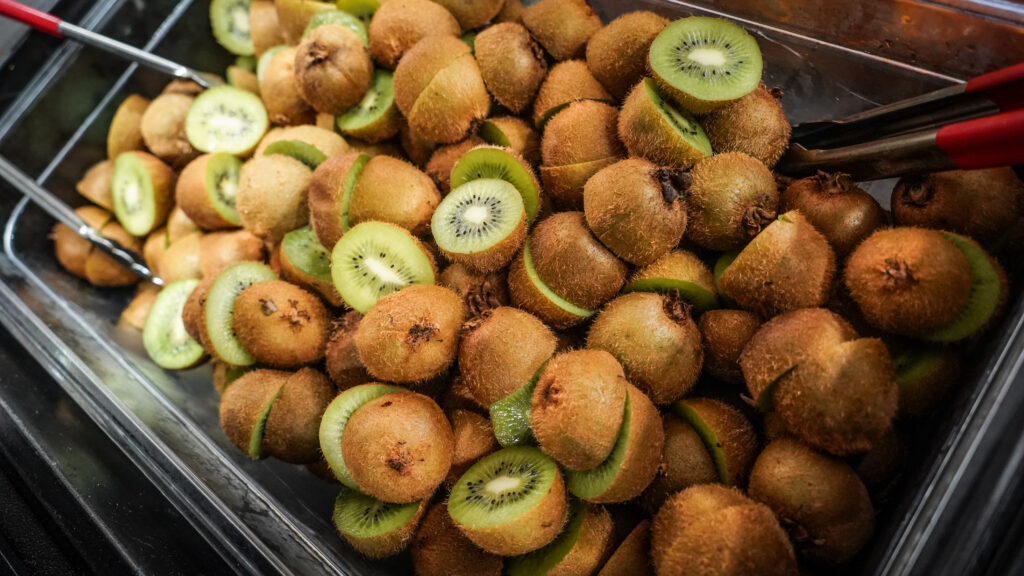
The salad bar for this week boasts vibrant choices including broccoli, oranges and kiwifruit. The kiwis were grown about 60 miles from the school at Sunrise Kiwi Packing, a four-acre orchard in Butte County, but the school works with what’s seasonally available and on budget.
“A lot of it is being flexible,” Nair said. Pasadena Avenue’s kitchen is small, which makes processing larger fruit like melons difficult, but it can work with citrus. “The Cara Cara oranges are from Fowler Packing, a large grower who is further away (in Fresno), but we try to purchase local food and work a lot with Spork Food Hub out of Davis.”
Sign Up for the City of Treats Newsletter
Get the latest Sacramento food news from Benjy Egel in City of Treats — delivered every Tuesday.
California school districts received a late exemption from a state law requiring them to purchase most of their produce from California farms by the end of last year. Still, some Sacramento-area districts are choosing to meet that bar on their own.
“Prioritizing California-grown products supports student access to fresher food, reduces transportation and environmental impacts, and strengthens local and regional agriculture —goals that align with our commitment to student wellness, sustainability, and responsible stewardship of public funds,” San Juan Unified spokesman Raj Rai wrote in an email.
Assembly bill exempts school districts
Assembly Bill 778, enacted in 2022 with compliance required by the end of 2025, mandated that state-owned or state-run institutions purchase at least 60% of their agricultural food products from within California.
Public universities, colleges and school districts were initially going to be required to comply, along with state prisons and hospitals, but got an exemption due to cost and program conflicts.
Even so, local schools are focusing on meeting or exceeding the requirements. San Juan Unified, for example, purchases about 75% of its produce from California farms to feed its 39,000 students, Rai said.
Elk Grove Unified, California’s fourth-largest school district, also meets the threshold. The district sourced 65-70% of its produce from California farms last year, including several local growers, according to director of food and nutrition services Michelle Drake.
“We have a large partnership with a farm in Elk Grove called Davis Ranch, and Fiery Ginger Farm in West Sacramento is growing our broccoli,” she said.
The school district also works with smaller growers to fill “snack packs,” a program started 10 years ago in partnership with the Center for Ecoliteracy. These packs, distributed during lunch at schools without salad bars, introduce kids to colorful, flavorful foods they might not find at home. A recent week’s packs included rainbow carrots, watermelon radishes and purple daikon from Root 64 Sacramento, a one-acre urban farm just south of Tahoe Park.
Schools with central kitchens have purchasing power and automation
Elk Grove Unified has more than 63,000 students spread across 68 schools. That size, combined with a main kitchen, helps it consolidate purchases and streamline operations.
“We’ve been lucky over the past 10 years to have a central kitchen which helps us distribute to our school sites,” Drake said. “We also have built AB 778 into our procurement, so when we go out to bid, we are asking very specific requests for California agriculture.”
Sacramento City Unified School District has over 42,000 students and 80 schools, which are fed from a full production kitchen that prepares about 100,000 servings per week. The district has been focusing on local agriculture for more than a decade, according to executive director of nutrition services Diana Flores.
“We work with farms throughout California and have a partnership with Soil Born Farms in Rancho Cordova to grow our lettuce,” she said. The central kitchen is equipped with machines that wash, chop, spin and bag the lettuce for distribution.
Budgets and commodity entitlements are a factor
California produces over 400 agricultural commodities including fruits, vegetables, dairy products, eggs and meat for schools to purchase if their budgets and USDA commodity entitlements allow it. Local meat is difficult to source and often out of budget, Flores said.
“The protein — the center of the plate — is likely not from California and is highly processed in order to work with allocated entitlement money,” Flores said. “We struggle to make the numbers work.”
That’s where Spork Food Hub comes in. The Davis-based organization was founded in 2021 to address the difficulty small producers face in getting their products to larger markets, general manager Jacob Weiss said. It now works with over 60 farms and most of the school districts in Sacramento and Yolo counties.
“We aggregate produce from small and urban farms. So if one grower has 20 cases of broccoli and another has 50 and another has 30, now we have enough volume to fill a school district order,” Weiss said.
But do the kids eat the broccoli? As lunchtime at Pasadena Avenue Elementary winds down, Nair will roll the salad bar back to refrigeration to be used another day. She’s enthusiastic about nutrition, but also realistic.
“We love to see them eating the fruits and vegetables, but we also make sure there’s a pizza day,” Nair said.
Lisa Thibodeau is a freelance writer and farmer in Placer County.