

The Abridged version:
- On Tuesday night, the Sacramento City Council weighed options to boost intervention services for members of the homeless population facing critical behavioral health issues.
- The last year saw 10,836 people brought into Sacramento emergency rooms on “5150 holds” as a danger to themselves or others.
- While programs like CARE Court set up court-ordered treatment programs, the city of Sacramento has not successfully placed any individuals in the program, despite petitions to do so.
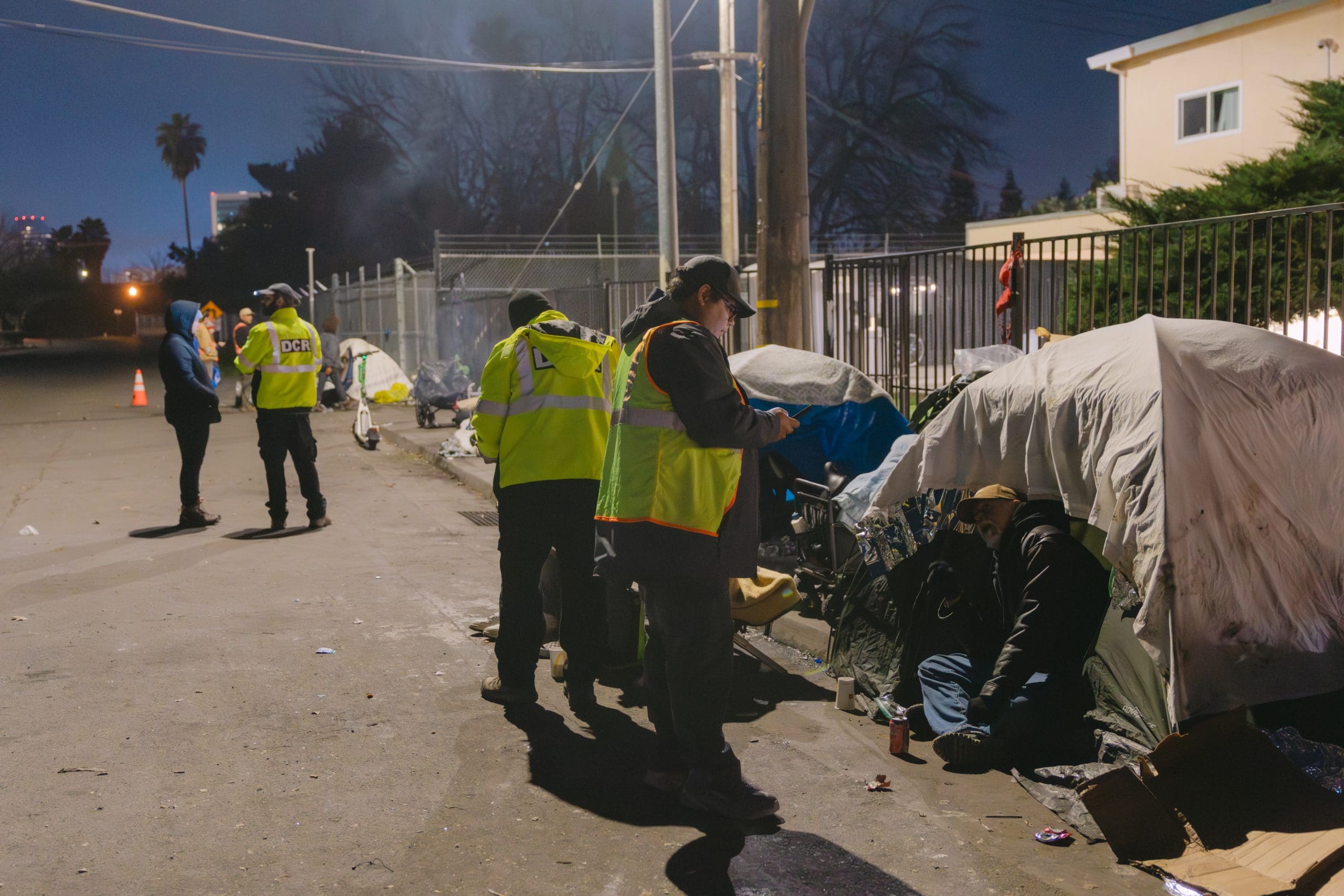
About 200 people in the city of Sacramento have critical mental health needs while also being among the most visible and tragic cases of people living on the streets.
The Sacramento City Council has been looking to conservatorships and court-mandated treatment programs as one path forward to address this issue. At their meeting Tuesday night, council members agreed to urge for more state legislation that would push people into treatment systems.
One mechanism for that is likely to be CARE Court, the state program touted as a new tool to fight homelessness in 2022 that has largely had limited success across the state.
The law allows families, first responders and health providers, among others, to petition a court to compel an individual into treatment.
“We’re going to have a huge push on this,” Mayor Kevin McCarty said.
Sign Up for the Morning Newsletter
The Abridged morning newsletter lands in your inbox every weekday morning with the latest news from the Sacramento region.
McCarty said that the topic is likely to be the top “legislative push” for the California Big City Mayors coalition next year.
The city will also consider changes to its 911 system to allow for more alternative responses to crisis calls, such as social workers rather than uniformed police officers.
Responding to thousands of mental health calls
While medical and behavioral health services are largely handled by the county, more and more the homelessness crisis is seeing the city of Sacramento enter that realm as well.
In the last year alone, the Sacramento Fire Department responded to over 19,000 calls involving homeless individuals, including 8,700 calls where individuals were experiencing a mental health crisis and had to be transported to a local hospital or mental health facility.
Recent data from the Fire Department also found that in recent years just 79 people triggered 5,100 calls for service at the cost of $12.5 million to the city.
The last year saw also saw 10,836 people brought into Sacramento emergency rooms on “5150 holds,” a reference to the state code that permits temporary involuntary detention, as a danger to themselves or others.
Councilmember Eric Guerra pointed to the discrepancy between that number, and the hundred or so conservatorships that were approved by courts during the 2025-26 fiscal year.
“I think a clear direction is needed immediately to work now, and not wait on state law to change,” Guerra said.
City has not placed anyone in CARE Court, despite petitions
The CARE Court program went into effect in Sacramento County on Dec. 1, 2024, but has seen limited treatment plans approved in the county.
None of the city’s institutions that are able to leverage the program — including its fire, homelessness response or police departments — has successfully petitioned anyone into the program.
The Sacramento Fire Department petitioned for 38 individuals to participate in the program and the city’s Department of Community Response, which handles homelessness, has filed 12 petitions. No petitions have been filed by the Police Department.
At the county level, 216 petitions have been filed, 65 people have been accepted into the program, and one person has successfully completed the program.
Brian Pedro, who leads the city’s Department of Community Response, noted that under the current format of the law, individuals are not mandated to engage in treatment. The program also does not mandate any housing resources.