
The Abridged version:
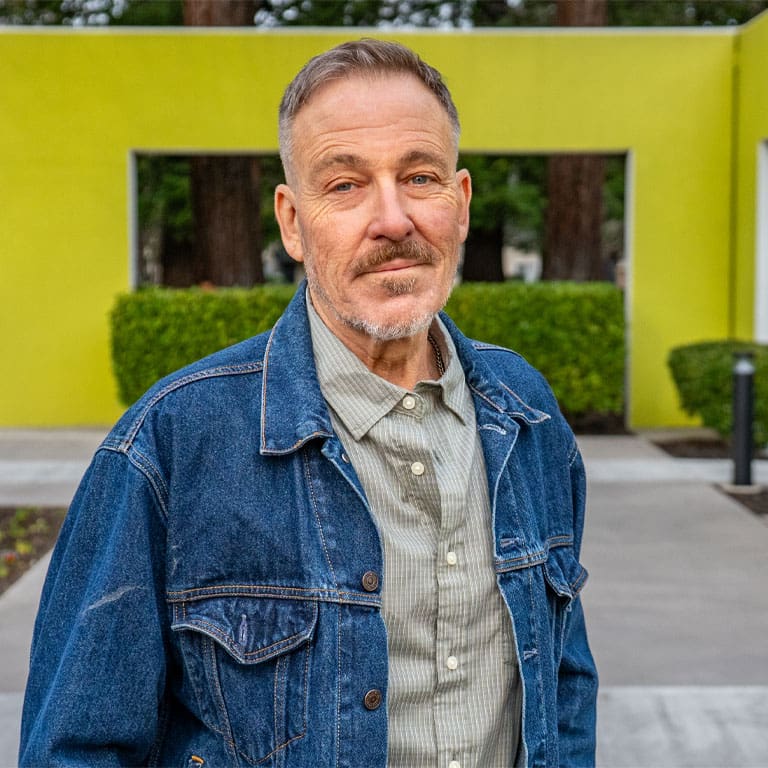
- Sacramento City Historian Ty Smith’s role is about translating lifeless records into a language that speaks to the living.
- Smith became the city’s new historian in June.
- Sacramento’s local history also tells the story of national movements and international shifts over time.
Whether combing through archives or helping showcase local art happenings, Sacramento’s new City Historian Ty Smith brings the city’s history out of museums and lonely storage shelves and into the streets and parks where people are.
City historians often serve as the guardians of a city’s heritage, preserving and archiving artifacts and records, developing exhibits and educational programs, and advising government agencies.
Smith fills those shoes and more.
“My role is really just being the convener and connecter,” he said, describing his job as translating lifeless records into words that speak to the living. “Archiving? Yeah, I can speak that language, but the role of the city historian is bigger than that and should be.”
Sign Up for the Morning Newsletter
The Abridged morning newsletter lands in your inbox every weekday morning with the latest news from the Sacramento region.
Long before managing Sacramento’s city archives at the Center for Sacramento History on Sequoia Pacific Boulevard, Smith began his studies at Cuesta College in San Luis Obispo while working at an auto parts store in the early 2000s. That path led to a job as a tour guide at nearby Hearst Castle, where he eventually returned to direct volunteer guides. He later taught public history at Sacramento State and served as the director of both the California State Capitol Museum and the California State Railroad Museum.
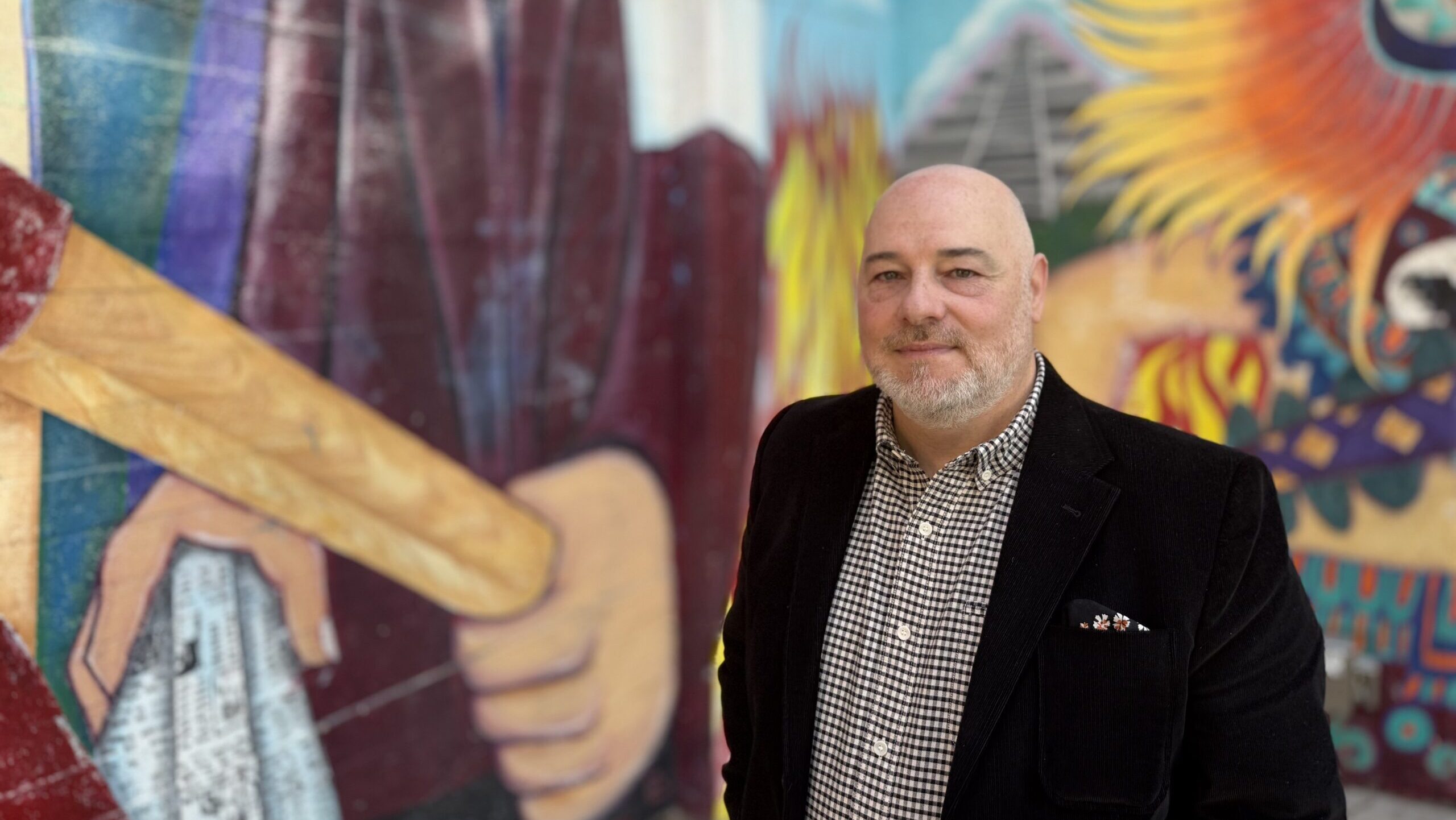
“My real office is the city itself,” Smith said. He has been known to meet the public in unconventional places. He recently showed up at the Sites of Vacancy immersive art experience in an old fire dispatch station in Winn Park to talk to the public and press.
Smith’s talent lies in framing this history in relevant, nontraditional ways. With more than a quarter-century of experience curating for audiences, he believes there is no single formula for enlightening people. You’ll see him at night markets, city mixers, classrooms and civic meetings.
His reach goes beyond the city and county. As an ambassador to Sacramento’s history, he’ll be featured in the Marin Made Films documentary, “Donner Summit: Gateway to a Nation” at the Tahoe Film Festival in December alongside narrator Peter Coyote.
“You have to connect with people through a framework they can relate to,” he explained. “Something that answers the question, ‘What’s in it for me?’”
A metaphor for Sacramento
When asked where he’d like to be interviewed, Smith suggested Southside Park in Midtown between 6th, 8th, T and W streets. He pointed out that in the late 1800s, the area was a flooded, industrial eyesore. Urban beautification efforts like the City Beautiful and City Parks movements of the ‘20s later led to a complete redesign of the park, which used to extend to X Street before the modern freeways cut through the neighborhood.
“Southside Park is a metaphor for Sacramento,” Smith said. The park, like the city itself, has endured periods of rapid, transformative change, ranging from the Civil Rights Movement and massive public works projects to sharp economic ups and downs.
“It used to be called the League of Nations here,” Smith added, noting the rich diversity of the Mexican, Portuguese, Japanese and Chinese communities who originally settled the area.
Then came the forced internment of Japanese Americans during the 1940s, followed by the displacement of entire communities to build the highway system. “That helps the suburban infrastructure, but it damages community, right?” Smith said.
Local history is world history
“Sacramento is a museum without walls,” Smith said. “History is never obliterated; it reveals itself in layers.”
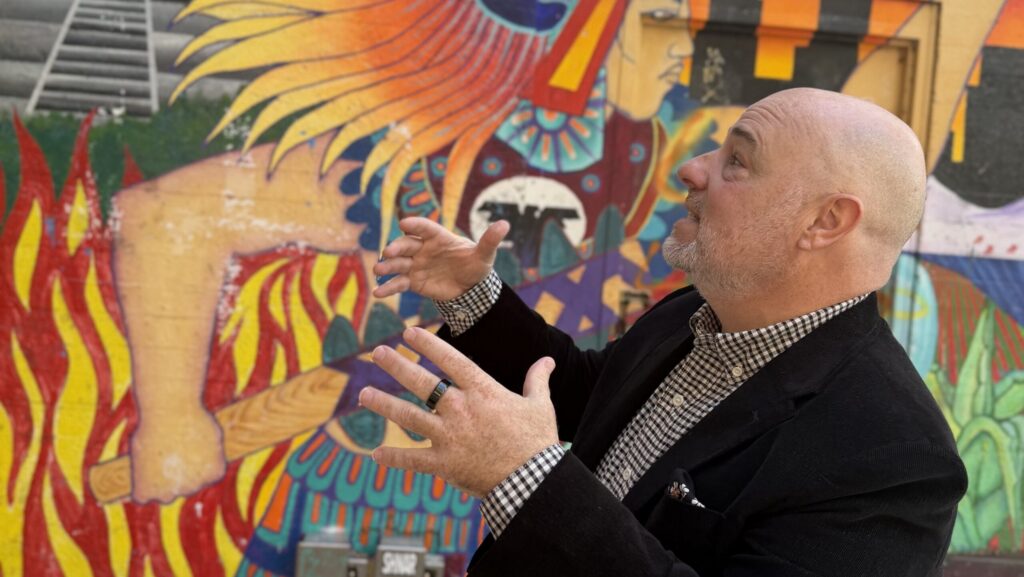
He pointed toward the brightly painted Southside Park amphitheater.
A bronze plaque on the bandstand dating back to its 1934 dedication has been incorporated into a vibrant mural. It is part of the “We are Still Here” Indigenous and Latino Heritage Mural Project, an open-air installation designed to reclaim public space and honor the city’s diverse cultural roots.
Today, that artwork traces the histories of the people who reshaped Sacramento long after 1934. One vivid section depicts the historic 1966 farmworkers’ march from Delano to the State Capitol, which took 25 days.
“What gets me up in the morning is telling the universal story here that connects us to one another,” Smith said. “In Sacramento, from a civic context, we have all this rail history, community history, civil rights history as a home to the American Labor and Chicano Civil Rights movements.”
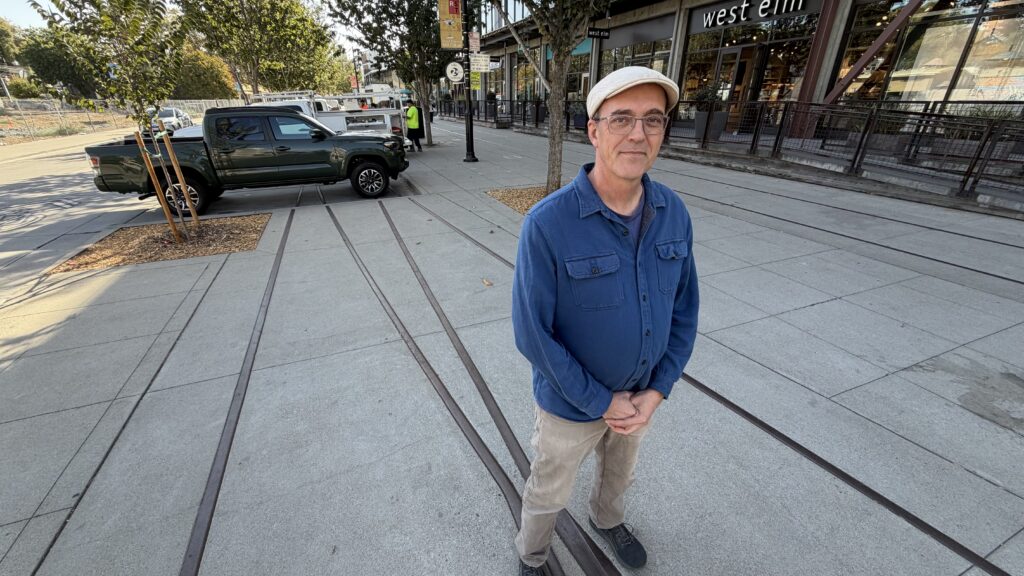
The city also served as the Western epicenter of transportation history. The building of the Transcontinental Railroad and the Sacramento Railyards once employed up to 10,000 people — a staggering third of the city’s entire workforce at the time.
“Our local history is world history,” Smith said. He pointed to Sacramento-born innovations like the railroad refrigerator car, which revolutionized global trade by allowing agricultural hubs to ship fresh produce, like Isleton pears, to Chicago, Canada or Mexico. This deep shipping legacy ultimately paved the way for the city’s modern identity as America’s “Farm-to-Fork” capital.
Past problems, present parallels
Smith’s view of history seems deeply rooted in how it informs modern life.
“Archival records and objects are really important, but they’re important to the degree that they can help us, the living,” Smith said. He noted that history sheds light on the reality that modern crises are rarely entirely new.
The mindset Smith brings to history is one he also helped to instill in the next generation while he taught public history at Sacramento State.
Andrew McLeod, a former student, recalled his professor’s “light touch,” and encouragement to use the past as a lens for the present. McLeod published a book last year, “Lost Gold Rush Towns of Sacramento,” and is founder and researcher behind Lost Sacramentos, a public history project dedicated to researching erased mid-19th century communities. He too believes history is never truly lost.
“Ty always challenged us to look at how old problems echo today,” McLeod said, reflecting on how Smith’s teachings apply to current civic debates. “The story of large, powerful entities running roughshod over communities has presented itself in various ways.”
As an example, McLeod pointed to Sacramento’s history from the 1860s to the 1880s. During this era, railroad barons tried to acquire vast swaths of land, spinning a romantic narrative that the Southern and Central Pacific Railroads were the first lines to “tame the wilderness.” But in fact, the Sacramento Valley line already offered rails to Folsom and planned one to Marysville. It is exactly the kind of historical pattern Smith loves to untangle — and one that McLeod notes has become increasingly relevant today amidst local community debates over AI data center land-grab policies.
Discussing history, as almost all topics, Smith inevitably brings the conversation back to a broader theme of human interconnectedness.
“Knowledge isn’t discrete. It doesn’t exist in silos like anthropology, public history or English,” Smith said.
“How we view history shapes how we show up in the world, and how you show up in your community,” he added. “It reverberates.”