
The Abridged version:
- Community gardens offer plots where neighbors can gather and grow their own produce.
- Sacramento’s Department of Youth, Parks & Community Enrichment runs 22 gardens across the city.
- Plots are often in demand, with many gardens maintain waitlists for available space.
This story was reported by a member of the Abridged by PBS KVIE Community Reporters program. The Community Reporters program empowers local residents to report stories with guidance and support from the Abridged editorial staff.
It’s spring planting time on a misty March Sunday morning in Oak Park. Small, brilliant pink and yellow signs of life jump up among the moist brown weeds and clumps of grass that winter left behind.
Volunteers queue up with seed-growing trays and bags and dig in to start vegetables — tomatoes, peppers, squash and zucchini, that will feed themselves — and a city. They’re at Alchemist Oak Park Sol Garden (3733 Broadway, Sacramento).
“We grow vegetables to donate to others in need,” said Amber Hamby, manager of the Community Garden Program for Alchemist Community Development Corporation. Founded in 2004, Alchemist CDC is a nonprofit organization that connects people with land and food through an array of efforts including its community garden program.
“People can come here, feel connected, share thoughts, share ideas, share art, share their culture and feel good about making connection with others in their community,” Hamby said.
Keep up with Community Reporters
Stories from Abridged by PBS KVIE Community Reporters are regularly featured in our morning newsletter.
Battling food insecurity through community service
“Alchemist works to reduce food insecurity, a lack of sustainable access to affordable food,” Hamby said. “Families often work multiple jobs to survive, leaving no time to garden.”
Alchemist’s solution was to tend plots for those folks.
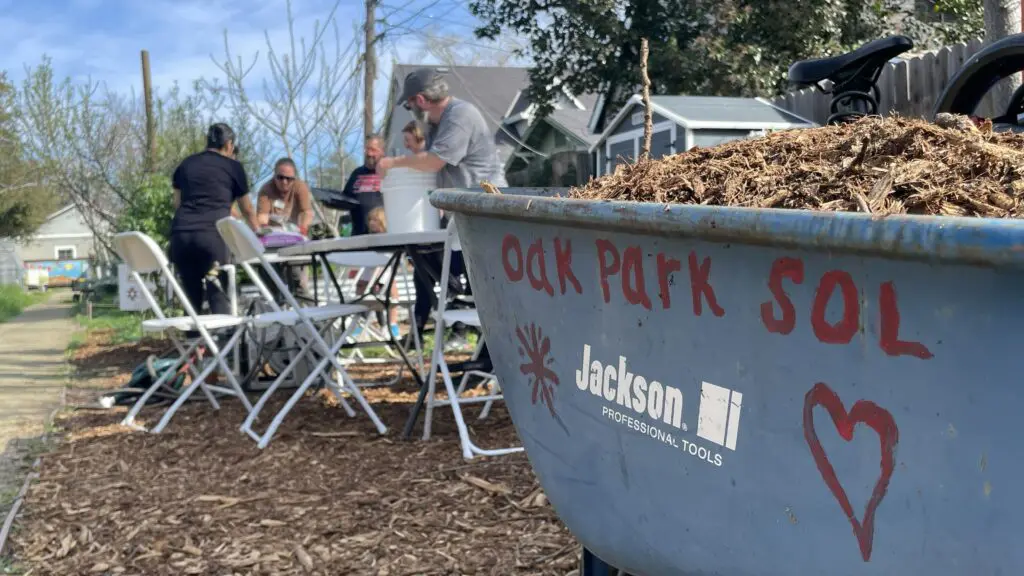
In April the garden will open its gates to community members who need community-supported agriculture (CSA) boxes, which are five-pound boxes of produce people can come and pick up whenever they want.
Alchemist also grows food here for its Food Connections Program, which partners with Sacramento City Unified School District to provide box lunches to students and grocery bags to families.
You don’t have to be a member gardener to sample the produce, Joe Robostelli, director of food access for Alchemist said.
“We’re looking at a gardening model that invites the public in,” he said.
Alchemist uses its food for Taco Tuesdays serving low-income neighborhoods and open pantries where people can shop. It’s a gathering spot for community events, recently hosting student-athletes from Sacramento State on a community bus tour, Robostelli said.
Community gardens create ‘third spaces’
Robostelli’s work focuses on “third spaces,” which he says are “places outside of home and work that people can rely on to build communities.”
Nearby Pansy Avenue Community Garden Park (3601 Pansy Avenue, Sacramento) is one of those spaces. It’s a small corner park with a few plots that are open to the community to plant. There is also the new Oak Park Art Garden (3834 Martin Luther King Blvd., Sacramento). The space will offer fruit trees and vegetables for the public to forage among the art. A tool-lending library and e-bike-lending venture with Sacramento Area Bike Association (SABA) are also slated.
Christian Sandrock, an Oak Park gardener and physician at a nearby medical center, brought his daughter Emma along to collect ladybugs from flowers at Oak Park.
“Gardening has been a good way for us to connect with people and give back to the community,” Sandrock said as Emma collected ladybugs off a bright orange nasturtium. Christian’s wife, a nursing professor at Sacramento State, brings nutrition program students through the garden for inspiration on bringing food to patients.
It’s the ‘small things’ that matter
Healthy Roots Community Garden (401 McClatchy Way, Sacramento) is one of Sacramento’s 22 city-owned community gardens, run through the Department of Youth, Parks & Community Enrichment.
“There’s such connection here to the community,” said William Friedrecksen, who manages the garden.
Friedrecksen insists that the benefits of community gardens might not be noticed by most. “I think it’s hard to see the big picture,” he said. “To me, the important part is the small picture.”
“You see families forming lifelong connections, people sharing produce and complimenting each other on their plots, education,” he added. “People get to feed their families, and they get the sense of pride of having grown that ridiculously healthy food for themselves.”
Cutting food costs
“Organic food is expensive,” Friedrecksen noted. “This is an affordable way for people to grow nutritious organic food.
Our average 10-foot by 10-foot plot costs $40 a year (plus a refundable cleanup fee), which lets you grow upward of $350 a year. You get 10 times your investment,” he said.
There is a two-hour service requirement here each week to maintain the overall space. Six of the site’s 73 plots were available.
“It takes such a wonderful class of people to have the vision of turning bare dirt into beautiful plants,” he said. “I love being around them.”
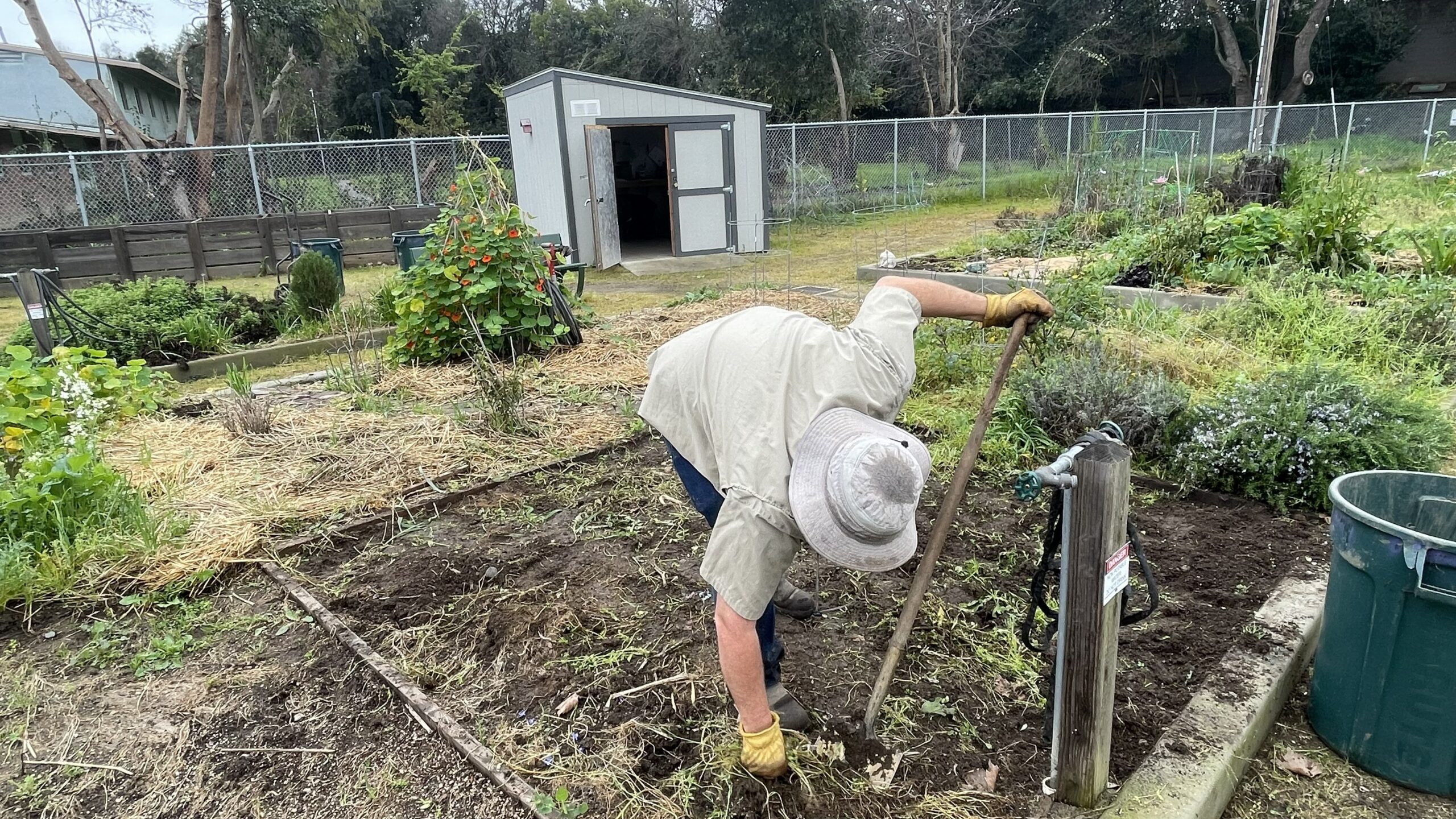
Hayden Columbine pulled a clump of Bermuda grass from the soil in his roughly 12-foot by 12-foot plot at Martin Luther King Jr. Community Garden (12th and Martin Luther King Blvd, Sacramento).
“I live in a rental now, and I really wanted to do outdoor gardening,” Columbine, who lives in a nearby apartment, said. “I’m a low-income student, so I want to grow my own food.”
Gardener Linda Sanford grew more than 1,800 pounds of produce in her plot to donate to the River City Food Bank last year. “My lifetime amount with them is a little over 15,000 pounds,” she said.
“Subsidy programs don’t provide everything,” she said. “I grow tomatoes, peppers, eggplant, summer squash, winter squash, radishes, Asian greens and strawberries,” she said. As a certified master gardener, Sanford does plot demonstrations for other gardeners, and also provides classes at Fair Oaks Horticulture Center (1139 Fair Oaks Blvd, Fair Oaks), which is open to the public for monthly planting talks.
Meanwhile, on the same Sunday morning, a circle of eight city gardeners gathered at 19th Street Community Garden (617 19th St., Sacramento) to map out their spring plans.
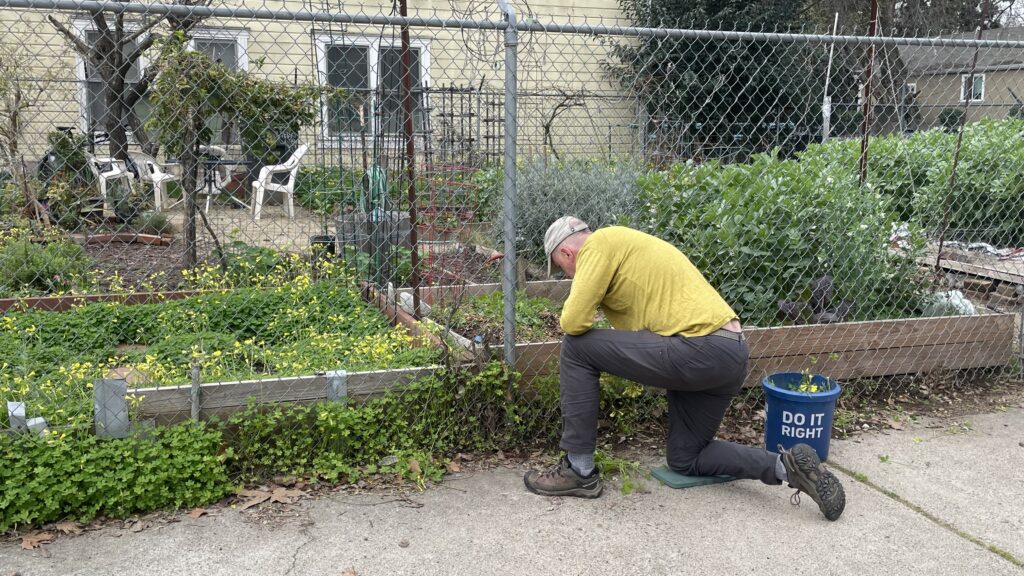
Manager Kaitlyn Gentilin says the garden has 22 plots and a waitlist of four to 15 people.
The cost is $15 for the first year and $10 to renew, plus a two-hour work requirement satisfied by two work parties annually.
As the gardeners discuss their cleanup, Alex Camacho volunteers to take on the beast of trimming back a giant tangle of blackberry brambles covering a shed.
“The community has been really the thing that keeps drawing me back,” he said. “I’ve made some really fabulous connections.”
A source of solace
“I started community gardening before the pandemic hit when I retired,” said Mollie Quasebarth, a long-time Sacramentan originally from the Baltimore area, now treasurer at 19th St. “It was perfect since the plots are six feet away from one another. Now it’s become social. It’s a source of solace and comfort.”
Quasebarth also gardens at nearby Marshall-New Era Neighborhood Association Community Garden (MNECG) (204 26th St., Sacramento) a mile away. MNECG has 41 plots, all claimed, and a waitlist for those who want one. MNECG hosts socials open to the public, like its upcoming spring block party April 18, with food trucks and live music.
How to get involved
Most community gardens offer plots for an annual fee, sometimes with a reduced cost for yearly renewal. Some also require a small work commitment to help maintain the garden.
Plots are typically available on a first-come, first-served basis. Some local gardens currently have open plots, while others are full but do offer a waitlist for when plots open up.
James Smith is a member of the Abridged Community Reporters program.