

The Abridged version:
- The Sacramento County Board of Supervisors unanimously approved a large-scale solar energy project after an hours-long debate that pitted solar advocates against land conservationists.
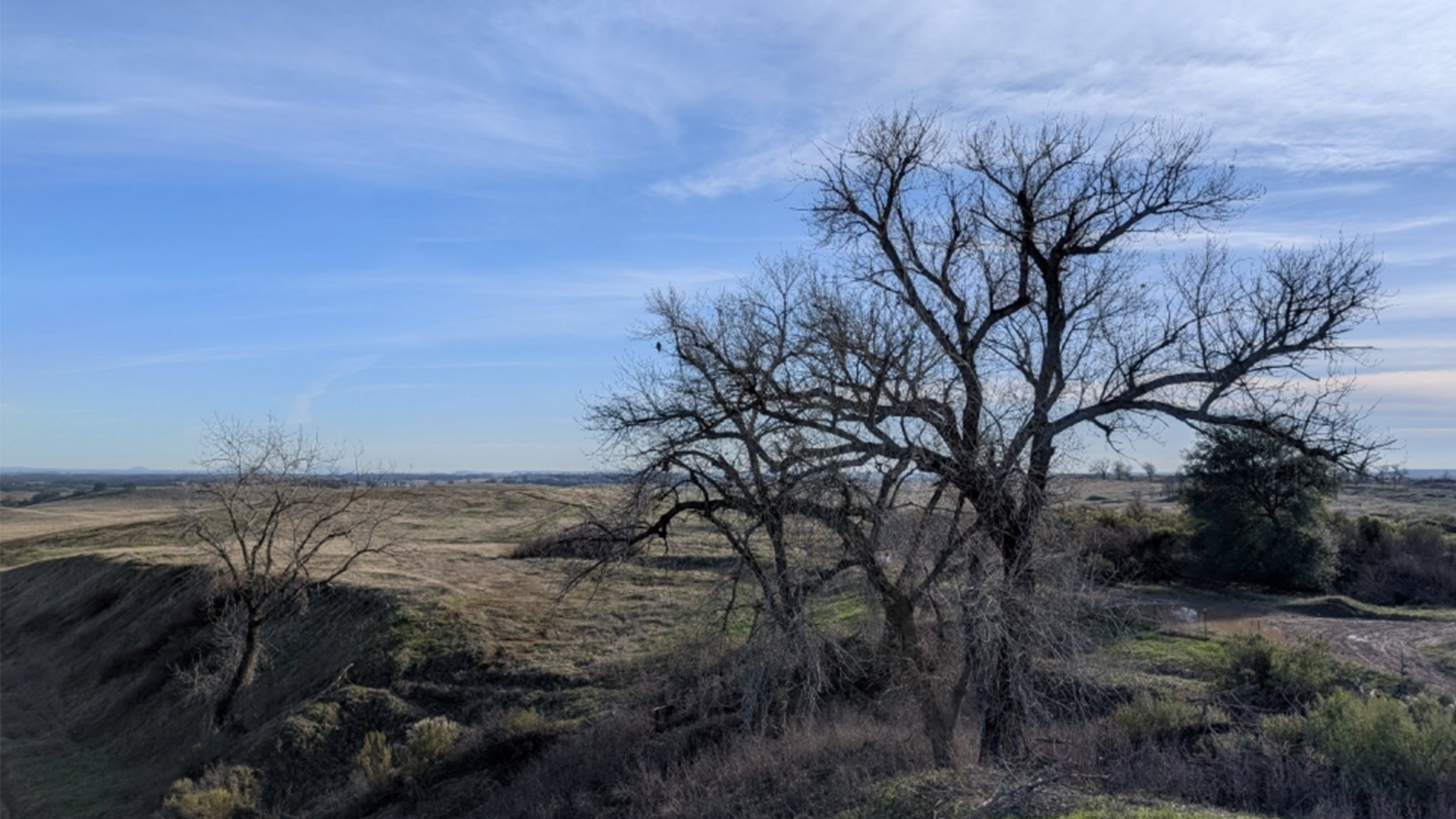
- Developers proposed the solar project for 2,700 acres south of White Rock Road, currently filled with cattle grazing lands, rolling hills and seasonal wetlands.
- The project would provide a large boost to the county’s solar energy production but cause the removal 3,493 native trees.
Sacramento County leaders greenlit a massive addition to the region’s solar energy supply on Tuesday evening, despite concerns over destruction of local oak forests and grasslands.
The Board of Supervisors voted 5-0 in favor of the new 2,700-acre Coyote Creek solar farm. The project is planned on the site of grazing lands and natural habitat south of White Rock Road and along Scott Road.
Supervisors grappled with a difficult choice: protect the county’s rolling foothills and thousands of native trees, or pave the way for significant increases to the region’s solar energy supply. In the end, supervisors sided with meeting greenhouse gas reduction goals.
“Sometimes sitting up here we’re asked to make decisions that suck,” said Supervisor Pat Hume. “I’m not going to be the one that kicked the can down the road and set us back another five years.”
Noting the county’s structural budget deficit and the estimated $76 million in property tax revenue the project could bring over the next 20 years, Supervisor Rosario Rodriguez said the choice for her came down to a business decision. “Under these financial restraints, tough decisions need to be made,” she said.
SMUD’s solar supply would increase substantially
The 200-megawatt project will substantially increase the Sacramento Municipal Utility District’s supply of solar power.
The utility is currently working toward eliminating all its greenhouse gas emissions by 2030. The Coyote Creek project would make up about 15% of SMUD’s total energy supply, according to the county.
SMUD currently generates about 340 megawatts from large solar projects — enough to power about 90,000 homes — according to the utility’s website. An additional 210 megawatts are generated from rooftop solar panels.
Approach allows animals to graze amid the panels
Within the Coyote Creek project, about 1,412 acres are earmarked for “agrivoltaic” development, which would allow animals to graze under and around solar panels. The remaining 1,292 acres would not be developed.
During a public comment period that stretched for five hours, dozens of residents drew concern over the destruction of grasslands, native oak tree forests and seasonal wetlands currently on the site.
“It is greenwashing, trading permanent destruction for temporary gain,” said resident Lauren Brandon.
Another local environmental activist, Megan Shumway, said the Coyote Creek project defies the county’s Climate Action Plan.
“I don’t think you can do justice to that climate declaration if you take it out of one of the largest carbon sinks in the area … which is those oak trees,” Shumway said.
Supporters say oak trees already struggling
Fred Hegge, a rancher who lives off of Scott Road, spoke in favor of the project.
“Our biggest fear is that Folsom will annex and that it’ll be houses. … For me (this) is a better form of agriculture,” Hegge told the Board of Supervisors.
Hegge added that during his time living in the area, he has already seen the oak trees on his land struggle.
“The oak trees are dying,” Hegge said, “… because we don’t have the fog anymore. They covered up all the ground in Rancho Cordova and Elk Grove with stucco, concrete, tile roofs. There’s no generation of the moisture.”
The county’s approval of the project also requires developer DESRI Inc. to preserve the oak woodland canopy by planting new trees on or near the site.
DESRI will partner with the Sacramento Tree Foundation to harvest thousands of acorns from native oak trees on the site. Those acorns would then be cultivated and planted in protected areas.
Felicia Alvarez is a reporter at Abridged covering accountability. She’s called Sacramento home since 2015 and has reported on government, health care and breaking news topics for both local and national news outlets.