

The Abridged version:
- Every two years, Sacramento County conducts a Point-in-Time Count of the homeless population.
- This year’s count will be held Jan. 26-27, and volunteers are still needed.
- Safety of the volunteers is a priority. No one is sent out alone, and the most challenging locations are handled by professional outreach groups.
- The count is tied to funding but can also help identify trends among the homeless population in Sacramento County.
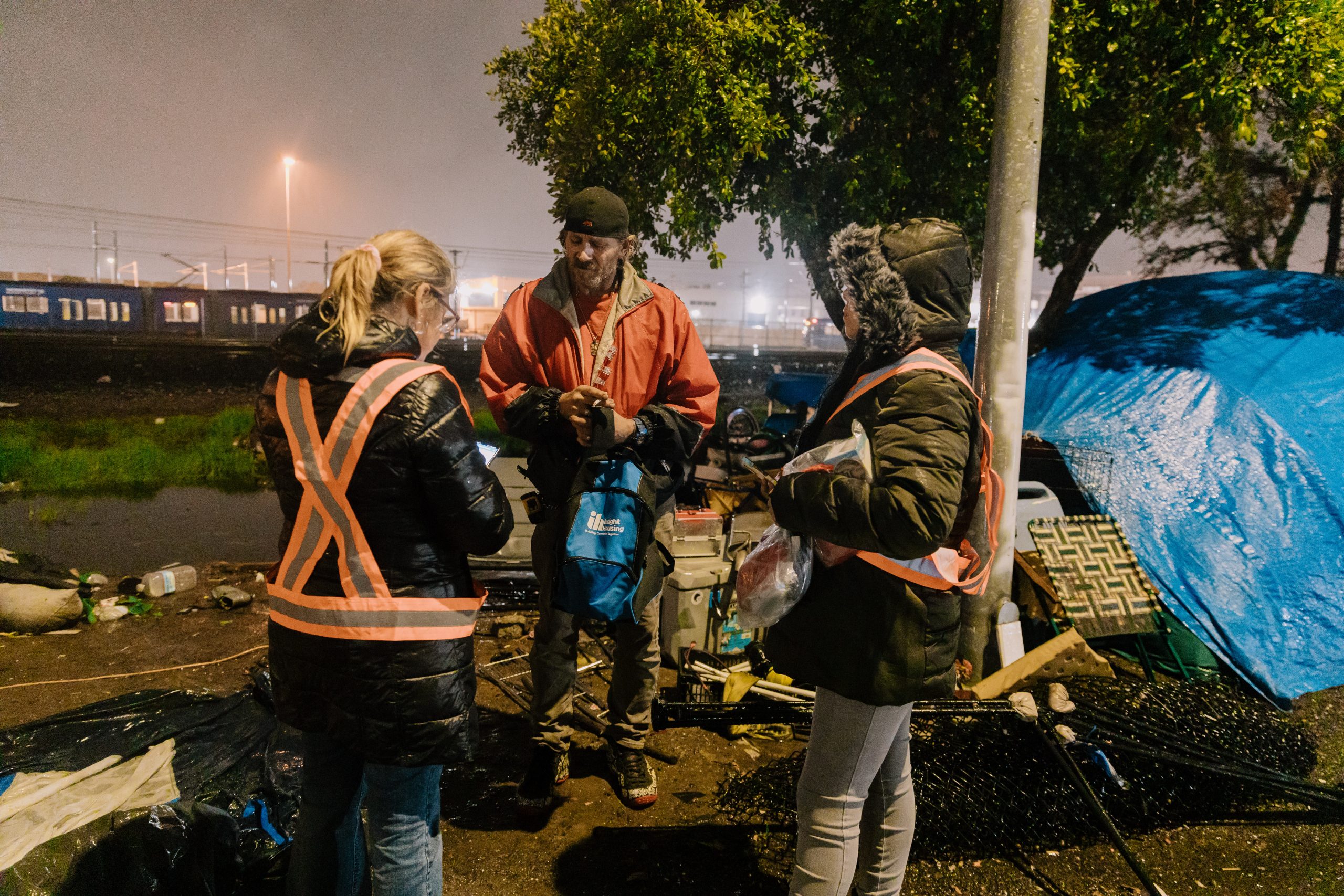
More than 20 years ago, Evan Schmidt walked Sacramento’s streets with a clipboard in hand, asking a few questions of people who were homeless. She had no idea the experience would quietly shape the rest of her life.
Schmidt was a UC Davis graduate student then, studying community development. The task was simple on paper. Go out. Count people experiencing homelessness. Ask brief questions. Record what you see.
“You can just see the numbers on a page, and it is heartbreaking, but it doesn’t mean very much to you,” she said. “But I got to really go out and talk to people and understand a little bit more about their situation and what they are experiencing.”
That night did not end when the data was turned in. What stayed with her had nothing to do with totals.
“It was really their stories that touched me,” Schmidt said. “I’ve never forgotten them, and they have helped really guide the type of work that I’ve wanted to do ever since.”
Today, Schmidt is the CEO of Valley Vision, a civic leadership organization dedicated to improving the livability of people in the Sacramento region. Schmidt is also on the board of directors for Sacramento Steps Forward, the lead organization that needs volunteer help for a massive undertaking in Sacramento County.
This month, Sacramento County will conduct its Point-in-Time Count, known as the PIT Count, a federally required census of people experiencing homelessness.
To some, the count is a compliance exercise. To others, it is a funding mechanism.
To people like Schmidt, it is something quieter and more personal. A moment when a community stops, looks closely, and learns something about itself.

What is the PIT Count?
The PIT Count happens every two years across the country.
In Sacramento County, it is coordinated by Sacramento Steps Forward, which trains volunteers and organizes teams to canvass streets, shelters, vehicles and encampments.
This year’s count will take place from 5 to 10 p.m. Jan. 26-27, starting from the Scottish Rite Masonic Center in Sacramento.
It is designed as a snapshot meant to capture who is visibly experiencing homelessness at that moment.
Dr. Trenton Simmons, the chief program officer of Sacramento Steps Forward, said the timing of the PIT Count is centered around accuracy. Daytime counting increases the risk of duplication.
“One of the reasons we do it at night is that folks are less likely to be moving around and might be settling in where they’re situated for the night,” Simmons said.
As of the most recent tally, just under 400 volunteers had registered. The goal is 1,000.
“The more volunteers that we have to cover more territory, the better,” Simmons said.
The deadline for volunteering is Jan. 16.
Every volunteer expands coverage. Every conversation deepens understanding.

Why accuracy matters
“The federal government requires all communities that receive federal funding to conduct a census of people experiencing homelessness at least once every other year,” Simmons said. “The data that’s collected from these Points-in-Time counts across the entire country are aggregated together for a report to Congress.”
Aside from the data, Simmons said “being able to interact with people who are experiencing homelessness” is a driving factor behind the count.
That interaction, he believes, matters as much as the final number.
“There’s always these opportunities for us to learn more,” Simmons said.
The PIT Count also has real consequences.
At the state level, Simmons said, funding is directly tied to the numbers.
“If Sacramento’s share of the state’s PIT Count is 10%, then we get 10% of the money the state has set aside for resolving homelessness,” he said.
At the federal level, the connection is more complex but still significant.
“They usually create new incentives around the PIT Count,” Simmons said. “If you can demonstrate that decrease or an increase, then you might get more or less points in your competitiveness for funding.”
Accuracy is not abstract. It shapes resources, services and policy direction for years at a time.
‘A monumental task.’ The goal in not perfection, it’s credibility
Sacramento County spans roughly 965 square miles. Counting every corner is impossible.
“It’s a monumental task,” Simmons said. “A lot of communities like Sacramento that are large have to rely on sampling.”
Using data from service providers and recent encounters, teams focus on areas that are most likely to be affected. Random sampling allows numbers to be responsibly extrapolated.
“HUD is completely fine with that,” Simmons said.

Volunteers are needed and ‘will be supported’
Safety is often the first concern for potential volunteers. Training is provided and no one goes alone.
“We set up the teams,” Simmons said. The most challenging locations are handled by professional outreach teams.
“The last thing I want to do is send a volunteer who’s never done this before into the trenches of the American River Parkway,” Simmons said.
Support is intentional, not incidental.
During past counts, volunteers and outreach workers ask questions, and one answer is consistent.
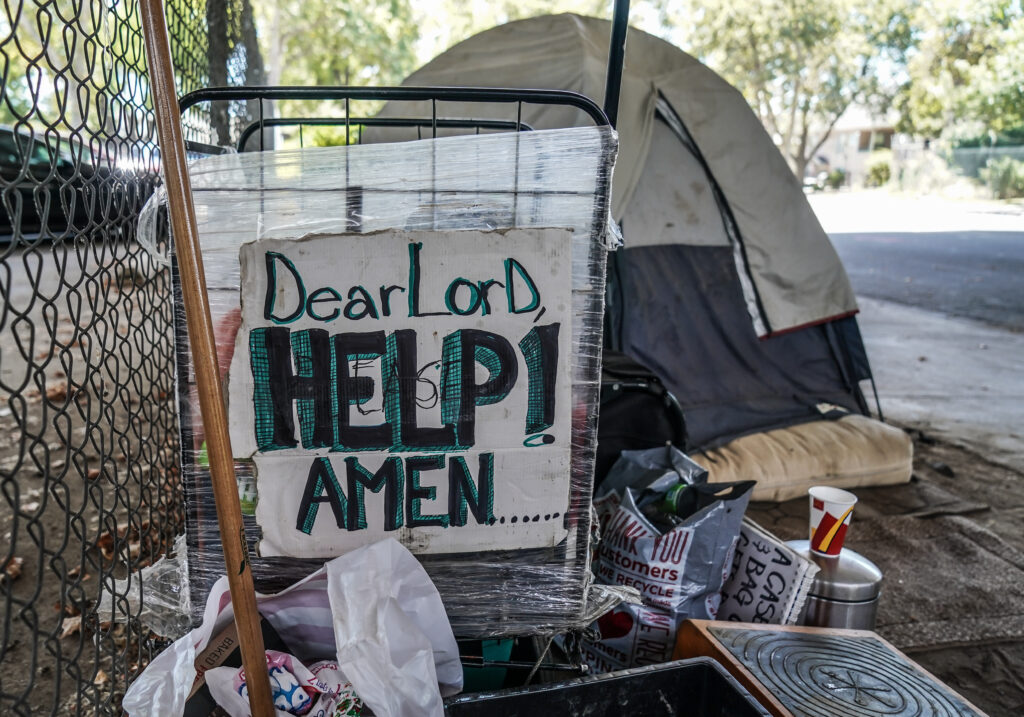
“What is one thing that Sacramento could do to help you to improve your situation?” Simmons said. “The most common reason was affordable housing,” he said. “How do you end homelessness? With a house.”
That clarity stays with him.
“The simplicity of that statement,” Simmons said, “and just how clearly everybody speaks to that.”
Numbers, trends and what they mean
When people question the accuracy of the count, Simmons said it is important to understand what the data is — and what it is not.
“We’re talking about a point in time count,” he said. “It’s not like you can do this for a year.”
Simmons cautioned that the count is influenced by what can be seen on a given night.
The last PIT Count in 2024 estimated 6,615 people living without homes in Sacramento County. This includes 2,671 people who were sheltered, and 3,944 people who were unsheltered.
Those numbers are a nearly 29% decrease from the 2022 count.
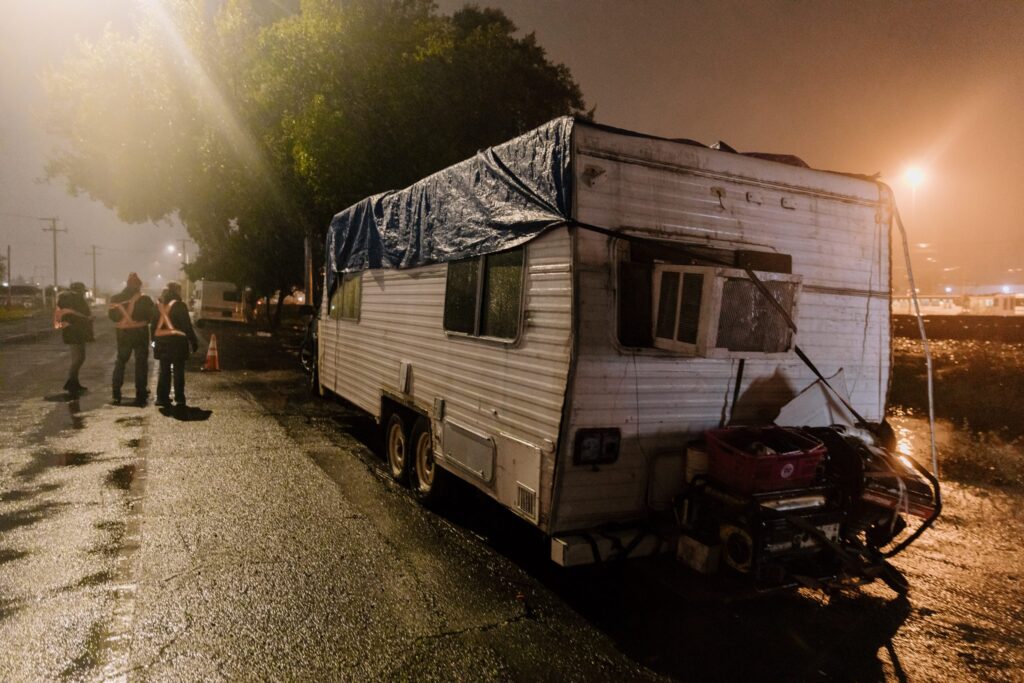
“The PIT Count is always biased by visibility,” he said, noting that weather, enforcement practices and broader conditions can affect where people are and how visible they are.
Over time, however, repeated counts reveal something deeper.
“One of the things that we get from doing these counts is a trend,” Simmons said.
Those trends can include ethnicity, gender, veterans and age — including children under the age of 18. It also looks at mental illness, substance abuse, domestic violence and whether an individual is experiencing homelessness for the first time or is chronically homeless.
More than 89% of the homeless counted in 2024 had been living in Sacramento County for at least six months. More than 60% were lifelong residents.
A count that changes people
Simmons has seen how the count affects volunteers, long after the night ends.
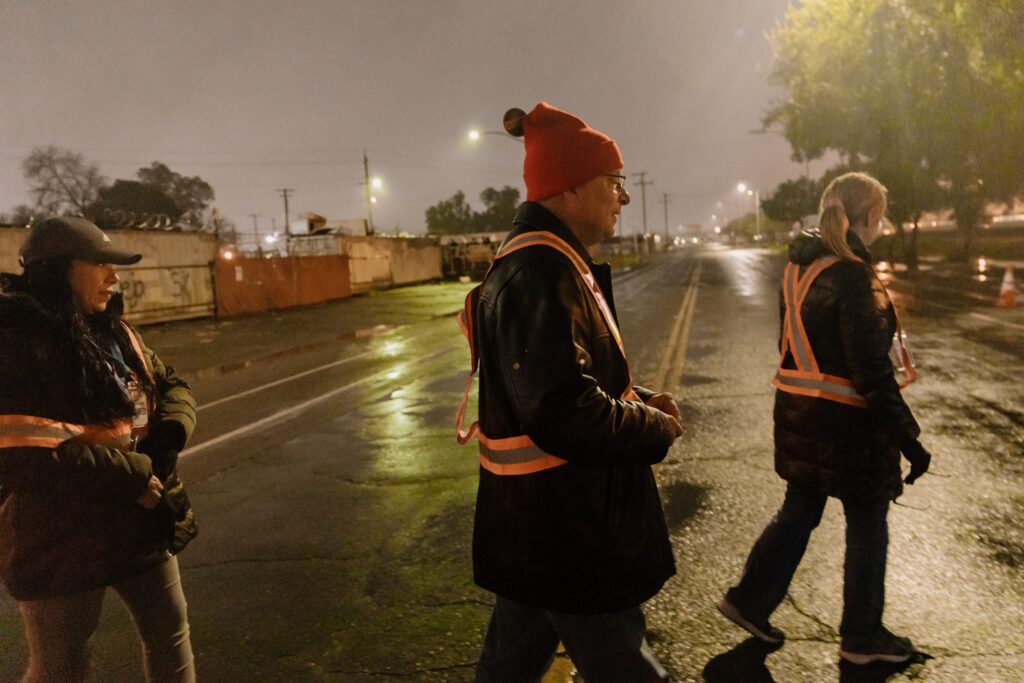
“Participating in the count changes perspectives,” he said. “The more people that we can have come and be all in on this process, the better they can be enabled and activated to help us reduce and resolve homelessness.”
Schmidt agrees and is volunteering again this year.
“It was a very memorable experience for me,” she said of her own count decades ago. “And I’m sure it will be again.”
What the count measures
The Point-in-Time Count measures homelessness.
But it also measures something less quantifiable.
It measures how willing a community is to step forward, to listen and to be changed by what it sees.
As Schmidt learned decades ago, and as Sacramento volunteers are invited to learn again this January, counting people has a way of revealing who we are. The word “homelessness” alone can feel heavy, complex, intimidating.
“I think people feel overwhelmed by the issue of homelessness in our region,” she said. “I think everybody wants to understand it better, know what they can do to help, and feel really unsure of what to do or how to think about it.”
The count offers a way forward.
“I would just say lean in,” Schmidt said. “Not only assist your community and your region, but think of it as your own learning journey and your own connection to people and to the issues of our region.”
That connection, she said, has a way of changing assumptions.
“Whatever you think homelessness is or what the homeless population of people experiencing homelessness is like,” she said, “you will learn completely different things when you’re actually talking to people.”
Point-in-Time Count: What to know
- What it is: A federally required census of people experiencing homelessness, conducted at least every two years.
- Who conducts it: Sacramento Steps Forward, the county’s Continuum of Care lead agency.
- When it happens: 5 to 10 p.m. Jan. 26-27.
- Volunteer registration deadline: Jan. 16.
- Volunteer goal: About 1,000 volunteers.
- Current sign-ups (as of Jan. 7): Just under 400.
- Who can volunteer: Anyone 18 and older, no prior experience required.
- Training provided: Online videos, volunteer manual and live support.
- How volunteers work: In teams, never alone, with staff and professional outreach support.
- Sign up and find out more here: https://www.sacramentostepsforward.org/data-and-analytics/2026-sacramento-point-in-time-count/
Rob Stewart is an executive producer for PBS KVIE, and reports for Abridged.