
The Abridged version:
- Local youth sports officials are attracted to the action — they say they do it for the love of the game. Officiating helps bring them back to their childhood in a meaningful way.
- Refs and umps expect a fair amount of yelling from the stands, but when it becomes too much, there are consequences for parents.
- Local coaches play an important role, too, both blowing their own kind of whistle when needed and setting the tone for the families behind them.
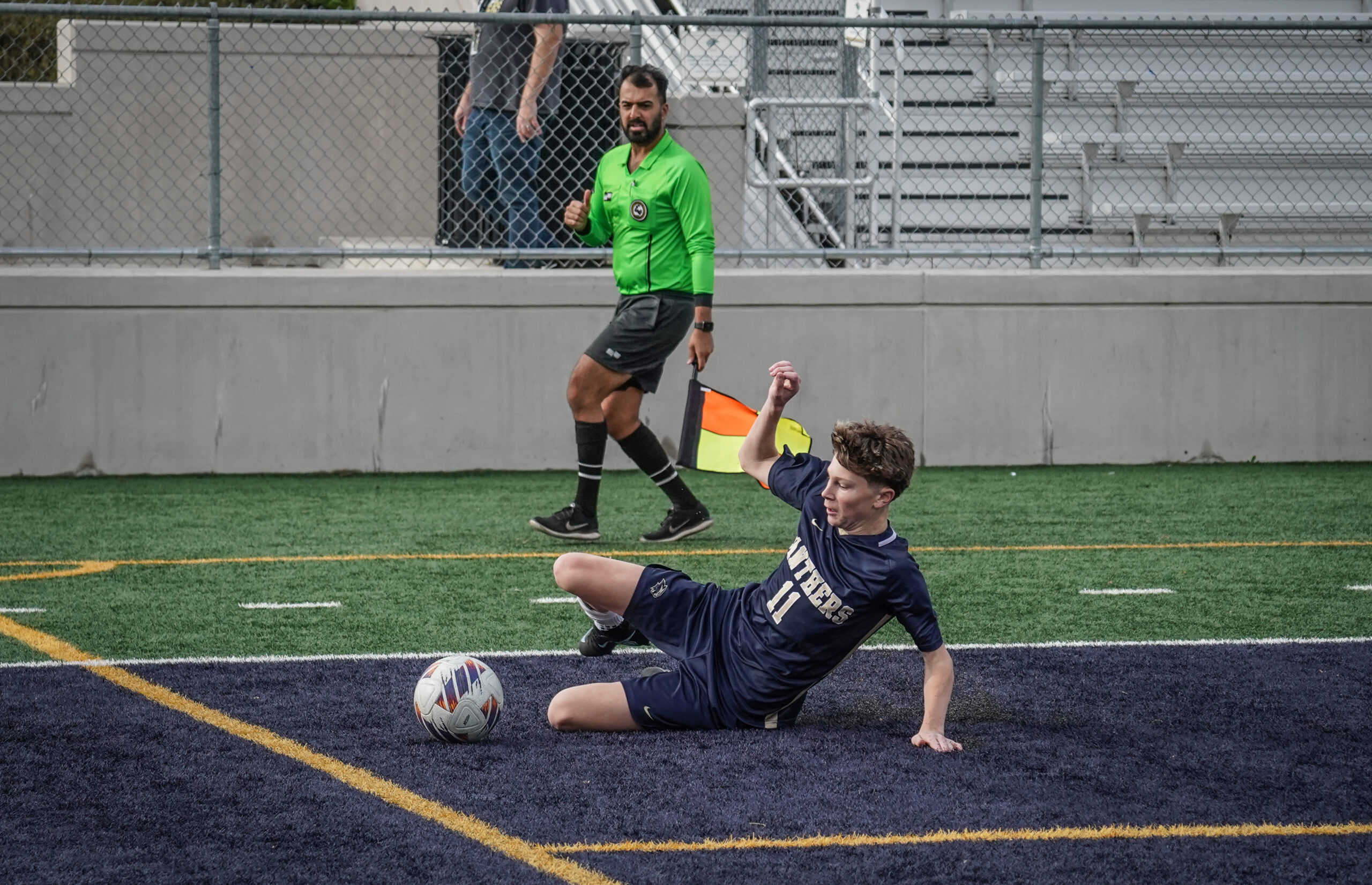
Local youth soccer referee Kris Zanardelli remembers exactly when he’d had enough. It was August 2022, as he was working a game in Loomis with players 12 and under.
“The parents were all over me,” he recalled. “If I called something they didn’t like, if I didn’t call something they didn’t like. I was done.”
He walked away from youth sports. For him, that meant shelving his whistle for both recreational and competitive high school soccer.
He didn’t officiate another soccer game for nearly a year and a half.
Zanderelli’s experience is not unique. Referees and umpires in the Sacramento region face a fair amount of passionate protest from the sidelines and stands. It can make them question whether it’s worth it. Aggressive behavior can also lead to consequences for spectators and add another responsibility for local coaches expected to keep their fans in line.
Youth sports officials want to stay in the game
Youth sports officials say they’re not doing it for the money. (Soccer referees earn $25-$110 per match depending on position and the level of competition.) They’re out there to stay in the game — to give back to the sports that shaped their own childhood decades ago.
“I don’t wake up early on a Saturday morning to go out to a local park and screw up a kid soccer match,” Zanardelli said. “None of us do that.”
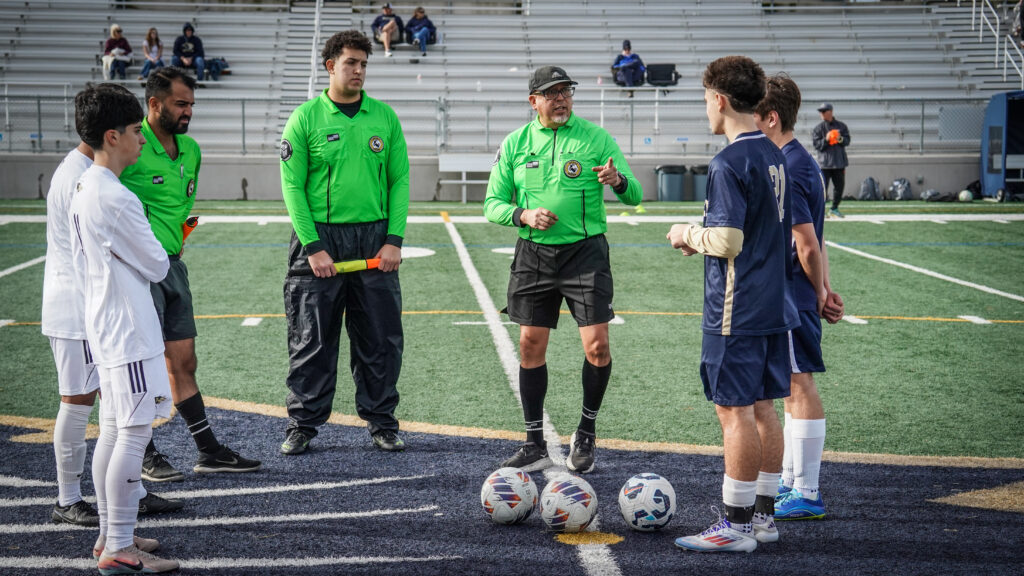
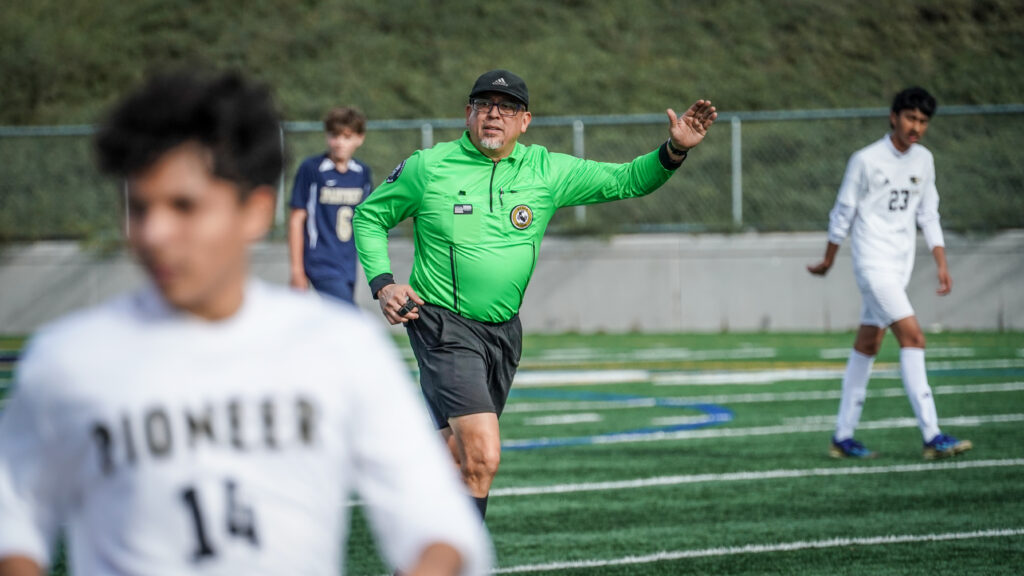
Like Zanardelli, Carlos Ledesma is a lifelong champion of soccer. Once a player himself, he now participates as a referee and referee assigner, which is the person who schedules the refs, for Roseville Soccer Club and Loomis Soccer Club. He works middle school and high school soccer as well. Both his kids played competitively when they were young athletes, and now that they are grown, officiating is his way of staying close to the action.
Some fans lack self-control
“You have those people that just don’t have that self-control, and it doesn’t matter if there are 12 cameras on them, they will still act that way, still be irresponsible,” Ledesma said. He pointed to an incident just a few years ago in Roseville, when a soccer spectator ran onto the pitch and tackled the ref. All captured on camera, it caught the attention of the local news.
“As a coach, I’ve definitely had my issues with referees,” said West Sacramento soccer dad and assistant coach Justin Chechourka. This past season, he shared, Chechourka got a yellow card. In soccer, a yellow card is a formal warning from the officials — one more wrong move and you are out of the game.
Sign Up for the Morning Newsletter
The Abridged morning newsletter lands in your inbox every weekday morning with the latest news from the Sacramento region.
Chechourka says drawing a yellow card as a coach, though, can be productive, helping the officials see something that needs more attention. “Part of their job is to protect the kids,” he explained. “If someone is coming in tackling with cleats up or playing dirty and it’s going to hurt somebody, or maybe they’re just playing so physical that things are starting to escalate, the referee’s job is to temper what’s happening on the field. They’re the only ones who can do it.”
Youth sports officials will even pause the play until a coach can get the crowd under control, for the safety of everyone involved, but mostly for the safety of the players.
Coaches play key role in fan behavior
Some youth leagues have written guidelines about fans. Roseville Soccer Club, for example, lays out expectations on its website: “Please remember to model positive behavior at all practices and games. All families agreed to our spectator policy during registration, and we have zero tolerance for negative behavior toward coaches, players, or referees. Violations may result in removal from the program without refund.”
Still, youth sports officials and coaches execute the behavior rules.
“I’ve kicked parents out who have been unruly. It’s mostly through the coach,” Ledesma said. “I’ve said, ‘I’m sorry, if that spectator is not removed from the field, I will not restart this game.’ And I always bring it back to the kids.”
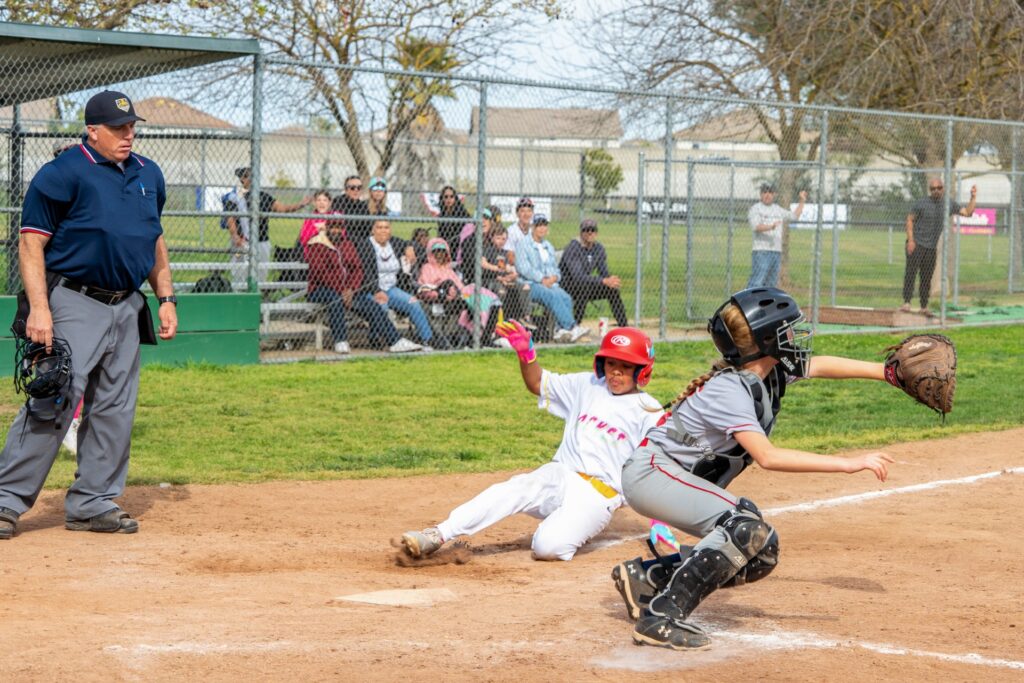
“Yelling at the refs and the umpires — that’s a time-old tradition. That’s going to be part of the game,” said Bob Wood, a longtime Sacramento youth baseball umpire who has been involved in local baseball — from player to parent to coach to umpire — for the better part of 50 years. “We do not care who wins the game,” Wood added. “We want to get the call correctly, and we are going to do it to the best of our ability. And we are out there for the kids.”
Let the players make decisions
“You’ve got to let the players make the decisions,” Ledesma said. “The best spectators are those who don’t say ‘go, go, go’ all the time. For the most part, (the players) will make a decision and they’ll commit it to muscle memory. Being a ref gives me the final perspective on how a parent or spectator should (behave).”
Something Checkourka said he’s learned from years of coaching “is that it’s really the coaches who set the tone.”
“For the most part, if the coach isn’t overreacting and isn’t being absurd, the parents don’t either. They follow the lead,” said Chechourka, who admitted to watching his words more carefully after that yellow card.
“The good experiences almost universally,” Zanardelli said, “are when the losing team players, spectators or coaches say to me as a referee, ‘That was a great game, ref, thank you.’ The mind switch required for that is great because they wanted to win, and they didn’t win.”
At the end of the day, Ledesma said, “we all want to go home thinking that was a good game.”
Carolyn Becker is a regular contributor covering youth sports for Abridged in Beyond the Bleachers. She’s lived in Northern California most of her life and worked in journalism and communication in Sacramento for more than 25 years. She and her husband are raising two boys, both of whom play competitive baseball.