
The Abridged version:
- Abridged freelancer Daryl V. Rowland talked to a half-dozen musicians from the Sacramento region, and they reflected on pursuing their passions as they maintain daytime jobs.
- It’s unlikely a Sacramento-based musician can make ends meet solely from their music. The collective audience in the region loves its music, but it is not large enough to financially support the contingent of performers and musicians who call this region home.
- The players, singers and personalities say their two lives provide challenges that must be navigated, but also bring a special kind of joy.
On a weekend night in Sacramento, it’s easy to believe the musicians onstage live in a separate universe — one powered by groove, adrenaline and the strange electricity that forms when a roomful of strangers starts moving to the same beat.
Then Monday arrives.
The sax player who just lit up the room is back at a desk. The singer who owned the stage is preparing for a day of intense listening and care. The guitarist who ran the jam with effortless authority is grading papers before sunrise. And the songwriter who just turned a bar into a chapel is — at least for a few hours — deep in emails, inspections and spreadsheets.
This is the part of Sacramento’s music scene most audiences never see: the double lives that quietly keep local clubs alive.
Sign Up for the Cultural Capital
In your inbox every Thursday, Abridged's entertainment newsletter from Chris Macias highlights things to do in the Sacramento region.
A culture built on after-work artistry
The idea of the full-time club musician has always been more myth than reality. Today in the Sacramento region, it’s rarer still. Even respected players who gig constantly can’t rely on local performance fees alone to cover rent, health care and family life — especially when musicians are often paid roughly what they earned decades ago.
Sacramento isn’t an industry town. What it is — and has long been — is a working-musician town: a place where artists build careers and still make music publicly, collaboratively and consistently. The result is a scene sustained by logistics, passion and a remarkable amount of sleep deprivation.
“The economics just aren’t there. Why? People don’t go out like in other bigger cities,” said Mark Mitchell, booking manager at The Torch Club. “It’s a running joke that in Sac, there’s always a spouse with a high-powered job, married to a bass player who plays once a week at Torch or Harlow’s.”
Bandleader Peter Petty put it a different way: “If you were a solo act and played seven nights a week, maybe you could get by.”
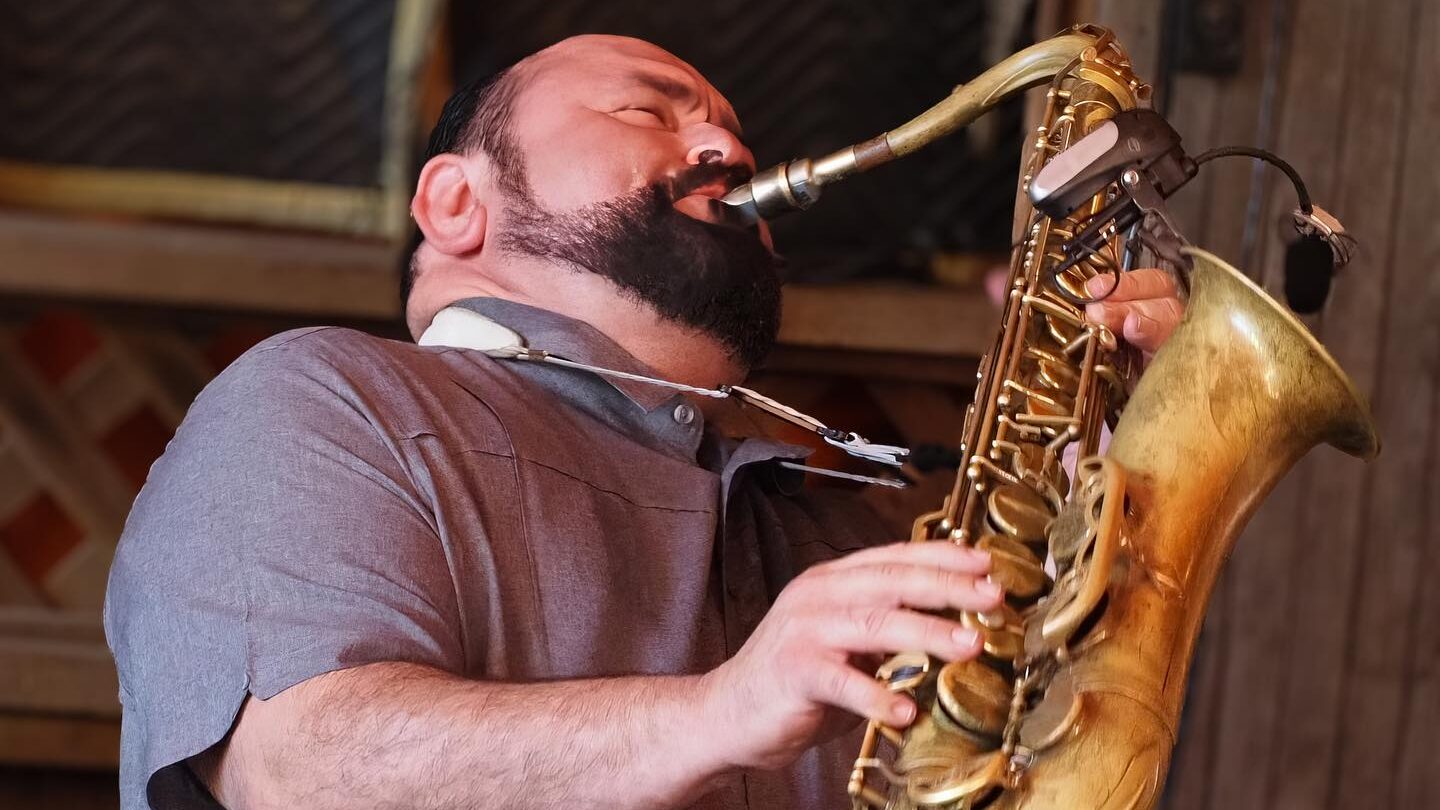
Danny Sandoval — sax player, office manager
Danny Sandoval has played saxophone since he was 8.
“It’s part of who I am,” he said. “I can’t imagine life without playing.”
By day, Sandoval is an office manager and program associate at the California Health Care Foundation, where he has worked for 18 years. “I’m the happiest I’ve ever been there,” he said, a reminder the day job isn’t always something musicians just endure.
By night and on weekends, Sandoval seems to be everywhere — because he is. He performs with multiple groups, including his own Danny Sandoval & His Amigos, a regular presence at the Torch Club in Midtown Sacramento. His work ranges from corporate events to big-band performances and touring, including international travel.
Preparation starts early. “Each band requires different equipment,” he said. “So I load the car in the morning and go straight from work to the gig.”
The connection between his worlds is simple: collaboration. “It’s the same principle,” he said. “Listen well, show up prepared and make the people around you better.”
When he moved to Sacramento 22 years ago, Capitol Weekly profiled him under the headline “Staffer by Day/Sax Player by Night.” The headline stuck because the community did, too. “The Capitol and music community took me in with open arms,” he said.
What does music give him? “Inner peace. Sometimes I feel transported somewhere else.”

Sabrina Rossi — singer, therapist
Sabrina Rossi’s voice carries polish, stamina and visible joy — qualities that come from professional training, experience and a love for music. She has been the lead singer of Remedy 7 for 13 years, performing across bars, wineries, breweries and private events.
“We call ourselves a band family,” she said, “because of the care we have for one another.”
By day, Rossi is a psychotherapist (LCSW) working primarily with teenagers, young adults and LGBTQ+ clients. Her path into therapy began in music. After studying vocal performance at UC Davis, she quickly realized students were seeking her out for something deeper. “That’s when I knew what my calling was,” she said.
The double life has a physical dimension audiences rarely consider. “A typical day before a gig means protecting my voice all day,” she said — difficult in a profession built on talking. On show days, she finishes sessions, packs her outfit, prepares hot tea with honey and drives in from El Dorado Hills.
The hardest part isn’t fatigue. It’s the pull between two futures. Rossi chose a music degree for a reason and still dreams of singing full time. “While I love my profession as a therapist,” she said, “singing is where I find pure joy.”
The skills cross over. Therapy requires being “on,” presenting steadiness no matter what’s happening personally. Music, in turn, becomes part of her clinical philosophy, something she shares with clients as a powerful coping tool.
What does music give her? “A light and warm feeling where I feel fully confident in who I am,” she said. People often tell her she smiles through entire three-hour sets.
Then comes the morning after: kids, school prep, volunteering in her child’s classroom and work — “usually not well rested,” she said, “but fulfilled in spite of that.”
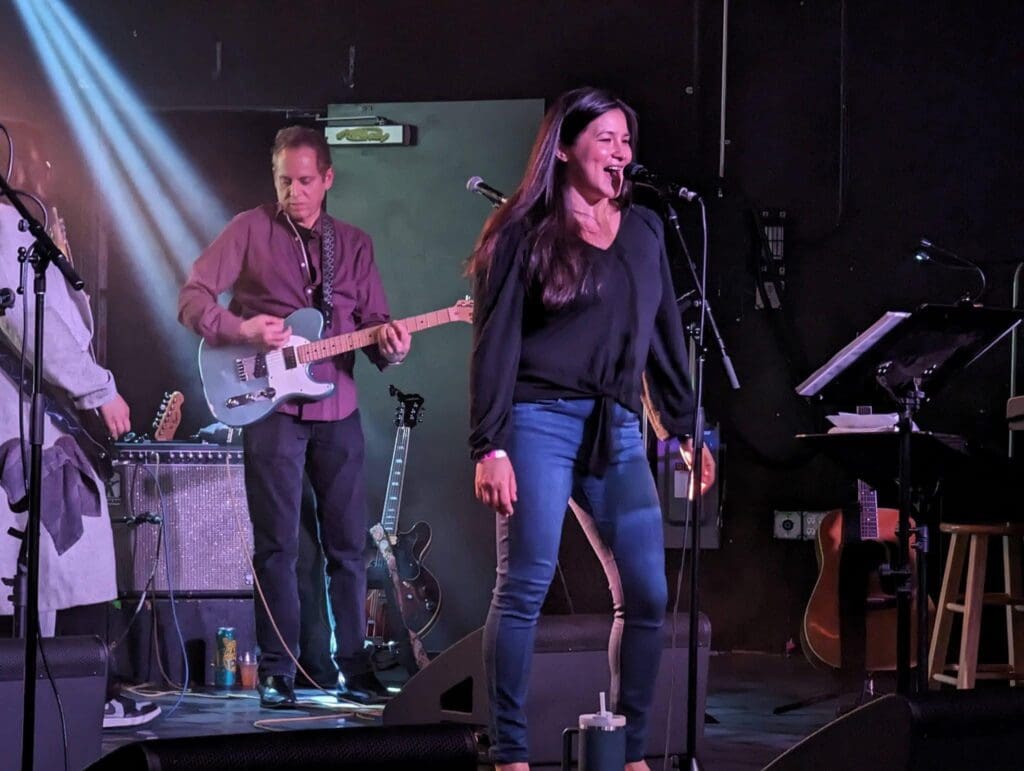
Katie Haley — singer, historian
Katie Haley spends her days as an architectural historian specializing in historic-preservation compliance for an environmental consulting firm. At night she writes and performs dream-pop with Sacramento band Soft Science.
She doesn’t call it balance.
“I call it a swinging pendulum,” Haley said.
Formed in 2009, Soft Science has released multiple records and played internationally while its members maintained careers outside music. Sustaining both worlds requires deliberate time-making.
“You have to carve out time,” she said. “If you want to do anything, you have to make space for it.”
Katie says that music feeds her day job, too. Performance builds communication and confidence that translate directly to professional collaboration. Life feeds the music in return — conversations and experiences finding their way into lyrics.
The pandemic briefly disrupted that identity. Without rehearsals or shows, musicians had to form “a new identity less based around the thing you can’t have,” she said.
But the pull remained.
“I feel most like myself when I’m playing music.”
Haley is clear-eyed about Sacramento: not ideal for earning a living solely from performance, but perfect for sustaining a life in music. “Nobody’s getting the major label deal,” she said. “So we keep doing it because we love to do it.”

Dave Segal — blues host, teacher
Dave Segal hosts the long-running Sunday blues jam at the Torch Club — part concert, part open door, part mentorship pipeline. By day, he’s a high school English teacher of two decades.
If you want to see Sacramento’s double-life model in action, go to a jam night.
Segal remembers at 16 he wrote about two possible futures: chase music full time or teach and play blues on weekends. “Lucky for me,” he said, “I picked the option with retirement and health benefits.”
The school-year schedule is brutal, he said, full of early mornings, long teaching days, meetings, grading, rehearsals, gigs and the Sunday jam. “Sleep,” he said, “is the hardest part”
Summer flips the equation — time to practice, travel and gig. “The two professions dovetail neatly,” Segal said.
What does music give him? “Camaraderie,” he said. “And creating something people can dance to.”
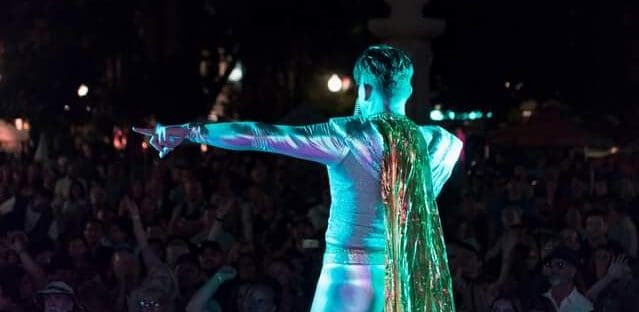
Peter Petty — band leader, court reporter
Peter Petty treats performance as theater, and Sacramento has embraced him for it. He was the 2018 recipient of the Sacramento Area Music Award in the category of Best Live Performer.
By day, Petty is a freelance electronic court reporter, a profession he entered in 1988 by answering a classified ad in The Sacramento Bee. He wanted a job that he wouldn’t have to take home and that would leave room for what he considers his real career.
That flexibility matters. Petty leads multiple incarnations of his musical “œuvre,” regularly performing at the Torch Club and Shady Lady Saloon, as well as festivals, private events and major venues. He also brings an annual holiday program to the Crest Theatre — now 10 years running.
The transition from courtroom to stage can be chaotic. Costume changes, theatrical elements, last-second loading. “I’ve never gotten it perfect,” Petty said. “But part of the fun is knowing something will explode in my face.”
He doesn’t consider the day job his career. “The hardest part,” he said, “is my resentment that I have to maintain it at all. But a girl’s gotta eat.”
What does music give him? “A sense of actual purpose.”
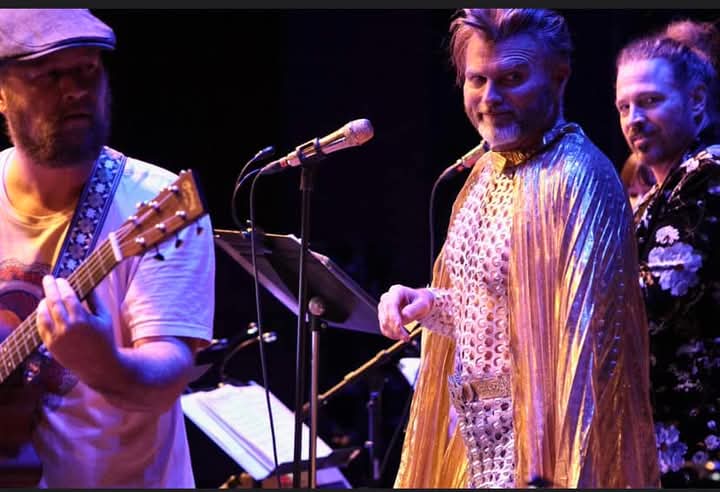
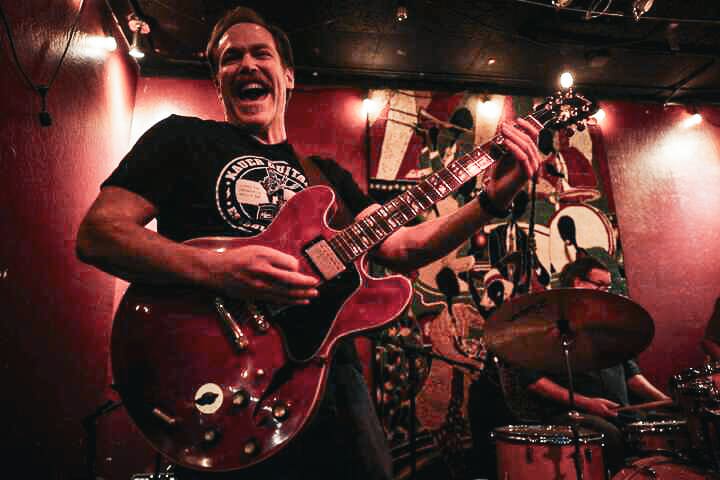
Mike Blanchard — guitarist, singer, photographer
Mike Blanchard’s “double life” has always involved multiple careers at once.
Today, he works at PhotoSource, handling online sales, product photography and customer support. Before that, he was a mechanic and business partner specializing in vintage Italian vehicles. He also holds a journalism degree and decades of experience as a photographer and writer, including time on staff at Thrasher and as founder of Rust magazine.
Musically, Blanchard is a Sacramento fixture. He spent years touring with the Tattooed Love Dogs, releasing records, playing hundreds of shows annually and earning multiple Sacramento Area Music Awards. For the past 15 years, he has led Mike Blanchard and the Californios, an Americana band that prioritizes lower volume, selective gigs and work-life balance.
Blanchard bristles at the idea that a job defines a person. “It’s a very American thing,” he said. “As if your job is your value. It’s offensive.”
Music, he said, provides joy, beauty and energy — and a sense of camaraderie that never really fades. But he’s candid about the economics: Musicians are often paid what they were paid in the 1980s. “I just wish more people would go see live music,” he said. “A rising tide floats all boats.”

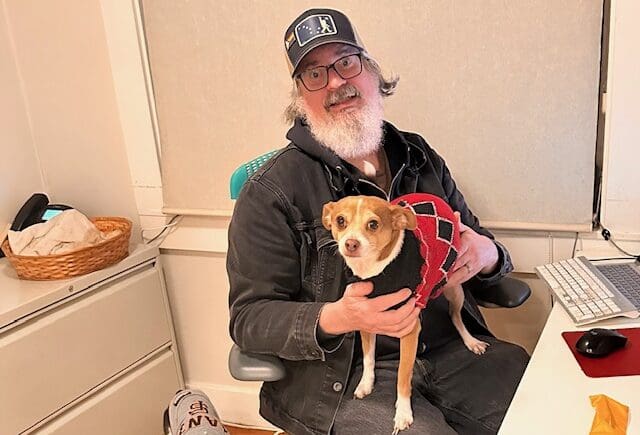
Grub Mitchell — bandleader, quality control
If anyone in Sacramento is willing to puncture romantic myths about music, it’s Grub Mitchell.
Mitchell works from home doing quality control for a company that helps maintain trust-owned properties for people with special needs. He says he deliberately “bifurcates” his days — work stays work until evening, when music begins.
Mitchell leads Loose Engines and plays drums for Forever Goldrush, both original Americana/alt-country projects that perform around Sacramento and beyond, including venues like SacYard Community Tap House. He also maintains a sprawling solo catalog, which, he says, “you can stream anywhere but Spotify. F— Spotify. F— a lot of things, but Spotify among them.”
For Mitchell, the real challenge isn’t balancing music with work. It’s balancing music with promotion. “The hours you’re expected to spend on social media just to get a few people out,” he said, “that’s the real story.”
As to the day job, Mitchell says “maybe music is a feedback loop. It needs you to go out and experience life and make the connection that the pressures that everyday life exerts on us, can be harmonically related to the music.
Is Sacramento “viable” for musicians? “If you mean economically viable as a pure musician — no,” he said flatly. But if viability means having a job, a family, bands you love and creative joy? “Yeah. Especially if money’s not in the game.”
Mitchell is at his most poetic when talking about bands. In rehearsal, he said, “there’s always a ghost note in the air, waiting for everyone to feel it. When that happens, you’re in the right place.”
Full disclosure
My editor asked me to mention that I’m not just reporting this story — I’m in it.
By day, I’m a writer and TV producer. By night, I play in my own band, Daryl Rowland’s Bleeding Hearts, often at the Torch Club or the Trocadero, and I also sit in with the aforementioned Remedy 7. I know some of the musicians in this story through shared stages, late load-outs and the quiet conversations that happen after the bar lights come up and reality returns.
That’s when Sacramento’s music scene reveals itself not as fantasy or hustle but as weekly practice — adults choosing, again and again, to make art after work.
Haley called it a swinging pendulum. Mitchell called it finding the ghost note.
Which may explain why Sacramento’s working musicians seem oddly content. They’re not chasing a finish line. They’re showing up, playing with people they love and finding the ghost note together — then getting up the next morning and going to work.
As Mitchell put it: “Expectations are nothing but disappointments wrapped in your optimism’s pretty paper.”
But the music is real.
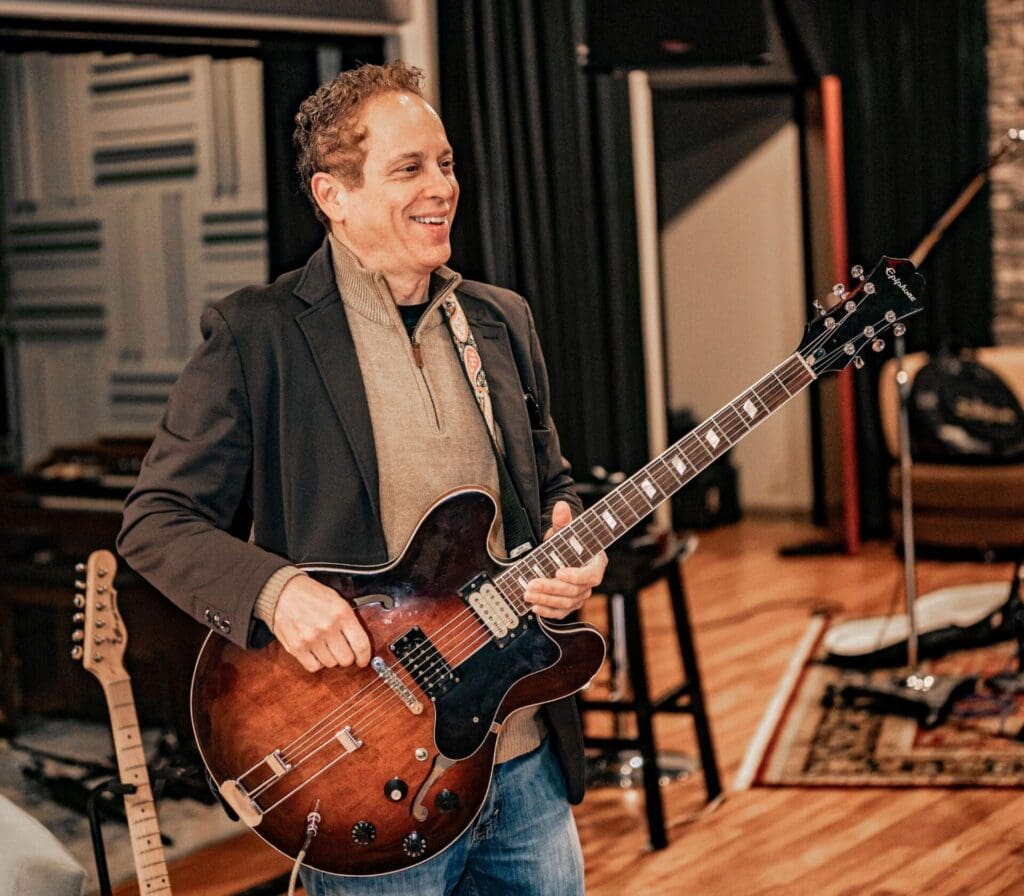
Daryl V. Rowland is a freelance writer in Sacramento.