

The Abridged version:
- Arts and humanities faculty at Sacramento State encourage social practice, prompting students to create work with the public.
- “What We Carry” is a social practice art project located at Sacramento State that invites people to respond to prompts about culture on a blackboard.
- “Artists are not defining the outcome of the work. They make the scaffold and allow people to fill in,” said Rey Jeong, an assistant professor of studio art who is developing social practice courses and programs.
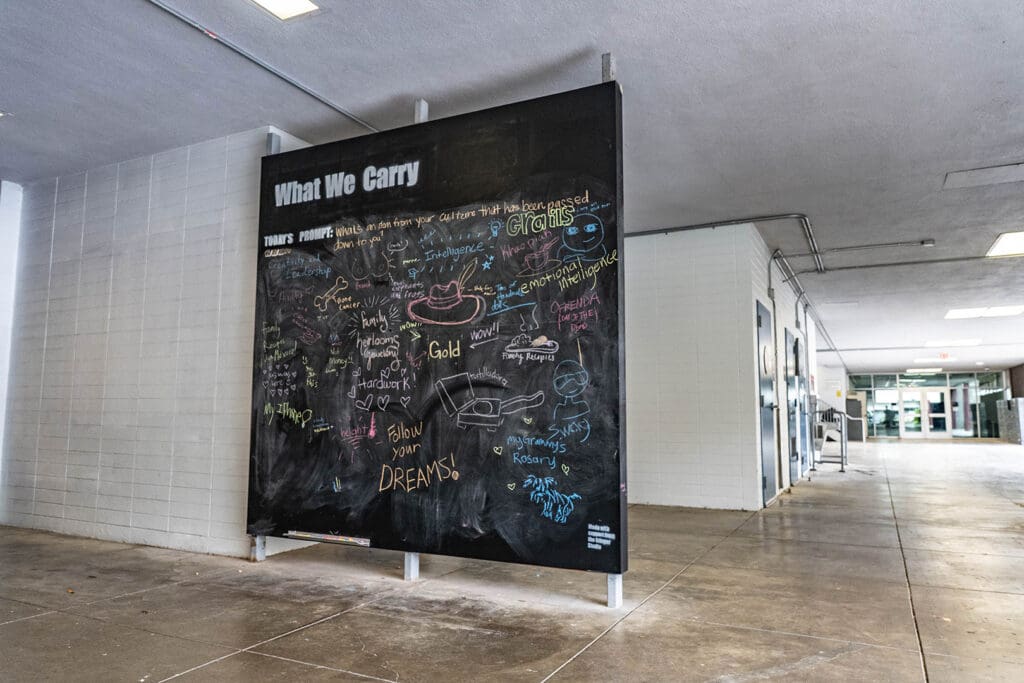
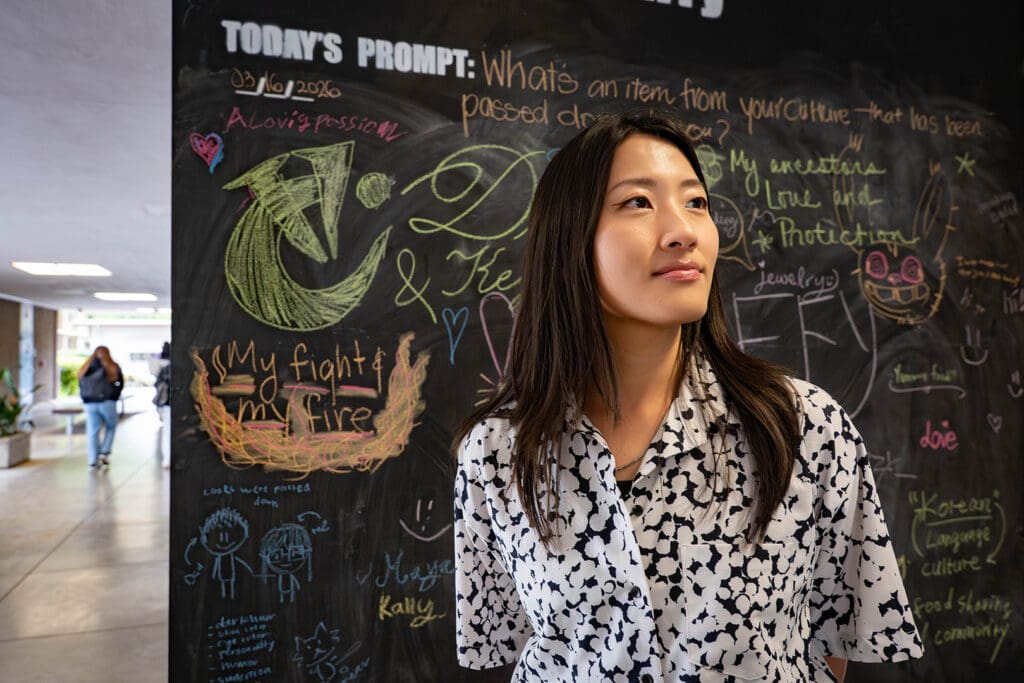
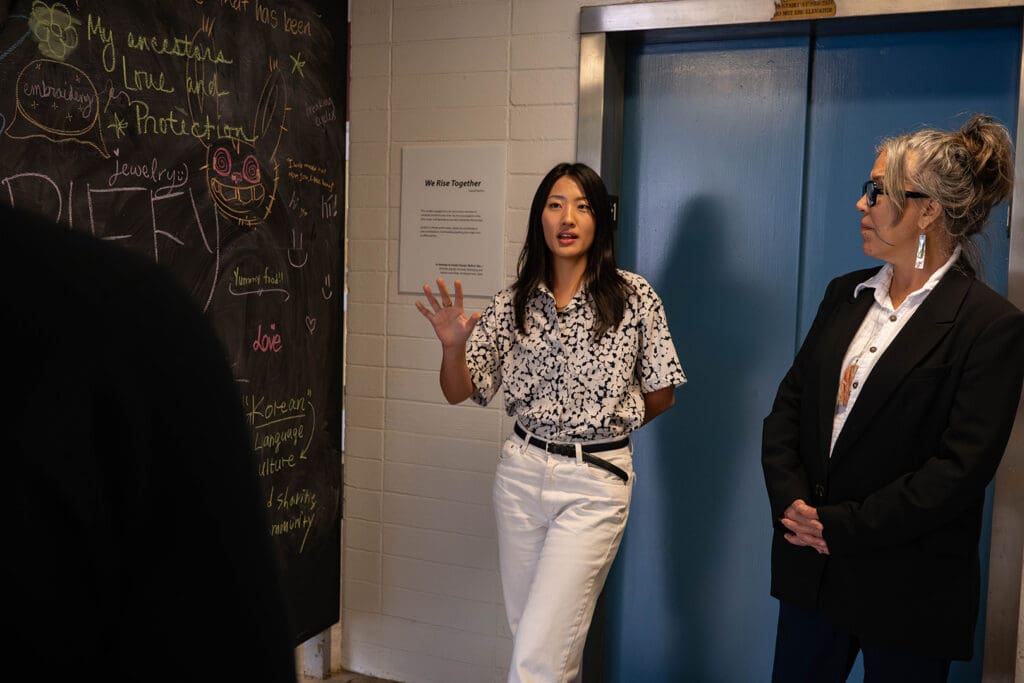
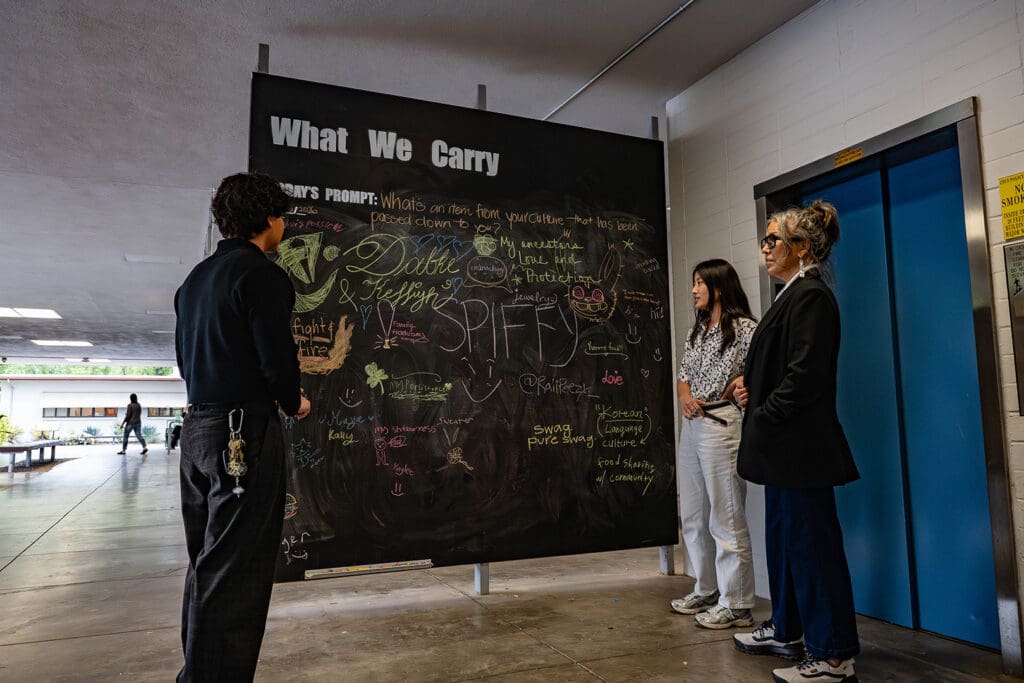
In the exterior corridor of Sacramento State’s Kadema Hall, a two-sided blackboard juts out from the wall, inviting passersby to pause and look at the colorful words and illustrations sprawled across it.
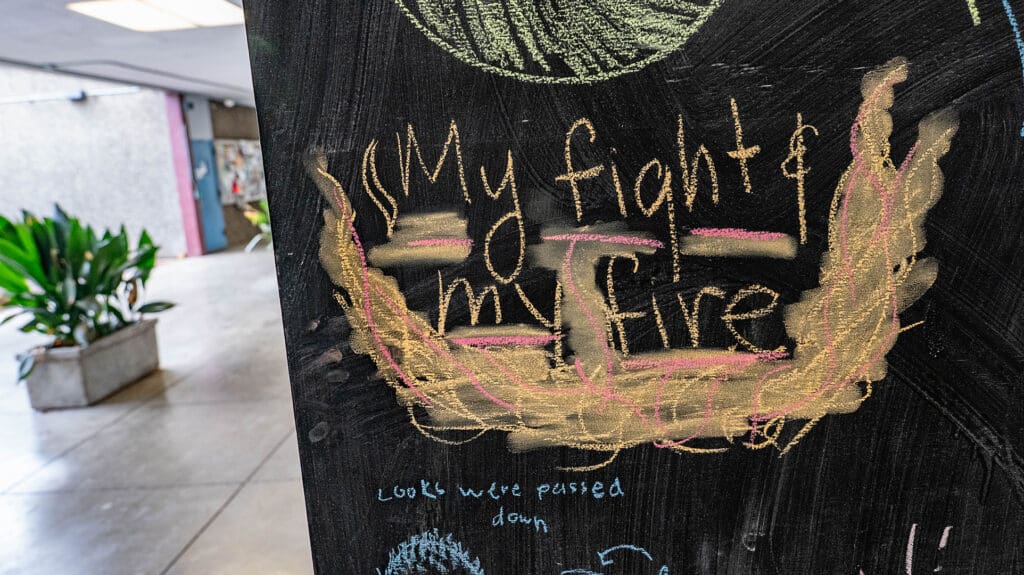
On the board, a prompt: “What’s an item from your culture that has been passed down to you?” Answers vary from physical items, to concepts, and even character traits.
‘What We Carry’ explores culture and identity
The blackboard is part of a project titled “What We Carry,” which explores how people’s cultures shape their identities. Throughout the semester, Edward Verdugo, a recent BFA graduate from the university, writes prompts on the board that ask people to share something about their culture. Past prompts include:
- What tradition in your culture do you practice today?
- What’s something you wish people knew about your culture?
- What part of your culture are you proud of?
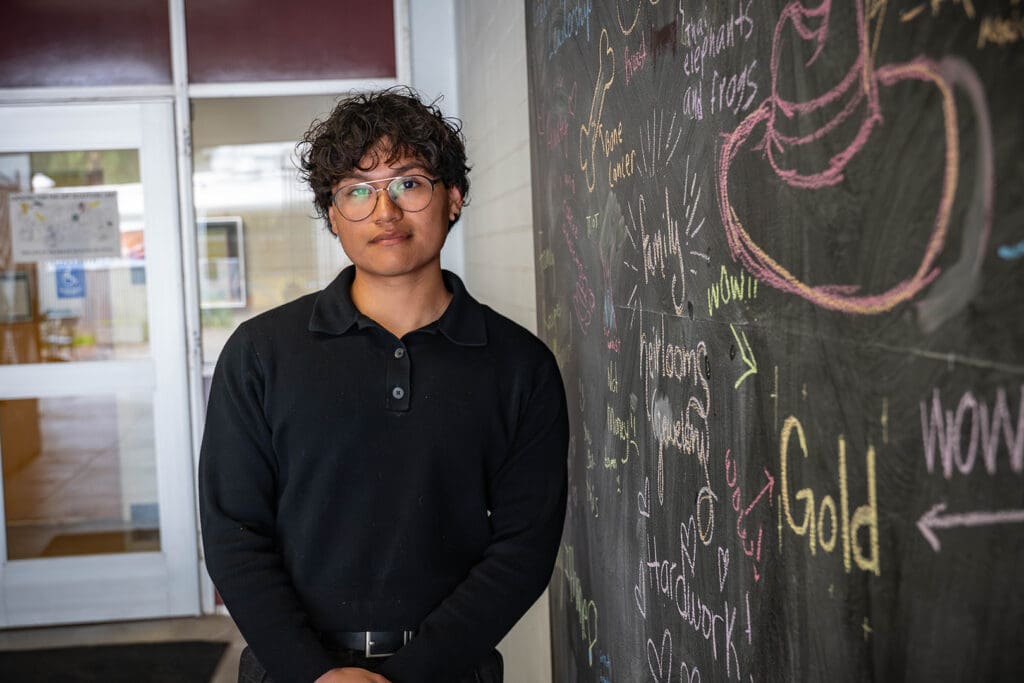
“The whole project is to find some relatability and build empathy within or across cultures,” Verdugo said. “The project is meant to create a space for connection, and so, this opens a small door for that.
“It came from my own experiences as a Mexican American. I did not always feel connected to that part of myself. A lot of the questions that are written on the board are a result of reflecting upon my own cultural identity. This project allows me to share these questions and invites others to ponder and embrace their heritage.”
Impact beyond the blackboard
While Verdugo erases the board weekly, he makes sure people’s responses live on, sharing them through social media to a wider audience including those outside Sacramento. “It allows people’s voices to still be heard,” he said.
Sign Up for the Morning Newsletter
The Abridged morning newsletter lands in your inbox every weekday morning with the latest news from the Sacramento region.
“People are very eager to share parts of their culture when they’re given the space to do so. The board shows how diverse those experiences are, along with the commonalities that exist between them.”
Projects like this are examples of social practice — an approach to art that invites participation from the public with the goal of sparking conversations, improving communities or addressing social issues.
Merging social practice with curriculum
At Sacramento State, there is a growing effort to integrate social practice into its curriculum, specifically in the arts and humanities. Gladys M. Francis, dean of the College of Arts and Letters, said the school is embracing social practice “not as an add‑on, but as a transformative way of teaching, learning, collaborating and engaging with communities locally and internationally.
“It allows faculty and students to step beyond the classroom and engage directly with the real, lived conditions that shape our region, and increasingly, the global communities with whom we are building new partnerships.”
Faculty dedicated to advancing social practice
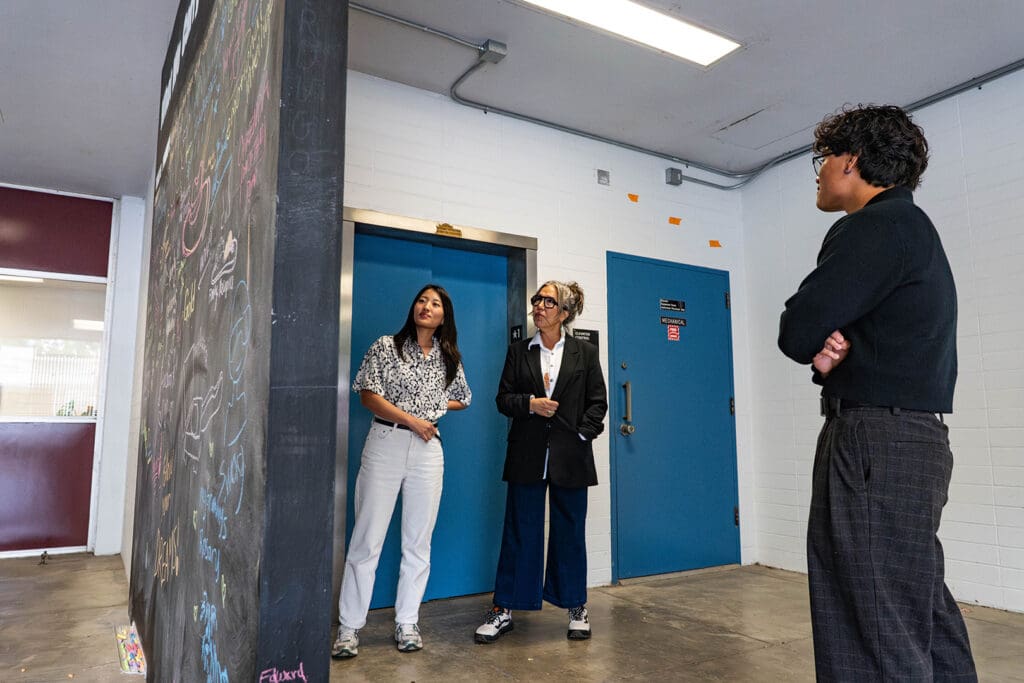
In fall 2023, Sacramento State welcomed a cluster hire of five professors to expand opportunities for social practice at the university. The professors teach across multiple departments including art, communication, design and theater, and they meet regularly to exchange ideas and discuss collaborations.
One of them is Rey Jeong, an assistant professor of studio art. During her time at the university, Jeong has been mentoring students to make socially and culturally responsive work within the current curriculum while developing new courses. Next school year, Jeong will teach two new upper-division classes in the art department that focus on social practice. One concentrates on the intersection of art, animation and social activism. Another will teach social practice through activities involving stories and play.
Jeong established the first iteration of the blackboard at Kadema Hall as an alternative way to conduct a survey that faculty typically send to students every semester. She wanted a place where students can freely express themselves and be interested in contributing. The first prompt she created was “We lift each other up by ____.” The concept was an homage to a project titled “Before I Die…” by artist Candy Chang.
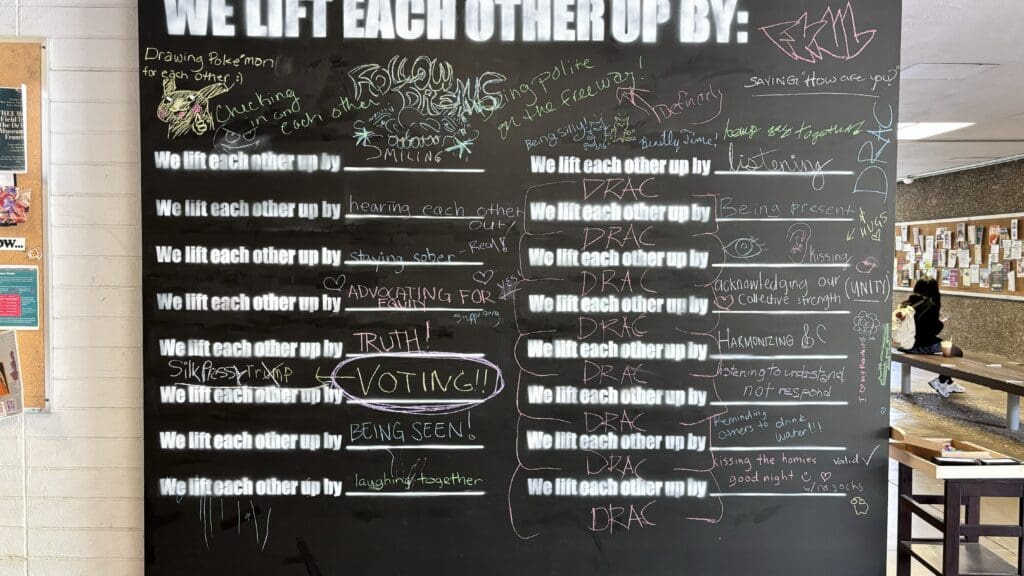
“Artists are not defining the outcome of the work,” Jeong said. “They make the scaffold and allow people to fill in.”
Instilling responsibility, sense of community
Jeong hopes that through social practice her students become “responsible, socially engaged, socially aware and culturally responsive artists, designers and citizens.”
Reflecting on her interest in social practice, Jeong said it comes from her upbringing in a government-subsidized apartment complex in South Korea. She spent the first 10 years of her life there where she felt a strong sense of community. There were shared meals and shared child care.
“I can knock on other people’s door and get some ramyeon,” she said. “It was amazing to have the community.”
When the area was demolished for new development, Jeong and her family had to relocate. “I realized that I lost my roots.
“I realized very recently the reason why I’m so into social practice is because I’m missing that part. I wanted to make my work so that I can find somewhere people belong and stories can be nurtured.”
Reaching the off-campus community
Outside of campus, Jeong takes social practice into the community with six interns, including Verdugo, at the Korean Language and Cultural Center of Sacramento. On Saturdays, they lead a social practice project in which high schoolers reimagine a Korean folktale called “Princess Bari” by changing parts of the story with which they take issue.
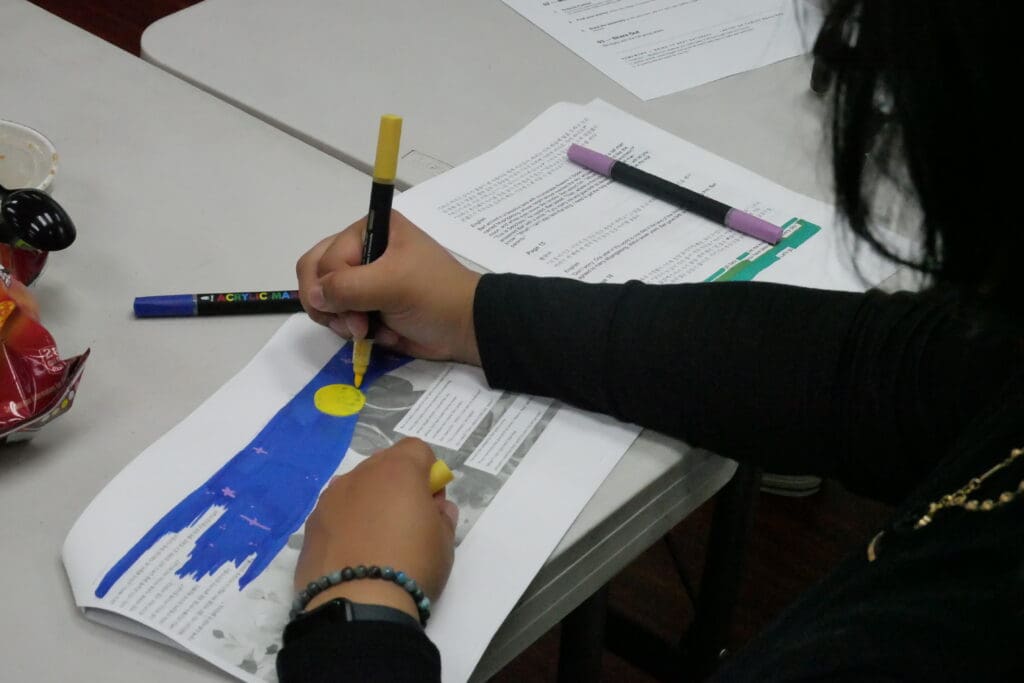
The story follows a princess who sets out to obtain lifesaving water for her ill father despite the fact that he abandoned her at birth for being a girl when he was hoping to have a boy. The roughly 2,000-year-old tale perpetuates a patriarchal view of society and is still read in many elementary school students in Korea. However, “there are not many people in the Korean diaspora who know about this story,” Jeong said.
Connecting with Korean culture
The project not only provides a way for students to connect with Korean culture but an opportunity to challenge cultural narratives that do not sit right with them.
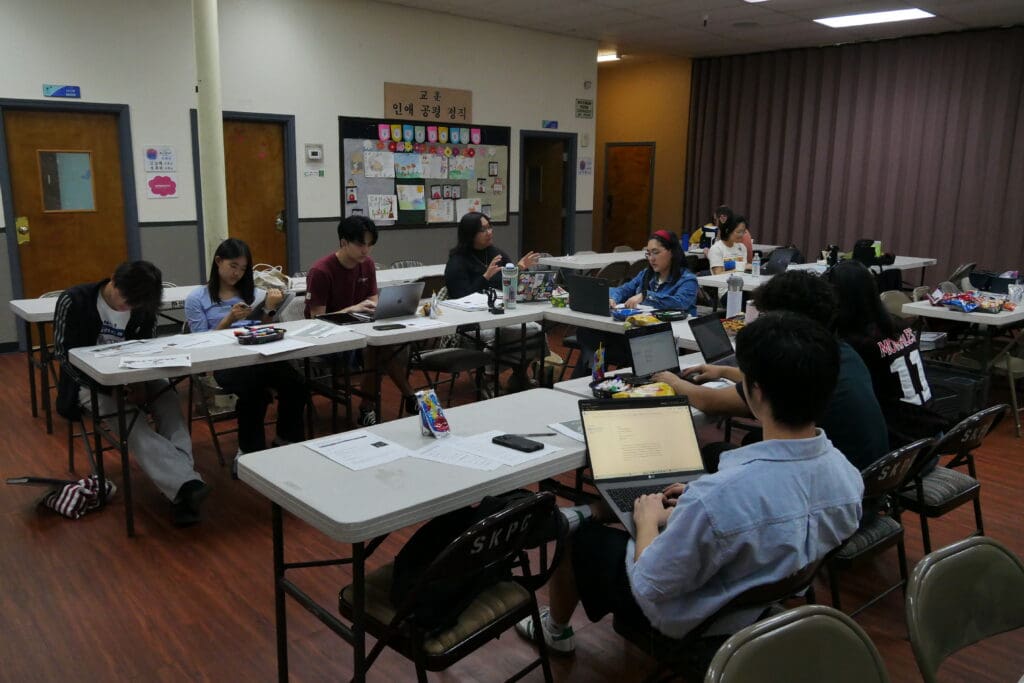
“We read along with them and ask questions to really get the students to think about the story in a deeper way where it’s like, ‘Oh, this isn’t quite right in a more modern view. Let’s change it up into this,’” Verdugo said.
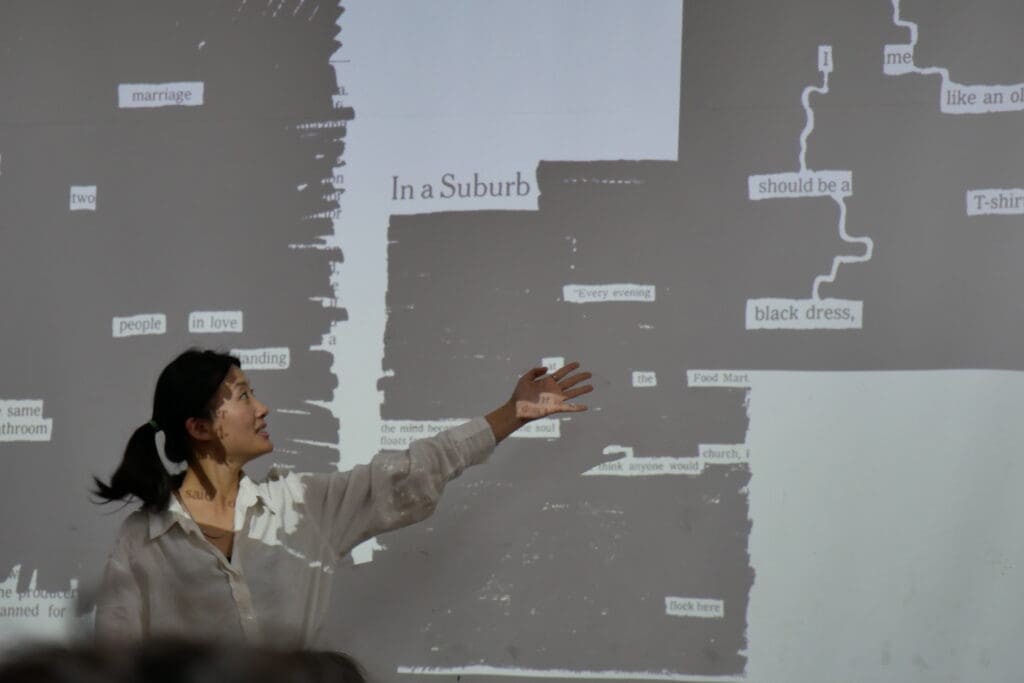
“We’re working on audio poems where based on the text, we’re blocking out a majority of it to create poems that connect to us,” he said. “It gets them to think about the impact that they can have on today’s world. If they all think about it together and they all band together, they can create some change in this world that they see fit.”
Jeong said the project will culminate in a public event showcasing the students’ work.
Bringing more awareness
“Not many students are aware of social practice, but there’s some interest in it,” Jeong said. “There’s definitely a need to raise the awareness of social practice. What that is and why that’s important.”
Verdugo, who comes from a painting background, was not familiar with social practice until coming to Sacramento State.
“I personally thought it was a performative art. I didn’t know that I could have a big impact on my community. When I told my peers that I’m doing this project with the community or I’m trying to do an outreach here, there was a lot of intrigue just because it’s not really talked about.”
Herbal plant installation prompted healing
Another student who has learned more about social practice through the university is MFA candidate Tiffany Adams, whose work reflects a “deep love” for her community. Adams, an enrolled member of the Chemehuevi Indian Tribe, is also Konkow and Nisenan. She engages in a variety of art forms, from painting to jewelry making and installations. Last semester, she created an herbal plant installation at the university’s sculpture building for her final project during a time of high stress among her graduate cohort. It served as a space for healing for her fellow graduates and a few other community members. The installation consisted of herbal plants placed below a blanket to create the feeling of a bed.
“I think everyone has relationships to plants through their culture, whether named directly or carried through practice, memory, care or place,” Adams said.
“They were not only experiencing the work, but also becoming part of it through their presence, stillness and interaction.”
Social practice not new to Native people
Adams says that the concept of social practice is not new to Native people, but she did not know there was a name for it. “That’s how things are passed on is through community engagement, is through mentorship.”
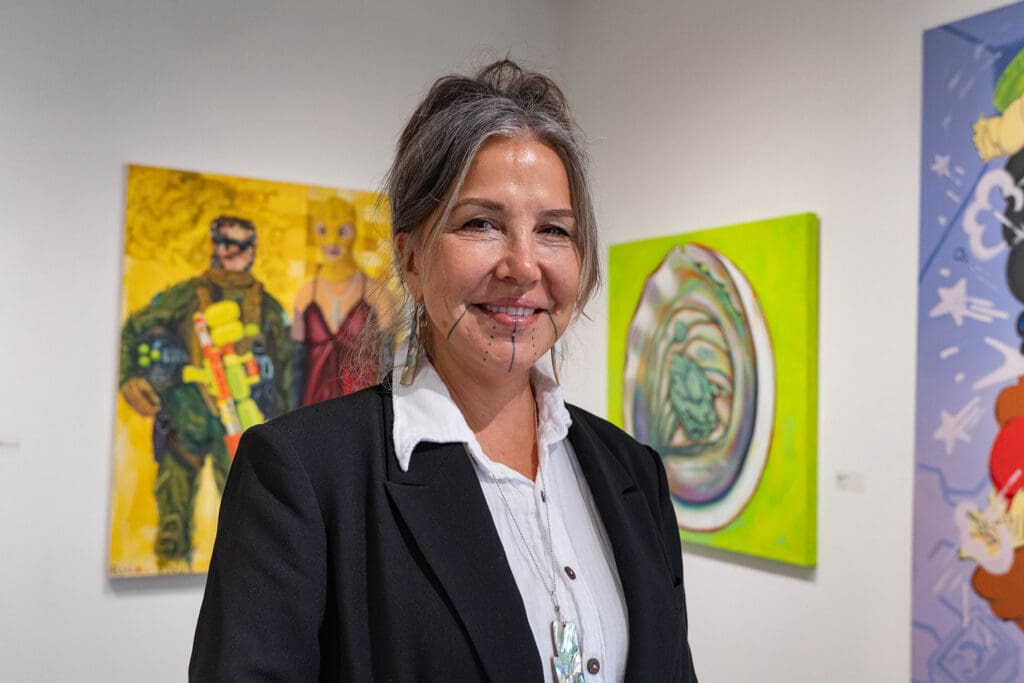
Adams met Jeong last semester, and she serves as Adams’ regular adviser.
“I feel like working with her has really helped me see the work I do differently and see because I always felt like my art practice was separate from the community work I do. I didn’t realize the work I do in community with local public health organizations, curating art shows, visual, outward activism for Indian education. I didn’t realize that all those things were social practice. I feel like Sacramento State has really helped me find the language to talk about my social practice and acknowledge that work I do.”
Broadening the reach of social practice
Jeong says while the current focus is on developing curriculum for BFA students and students in the College of Arts and Letters, she hopes to introduce more people to social practice through an introductory course that is open to all majors.
For the university, the vision is “to build a collaborative ecosystem where art, design, theater, film, community knowledge and cultural memory converge to create new forms of public meaning,” said Francis, the Arts and Letters dean.
Shelley Ho is a producer with PBS KVIE and a visual journalist with Abridged.