
The Abridged version:
- New express lanes are scheduled to begin operation in mid-December.
- The lanes, which extend between Fairfield and Vacaville, will allow drivers to pay a toll to avoid heavy traffic.
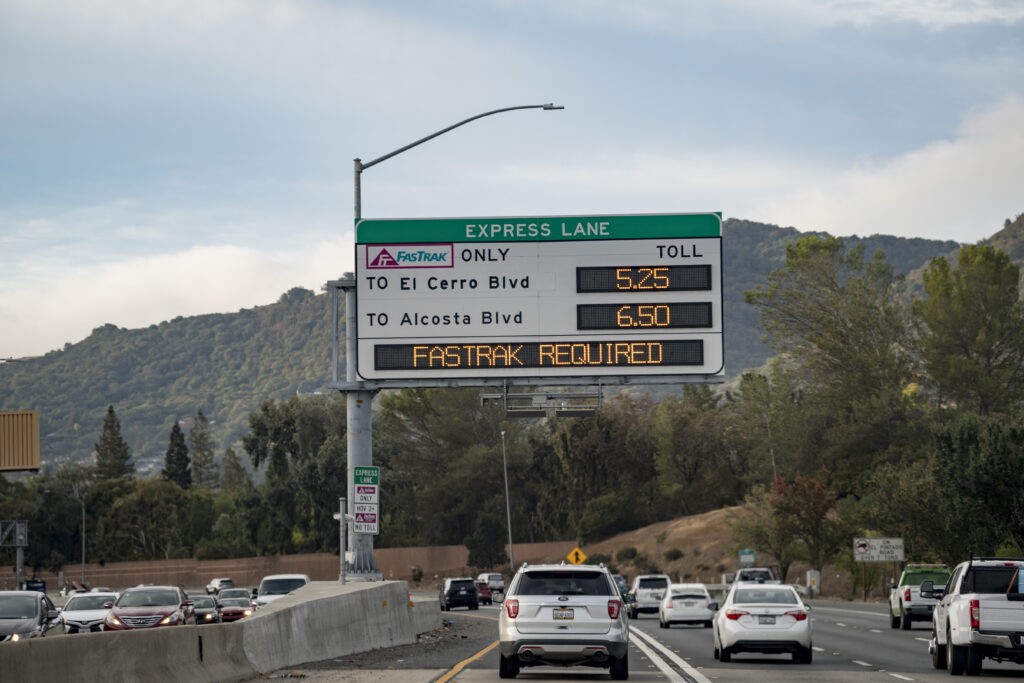
- The lanes require drivers to have FasTrak, regardless of how many passengers are in the car.
- Toll rates depend on how much traffic there is and final destination, so drivers should check signs over the lanes for specific prices.
You know that feeling when traffic gets so bad you would do just about anything for a way out? Starting in December, drivers on Interstate 80 between Sacramento and the Bay Area may be able to do just that.
But it’s going to cost you — and the more traffic there is the deeper drivers will have to dig into their wallets.
When will new toll lanes open in Vacaville?
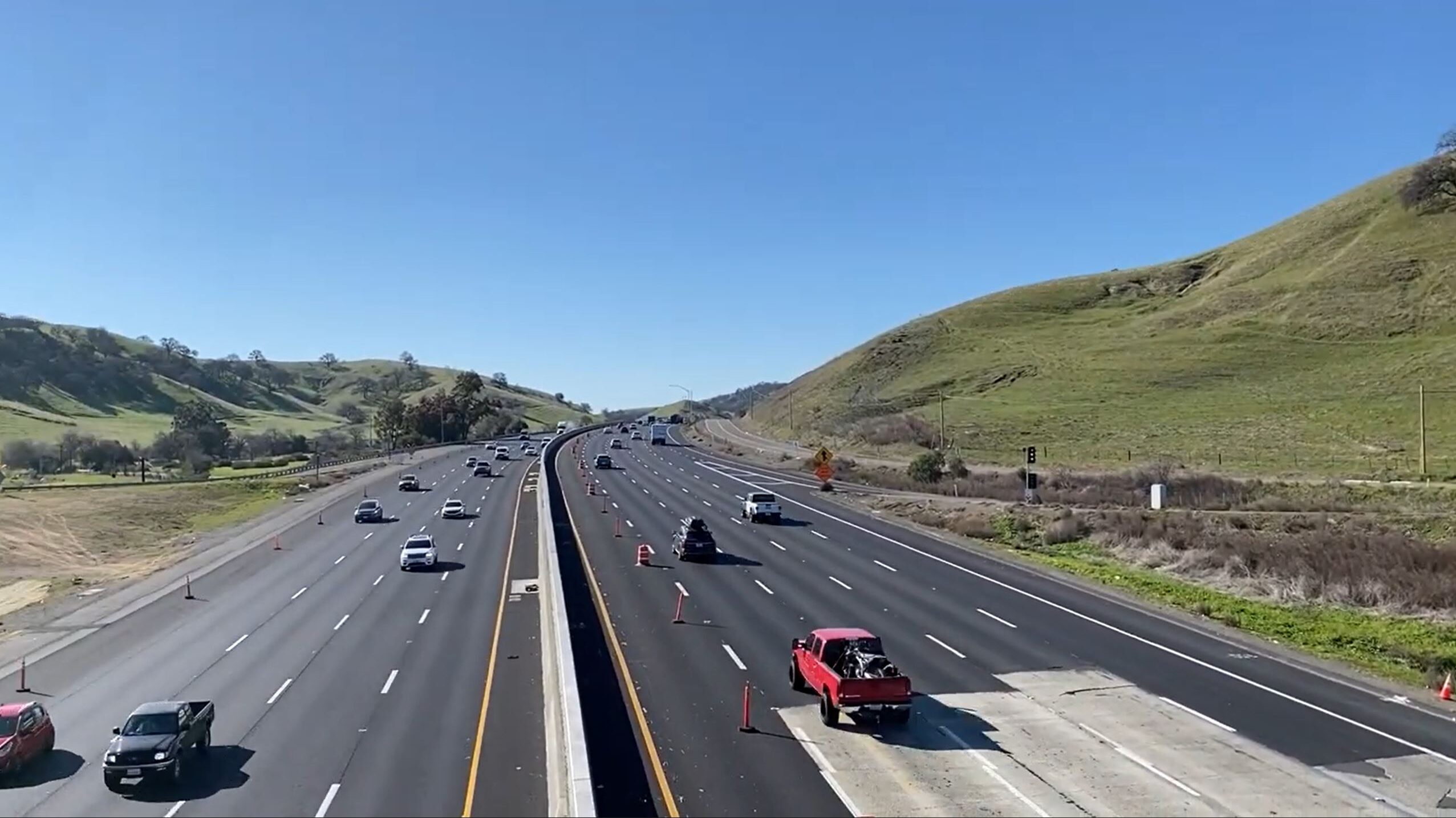
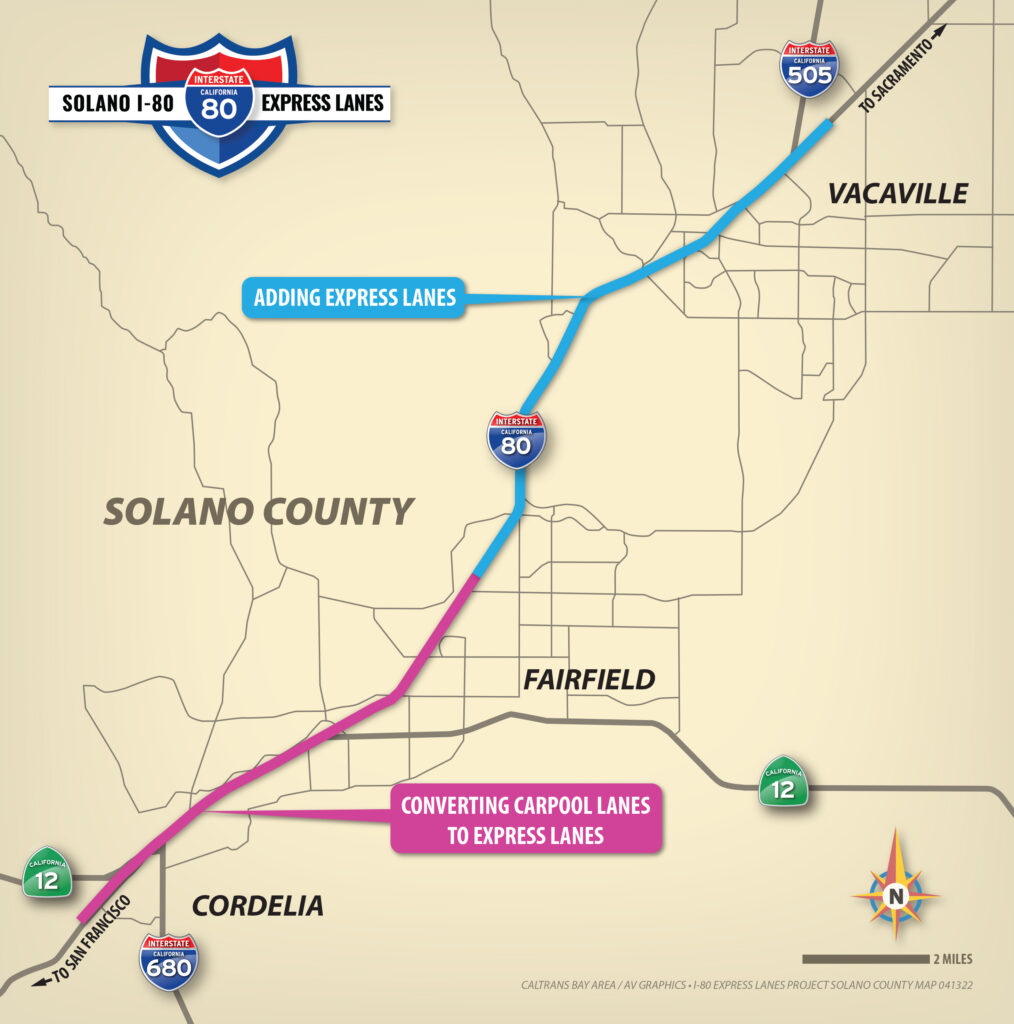
New express lanes on an 18-mile stretch of I-80 between Fairfield and Vacaville are set to open on Dec. 16, the Metropolitan Transportation Commission announced last month.
The lanes, which will replace traditional carpool lanes, extend from Red Top Road in Fairfield to Interstate 505 in Vacaville and allow drivers to pay to avoid heavy traffic.
When will the tolls operate and who can use them?
Express lanes will be open daily from 5 a.m. to 8 p.m. Here are the requirements:
- A FasTrak toll tag is required to use the lanes, regardless of how many passengers are in the car.
- Cars with at least three people, buses, vanpools and motorcycles don’t have to pay tolls but still need a FasTrak Flex toll tag set to “3+.”
- Vehicles with two people pay half-price with a FasTrak Flex toll tag set to “2.”
- Solo drivers can still use the express lanes but will have to pay the full toll with a standard FasTrak or FasTrak Flex set to “1.”
How much will the new toll cost?
Toll rates depend on how much traffic there is and final destination, so drivers should check signs over the lanes for specific prices.
John Goodwin, assistant director of communications for MTC, said that there will be four toll zones in each direction, and drivers will pay a minimum of 75 cents in each zone. If a traveler is using the lane for the whole 18-mile stretch, they will pay at least $3.
But more congestion will increase the price, and there is no maximum.
Goodwin said that federal regulations require MTC to maintain a speed of 45 miles per hour or faster in carpool lanes at least 90% of the time. To keep express lanes clear, prices will rise to deter some drivers even as traffic gets worse.
“It’s using pricing power to regulate demand for space in the lane,” Goodwin said.
There are express lanes in other parts of Northern California, including on a stretch of Interstate 680 in Contra Costa County. Goodwin said that the average toll in those lanes is about $4.
The lanes are being developed by MTC, Caltrans and the Solano Transportation Authority.