

The Abridged version:
- Loomis and Granite Bay voters will decide the fate of Measure B, which seeks to boost funding for the struggling South Placer fire district with a new parcel tax.
- The measure requires approval from two-thirds of voters, replacing a yearly tax of $70 in Granite Bay and $406 in Loomis with a uniform $375 yearly tax.
- While supporters say the measure will boost equity, help the department recruit and retain first responders and reopen closed stations, opponents have criticized the tax raise in Granite Bay and management of district funds.
Embattled by station closures, retention problems and outdated equipment, the South Placer fire district plans to tackle its financial woes with a new ballot measure — but it’ll need two-thirds of voters to get on board.
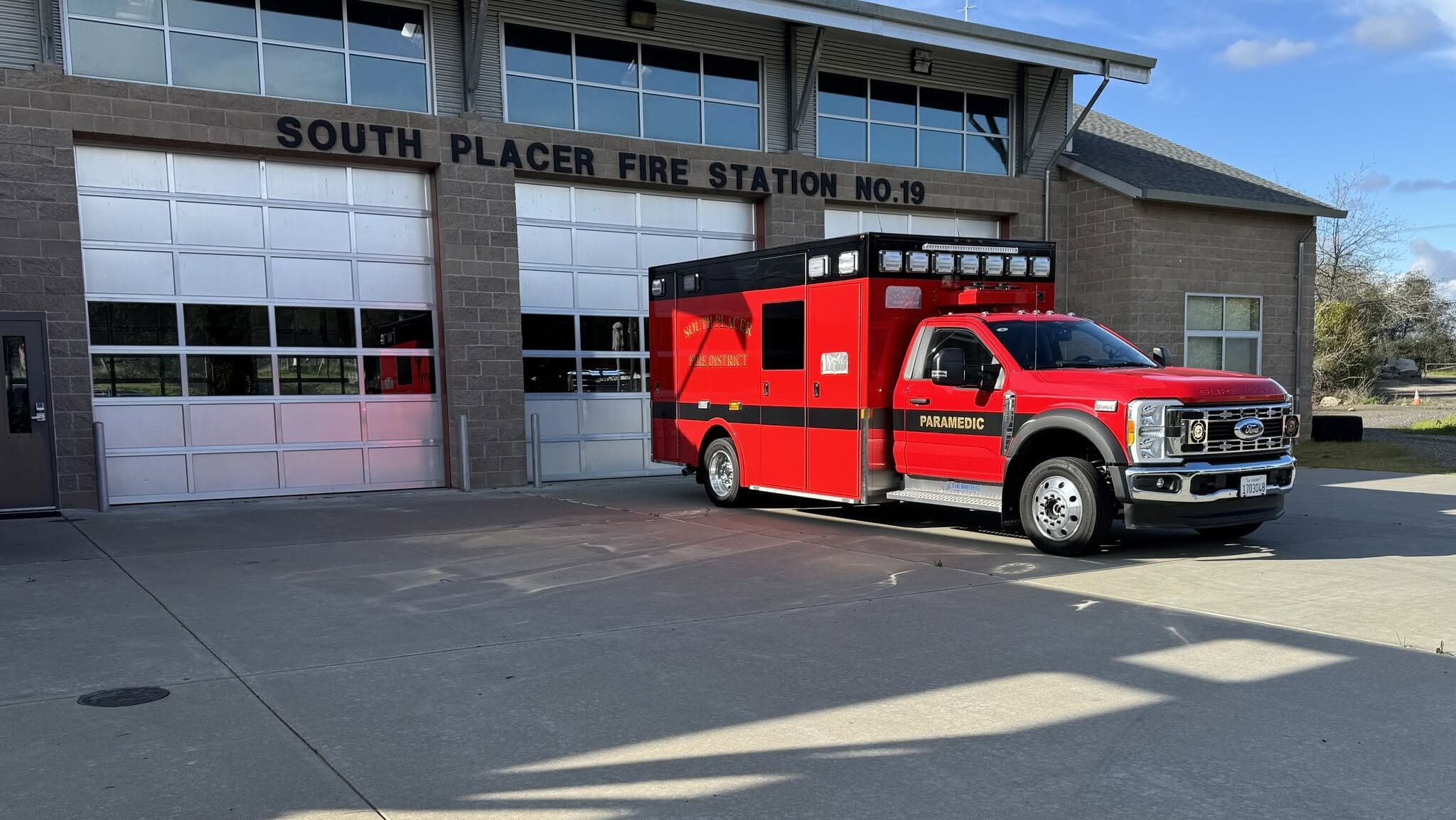
Next month, Granite Bay and Loomis area voters will determine the fate of Measure B, which seeks to boost fire district funding with a uniform $375 parcel tax across the district’s households. The department is estimated to generate $5.75 million annually in parcel taxes if the measure is approved, an uptick of about $2.5 million.
Because Loomis division households currently pay the department over $400 yearly and Granite Bay division households pay $70 yearly, repealing existing parcel tax structures will have different financial impacts on different households.
Sign Up for the Placer County Newsletter
Coming soon: A weekly newsletter focused on the stories that matter to Placer County.
Supporters and opponents of the measure disagree on its fairness and whether the fire district is truly struggling with funding. Local officials say that the future of emergency services in the community hangs in the balance.
“The question is, what price do you put on the safety of your family?” asked Placer County supervisor Suzanne Jones, who represents the fire district’s communities.
A survey of likely November voters released earlier this year showed broad support for the measure and approval of the fire district’s performance, with 64% of the 417 voters polled saying they were leaning toward voting yes to different degrees. Over 70% of voters agreed that the fire district is in need of new funding.
But with the two-thirds approval threshold in place, the measure’s fate remains unclear.
A struggling department
Two of the district’s six fire stations are currently closed, both of which are located in Granite Bay. South Placer fire chief Darin Snedeker said that if Measure B fails, a third station will likely need to close, too, leaving only half of the stations operating. Station closures mean longer wait times for medical aid or fire responses, he added, making the possibility a major safety threat.
Snedeker said that due to budget constraints, the fire department has also struggled with retention, as it cannot afford to pay apprentices more than minimum wage. In the past six years, the South Placer Fire District has lost 33 firefighters, engineers and captains — about 68% of its workforce. When added to the number of employees who have retired or been let go during this time, the turnover rate rises to 110%.
“The numbers are frankly embarrassing,” Snedeker said. “So why is there all this turnover? It’s pretty simple, there are other local agencies where they’re compensated better.”
Costs of operating a fire department have climbed in recent years due to skyrocketing equipment and operations costs. In ballot argument materials, Measure B supporters noted that from 2021 to 2025, the price of a new fire engine has more than doubled.
Mark Robertson, the South Placer firefighters’ union representative, said that the district needs new equipment and technology to keep first responders and residents safe. Training costs have also become more expensive, he added, making new funding crucial to keep firefighters safe and well-prepared to respond to emergencies.
“Keeping up with the times is one of our biggest struggles,” Robertson told Abridged by PBS KVIE. “We’re just asking for help so we can help you better. We want the best for our community.”
According to Snedeker, about $10,000 will be left in discretionary funds for the department at the end of this budget year — a sum he called “dismal.” With new funding, officials said, the district hopes to reopen stations, fill vacancies and invest in more equipment and training.
Measure B opponents have cast doubt on arguments that the fire district lacks enough funding to keep stations operating and people working. Fire district resident Jeff Moss, who previously served as a firefighter and board member, accused the district of closing the two Granite Bay stations to punish local residents for voting down a previous funding ballot measure, a charge that fire officials have disputed.
“I don’t think the turnover is a huge issue — any district that can’t win a wage contest is going to have turnover,” Moss said. “It’s a leadership issue of the board of directors not being able to live within a budget.”
Parts of the South Placer fire district sit in high or very high fire hazard severity zones, according to CalFire’s risk map.
The tax question
Resident funding for the fire district primarily comes from property taxes, the two parcel taxes and a benefit assessment paid by Loomis division residents. Granite Bay division households pay $70 in parcel taxes a year, while Loomis division households pay both $130 in parcel taxes and $276 in benefit assessment charges.
The two divisions pay unequal amounts because of special taxes set decades ago, back when Loomis and Granite Bay made up two separate fire districts. Granite Bay residents have paid a $70 parcel tax for over 40 years, a value that did not change after it merged with Loomis to become the present-day South Placer district. Fire officials said that the stagnant $70 price tag has not kept up with rising operational costs.
“We need to begin to shore up the structural funding problem that’s existed for 50 years,” Snedeker said.
Since Measure B would repeal existing parcel taxes and benefit assessments to impose a uniform $375 annual tax, proponents say it will boost equity across households in the fire district. But opponents contend that it’s unfair to increase taxes in one division while decreasing taxes in another, even if everyone will ultimately pay the same amount.
Critics have also raised issues with the fact that a larger proportion of property tax revenue from the Granite Bay division goes toward the fire district: while 12% of Granite Bay division property taxes fund fire services, 2.5% of Loomis district property taxes are set aside. About two-thirds of the fire district’s residents live in the Granite Bay division.
“Granite Bay is subsidizing Loomis by big numbers, and now they want us to tax ourselves further to subsidize it even more,” Moss said.
The difference in percentages doesn’t mean that Granite Bay households are paying a greater property tax rate compared to Loomis households. Placer County collects property taxes and decides how revenue is distributed based on jurisdictional boundaries like school districts, utility districts and fire districts. So, while the proportion of Granite Bay tax dollars sent to the fire district is larger than that of Loomis, its overall property tax rate is the same.
Snedeker stressed that it’s uncommon for households across the state of California to pay as little as $70 in yearly fire parcel taxes. Since Granite Bay and Loomis represent one community under the fire district, with both receiving the same services, it’s important they contribute equally.
“We’re one community,” he said. “It’s imperative that everyone understands that this makes this equitable — for everyone to pay the exact same amount for the exact same services.”