
The Abridged version:
- California state workers abandoned the office for strike lines Wednesday, protesting what they call unfair contract bargaining tactics by Gov. Gavin Newsom’s administration.
- It’s the first time in Service Employees International Union Local 1000’s history that members have gone on strike.
- Hear from state workers firsthand about what drove them to the strike line.
This story has been updated with live coverage from the strike lines in Sacramento, from Department of Education and CalHR to the Capitol.
California’s largest state worker union is striking for the first time Wednesday, marking only the second work stoppage in history by California civil servants.
Nearly three years since over 4,000 state scientists staged the first California employee walkout, Service Employees International Union Local 1000 members across multiple agencies will demonstrate in Downtown Sacramento on Wednesday.
Local 1000, which represents nearly 100,000 state workers, hasn’t come this close to striking since a decade ago, when its members authorized a strike under then-Gov. Jerry Brown. The union called the strike off when the sides reached a contract deal two days before.
But no such deal had materialized with Gov. Gavin Newsom by early Wednesday morning, when workers showed up early to picket state offices.
Update 2:35 p.m. Wednesday, Oct. 21
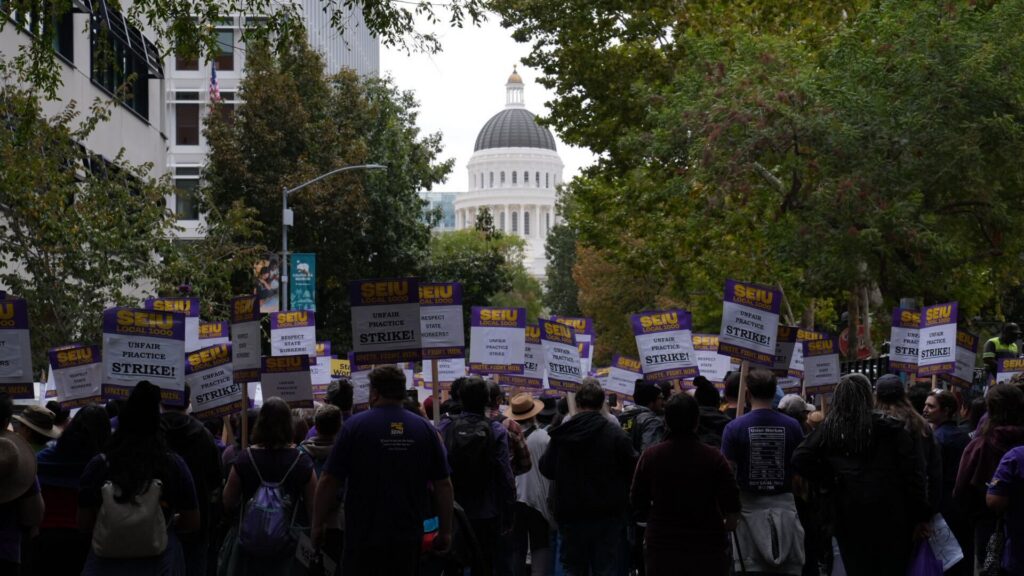
Thousands of marching state workers reached the Capitol Annex Swing Space by about 1:30 p.m. Employees in the government building could be seen looking out second-floor windows at the crowd of thousands below, which unfurled a large SEIU banner in the street.
The demonstrators soon moved toward the Capitol, reaching the lawn before returning back to the streets leading to the building. A Sacramento Transit light rail car halted at its stop on O Street and pumped its horn apparently in support of the state workers.
Rain began to fall as the crowd started to disperse.
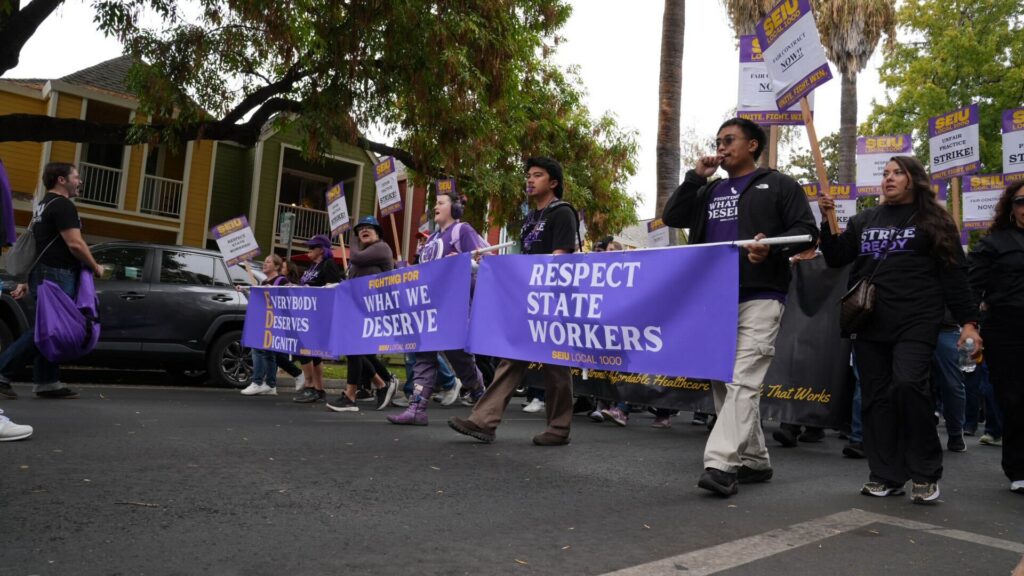
At the march’s final stop, opposite the front doors of the swing space, Cal Fire finance analyst Shannon McKenna reflected on the day of striking.
She’s willing to take part in another work stoppage “as long as it takes,” she said.
“I’m in it to win it,” McKenna said. “I shouldn’t have to take a second job or work overtime to pay my bills.”
“We run this state … nothing would happen without us,” she added. “I say that with my full chest.”
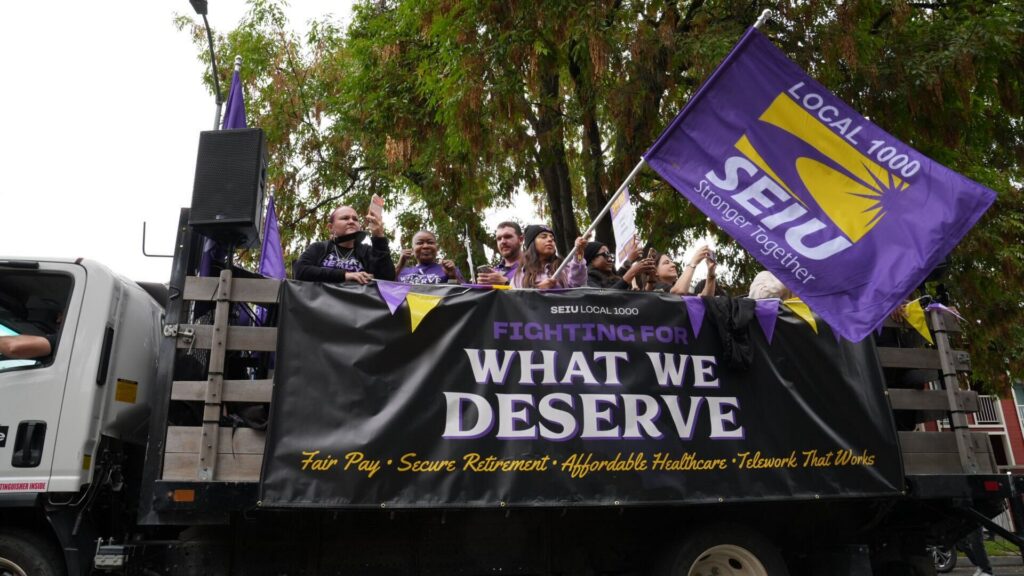
Update: 1:30 p.m. Wednesday, Oct. 21
Shortly after noon, SEIU Local 1000 President Anica Walls took to the stage — the back of a flatbed parked outside of the California Department of Human Resources building on 16th street.
Kicking off her speech, she shouted to a crowd, “for the first time in history, we are on strike!”
“State workers have shown up for Californians time and time again, and when the administration refuses to do right by its workers, we have a choice,” she said. “We can stand by and let it happen, or we can do what we’re doing today: we can stand and fight back.”
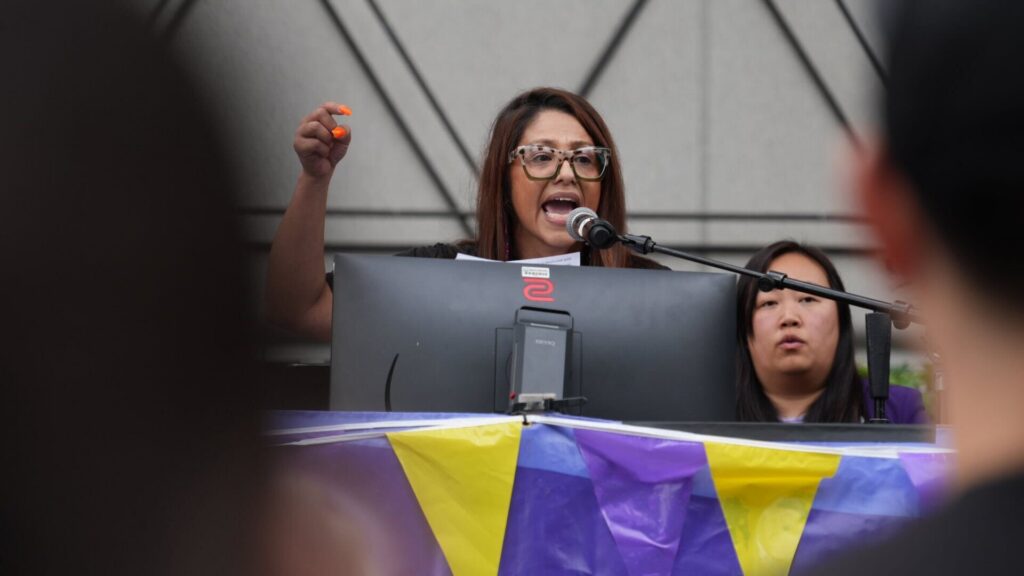
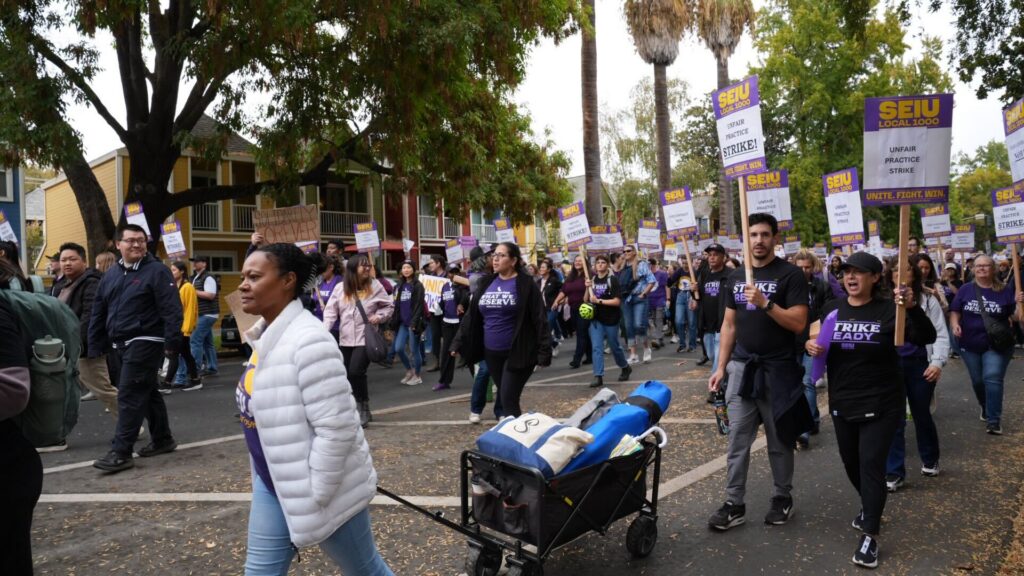
As Walls ticked through the union’s economic proposals, and the Newsom administration’s responses, her mention of telework brought a cheer from the crowd of at least 1,000 people gathered in the middle of 16th street.
Walls hinted at future labor actions if bargaining dynamics don’t improve.
“Today may be our strike day, but it won’t be the last time we collectively show our power … if they continue to bargain in bad faith, we are prepared to escalate,” she said.
The union president also urged state workers to remember which candidates support labor heading into Election Day on Nov. 3.
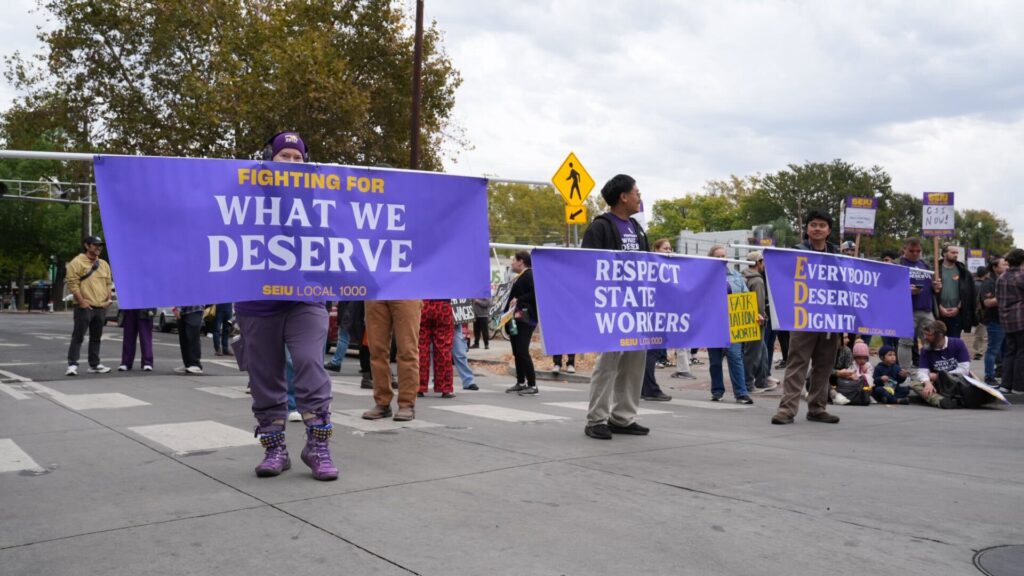
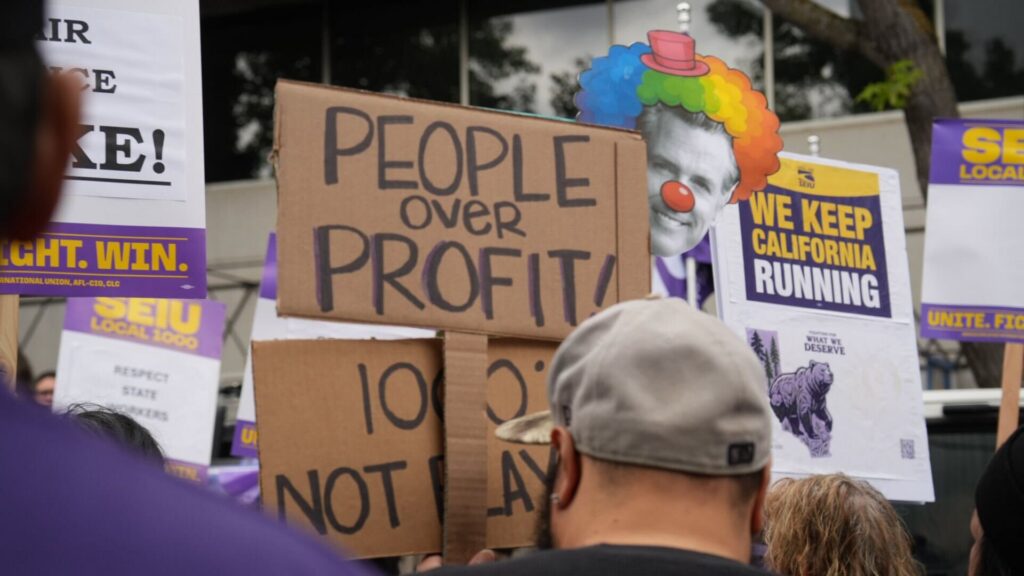
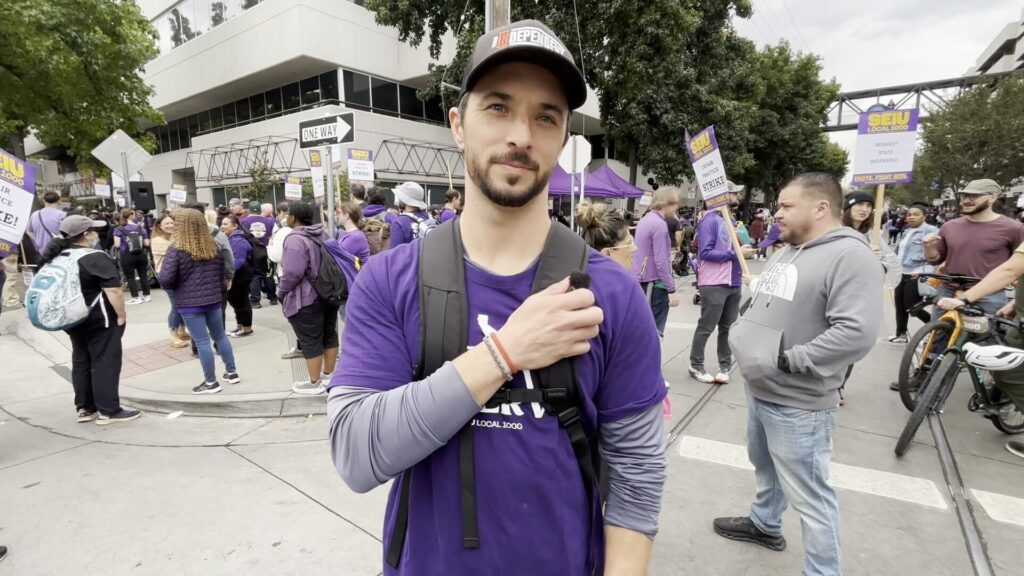
Jesse McDonald-Ryan stood among thousands of Local 1000 members around noon at the 16th and R street intersection.
As an analyst for CalRecycle, McDonald-Ryan is already able to work from home two days a week. He hopes negotiations will result in a change in the administration’s staunch return-to-office position many of his state colleagues must follow.
He also hopes for a change for the sake of the quality of candidates the state can attract.
“We want good employees to work for the state, in terms of recruitment, I think it makes the state a way more competitive place to work” to allow telework, he said.
Update: 11:20 a.m. Wednesday, Oct. 21
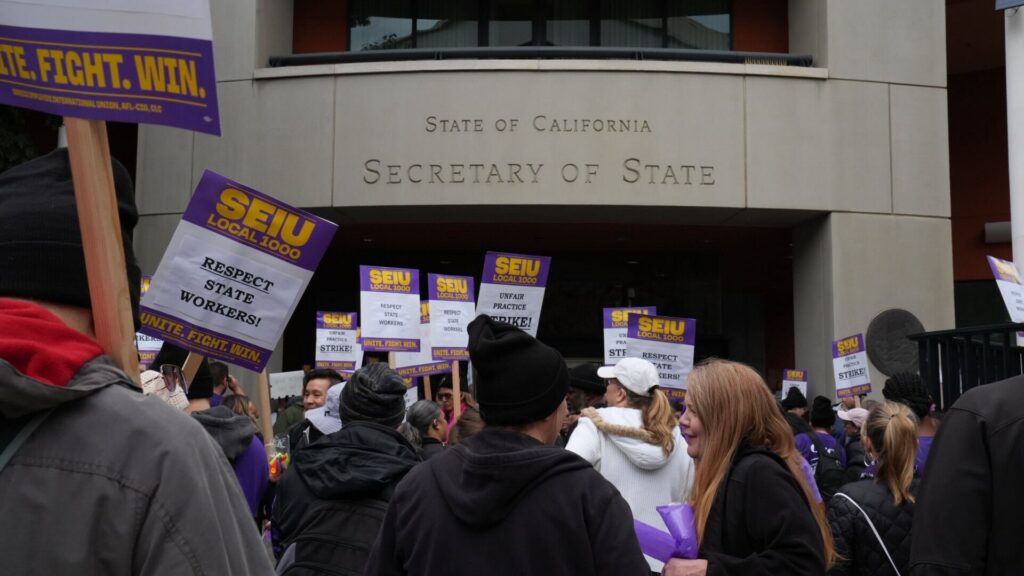
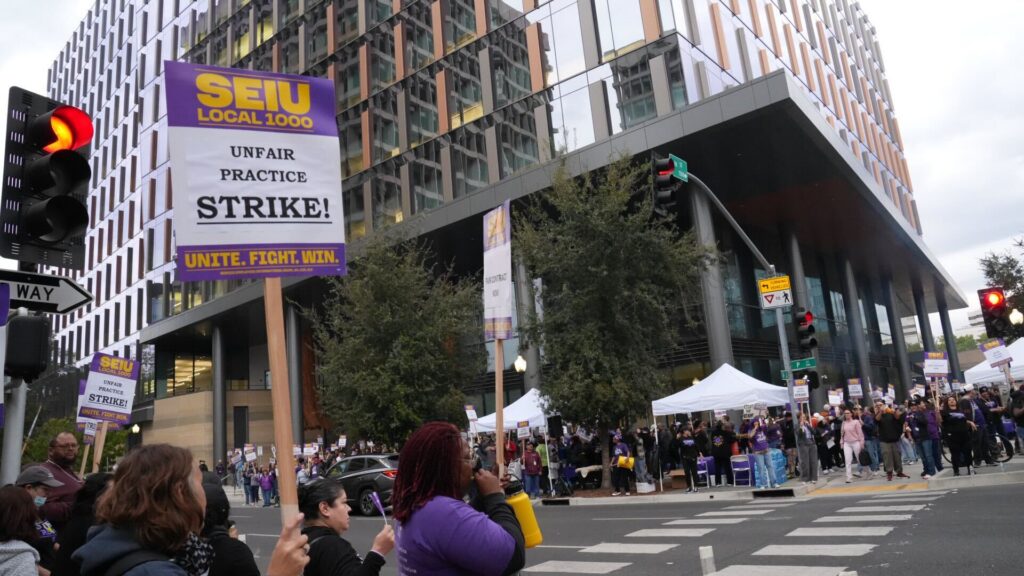
About 400 people gathered outside the Secretary of State building Wednesday morning, opposite the front windows of the Capitol Annex Swing Space, which contains most California lawmakers’ offices.
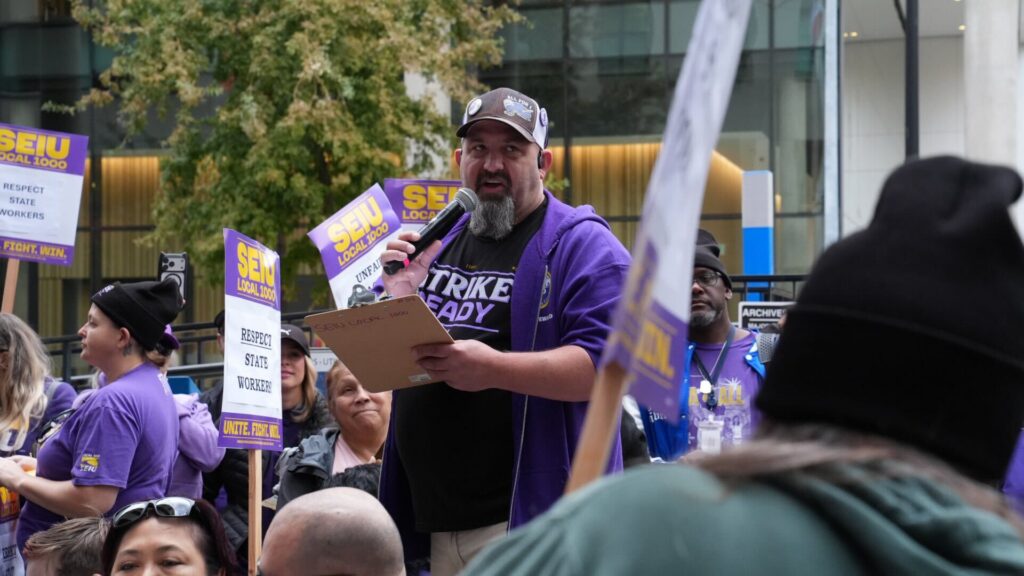
“Again and again, state employees have been asked to carry California’s budget burdens,” Josh Guile, a state worker and president of the union’s District Labor Council 768, said to the crowd.
“Enough is enough.”
The crowd answered with shouts and peals on plastic horns, and someone shouted, “Newsom sucks!”
As commuters finished their drives to work, at about 9:30 am, strikers were still getting plenty of support from those driving through the intersection of 11th and O streets, with a steady stream of honking from passing cars.
Outside the Secretary of State’s office at about 10 a.m., Letticia Gilmore, an office technician with the State Water Resources Control Board, said her message to the administration would be to return to the bargaining table.
“I want the governor, the negotiating team, to understand, that what we do matters … give us the benefits, the contract that we deserve to have,” Gilmore said.
She said her top priority for a new contract is raises.

Raises are particularly important for state workers who have risen as high as they can in their job classification, who can no longer receive performance-based raises, making yearly raises critical.
Regarding public perception of state employees’ plight, Gilmore said, “state workers get a bad rep … but if you look at myself … and my coworkers, we deal with a lot, especially if we deal with the public.”
Update: 9:25 a.m. Wednesday, Oct. 21
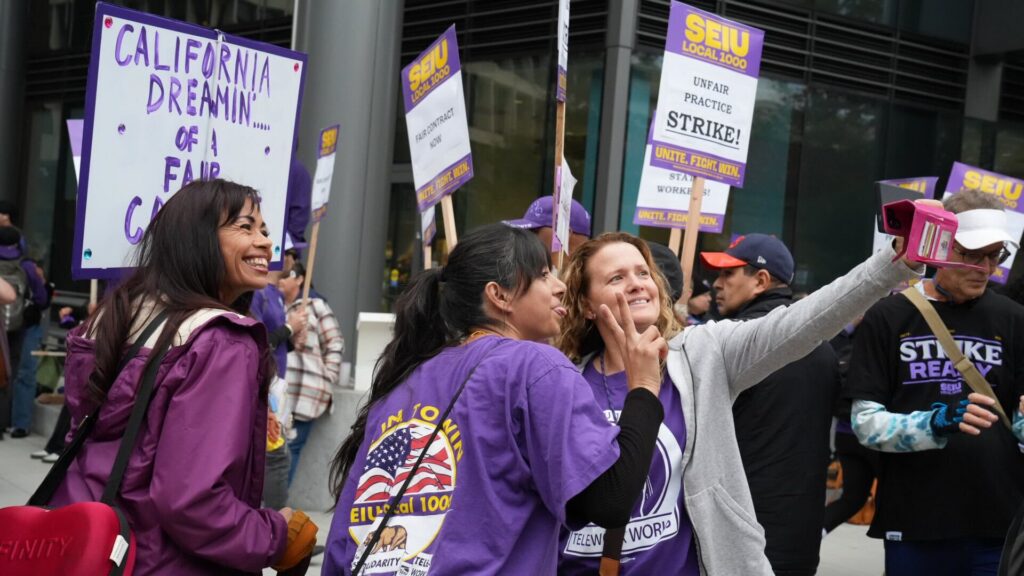
On the strike line together were Kai Ambakad and Troy Dujardin, both Employment Development Department trainers, picketing outside the YMCA, opposite the California Natural Resources Agency building.
Ambakad said his top issue was pay, and Dujardin said his top priority was what Local 1000 considers unfair practices by the Newsom administration.
“If the state feels comfortable simply telling us ‘no’ … that speaks to the condition of working people everywhere, and the degradation of working people everywhere,” he said.
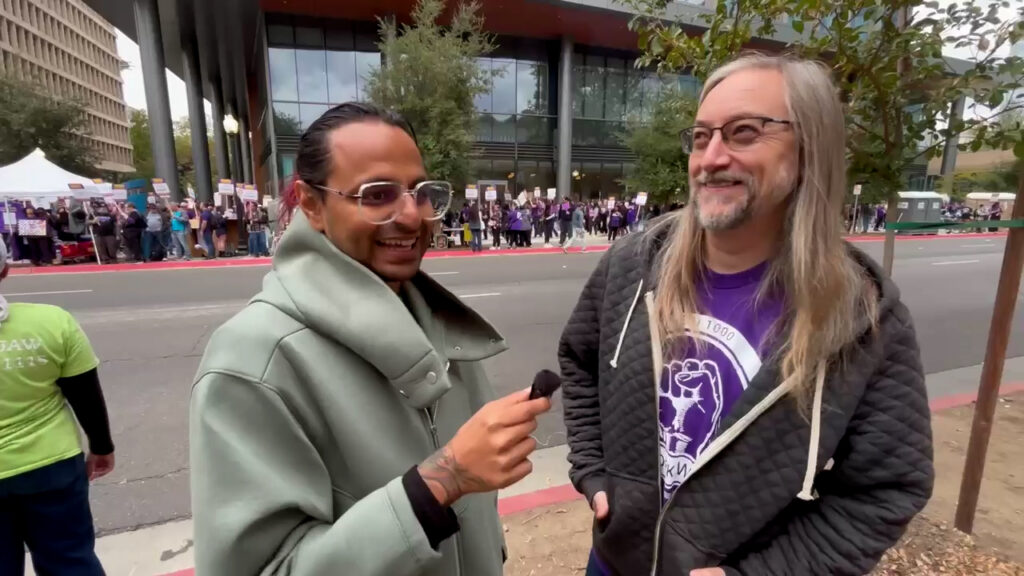
Regarding whether he had an appetite for more work stoppages if there’s no deal soon, Dujardin said, “I’m here as long as it takes personally … I feel the squeeze a little bit, but I’m fortunate I can make it work.”
He added that while missing work would be painful in the short term, a strong contract now would ultimately pay dividends throughout the rest of his career.
For his part, Ambakad said he’s “more than open to” striking for longer.
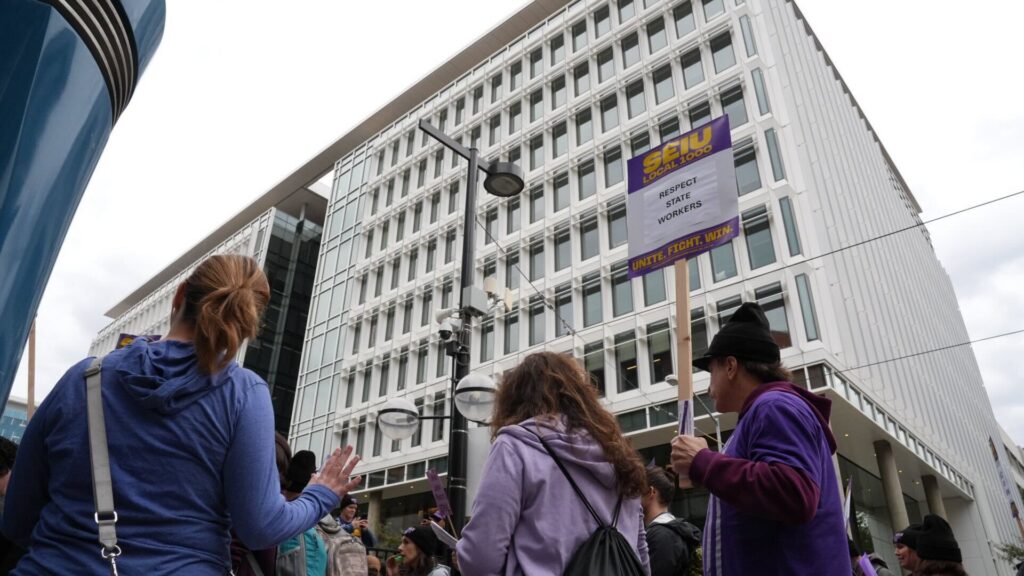
Update: 8:30 a.m. Wednesday, Oct. 21
Picketing outside of the California Natural Resources Agency building in Downtown Sacramento at 7th and P streets, Jim Lane, an analyst with the state office of emergency services, said he would strike “much longer if need be.”
Lane said the “financials” of the contract dispute with the state is a top priority, and added that telework, a major point of contention between state workers and the Newsom administration, is the best way for him to do his job.
“‘Work life balance’ … It sounds very good and mushy, but it’s critically important,” Lane said. “I can literally do anything I need to do on my laptop, and have (been able to) for years.”
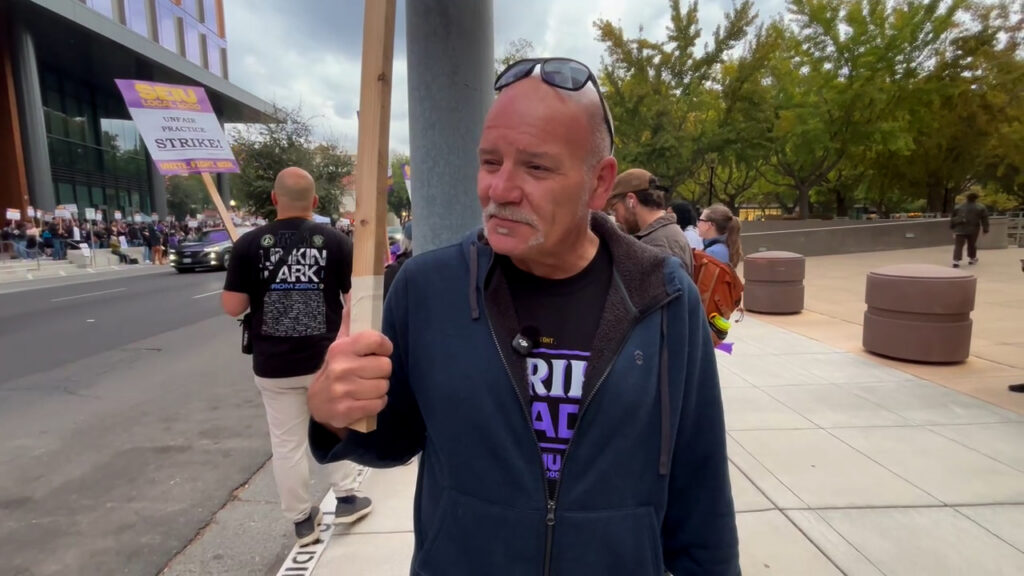
Arne Bracchi, an auditor with the California Department of Social Services, said if a deal isn’t forthcoming after today’s one-day strike, he’s willing to strike “as long as it takes.”
Bracchi, who entered state service in 2005, said his top priorities for a new contract include salary increases and “working from home.”
“I’m in the twilight of my career … I work with an outstanding team, a lot of them are the next generation. I’m doing this for them,” he said.
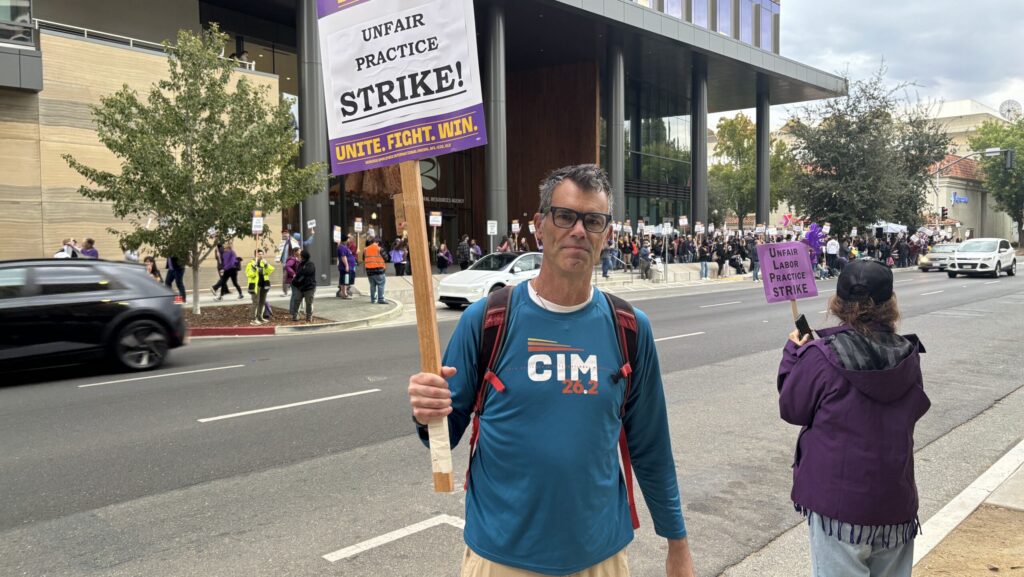
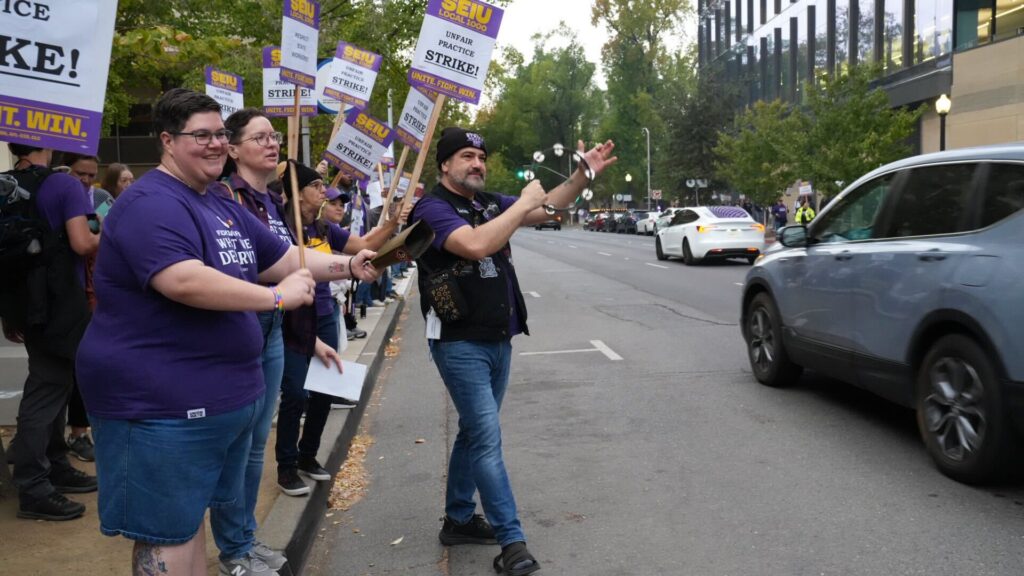
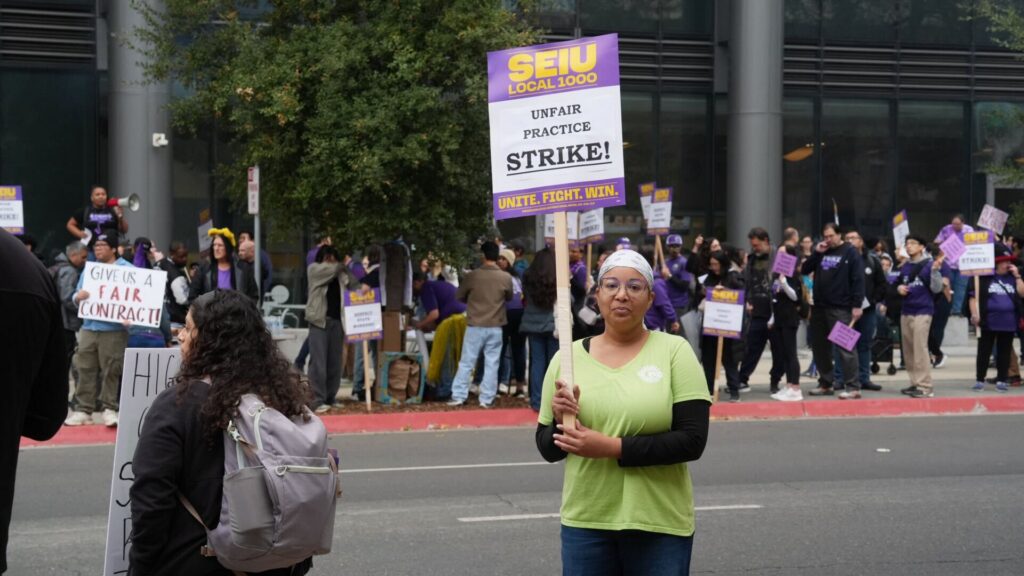
Update: 7:18 a.m. Wednesday, Oct. 21.
At least 300 members of SEIU Local 1000 and organizers were gathered at 7th and P streets in Downtown Sacramento after 7 a.m. Wednesday, many wearing purple and marching in picket line circles near sign-in tents set up by the union. Drivers were passing by and honking in support every few minutes.
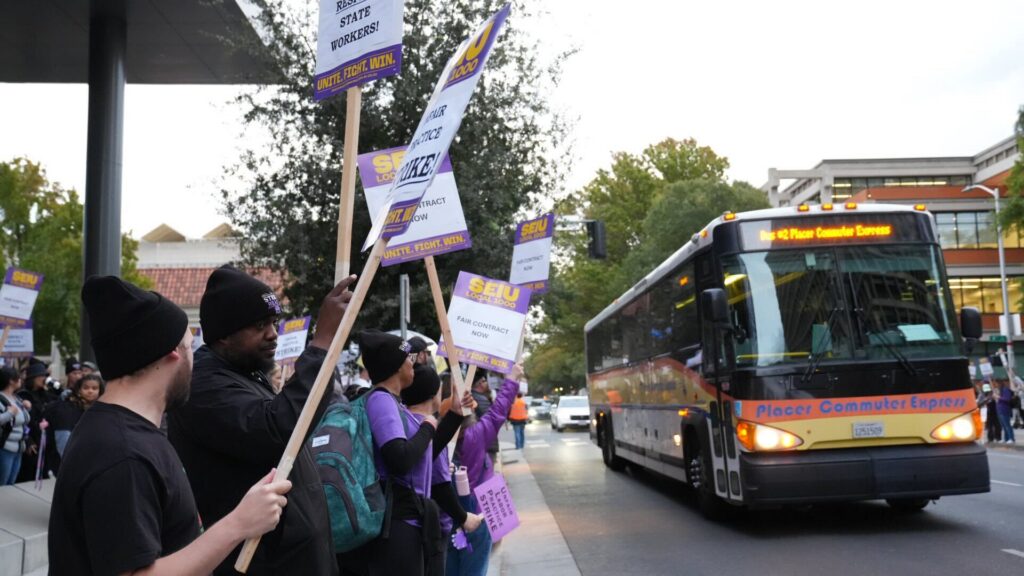
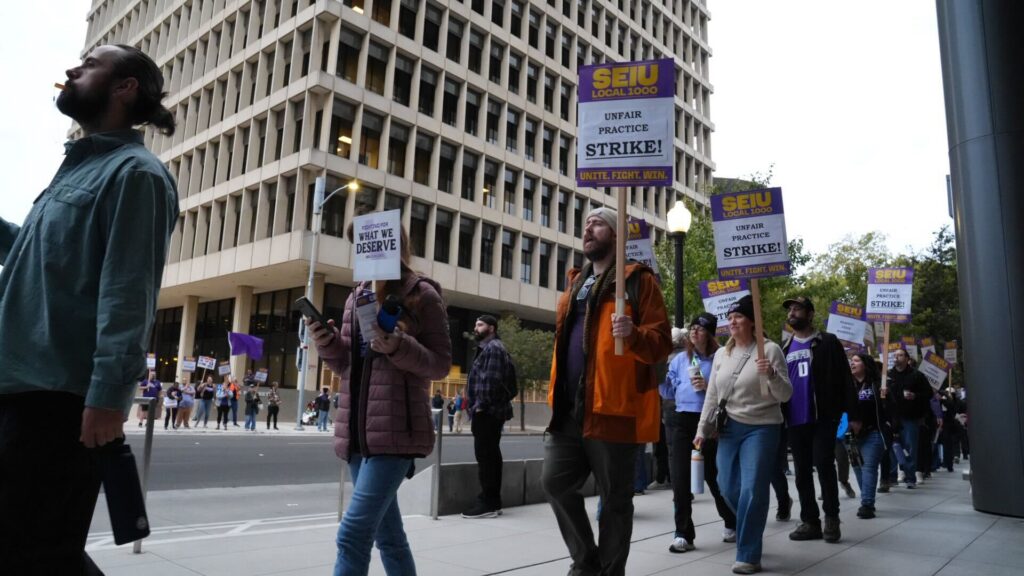
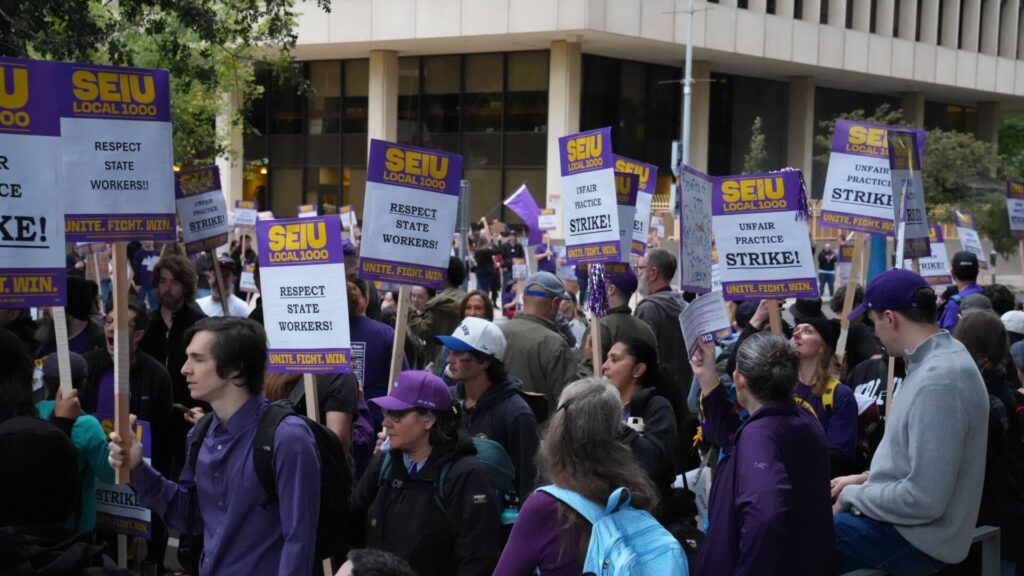
State worker union on strike
Wednesday’s strike marks the latest escalation amid tense negotiations that have been open since spring, before the union’s contract expired in June.
Those escalations have included claims of unfair bargaining tactics by both sides, a finding by California’s labor board that negotiations had reached a halt and an attempt by the Newsom administration to block the strike. The labor board didn’t agree.
With that momentum, Local 1000 may also intend the action as a show of strength amid its final contract fight with Newsom, who’s set to leave office in January.
The move may equally be aimed at California’s next governor, who’ll take over future negotiations with the state’s union workforce.