

The Abridged version:
- The Warehouse Artist Lofts, also known as WAL, celebrated its 10th anniversary this year. Artists live and work in the 116-unit space on R Street in Sacramento.
- Abridged interviewed four WAL artists including a dancer, a visual artist, a fashion designer and an archival producer.
- “It’s the first place that I had that’s my own place,” said one artist, allowing him to grow his confidence in his craft.
- Another artist said, “I think it’s super dope to be around people that like genuinely, even if they don’t understand your art form, they understand art.”
Over a decade ago, the late developer Ali Youssefi and his father, Cyrus Youssefi, proposed a new vision for Sacramento’s Historic R Street: To convert the historic Lawrence Warehouse into mixed-income housing for artists to live, work and build community. That vision became a reality when the Warehouse Artist Lofts opened to residents in January 2015.
Also known as WAL, the community is made up of 116 units with a shared performance space, dance studio, picnic area and rooftop garden. Artists can apply for market-rate or affordable housing units, which are leased on a first-come, first-served basis. Every first Friday, residents can open up their homes to the public. The building also has a marketplace, known as the WAL Public Market, which is open daily.
WAL continues to serve as a hub where creativity and community come together. As WAL marks its 10th anniversary, Abridged met with four residents to learn about their stories and artistic practices.
Jump to:
- Jayda Irene – Dancer, creative director
- Joha Harrison – Visual artist, photographer, filmmaker
- Janine Mapurunga – Photographer, filmmaker, fashion designer
- Chris Lango – Archival producer, researcher, filmmaker
Jayda Irene
Dancer, creative director
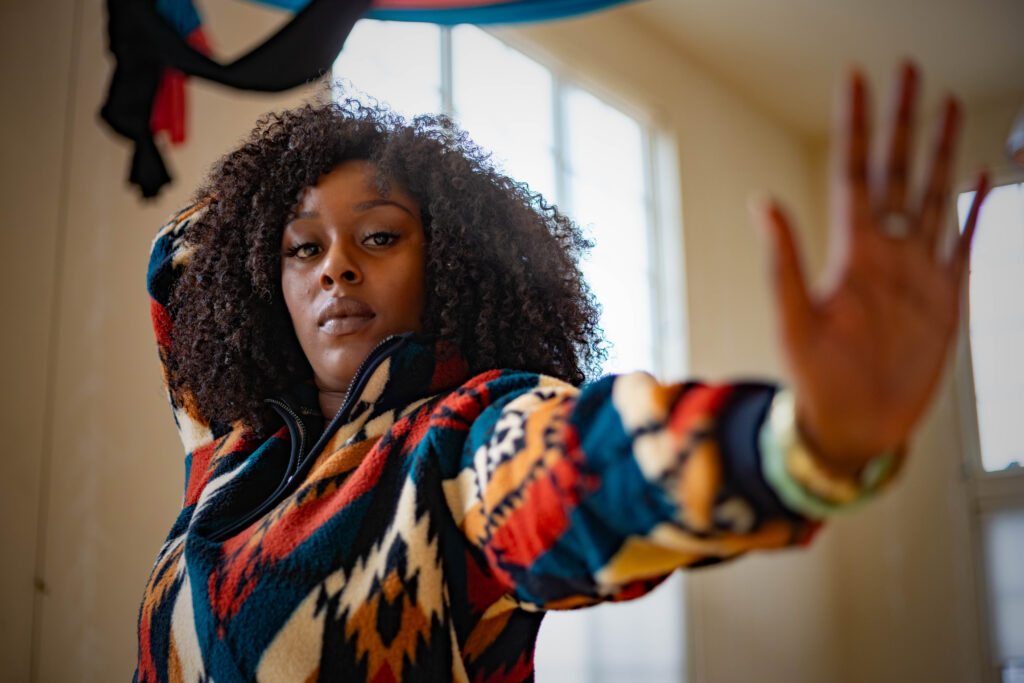
Jayda Irene is one of WAL’s newest residents, joining in September. The dancer and creative director quickly connected with the WAL community by hosting an open-mic event on the rooftop the first week she moved in. A native of Oakland, she moved to Sacramento to attend Sacramento State, graduating with a Bachelor of Science degree in criminal justice with a minor in sociology and dance. Irene is now a dance teacher at Grant Union High School and founder of the nonprofit “Heeling Heels” which hosts dance classes, workshops and performances that focus on mental health and building self-esteem. She has been dancing since she was a child but said challenging times as a young adult pushed her to dance more professionally and in her personal life.
Pushing forward through dance
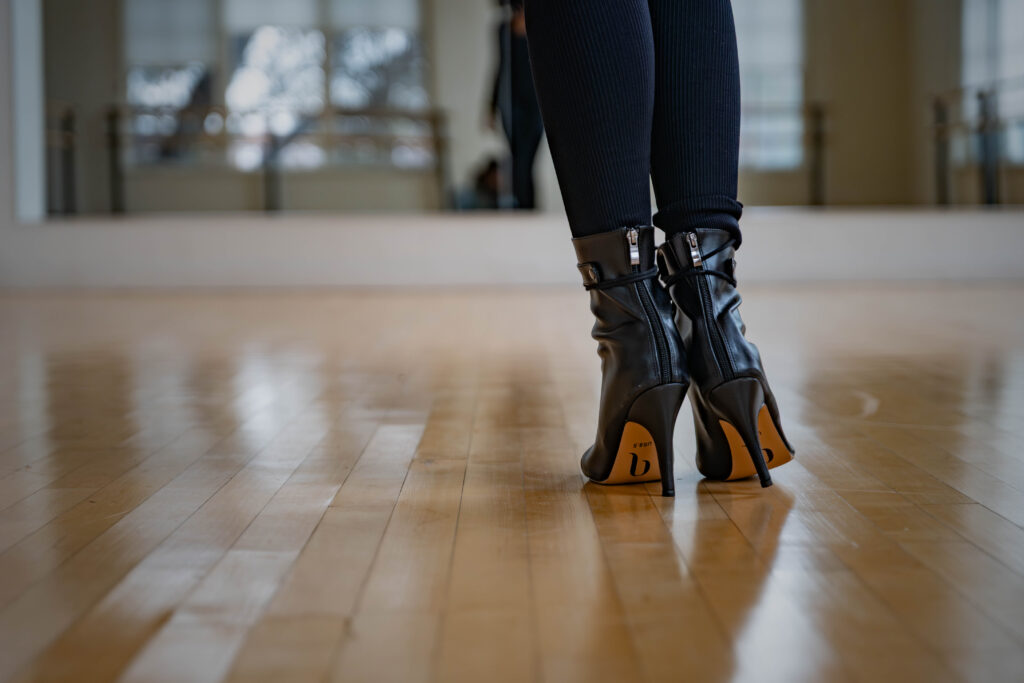
“I got into… a really bad relationship… I wasn’t dancing much, and then I found out about this class called heels,” Irene said.
At the age of 20, she began taking heels classes in Oakland and San Francisco. Her move to Sacramento to attend college would lead her to experiment with new dance genres.
“I didn’t find many heels classes, so I felt like super lost,” she said. “Instead of me fully giving up, I decided to take dance classes at Sac State.” That led her to training in jazz, ballet and contemporary dance.
“I just kept dancing, and then ironically, I got pregnant,” Irene said. “I had a terrible miscarriage and then it made me dance more. “
A few years later, a childhood best friend died, which made her “dance even more and create like a freestyle session for the community members.”
The loss of her friend was the start of a personal healing journey that would become the inspiration for Healing Heels. The nonprofit aims to turn “pain into passion.” She and her group of dancers travel around Sacramento, performing shows and empowering others through dance.
Dancing is healing
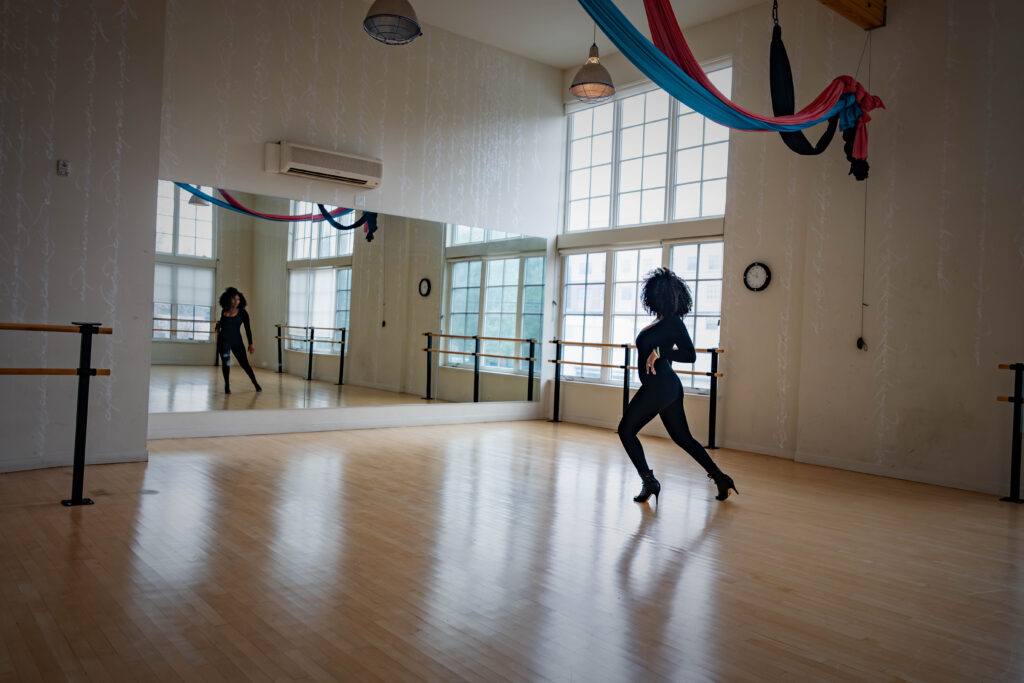
Through her hardships, Irene learned that “nothing’s promised to you, not even your health.”
“Even if you didn’t die tomorrow, but… you couldn’t use your legs anymore, how are you still going to potentially use movement to navigate through that, right?”
“We really do store things in our body,” she said. “If you don’t find a healthy way to release them, it stays in your body… If you have that stuff locked in your body and you never move it out… that becomes heavy. That’s how people get sick… For me, I understood, ‘Wow, I’m feeling like this,’ but as soon as I came from that dance class, I felt 10 times better… As soon as I freestyled, I felt like I’m free.”
Feeling herself
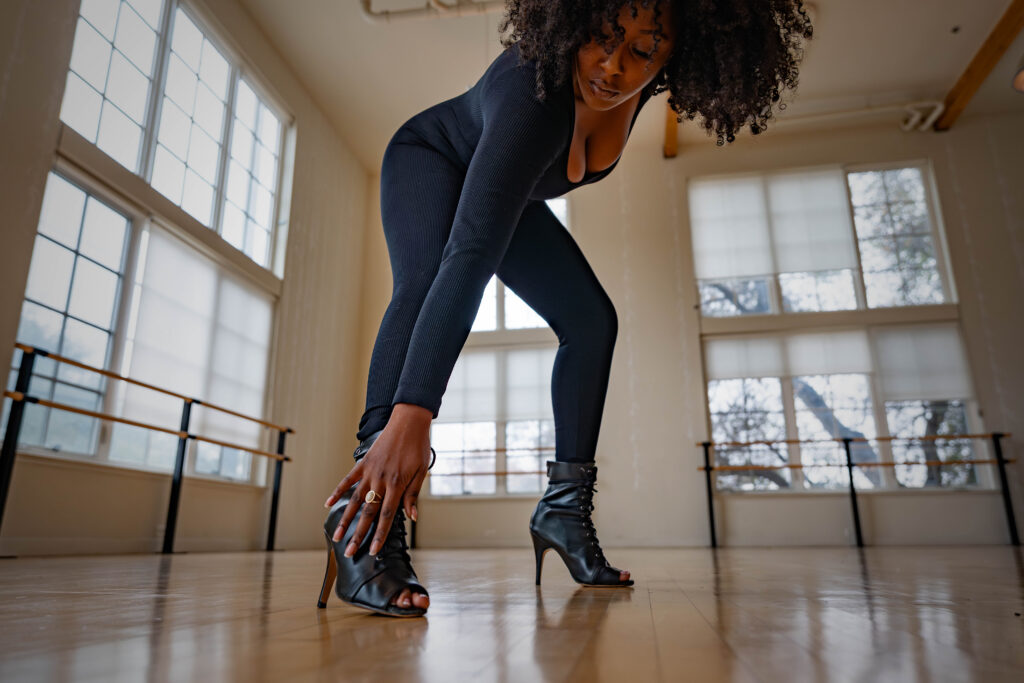
There is one thing Irene hopes for people to see when she dances: Confidence.
“It took a long time for me to be confident… I hated the fact that I found this magazine and the article said people… usually they turn 60, and that’s when they feel the most confident in their lives. I’m from Oakland, California, not a lot of people make it to 60 where I’m from. We barely make it to 25, 18, you know?… Imagine going your whole life and you don’t feel confident,” she said.
“I want them, even if they’re not taking my class, if they’re just watching, I want them to feel confident with the movement, and I want them to feel me and connect with whatever story I’m telling,” Irene said.
Living among artists
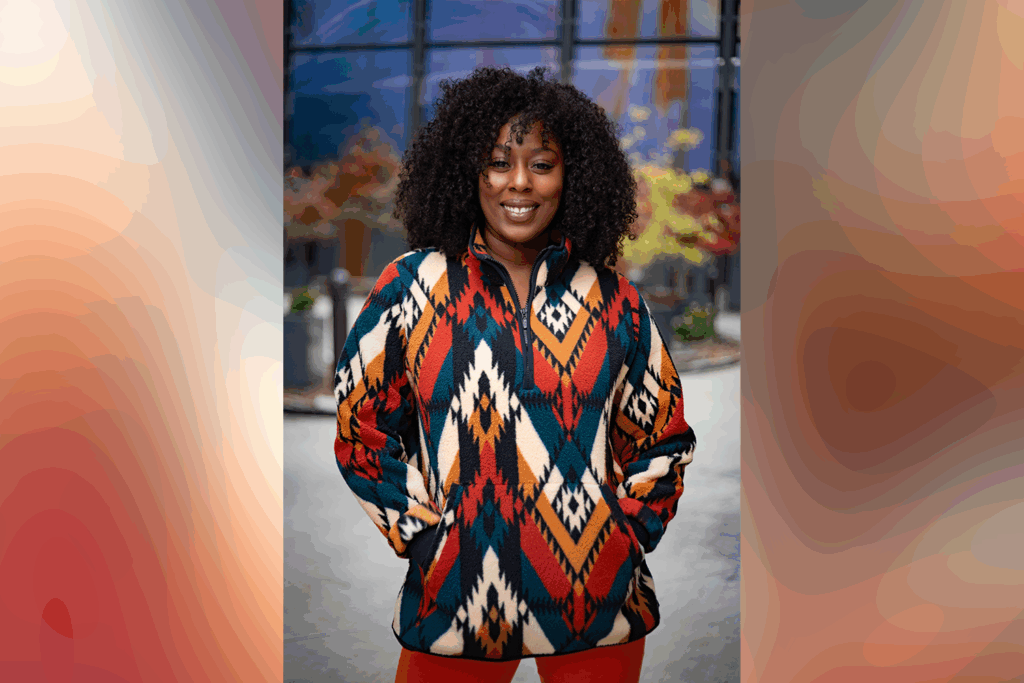
Irene said living among artists at WAL is “different and cool.”
“Sometimes you’ll be taking a nap and then you hear the drums playing and it’s like, to be honest, it’s fine… I think it’s super dope to be around people that like genuinely, even if they don’t understand your art form, they understand art… It’s easier to have a conversation, and have that like understanding of like, okay, the reason why my music is so loud is because I’m in there dancing. And now they’re like, oh okay, cool, that’s what’s up.”
“There’s so much more to do”
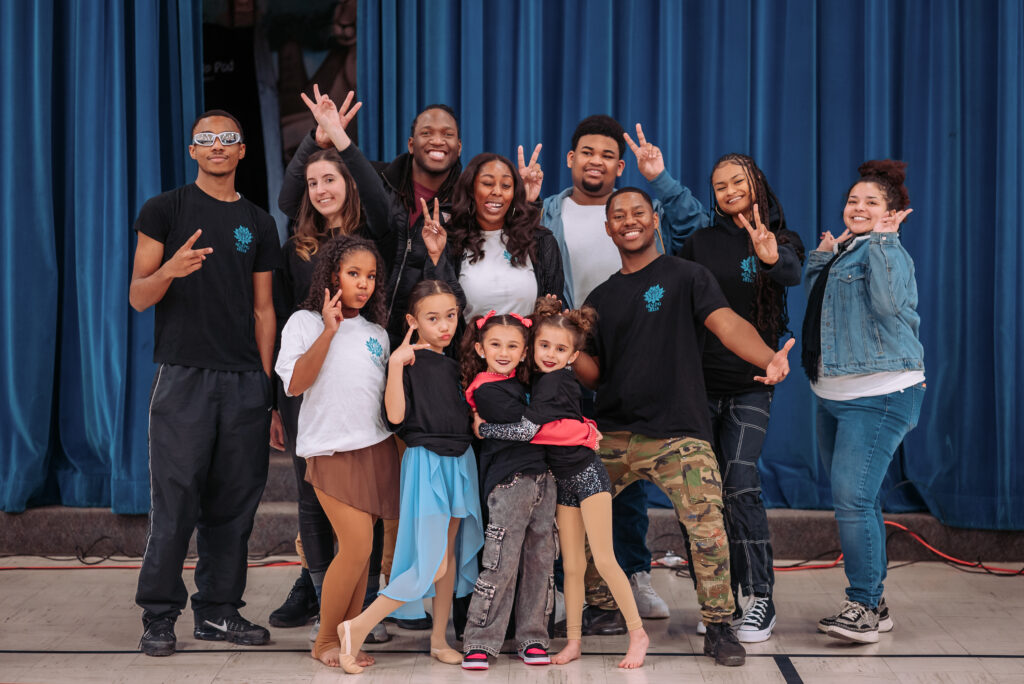
When asked about where she is on her artistic journey, Irene said “I feel like I’m still a baby, but then I have the babies with me and I’m like, okay, I’m not a baby. I’m actually a full adult and I’ve done a lot and I’ve grown a lot, and I have a lot of wisdom to give back and etiquette to teach the youth, and adults… I always strive for something more and… I’m trying to also be grateful for where I am in my journey right now… You’ll always want more, you’ll always want to be better, but where are you right now?”
Joha Harrison
Visual artist, photographer, filmmaker
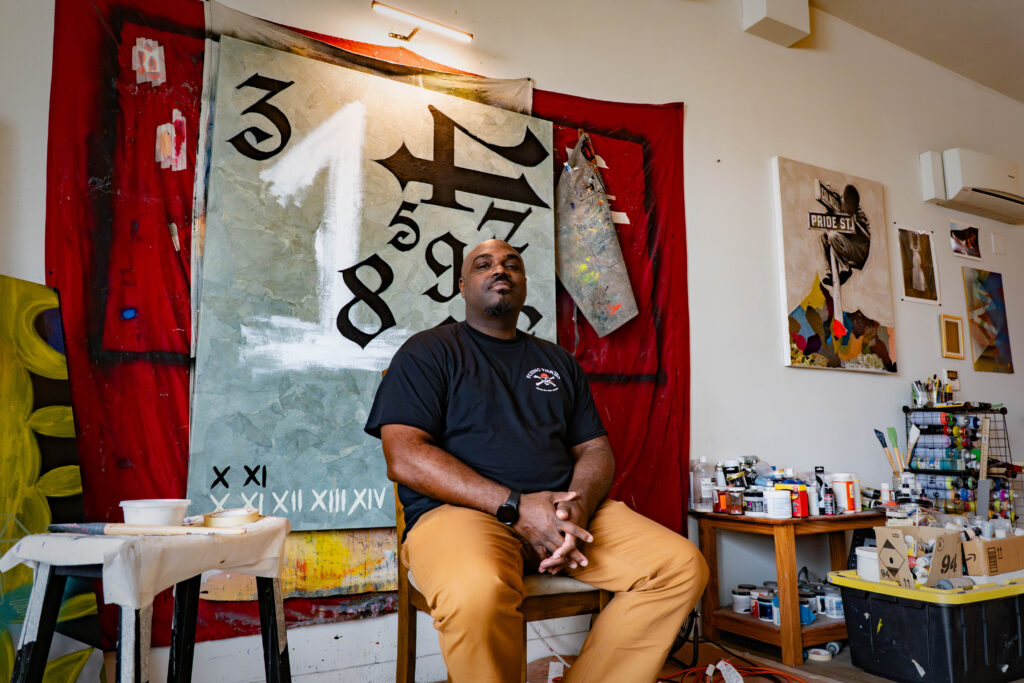
Joha Harrison began his art career in elementary school, admitting he did more art than he did other schoolwork — even winning a few blue ribbons. After a pivot to sports, he returned to art in high school through photography. Originally from Louisiana, he came to Sacramento on a mission trip while attending college in Georgia. After deciding to stay, he lived all over the Sacramento region before coming to WAL where he has lived for five and a half years. Harrison balanced photography and other jobs for several years before shifting his focus to paintings. He began honing his craft more in 2020. His abstract work often consists of photographic images, homemade paper, acrylic, spray paint and other items. He says he doesn’t gravitate towards being a realistic painter.
Seeing things differently
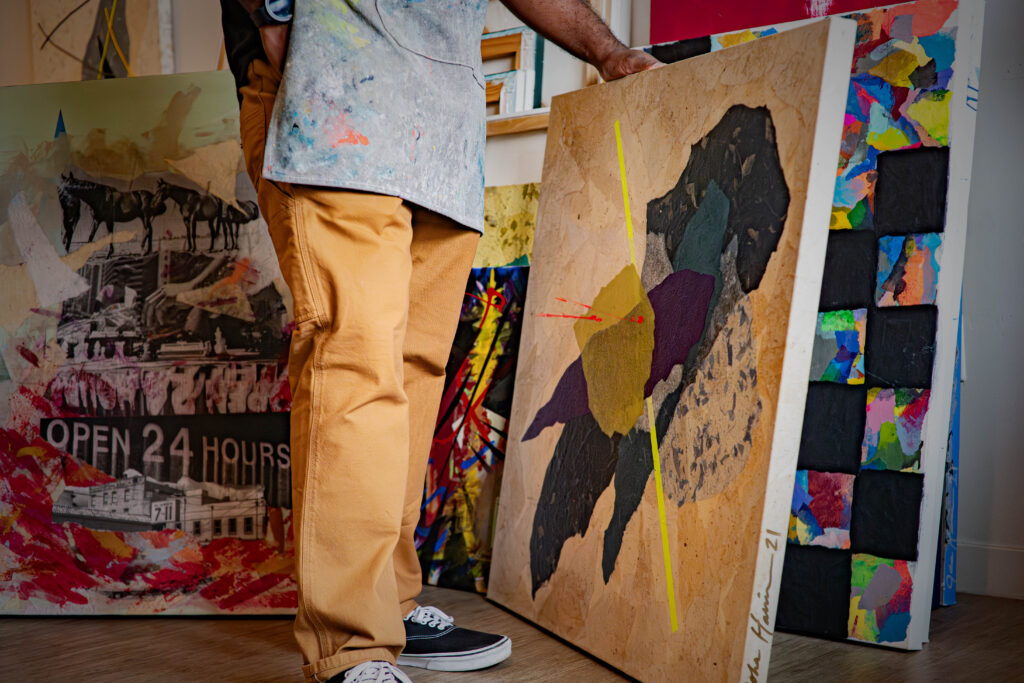
“I like the abstract, because it works on each person’s individual mind. You can look at that painting and see something… I can see something else… 1,000 people could see 1,000 different things,” Harrison said.
Harrison sees abstractness in his work as the foundation. When he incorporates realism— the photographic images— he believes he is “creating experiences for people to… unlock… patterns of thoughts that may not have been there before.”
“I can create something that can interact with someone on their own level, and it could be just for them,” he said.
“It’s okay to think something looks like this.”
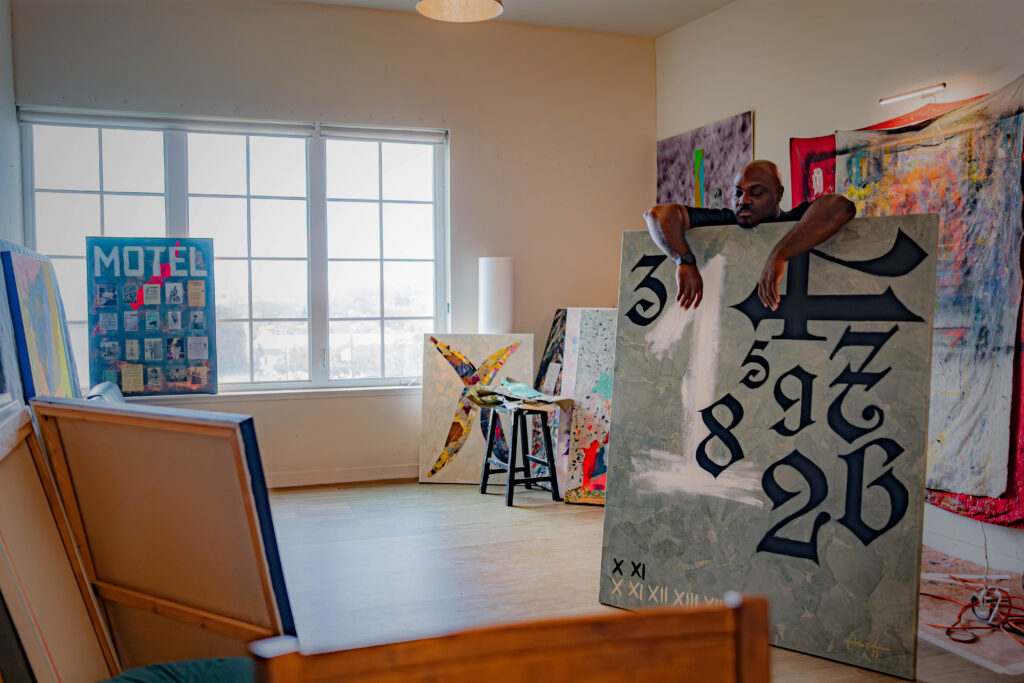
Harrison hopes the audience takes away more than what is on the canvas.
“It’s okay to let your mind have fun. It’s okay to challenge things. It’s okay not to get stuck in a box of patterns. It’s okay to be free.”
He pointed to his painting “The Saga Continues,” a mixed media piece that features Arabic and Roman numerals.
“You look at these numbers. Whatever your brain thinks about the number eight… Whenever you were eight years-old, you had a memory,” he said. “That might be the only thing you remember. But, let’s say it was traumatic, right? It’s okay to go back to that traumatic thought and work your way out of that, you know?”
Approaches to painting and photography
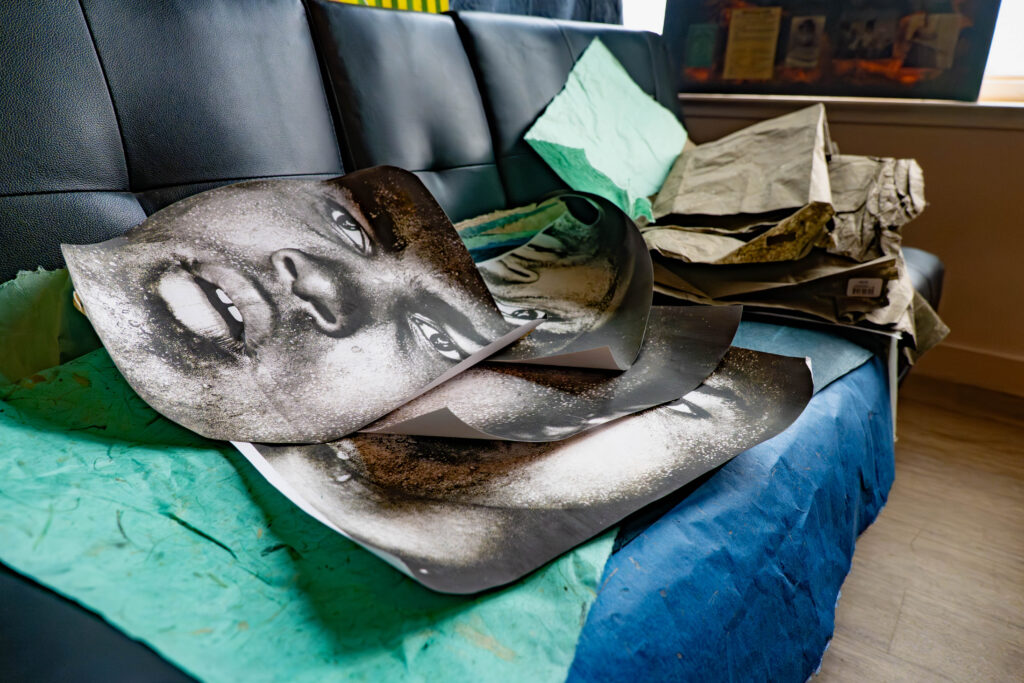
When taking photos, Harrison said he focused on balancing the compositions through mindful placement of elements in the foreground and background. However, he approaches painting in a slightly different manner.
“I don’t really like perfect compositions in painting, because it goes against the idea where I say, ‘You’re free to not be stuck in the… boxes of patterns.’ If the composition is too perfect, then it’s creating a box for you to sit in,” he said.
Still, he creates balance in his paintings through other means. “I try to make it balanced with the structure. The weight, the colors, I just try to balance it… so that it’s not too perfect.”
WAL gave him an opportunity
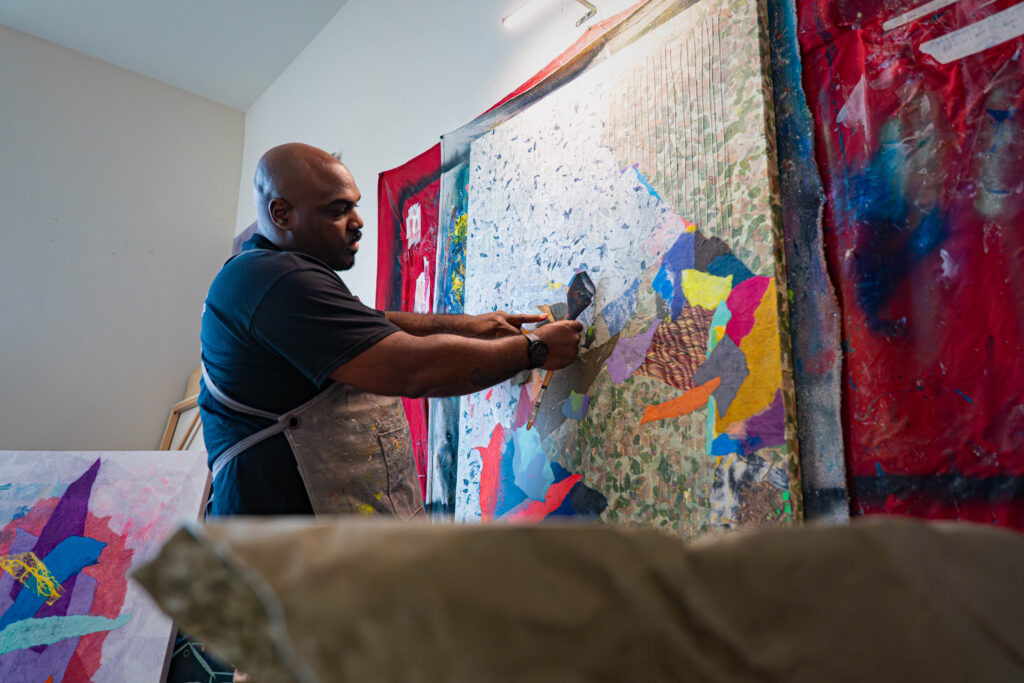
Living at WAL has given Harrison the confidence to grow in his craft. He said he finally had more space to create.
“It’s the first place that I had that’s my own place,” he said. “That was paramount for me.”
Aside from having a space to live and work, Harrison said the artistic spirit of WAL keeps him motivated.
“Let’s just say you’re having a bad day or whatever or you’re not feeling so good about your work. You might walk out of your apartment and see somebody transporting a painting. Just walking out of your door, you get inspiration just off of that,” he said.
Just getting started
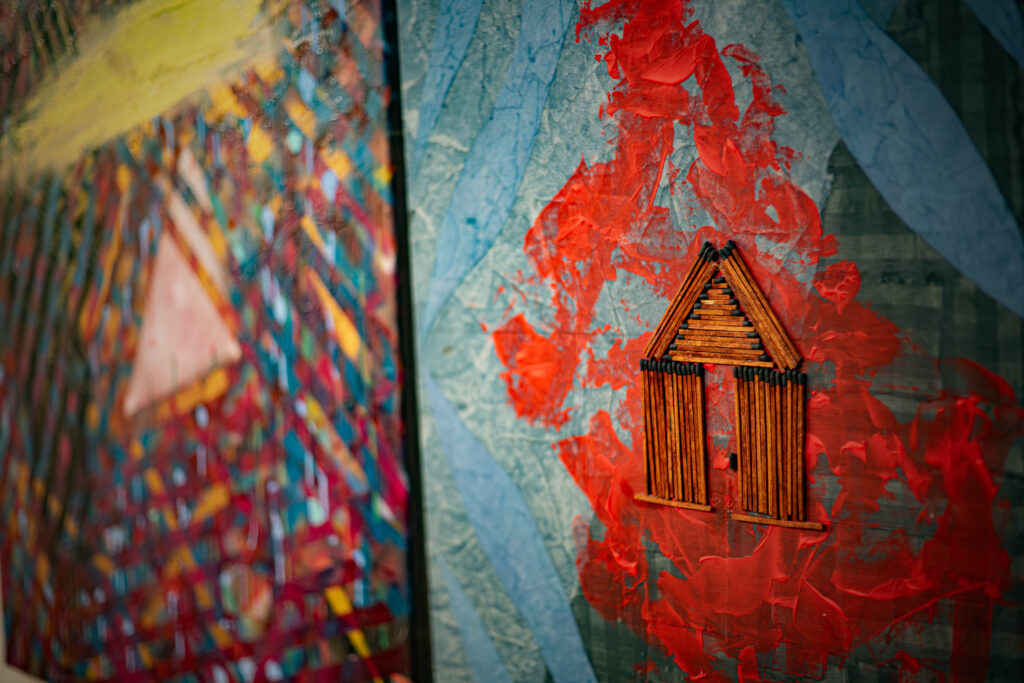
Despite being an artist since his youth, Harrison said, “If you look at it in terms of like a life cycle, I’m probably like a toddler, like a 2-year-old… I’m getting my ideas out… There’s so many things that I wanna do.”
“All the different things that I want to make… they all have their time.”
Janine Mapurunga
Photographer, filmmaker, fashion designer
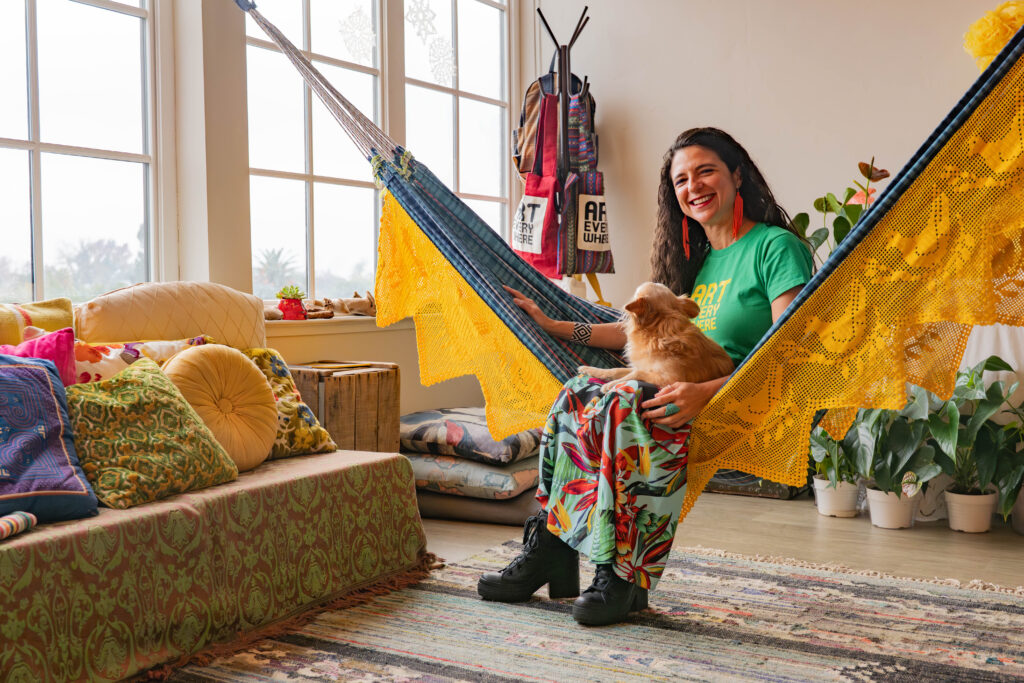
Janine Mapurunga is a photographer, filmmaker and fashion designer who has lived at WAL since its opening in 2015. She was the first in line when applications opened to live at WAL, claiming her spot in line at noon the day before. A native of Brazil, she began taking photos after receiving her first film camera at the age 10.
She developed her career as a photographer after immigrating to the Sacramento region when she was 16 and became the first woman to teach in the photography department at Sacramento City College. Today, she is elevating artisan crafts from Brazil through her fashion brand, Maria Canta, which sells hammocks, blankets, clothing, t-shirts, jewelry, bags and leather sandals with recycled tire soles. The brand originates from her love of the hammocks she would buy from her hometown.
“Everything was handmade.”
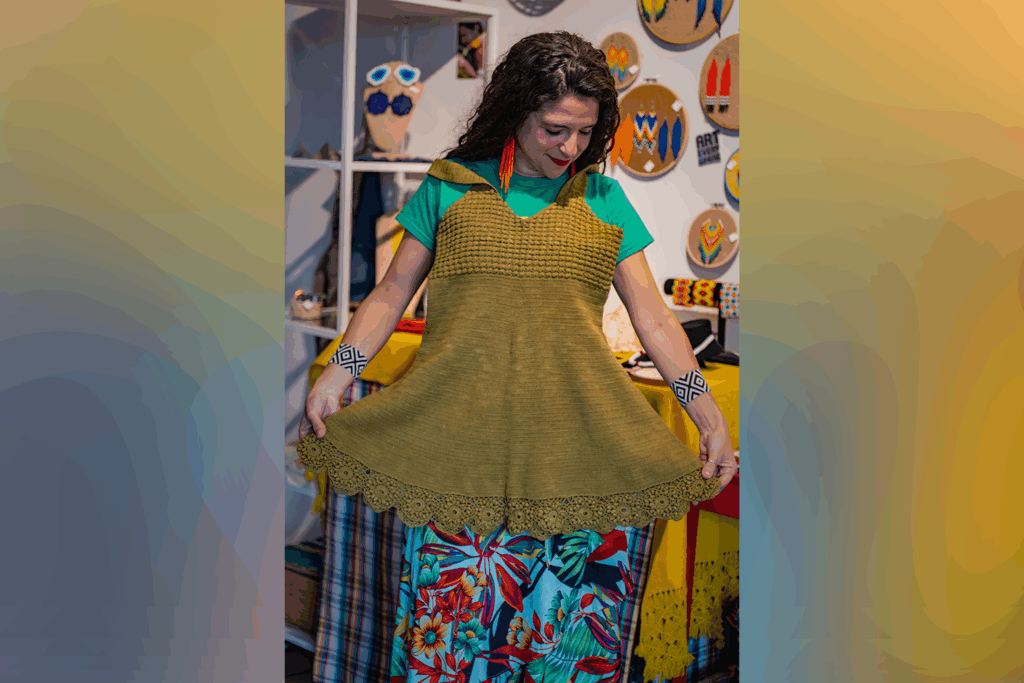
Mapurunga is no stranger to preparing things by hand. She grew up in a house with her grandma and great-grandma where chicken for dinner came from the backyard and clothes were designed and custom-made.
“When I was 14, my grandma gave me a gift for my birthday. She said that I could design a dress and I could pick the color of the thread, and she would pay for the crochet lady to make it for me. I have it to this day. That was the first piece I ever designed,” she said.
Around 2013, she saw “these super colorful plaid” hammocks in the fabric store in her hometown in Brazil, which she fell in love with.
“The problem is that every time I go home, I’d buy myself another hammock, and I just had too many hammocks,” she said. “It was 2016. I bought 20 hammocks, and I brought them here. I sold out just selling to my friends. People just love them. It started with the hammocks and then I couldn’t stop…. I wanted to work with all the artisans, because that’s the culture I come from. We have basket weavers, we have seamstresses, people who make jewelry, people who make ceramics.”
Mapurunga said handmade crafts are an integral part of her native culture. “Everywhere you go, you will find just the most beautiful things,” she said.
Maria Canta embodies culture and female labor
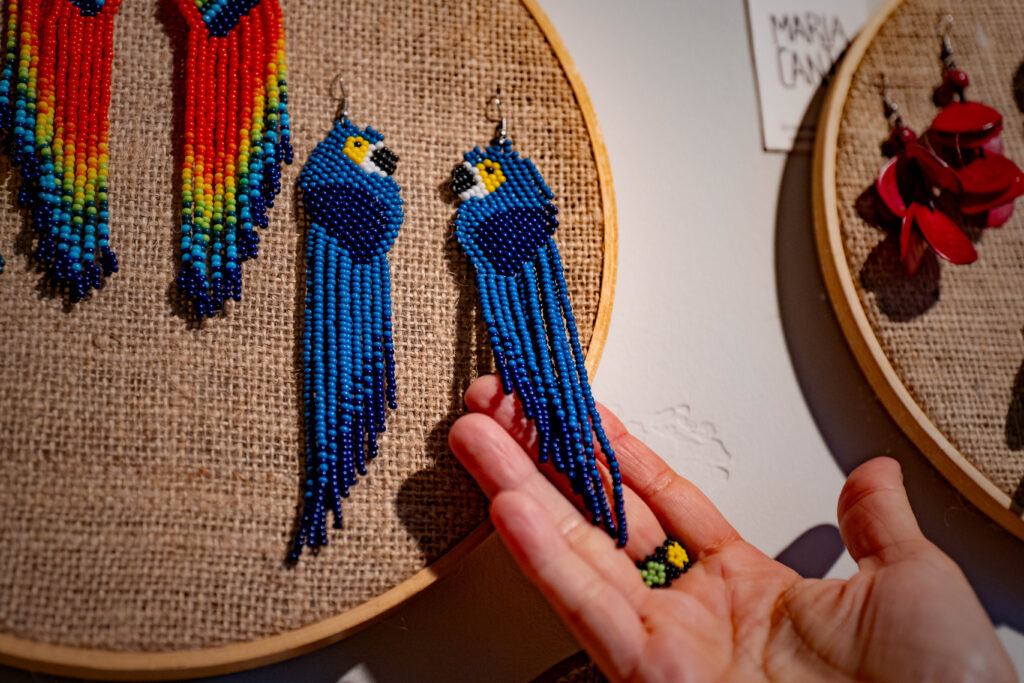
The name Maria Canta means “Maria sings” in Portuguese. The name Maria is significant in Mapurunga’s life.
“Maria was my grandma’s cook. My grandma ran a bed and breakfast for 45 years out of our family home. So Maria, when she would work, she would hum. She was always humming songs. I chose Maria as a symbol for all the Marias, for all of our female caretakers, our grandmas, our mothers, our aunties, all the Marias who are responsible for taking care of all of us and also moving the culture forward into the next generation, because they have the cultural knowledge, they have the recipes, they know how to make the different crafts, right? And, female labor doesn’t get enough recognition in Brazil,” she said.
Art is everywhere
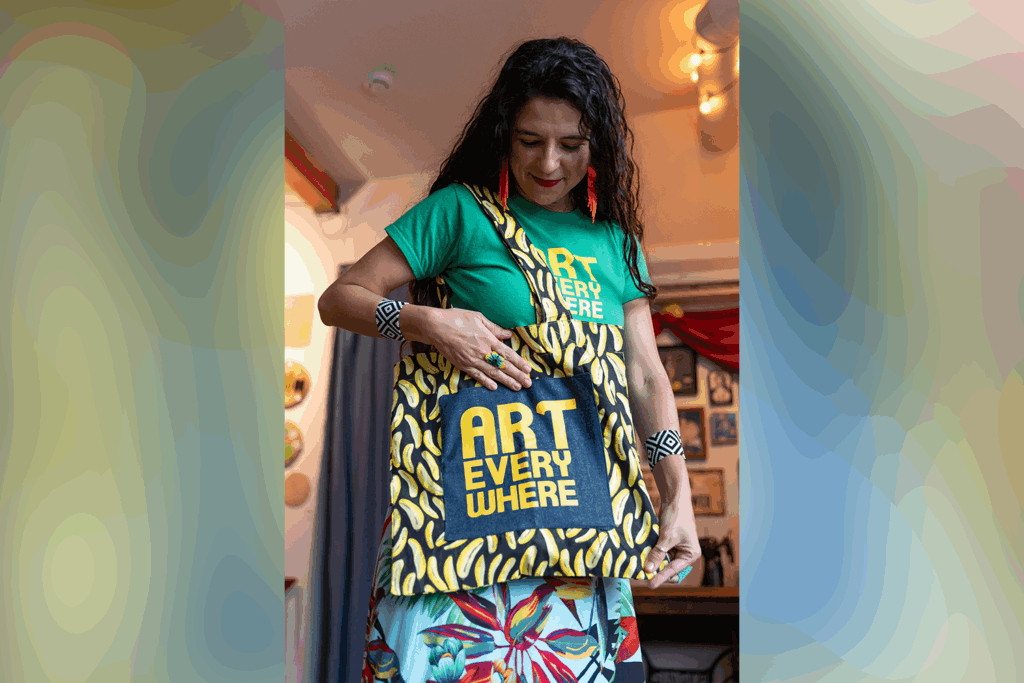
There’s a common phrase you’ll find across many products from Maria Canta: Art Everywhere.
Mapurunga explains it in two different ways.
“In the one hand, art is everywhere. All you have to do is open your eyes, right? You look at nature, nature is art. You look at culture, culture is art. You look at the way that the breeze touches the leaves on a particular tree, and then all the leaves start dancing. That’s art, right? You look at the way that someone moves their body, someone inhabits the space, just the way that they navigate the space very artfully, very carefully, very mindfully. That’s art.”
“These modern lives that we live with all these worries and responsibilities and all this other stuff, if we strip that down to the foundational element of it, what there is art. That is our connection with ourselves and with the world around us.”
“From another point of view, humans are fundamentally creative. That is one of the defining factors that that define us as human and not as any other species.”
“When people say, I’m not creative, everybody’s creative. Your life is your creation. The way that you’re choosing to live your life is your own art form,” Mapurunga said.
Connecting with other WAL residents
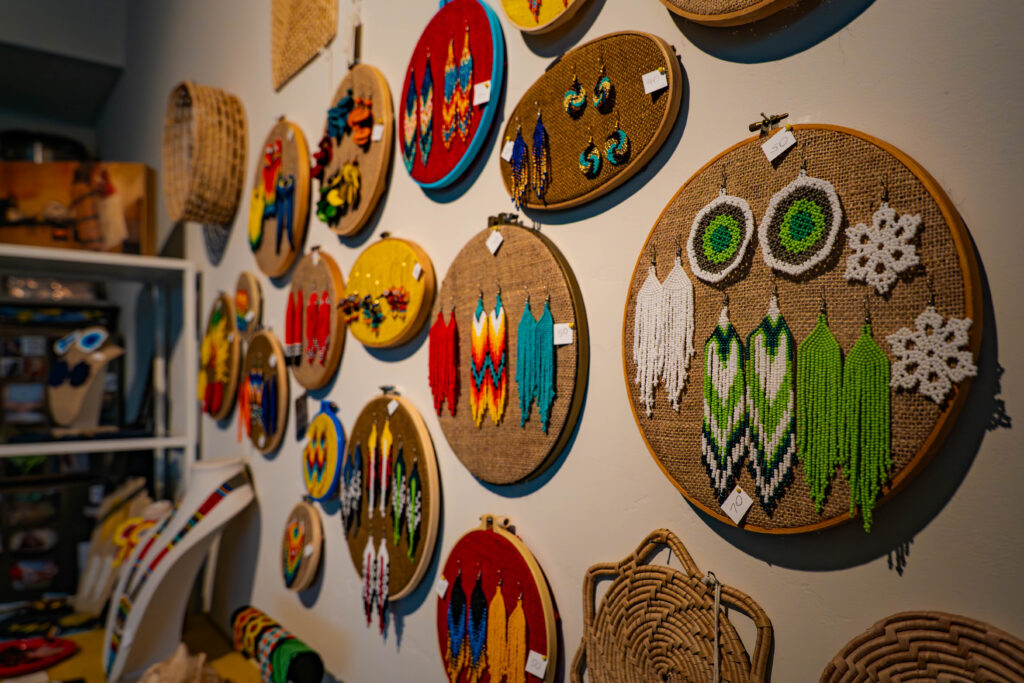
Having lived at WAL for 10 years, Janine has found a community among many residents.
“I’ve learned from a lot of different local resident artists who practice a totally different medium from me. I’ve collaborated with a lot of people from all over the years… I’m a very social person. I’m a big connector. I learned it from my grandma,” she said. “Learning about what people are doing, and then connecting them to other people that I know, and then also looking for those connections as well has been very integral to the growth of my practice… That community aspect has been very key in growing my practice too.”
‘I’ve taken a lot of big chances.’
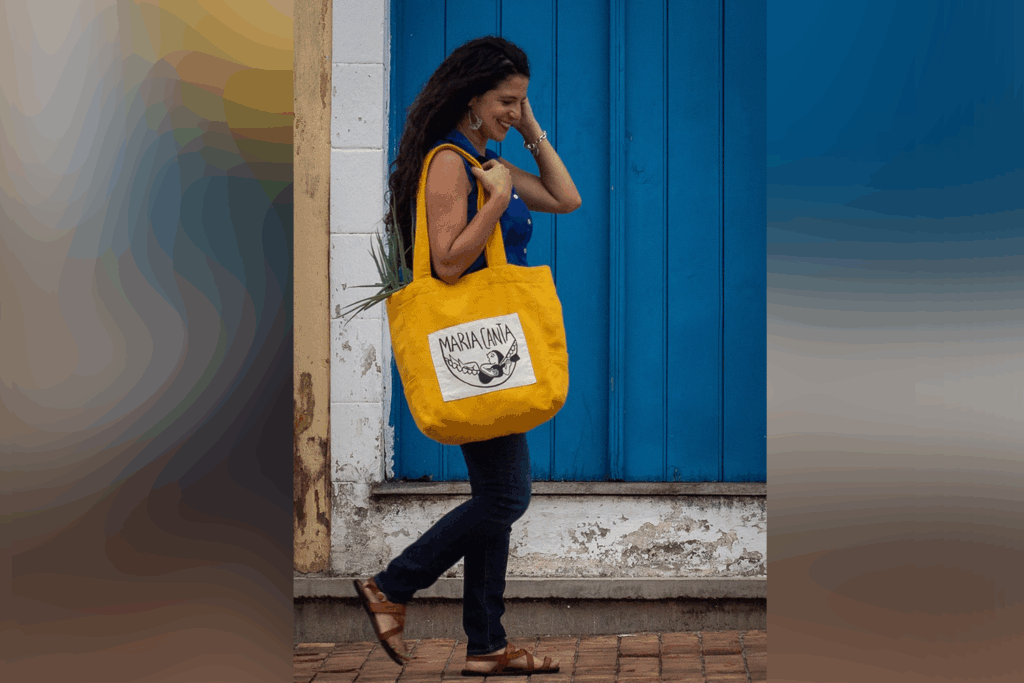
For Mapurunga, starting Maria Canta was just the beginning. It has helped her overcome doubts in venturing outside her typical work.
“It’s crazy because I’ve been a professional artist my entire life, my entire career, but I feel like I’ve just scratched the surface. I’ve taken a lot of really big chances. Maria Canta is a huge chance that I took in confronting my own insecurities because of… imposter syndrome… I’m not trained as a designer. I’m trained as a photographer… Who am I to think that I can come and design? It’s just all of these limitations that we set for ourselves,” she said.
“I started it from an artistic sense, from an instinctual inspirational sense. I feel like that was a huge step for me, and that now I’ve gained so much knowledge, I’m just so excited to see what’s next,” Mapurunga said.
Chris Lango
Archival producer, researcher, filmmaker
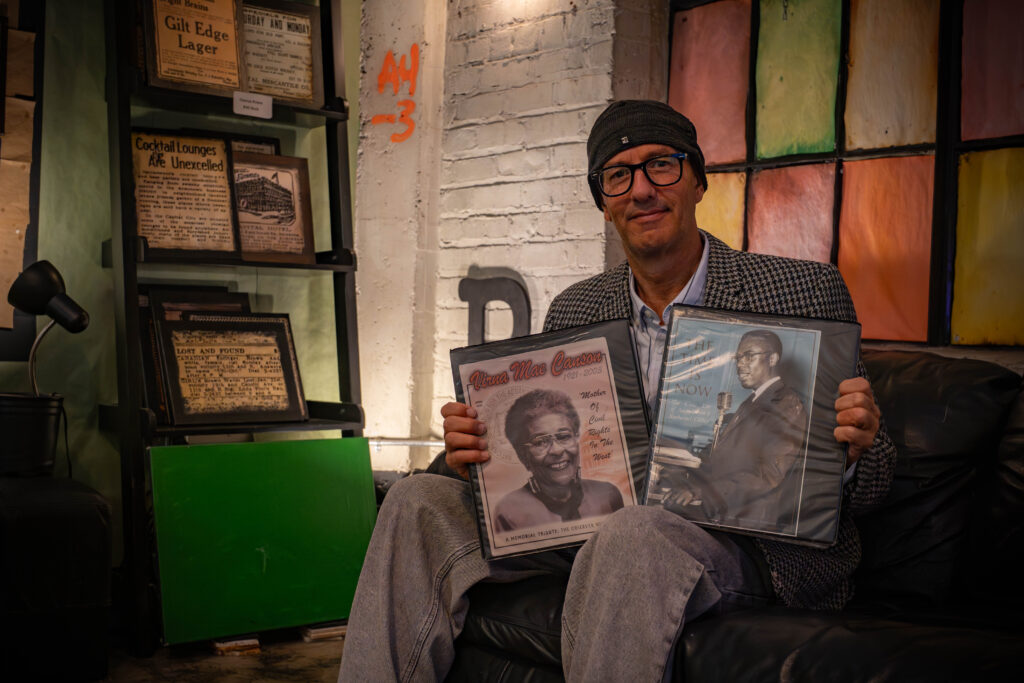
Chris Lango’s home of 10 years at WAL is covered in re-printed newspaper clippings and images of important historical figures. As an archival producer, he has worked extensively to shine a light on Sacramento’s history, particularly the fight for civil rights, through historical footage and images.
Originally a sports producer for KCRA, he began delving into archival work after his position was eliminated. He decided to volunteer at the Center for Sacramento History for video production, where he became more involved with archival work.
His documentaries include “The Time Is Now,” which details the life of Sacramento’s Nathaniel Colley, and “Replacing the Past” which is about Sacramento’s downtown redevelopment in the 1950s and 1960s. This year, he produced a documentary ‘WAL – The First 10 Years‘ celebrating WAL’s 10th anniversary, where he spoke to several of his fellow residents and shared the impact that Ali Youssefi had on many.
Seeing art in history
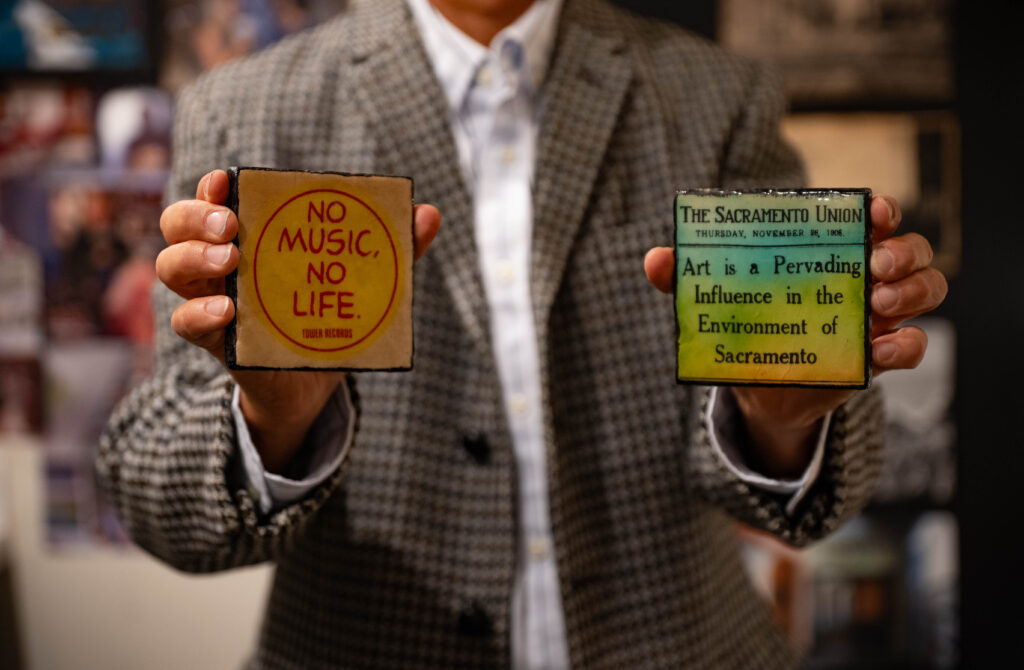
Lango’s documentary work uncovers and re-purposes real moments in time. He believes that art comes into the picture when trying to present the information in a way “so that it lands cleanly for the viewer or the person that’s engaging with it.”
“When you can hear somebody’s voice whether it’s an oral history or a film or whatever you’re doing, and you can see them fighting these battles… even if it’s just seeing archival footage of a person on the street interviews from 1948 when there was a snowstorm or something… I think that just is enlightening,” he said.
“When I do talks on all of this stuff, it’s really me just filling in the gaps between the clips and the photographs, so the engagement part for me is really elevating the history and the people who made it. Other artists do that through painting… I do it through their own voices.”
Beyond the screen, Lango also plays with the visual arts by creating items with his historical findings. He sells hundreds of coasters with humorous newspaper clippings and iconic Sacramento imagery.
From the past to the present
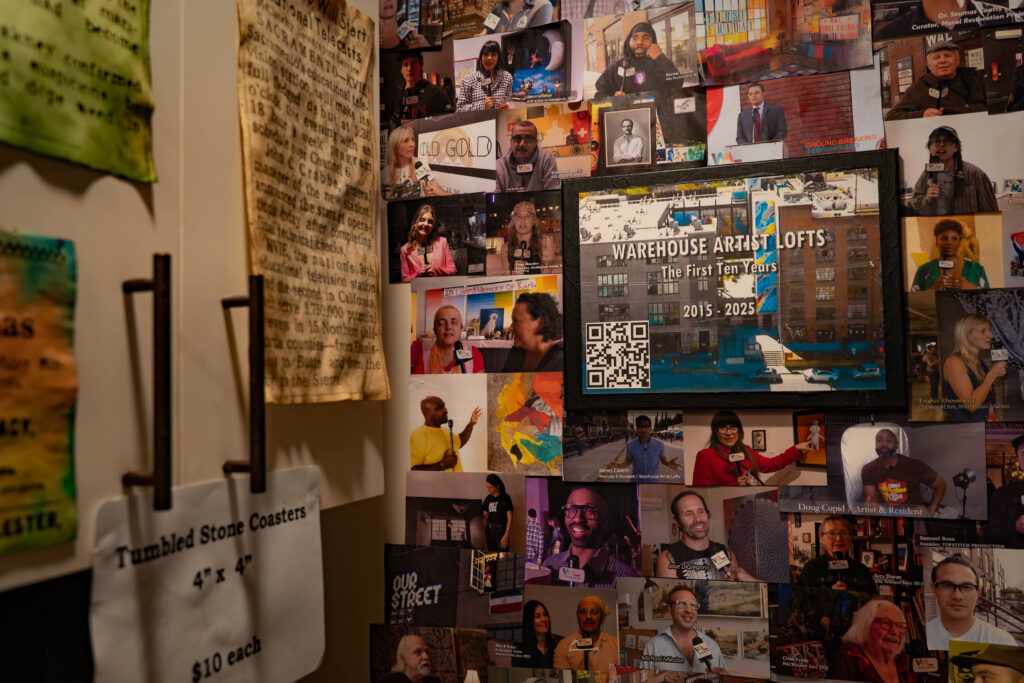
Lango finds value in helping people understand history through his work.
“If we don’t know our history… then we’re bound to repeat those mistakes that were made… It’s important to understand our history, and… a way to get that out so that people do engage in that. Every artist or creative person is different in the way that they do that,” he said.
The one that started it all
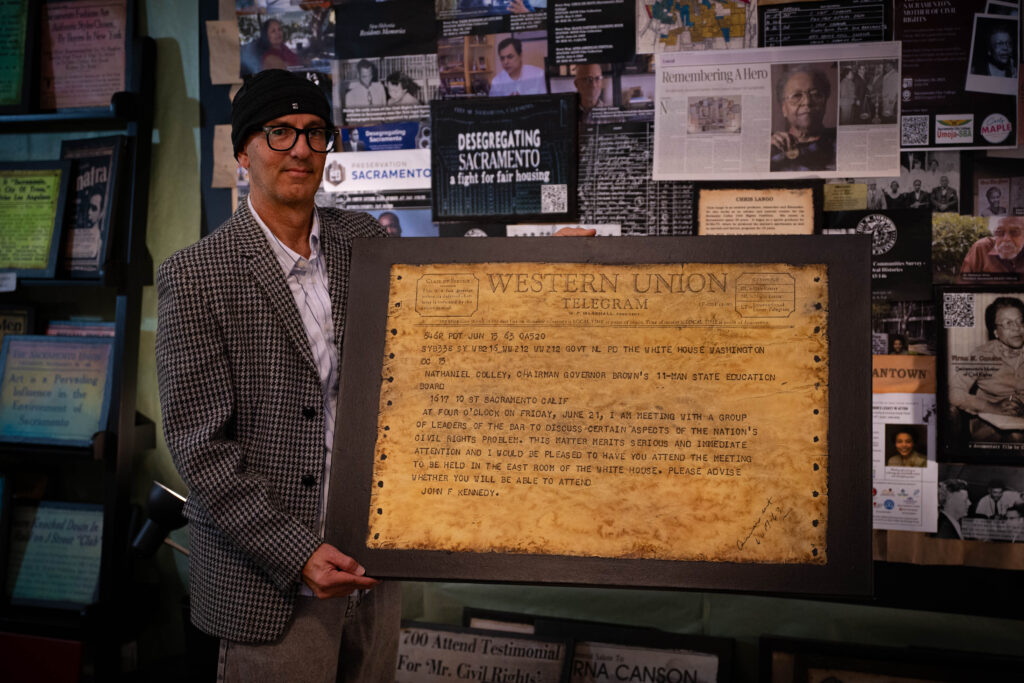
There was a particular moment that led Lango down the path of producing his first major documentary. While volunteering at the Center for Sacramento History, he found a telegram among the papers that had just been donated by the Colley family. It was telegram sent to civil rights activist Nathaniel Colley from then President John F. Kennedy asking Colley to meet with him about civil rights issues.
“I was like, ‘Wait a minute, whoa, who is this person?’ I had never heard of him, and then the president urgently called this man to the White House, whose office was just around the corner,” he said.
That set Lango on a path to learn more about Colley. “It hits me in a certain way that I just feel compelled to… elevate that history, and I’ve had… a few different experiences where you go, ‘Oh wow, that was kind of an aha moment,'” he said.
A special connection to WAL
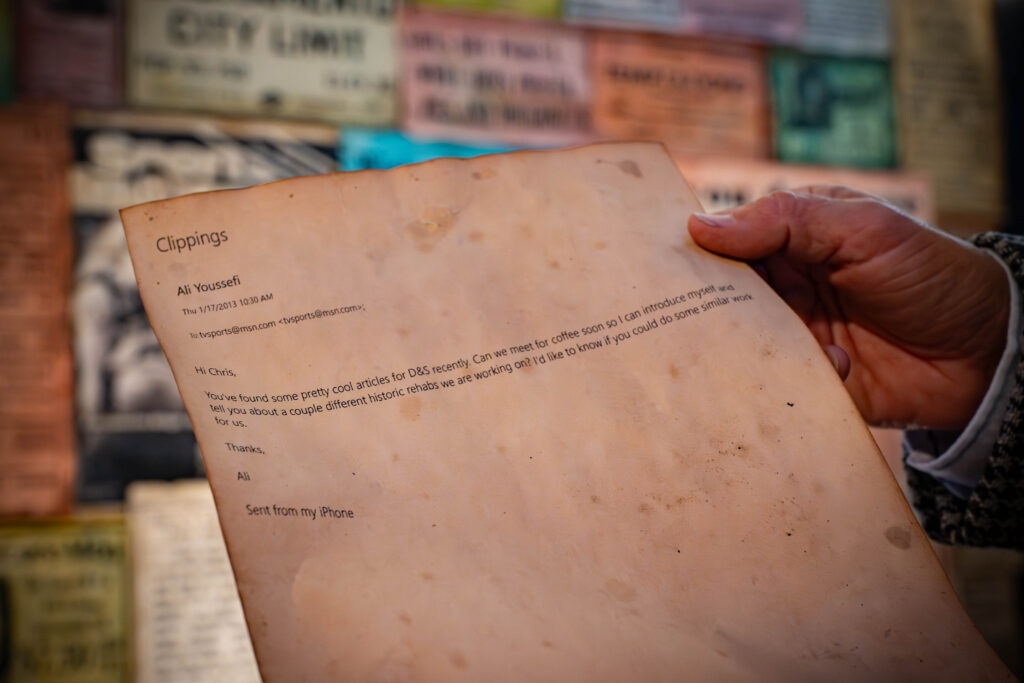
For Lango, living at WAL was meant to be. Before WAL existed, Lango got to know developer Ali Youssefi in 2013 when Youssefi sent an email asking if Lango could produce art displays using historical artifacts. Youssefi had seen other artwork that Lango made and wanted similar work for WAL, which had just broke ground at the time.
Lango lives in the original building at WAL, which was once the historic Lawrence Warehouse, built in 1914. For an archival producer, he feels connected to the building that was once home to the California State Archives. In the mid-20th century, the archives contained items like furniture from the Governor’s Mansion and assembly bills.
What keeps him going
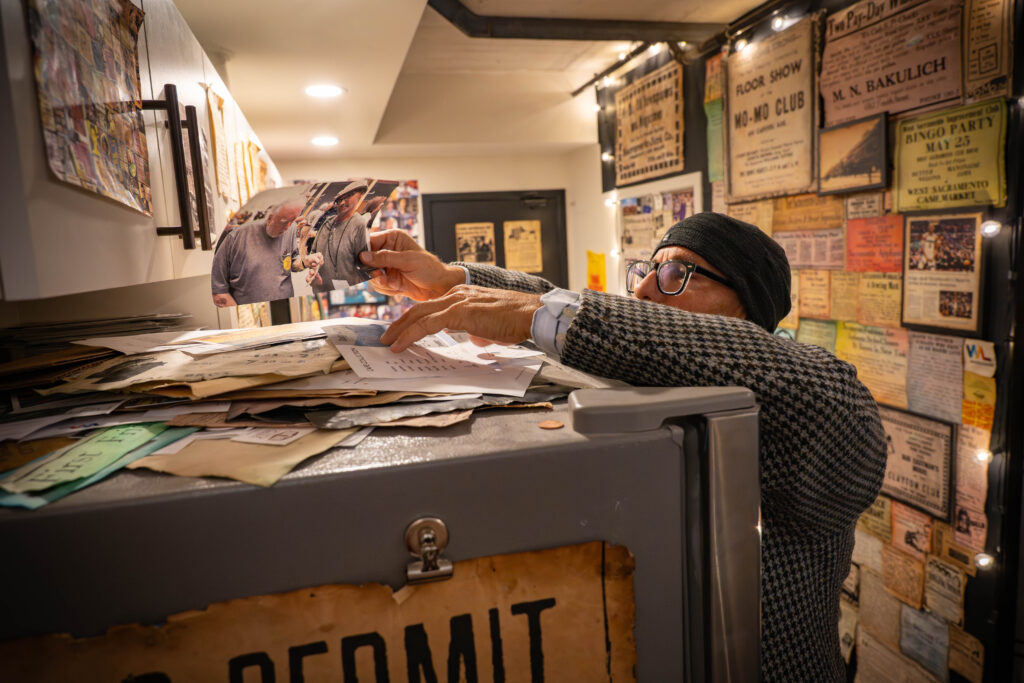
Speaking about his artistic journey, Lango said that despite being 61, he feels like he is still getting started.
“I get just as enthused and just as frustrated as I did 14, 15 years ago when I started on this path,” he said.
“When you’re deciding to create art using archival material, when you’re deciding to create films that are archival based, you gotta unearth this archival material… It’s a real challenge to go down that path,” he said.
“When people come up to you and they tell you what it meant for them to watch that film, it makes you realize that you can’t just say, ‘Okay, I’m done with that.’”
Shelley Ho is a visual journalist with Abridged.