
The Abridged version:
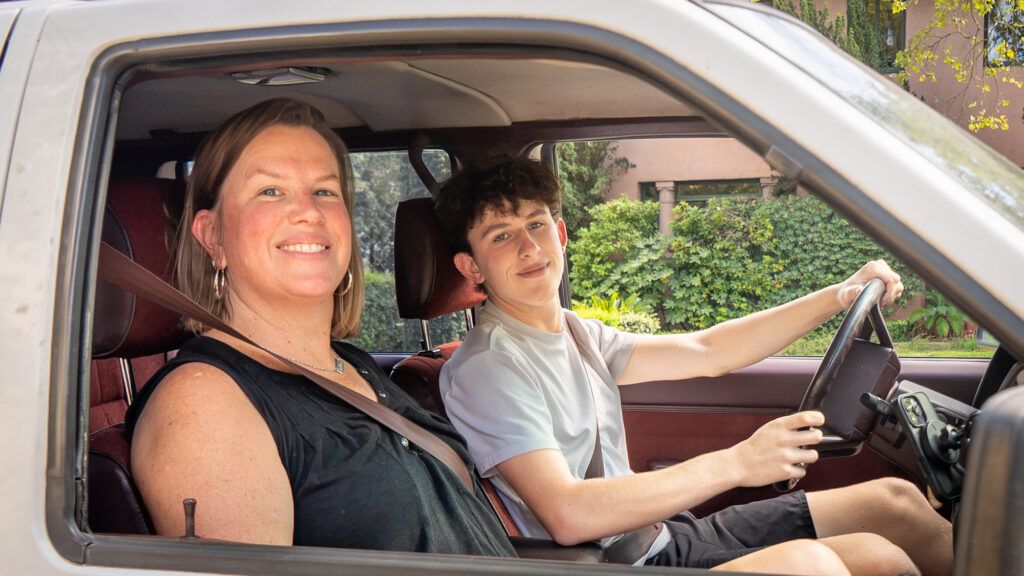
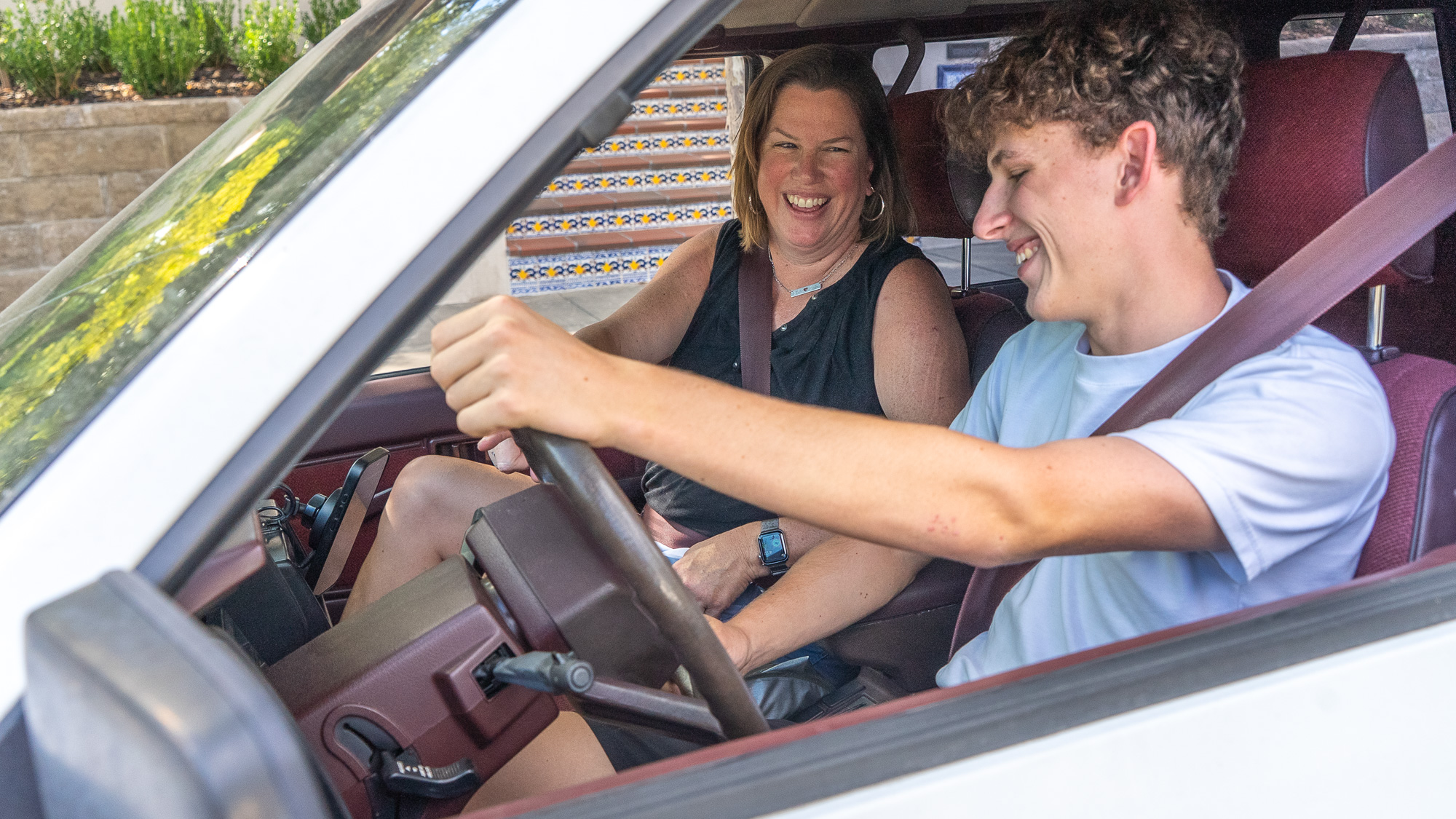
- Teaching a teenager to drive is a lesson in patience, trust and when to let them take the wheel.
- Driving is second nature to adults, but teaching it to a new driver is surprisingly difficult.
- Removing distractions is key, especially on busy Sacramento streets.
When my son Blake turned 16 in March, I was ready.
Maybe more ready than I was supposed to be.
A lot of parents dread the moment their teenager gets behind the wheel. They picture the gray hairs, the insurance bills, the empty-nest symbolism of handing over one more piece of independence.
Me? I was excited.
For the past 10 years, I had slowly but surely become the family chauffeur. Baseball practices, games, school events, social plans, errands. If Blake needed to get somewhere, chances are I was the one behind the wheel. So when he turned 16, I was ready for him to start driving his own agendas — pun intended.
Sign Up for the Homeroom Newsletter
A weekly email with news and insights into Sacramento area schools and how it impacts your students.
But I quickly learned that teaching a teenager to drive is about much more than teaching them how to operate a vehicle. That turned out to be the easy part. Teaching a teen to drive wound up being a lesson in patience, communication and realizing just how much of driving is second nature — until you have to explain it to someone who has never done it before.
Here are five things I learned along the way.
Patience matters more than you think
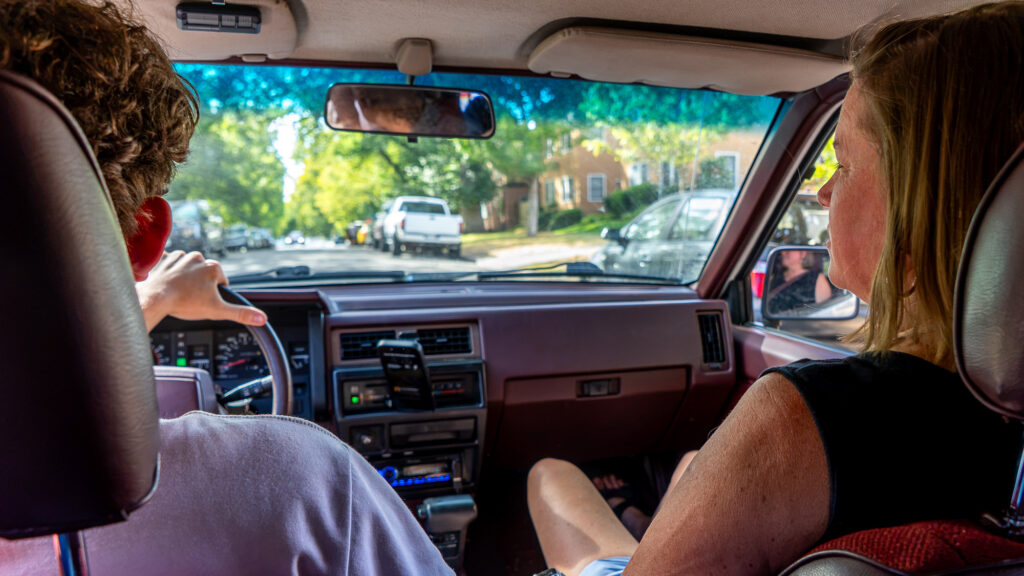
It may seem obvious, but you truly need patience when sitting in the passenger seat next to someone who has never driven.
Remember to breathe. It is perfectly normal for your right foot to instinctively push down on the floor as if there is some invisible passenger-side brake pedal when your kid is approaching a red light a little too quickly. (Spoiler alert: there is not.)
But the patience starts long before the first drive.
The DMV process itself requires a level of patience I was not prepared for. I learned this the hard way when I took Blake out of school early one day, left my own office, also early, and showed up for the first DMV appointment we’d booked weeks in advance, only to find out we did not have the right paperwork to prove he lived at our address.
The DMV website says to bring “your California Identification Card or proof of identity and residency.” Note the word “or.” It turns out the reality is more complicated. You need both.
The process requires planning: the application, parent approval, driver education course, permit test and showing up with the right documents.
You need a birth certificate, Social Security number, application confirmation number, proof of residency, payment and patience. Did I mention patience?
Set up parental guardrails before you start
If I could go back, I would have had a conversation with Blake before our first lesson about what my job actually was. I wasn’t just there because the law required an adult passenger. I was there to teach him. And teaching means giving feedback — something I naturally do in real time.
The problem? Not every piece of feedback needs to happen in the exact second it happens. Of course, if he is about to miss a stop sign or is not braking quickly enough, that feedback is immediate. But sometimes I could have waited until the drive was over to talk about a smoother turn or a better way to approach something. Some of my “helpful” coaching turned into frustration. Frustration turned into arguments. And arguing is not exactly the ideal environment for someone learning a skill as important as driving.
A simple conversation at the beginning — “Here’s how I’m going to help you, and here’s how you can tell me when you need a minute” — probably would have saved us both some stress.
Teaching something you do automatically is surprisingly difficult
One of the biggest surprises was realizing how hard it is to explain something that has become automatic after, ahem, decades of driving.
It turns out when you are teaching someone, you actually have to explain everything with out-loud words.
How much pressure should you put on the gas pedal? How do you turn smoothly while accelerating? How do you know when to start slowing down for a turn? These things feel obvious when you have done them thousands of times. They are not obvious when you are 16 and trying to coordinate your hands, feet, mirrors, signals, speed and every other car on the road.
It gave me a whole new appreciation for how much our brains do automatically.
Make sure your teenager knows their ABCs
This one is very specific to where we live, but it taught me something important: teenagers don’t always see the world the way adults do.
We live in Midtown Sacramento, where many locals know the streets are organized in a grid of numbers and letters.
One day, I asked Blake to drive from 16th and V streets to 16th and J streets, and he needed to get a few lanes over to the left so we could park at the curb and grab our takeout. I told him, “Don’t worry, we’re only at T Street. We’re going all the way to J, so you have time.”
I assumed he understood that we were traveling through the alphabet — T, S, R, Q, and so on — and that J was still several blocks away.
He did not.
He understood the street grid, but he had no concept of the distance between letters.
It was a reminder that what feels obvious to us may be completely new information to someone else.
Remove distractions whenever possible.
One thing that ended up being a blessing was that Blake did not have a phone when he started learning to drive. That was not because of driving — it was simply our family’s choice — but it worked in our favor.
No texts. No calls. No buzzing notifications.
Just driving.
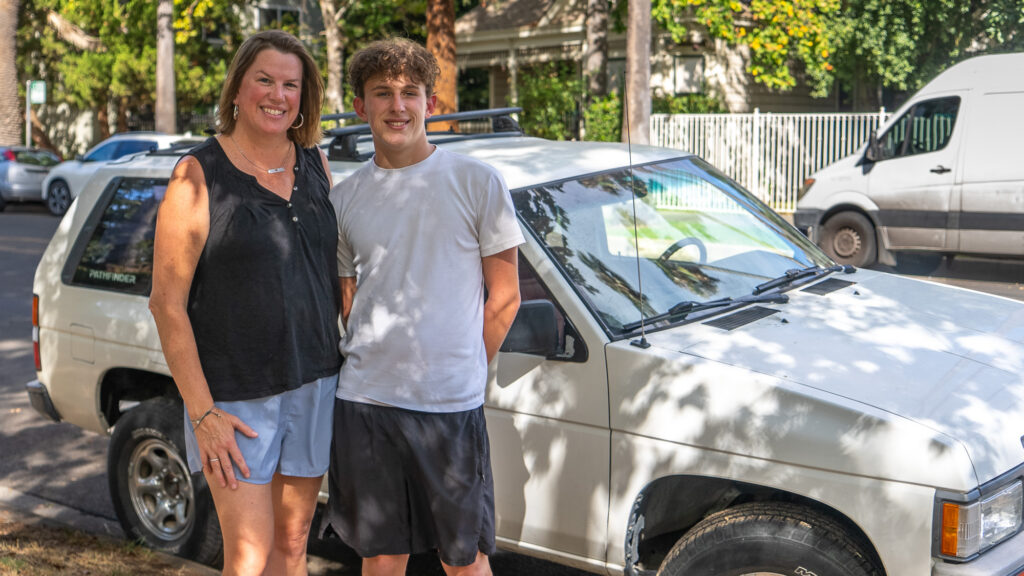
It also helped that our family’s spare car is a 1992 Nissan Pathfinder. It does not have fancy technology designed to help drivers — no lane sensors, no backup camera, no alerts constantly telling you what to do. Yes, our kids might tell you it’s from the late 1900s. We call it “vintage,” and as it turns out, Blake and his friends actually think it’s cool (or rad, as I would say).
But driving a car older than Blake means he had to learn the old-fashioned way: look over your shoulder before changing lanes, check your mirrors, pay attention and trust your own awareness.
And maybe that is the biggest lesson of all.
Teaching a kid to drive is no joke.
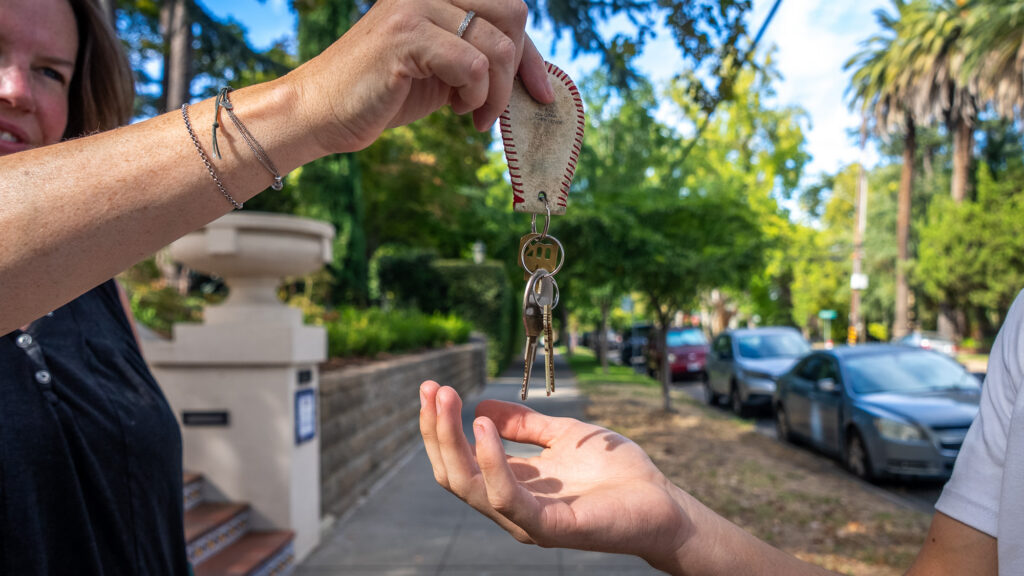
I recently spoke with Ph.D. students working on a research project about this very topic, and they asked me a simple question: Did I ever look up a guide for parents teaching their teenagers to drive?
I had to admit that I did not.
Which is strange because I Google just about everything else.
Maybe I should have.
But maybe the process itself was the lesson. Teaching a teenager to drive is not just about helping them learn the rules of the road. It is about learning how to let go, how to communicate and how to trust that the person sitting next to you is becoming someone who can take on responsibilities.
When we went to the DMV on the day of his driving test — the day he would either get his license or not — it turns out we were both a little nervous.
After he passed, Blake admitted he had been worried he wouldn’t. I told him I had been worried too, but not because I didn’t think he was ready. I knew he was. I was worried he would get inside his own head — overthink every turn, feel the pressure he had put on himself, and maybe even the pressure I had unintentionally put on him over all those months of lessons.
But we didn’t need to worry.
He passed with flying colors.
And now, every once in a while, I still ride with him. There are moments when I catch myself holding my breath, reminding myself that learning to drive doesn’t end the day you get your license. It’s a skill that continues to develop with every mile, just like the independence and confidence that come with it.
Looking back, I thought I was teaching Blake how to drive.
What I didn’t realize was that he was teaching me, too.
He taught me to be more patient. To communicate better. To recognize when my help was actually helping — and when it was just me trying to hold on a little too tightly.
The license gave him the ability to take the wheel.
But the process gave both of us something much bigger: a little more trust in each other, and a reminder that raising kids is really just one long exercise in knowing when to guide them — and when to let them take the wheel.