

The Abridged version:
- UC Davis opened a new Center for Animal Flight and Innovation at the California Raptor Center.
- The facility is a collaboration between the school’s engineering and veterinary departments, funded by a grant from the U.S. Army.
- Research will focus on potential applications of bird flight to drone technology and veterinary medicine.
When Jack the red-tailed hawk arrived at UC Davis’ California Raptor Center in 2012, he was a just a youngster with a respiratory problem who had spent most of his days in captivity. Fourteen years later, he could soon be one of the most on-camera birds in the United States.
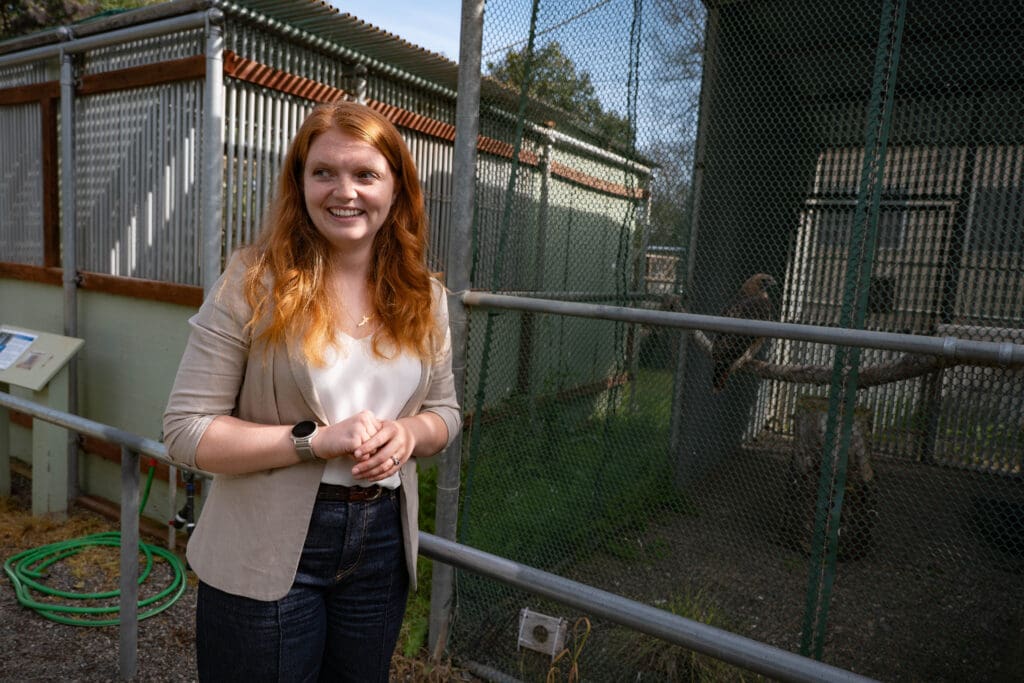
The raptor, along with a handful of other permanent residents of the rehabilitation and education site, is a prime candidate for study at the school’s new Center for Animal Flight and Innovation.
The only facility of its kind in the U.S., the center uses advanced cameras to examine flying birds and owls with submillimeter accuracy. The research team hopes that level of detail will lead to advancements in aerospace technology and veterinary medicine.
Sign Up for the Yolo County Newsletter
Stay in-the-know on all things Yolo! Weekly email with stories and insights from Yolo County reporter Daniel Hennessy.
State of the art technology
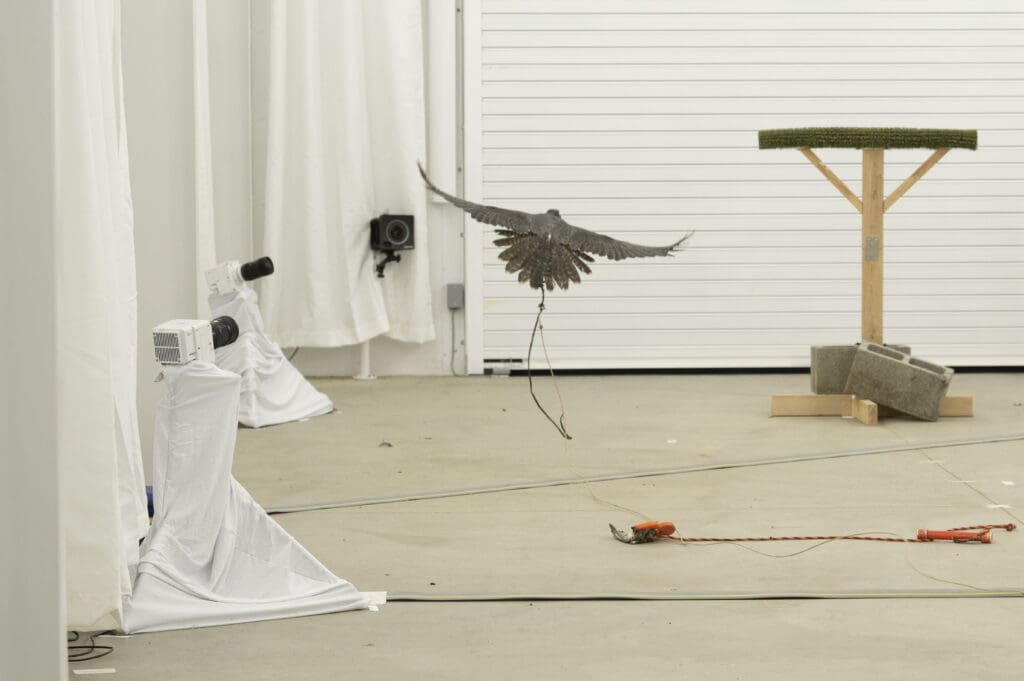
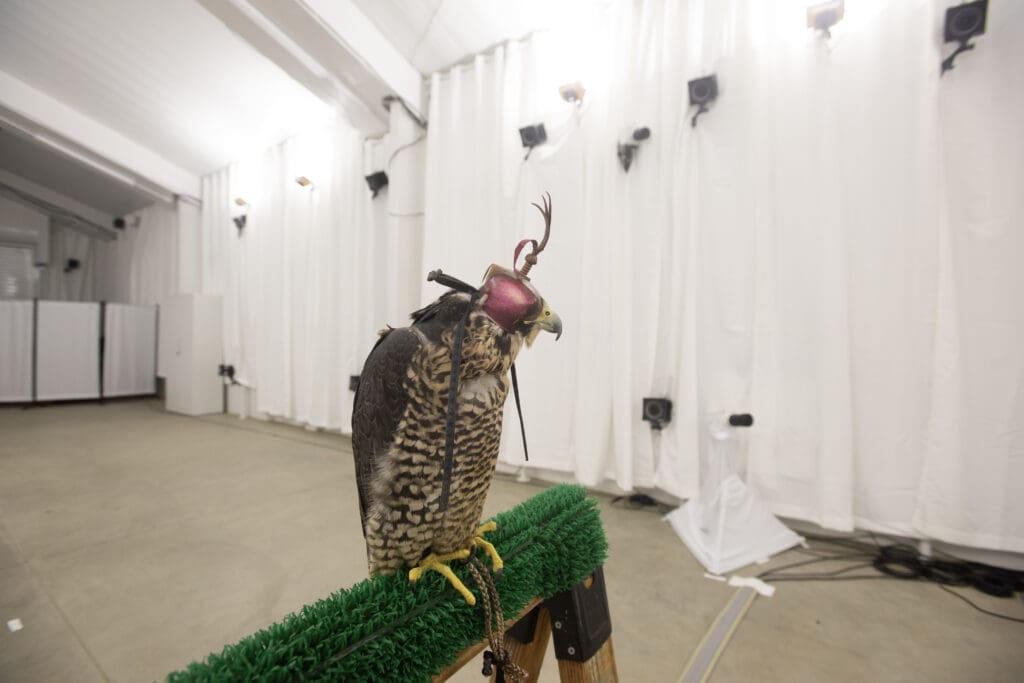
After receiving a $3 million grant from the U.S. Army Combat Capability Development Command Army Research Laboratory, UC Davis researchers from the engineering and veterinary schools put together a facility about half the length of a football field that is lined with specialized cameras and lighting. At either end of the building are perches that birds like Jack can fly between while the cameras are running.
The facility broke ground in 2024 and experimental flights started this winter, according to a news release.
As the bird passes the cameras, it’s captured at 300 frames per second and 12 megapixels, enough high-resolution detail to create a full 3D reconstruction.
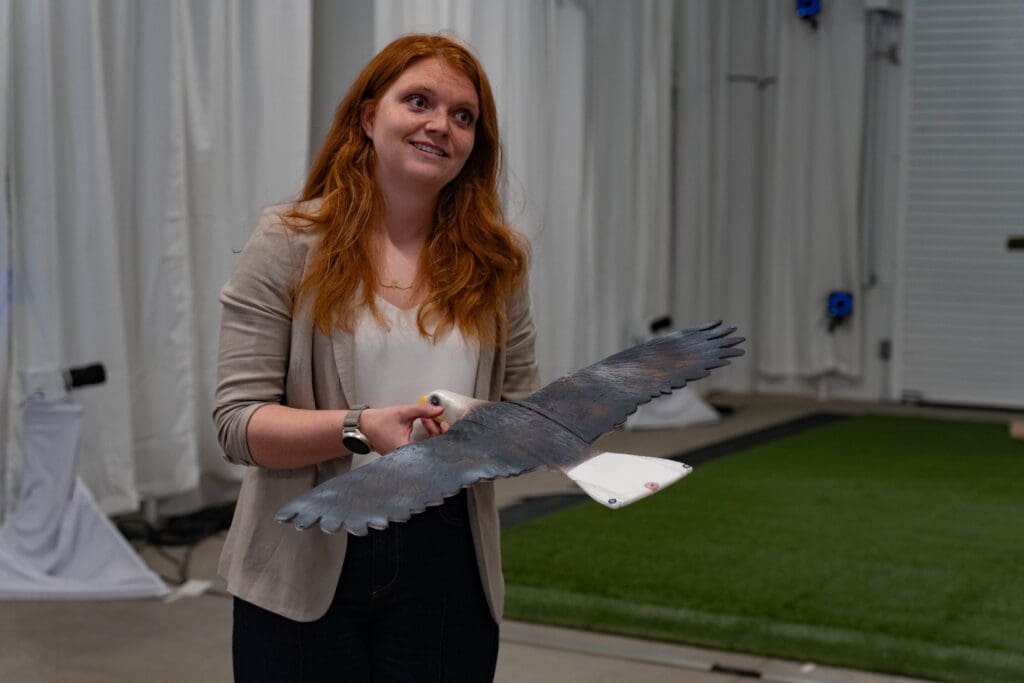
The goal, said UC Davis assistant professor of mechanical and aerospace engineering Christina Harvey, is to map out traits and evolutionary characteristics that could prove useful for human applications.
Because the money is coming from the military, one of the focus areas will be improving drone technology. But Harvey said the military isn’t directing the research, and the findings from the center will be applicable for other uses, including the advancement of in-flight bird behavior for veterinary purposes.
Potential uses
When the flights get started in the next few weeks, the researchers will be looking for what birds can teach them about in-flight physics, but not everything will have a useful application.
Harvey said that traditional knowledge in aerospace engineering tended to assume that birds were optimized for flight and should be emulated as closely as possible. But birds aren’t machines and have evolved for other purposes.
“We don’t need our aircraft to have babies,” she said. “We’re not going to make commercial aircraft flap.”
But by looking closely at how birds do things like change direction mid-air, navigate tight spaces, move around obstacles and perch, researchers can identify the characteristics that could improve mechanical flight technology.
That kind of capability is unique in the U.S. and exceedingly rare worldwide, where there are only a handful of facilities doing this kind of work.
Training wild birds
Flights haven’t officially started yet, but Harvey is hoping to begin soon. Most of the birds at the raptor center are wild, and training can take longer than it would for a domesticated falcon.
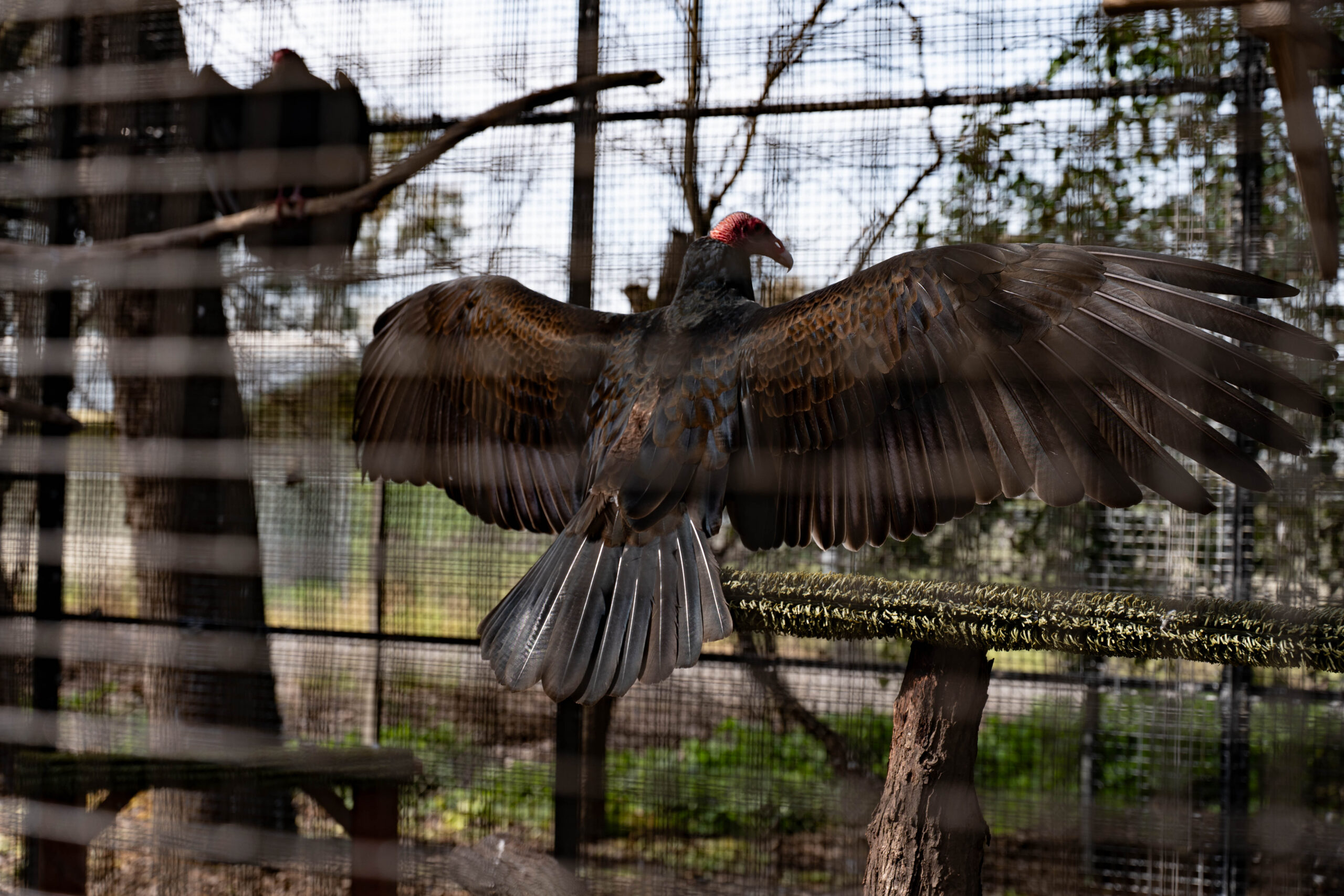
Jack and his three turkey vulture neighbors are still getting used to the perches and can be anxious in a setting with a lot of people around.
But the red-tailed hawk is showing some promising signs of progress. During a training flight he took in a barn before the new facility was built, the bird completed multiple trips from perch to perch.
The researchers will take all they can get, because the birds won’t work all day.
Harvey said a red-tailed hawk will put up with flying back and forth a handful of times before it gets tired and bored. She can always tell when its patience is running thin because it gets restless and starts looking around the room.
Once that happens, the cameras turn off, the lights go down and the bird goes back to its enclosure to unwind after a long day at the office.
Daniel Hennessy joins Abridged from the California Local News Fellowship. He’s a reporter covering Yolo County.