
The Abridged version:
- A UC Davis study of teenagers found that spending a short amount of time with horses and donkeys was linked to improvements in mood, while also showing that animals and humans influence each other during an interaction.
- Animal-assisted interventions bring animals into therapeutic settings, using the human-animal bonds to support emotional and behavioral growth.
- Local equine-assisted therapy organizations like Hearts Landing Ranch use interactions with horses to help clients work through challenges and build coping skills.
What if the benefits of working with animals don’t stop with the people involved?
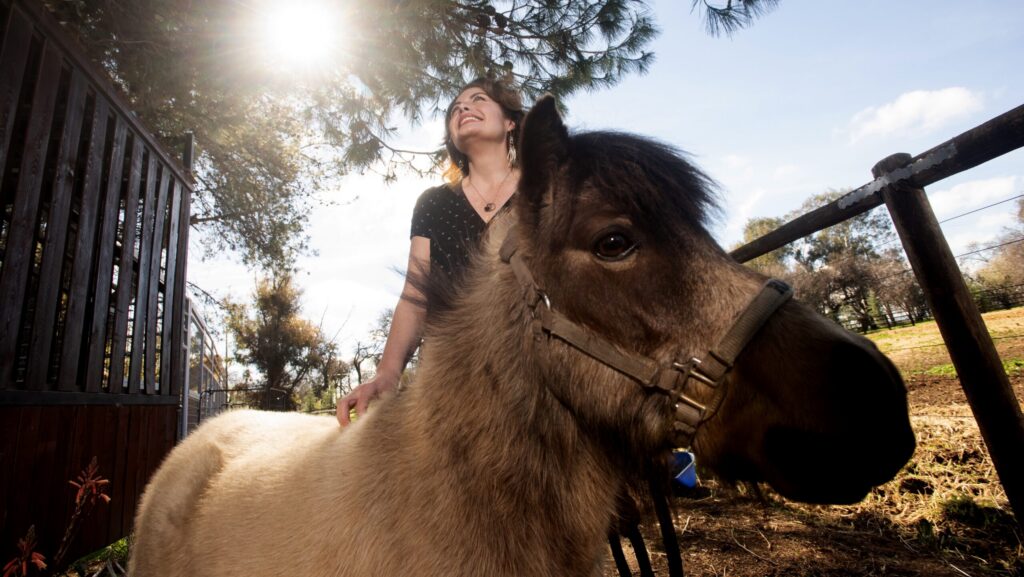
A recent UC Davis study found that spending short amounts of time with miniature horses and donkeys improved teenagers’ moods, but its researchers were looking at more than what humans get from the interaction. They wanted to know what the animals might gain, too.
“We scientists have spent decades asking what animals can do for us, and I think it’s time we ask what our experience with them looks like from their side of the relationship,” said Rebecca Calisi-Rodríguez, the UC Davis professor who conducted the research.
Calisi-Rodríguez said science knew that animals could be beneficial to humans, but what was novel about the study’s findings was the evidence that recognizing an animal’s choice to engage or disengage can also influence humans’ moods.
What the study found
“The kids overall felt better just after a three-minute interaction with these animals, but it was a surprising finding that the teens still reported mood changes even when the animals walked away from them,” Calisi-Rodríguez said.
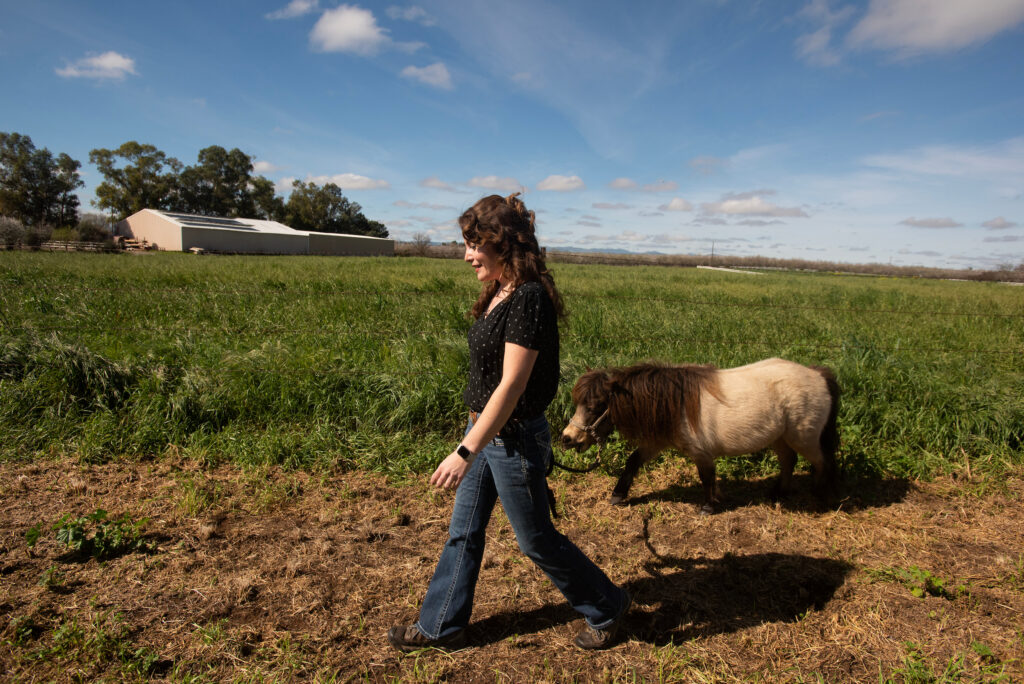
The study, published in the journal Scientific Reports, monitored 61 teenagers during three-minute interactions with miniature horses and donkeys, observing how the animals responded to different behaviors and how the teens’ moods changed. Calisi-Rodríguez explained that sadness decreased overall in the short interactions, but teens who reported seeing an animal walk away showed an even greater reduction.
Research has shown that having a sense of agency and control over one’s interactions can benefit mental well-being. The UC Davis study extended that concept to human-animal interactions through the lens of mutual well-being, finding that recognizing an animals’ agency was associated with improvements in the teen’s moods.
“Maybe a good relationship with an animal isn’t one in which the animal always says ‘yes’ — maybe part of the experience comes from learning to listen when it also says ‘no,’” Calisi-Rodríguez said.
She added that she loved this result because it challenges the assumption that a successful interaction means an animal is constantly engaging with us.
“What excites me is that we changed something incredibly small, simply how a person was instructed to touch an animal,” Calisi-Rodríguez said. “When the animal responded differently, those differences were then associated with how the teenagers felt.”
The reason behind that monumental change to the study was its co-author, Claire Short, a UC Davis graduate and manager at Calisi-Rodríguez’s Green Care Lab in Davis. Calisi-Rodríguez said Short had the beautifully simple idea of teaching the teens to look out for lip wiggles, which indicate pleasure or satisfaction, and walking away, allowing the horse or donkey to disengage.
By learning to read the horses and donkeys’ body language and recognize when their attention was reciprocated, Short said the teens could see how their own behavior affected the animals.
“I think this study opened the door to learning more about how we can make animal-assisted interventions more beneficial for both humans and animals,” Short said. “It brings up a lot of questions about how beneficial animal therapy is and what specifically makes it work.”
“We should care about animal welfare because it’s the right thing to do, but also now we see, scientifically, that there’s another big reason: the better we take care of animals, the better they take care of us,” Calisi-Rodríguez said.
What this connection looks like in practice
The study took place during a 2025 summer program hosted by Calisi-Rodríguez’s nonprofit animal rescue Skyheart Sanctuary, located at Pine Trails Ranch in Davis.
Michelle Haseltine, who opened Pine Trails Ranch with her husband in 1990, is no stranger to the therapeutic effects of horses. From teens learning to overcome anxiety to adults in need of management classes, Haseltine has seen horses work wonders for people from all walks of life.
Pine Trails Ranch is a teaching facility, not necessarily a therapeutic program, Haseltine said. But riding lessons have turned out to be a form of therapy for many of her clients.
Horseback riding takes more than just physical stamina and focus; it also teaches problem solving skills, diplomacy and adaptability, she said. Horses are magnificently large animals that are hard to bargain with, their stubbornness making them uniquely qualified to teach humans the value of patience, communication and mutual trust.
“When something goes wrong with the horse, you can’t just ignore it and you can’t overpower it,” Haseltine said. “You have to stop and think about why the horse is anxious or upset and figure out how to get them to calmly respond.”
Haseltine easily recalled several clients who achieved their personal goals through taking horseback lessons. She’s witnessed lessons on her ranch teach a client more about directness than the management classes they were originally recommended and build better focus in a younger client who was initially advised to seek tutoring.
“Her teacher said to keep her riding because she can focus, she’s problem solving, she’s interacting with the other students better and is doing really well,” Haseltine said. “The teacher came out the following week to meet me and watch a lesson, and then she started sending me students regularly.”
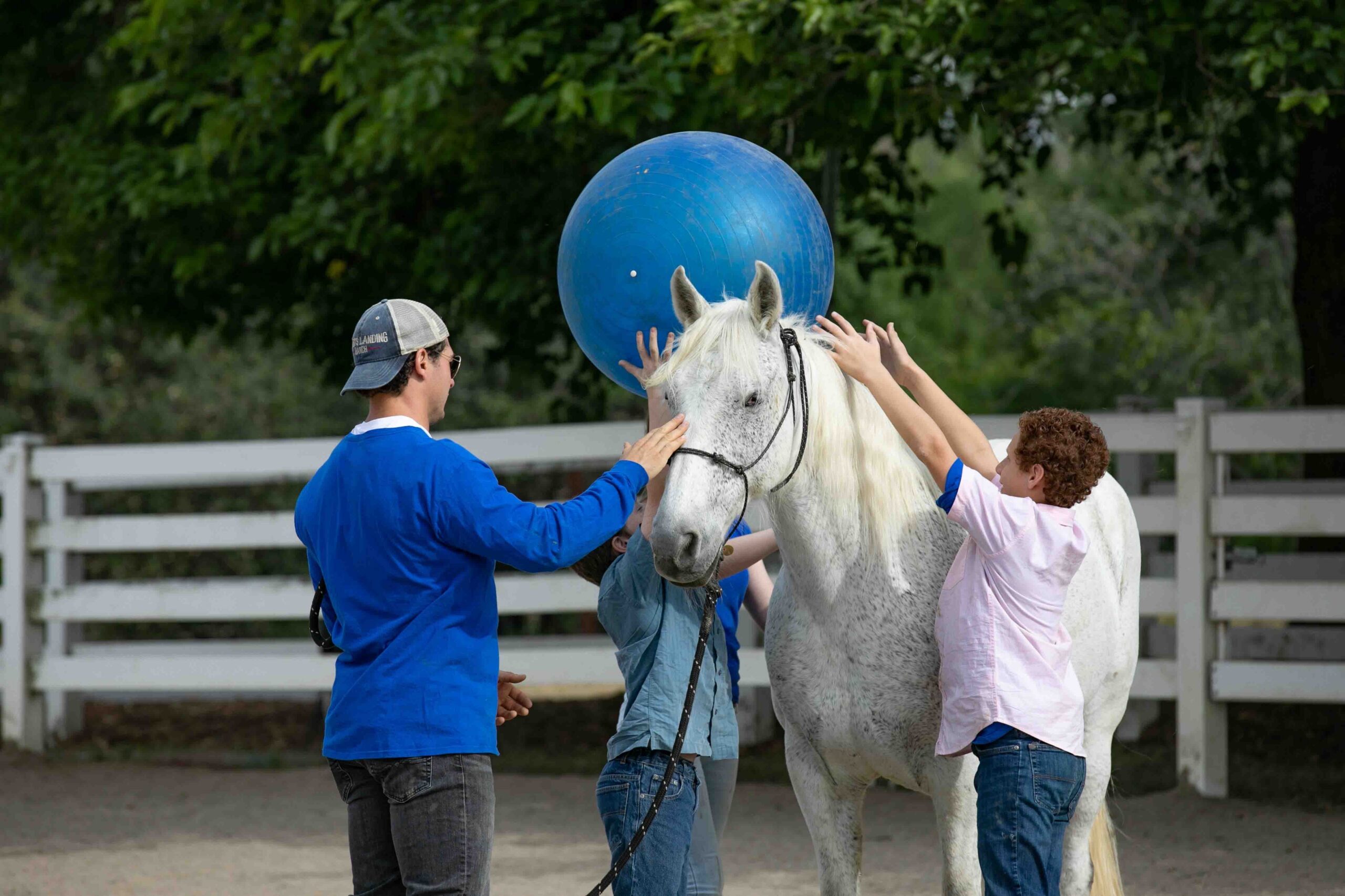
Local equine-assisted therapy centers like Hearts Landing Ranch in Granite Bay embrace this skill-building framework, using horses to help people process trauma, find comfort and develop long-term coping skills.
Hearts Landing Ranch aims to “turn trauma into triumph,” specializing in treating depression, anxiety, eating disorders, sexual trauma and PTSD. Staff work with clients of all ages through groundwork techniques instead of riding lessons.
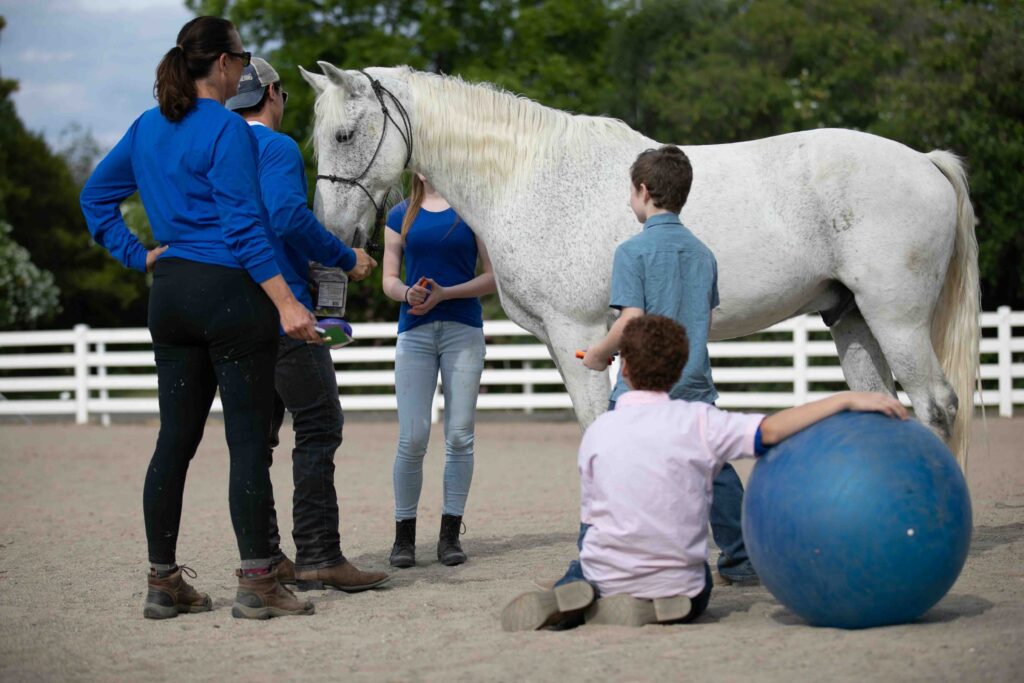
Sierra Tsygankov, a clinician and counselor at Hearts Landing Ranch, said working with horses left an impact on her that talk therapy couldn’t. She’s seen the same among her clients, many of whom are recovering from substance use and abuse.
She said part of what makes the relationship between humans and horses so distinct is that horses can mirror the energy people bring and can sense when it comes from a place of fear or disingenuity. That makes emotional regulation and a calm approach some of the first skills people learn.
“We find very often that moods are changed,” Tsygankov said. “It’s very common that clients come in dysregulated, anxious, nervous or tearful and then by the end of the hour-long session, they’re happy and smiling.”
Tsygankov said eight out of nine of the horses at Hearts Landing Ranch were rescued from neglected situations or a slaughterhouse, so they had their own work to do before they started working with clients.
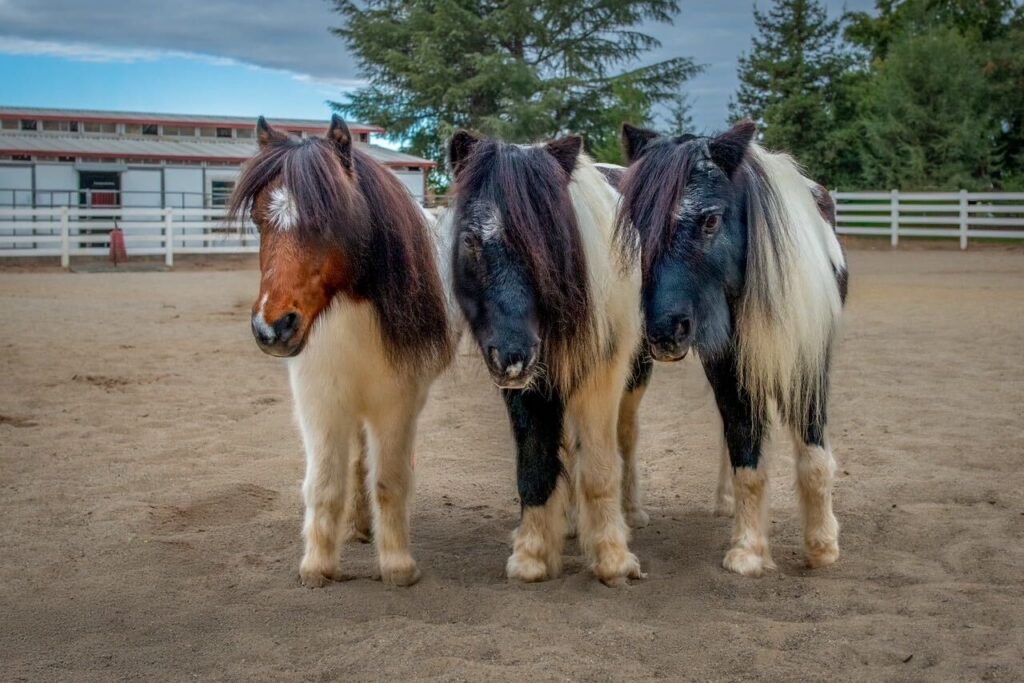
“They have a history, too, and the clients are able to connect with that,” Tsygankov emphasized.
Horses can also teach people to prioritize self-care. For those coping with depression, even basic hygiene tasks like showering or brushing their teeth can become difficult. Tsygankov has found that having clients care for the horses, from bathing and brushing them to cleaning their hooves, can make caring for themselves feel possible again.
“They come and care for another being, and they learn to care for themselves,” Tsygankov said.
Annie Biebl attends Sacramento State and is an intern at Abridged.