
The Abridged version:
- In a region that relies on winter storms to build up water reserves for the rest of the year, December’s onslaught of rain and snow has officials and farmers cautiously optimistic.
- Local reservoirs are sitting at levels well above historical average, and snowpack is increasing in the mountains.
- But that doesn’t mean dry conditions won’t return.
- In Yolo County, for example, officials can generally expect enough surface water to meet all irrigation needs in seven out of 10 years.
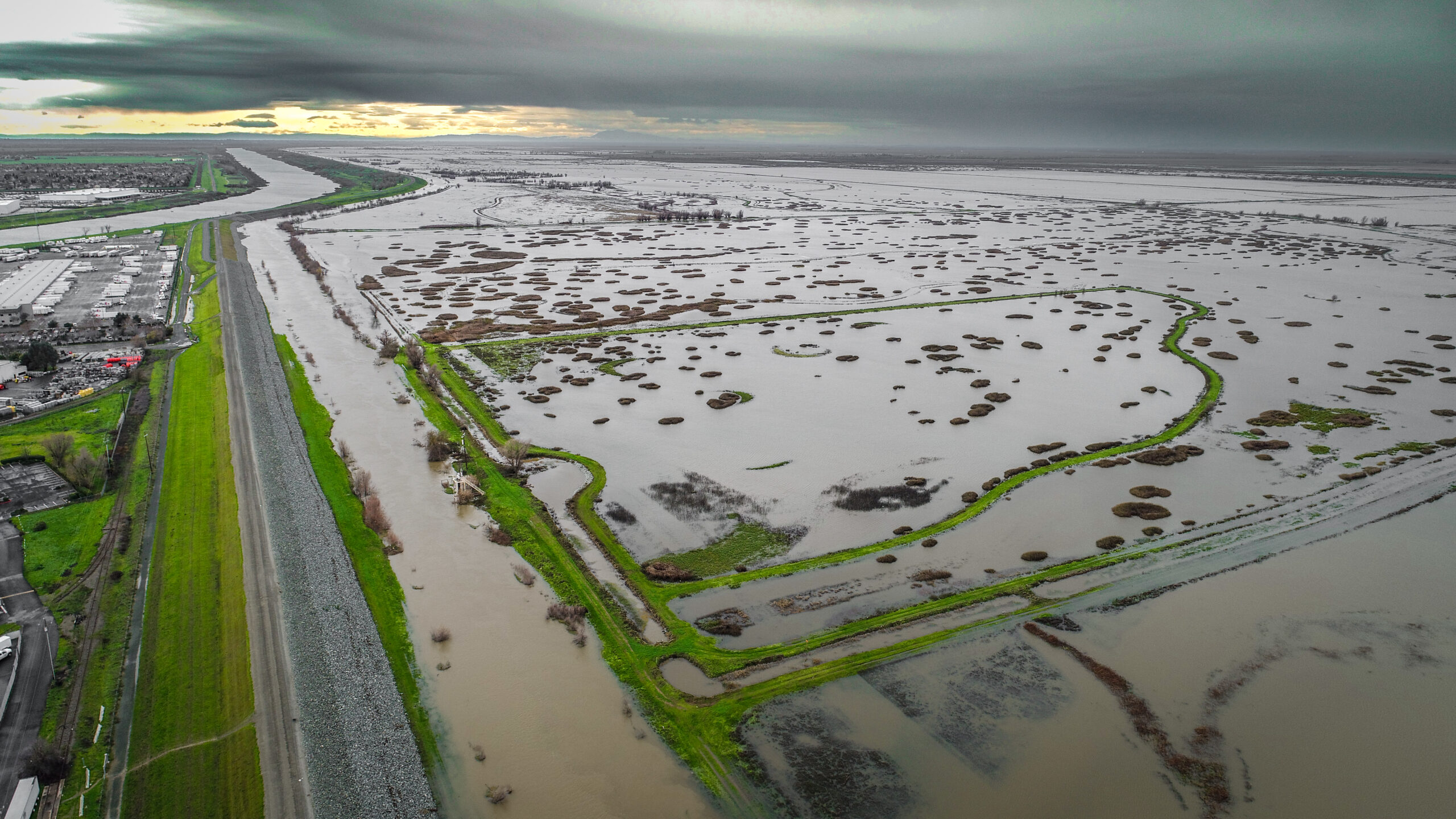
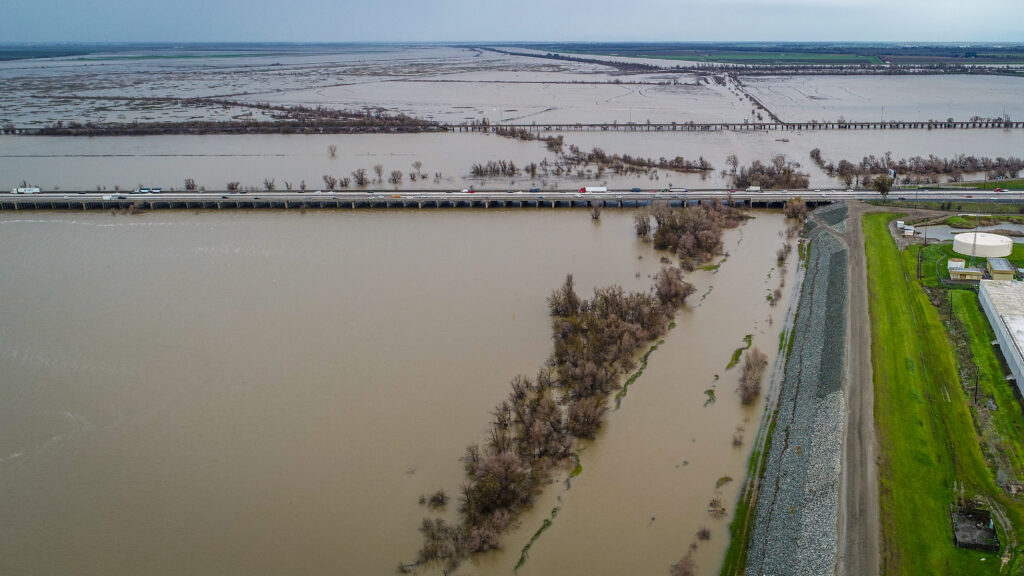
After a recent stretch of wet weather, water seems to be everywhere in the Sacramento region. The Yolo Bypass is flooded, low-lying roads are closed by standing water, creeks are raging, and gauge readings on major rivers are trending up.
As rain subsides and area residents look ahead to a drier week, local water stores are showing promising signs for the year ahead. But in a region that relies on winter storms to build up water reserves, farmers and water managers are cautious.
“The water year is off to a great or at least a very good year,” David Schaad, a fifth-generation farmer and president of the Dunnigan Water District’s board, said in an email. “But weather can be fickle. A wet December doesn’t mean January, February and March won’t turn dry.”
If the trend continues, the Sacramento region will have had multiple wet years in a row. The last major drought ended in 2023, according to the U.S. Drought Monitor.
That doesn’t necessarily mean dry conditions won’t return.
Preparing for the future
According to the state’s California Water Watch website, severe weather patterns have created swings from “extreme dry to extreme wet situations,” in the last few years.
“One set of strong storms or atmospheric rivers can make a difference between wet and dry,” it reads.
Data collected over the last half-century has shown that officials can generally expect enough surface water to meet Yolo County’s irrigation needs in seven out of 10 years, said Kristin Sicke, executive officer for the Yolo Subbasin Groundwater Agency.
“Then two out of 10 years, we will have an allocated supply, which means we have to tell farmers they can only have so much per acre,” she said. “And then one out of 10 years we’ll say, ‘We don’t have any surface water to give you.’”
To prepare for those dry years, officials need to think ahead as they manage water resources in wet years.
One way to do that is to focus on projects that recharge water held in underground aquifers.
Sicke said that when there’s excess rainfall in the winter months, the water agency focuses on replenishing groundwater.
“We will do our best to recharge that water and put it in the ground,” she said. “So, it’s like our savings account that we have available to us.”
There are a handful of projects in the county aimed at accomplishing that goal, including two spearheaded by Schaad and the Dunnigan Water District.
When the inevitable dry year does come, the captured water from those projects will likely be a valuable resource.
But, as long as the rain keeps coming and the reservoirs fill up, the county can meet its substantial irrigation needs with water from Indian Valley Reservoir and Clearlake.
Some light rain and patchy fog is expected in the region through midweek.
Daniel Hennessy joins Abridged from the California Local News Fellowship. He’s a reporter covering Yolo County.