


The Abridged version:
- A long-discussed housing development in Davis could be on the ballot in 2026.
- The project would add 1,800 new homes, but details are still being negotiated.
- The City Council will hold a public hearing on Jan. 20 where it will solidify affordable housing plans for the project.
The fate of a controversial and long-discussed housing development in Davis could be decided later this month.
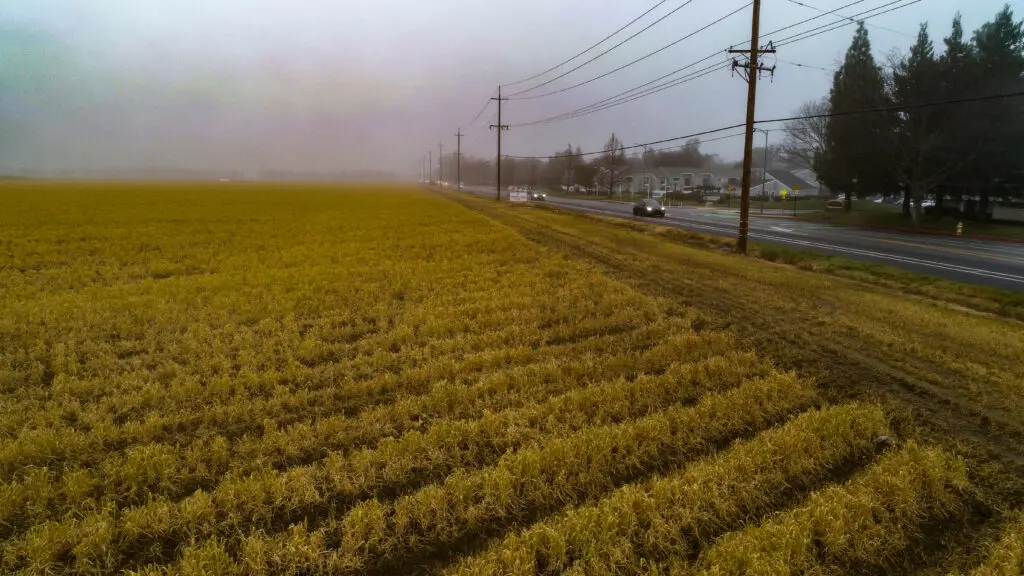
Village Farms Davis, a project proposed for a nearly 500-acre swath of agricultural land on the northern edge of the city, has cleared all but two main hurdles in a yearslong planning process. Initially proposed in April 2023, the development would add 1,800 homes, along with green space, infrastructure and room for a pre-K day care.
Despite multiple rounds of negotiations, commission meetings, council meetings and public workshops, the project’s future is far from certain.
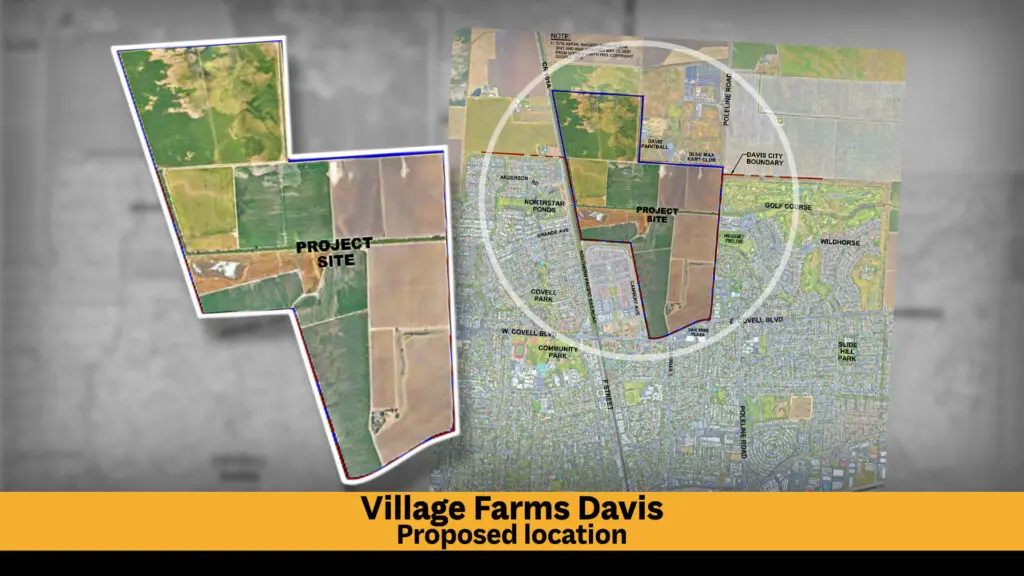
What’s next for Village Farms proposal
After the city’s Planning Commission recommended its approval, Village Farms will come before the Davis City Council again on Jan. 20 for a public hearing.
At that meeting, members will decide whether to bring the project to voters later in the year. Residents can view or take part in the 6:30 p.m. meeting by going to the council chamber at Davis City Hall or watching online.
Davis’s Measure J/R/D gives residents the right to weigh in on proposed land use changes at the ballot box. In the past, it has been used to halt development projects.
One of those ill-fated proposals was the Covell Village project in 2005, which was slated for the same land and was similar in size to Village Farms. After some residents raised concerns about traffic, the project’s proximity to a former landfill, its potential contamination of groundwater and part of the project’s location being in a FEMA flood zone, voters rejected it.
The city continues to test at the landfill and Village Farms project managers have assured appropriate flood mitigation plans, but — two decades later — concerns persist for some residents.
At the Dec. 17 Planning Commission meeting and public hearing for the project, multiple attendees spoke about potential environmental, water quality and flooding risks.
“The Village Farms project is unacceptable in its current form and needs to be downsized,” Davis resident Ziv Lang said.
Others worried about how much the project would end up costing the city.
“There’s no doubt that we need more housing, but is this the kind, the expense, of housing that we need?” Davis resident Jim Watson said.
Supporters of the project expressed hope that Village Farms could help address a housing shortage in Davis that has contributed to declining enrollment in public schools.
“Davis clearly needs more housing and this is the kind of project to do it,” said Davis parent Chris Theg.
Local school officials agreed with that sentiment.
Matt Best, superintendent of Davis Joint Unified School District, said in a response to the project’s environmental impact report that the development could bolster the district’s sagging enrollment by about 700 students.
“Without Village Farms or another large development approved in the next 18 months, the district will need a significant restructure to meet a much smaller enrollment size, and that would likely include any combination of school consolidation or closure, boundary rebalancing and/or school model adjustments,” he said.
Affordable housing likely topic of discussion
When the City Council takes up the project Jan. 20, affordable housing will likely be one of the primary topics of discussion.
Dara Dungworth, principal planner for the city, said in a Dec. 17 presentation to the commission that the affordable housing plan for the project was still being negotiated.
Since its inception, there has been “significant negotiation between the parties” about how much affordable housing will be included in the development, Dungworth said.
The applicant’s original proposal set aside about 9 acres of land to be developed by the city into affordable housing and a $2 million deposit into the city’s housing trust fund.
This proposal met terms laid out in Davis’ inclusionary housing ordinance, which requires developers to dedicate resources to housing that is affordable to low-, very low- or moderate-income residents.
City officials then pushed the developer to go beyond the requirements and expand its affordable housing allotment. After some back and forth, a new proposal was brought to the table that dedicates 16 acres of land to the city for affordable housing and $6 million to the housing trust fund. That land is slated for 262 units that are affordable for low- or very low-income residents, as well as 98 units for moderate income households.
At the last City Council meeting in 2025, some members expressed satisfaction with these new terms.
“I wholeheartedly support the negotiation team that made this happen,” Councilmember Linda Deos said. “I am 100% behind this proposal.”
But others hoped for more changes.
“For me the affordable housing proposal is the most important thing,” Mayor Bapu Vaitla said. “I’m a definite no on this proposal as it is.”
Vaitla expressed concern that the actual cost of building nearly 270 affordable units far exceeds the $6 million provided by the developer and that the city would wind up footing too large of a bill.
“16 acres, $6 million at one time would have been enough. If we accept this, no units will be built,” Vaitla said.
As it stands, the responsibility for securing appropriate financing and building the units falls primarily on the city. Vaitla proposed some kind of time trigger that would switch that responsibility to the developer if the units haven’t been completed by the city after a certain number of years.
That point is being negotiated, and the final proposal will be presented to the council on Jan. 20.
Should they come to an agreement, the city aims to bring the decision to voters this summer.
Daniel Hennessy joins Abridged from the California Local News Fellowship. He’s a reporter covering Yolo County.