
The Abridged version:
- Sacramento’s Front Street Animal Shelter operates the Homelessness Outreach and Assistance Program to provide basic care for pets of unhoused people.
- Teams of caregivers visit encampments and other sites to provide services — and sometimes help the owners connect to their own help.
- HOAP architects and supporters aim to build trust with pet owners and make them more comfortable seeking out and using services.
For the past three years, a small program inside Front Street Animal Shelter has been quietly reshaping Sacramento’s response to homelessness — one dog or cat at a time.
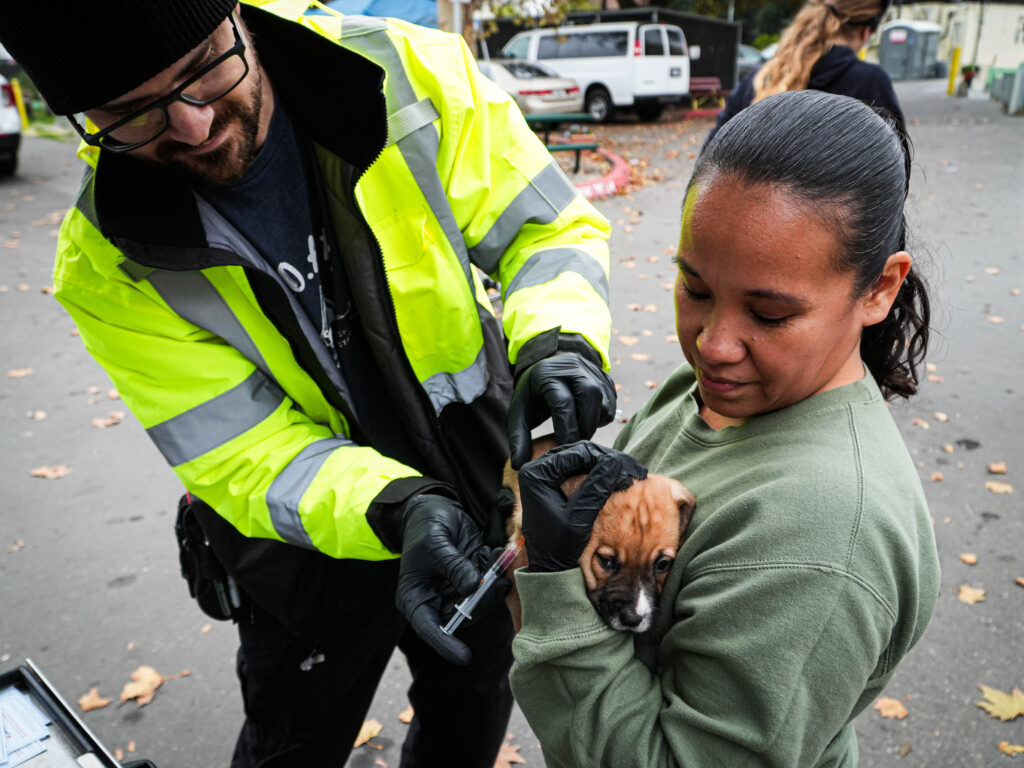
The program, called HOAP (Homelessness Outreach and Assistance Program), provides medical care for the pets of unhoused people: vaccines, flea treatments, spay and neuter surgery, microchipping and nonemergency treatment. It also helps reunite animals with their owners when pets are separated during crises. According to the 2025-26 city budget, the program has helped 1,509 animals owned by 832 residents.
But caring for a pet often opens the door to something larger. By showing up first for animals, HOAP staff hope to become trusted guides — connecting people to health care, behavioral health services, addiction treatment, housing resources and emergency support they might otherwise avoid.
Under bridges, not behind desks
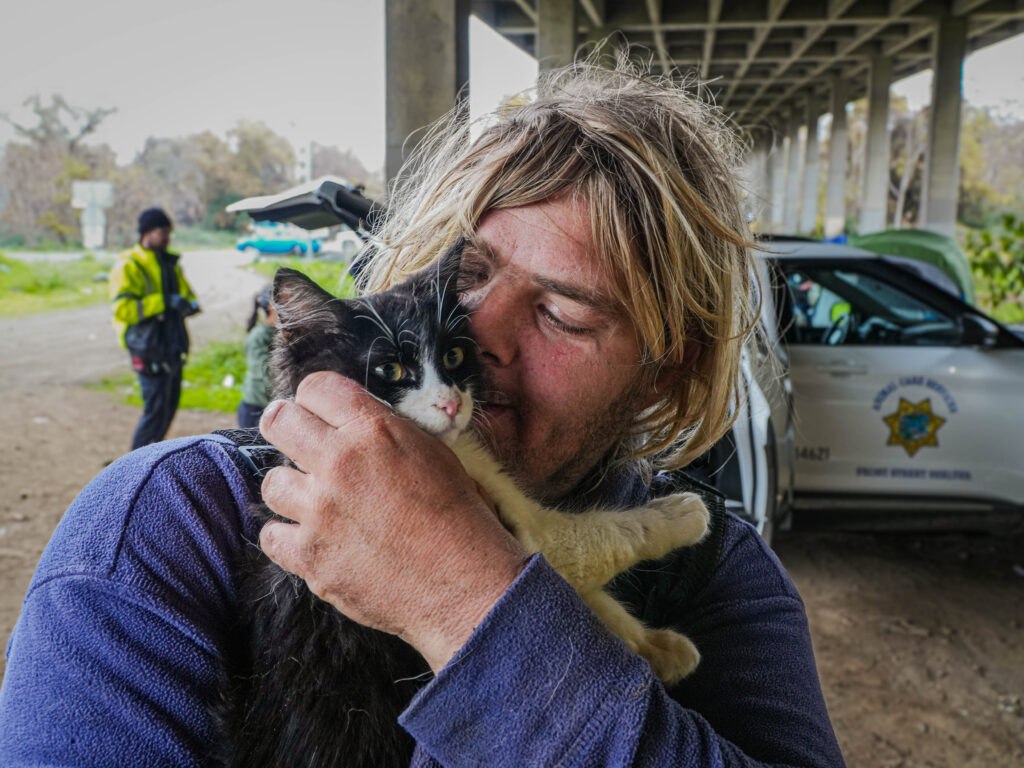
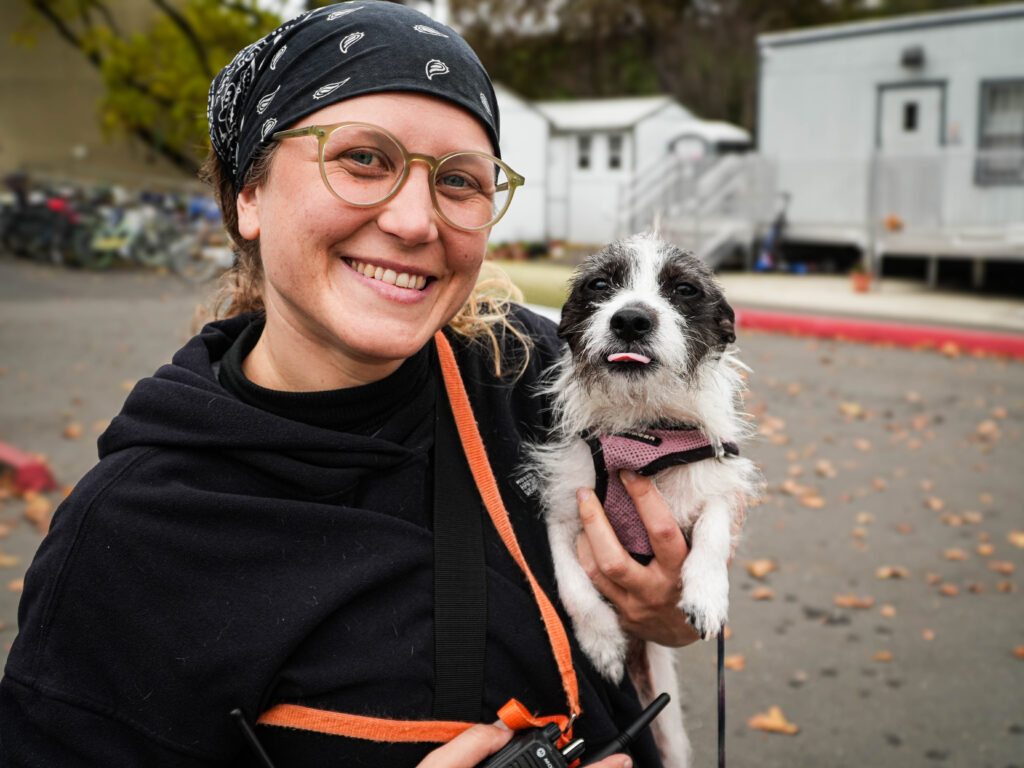
On most days, Jenna Topper, HOAP’s homeless outreach coordinator, is more likely to be under a bridge than behind a desk. Along with veterinary technicians Desire Villegas and Marco Kroon, she spends her days in a mobile veterinary clinic van, driving to encampments, navigation centers, levees and shelter sites across the city.
“Honestly, it feels like my dream job,” Topper said. “It’s difficult some days, but I get to protect the animals and advocate for people.”
The bond — between people and the animals who stay with them through instability, trauma and displacement — is the program’s starting point. It’s also what sustains the team on long days that are often physically and emotionally demanding.
“To me, what keeps me going is seeing that bond,” Villegas said. “You see how much they love each other and care for each other, even when everything else in their life is uncertain.”
Kroon sees the same transformation again and again.
“When you see someone with their animal, their whole demeanor changes,” he said. “As soon as you ask about their pet, their whole face lights up.”
A shift in how help shows up
Front Street Animal Shelter has long supported people trying to keep their pets through a weekly pet-food pantry and occasional clinics. HOAP represents a shift in philosophy — from a model where people must come to the shelter, to one where the shelter goes to them.
“Our program has taken the lead in trying to be community-oriented and recognizing that the animal crisis is ultimately a human crisis as well,” Topper says. “To get to the root of the solution, we have to care about people just as much as we care about their pets.”
HOAP’s work is built around outreach. The team meets people where they are living, provides preventive and basic medical care, and helps document pets when a housing opportunity arises — paperwork that can mean the difference between a person accepting housing or staying outside with their animal.
That approach also keeps animals out of an already overcrowded shelter system, reducing stress on staff and improving outcomes for pets who never have to be surrendered in the first place.
HOAP team is familiar friend
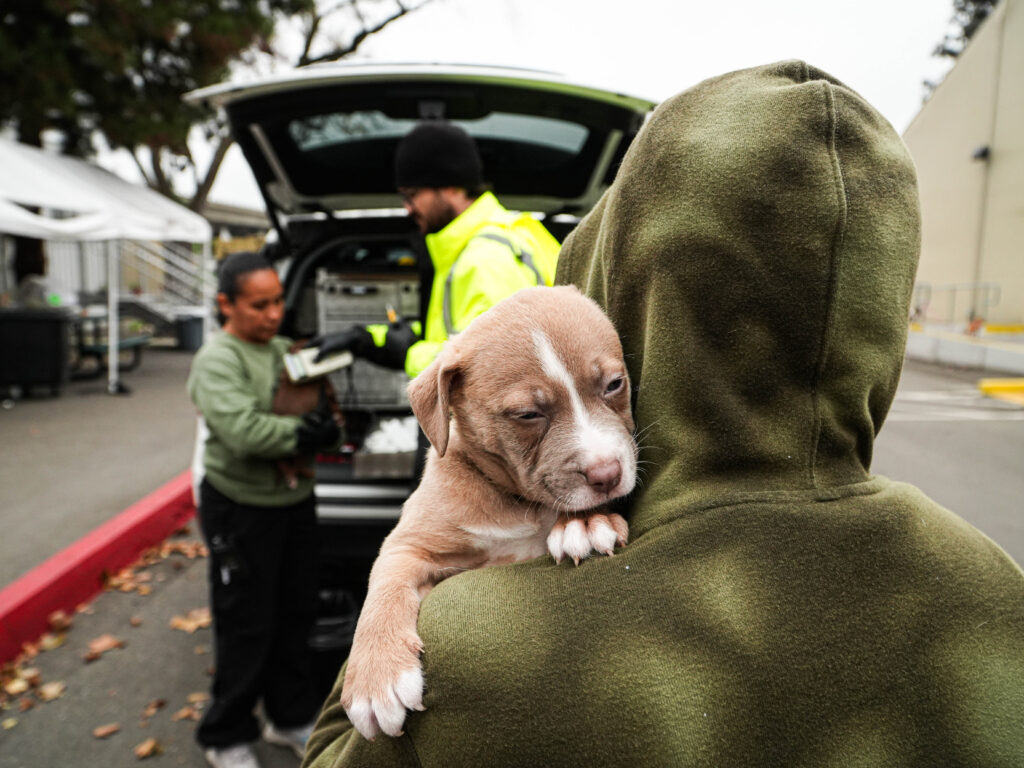
One morning last week, the HOAP mobile clinic headed to the X Street Navigation Center, a facility for unsheltered adults operated by Volunteers of America. As the van pulled in, residents recognized the HOAP team immediately.
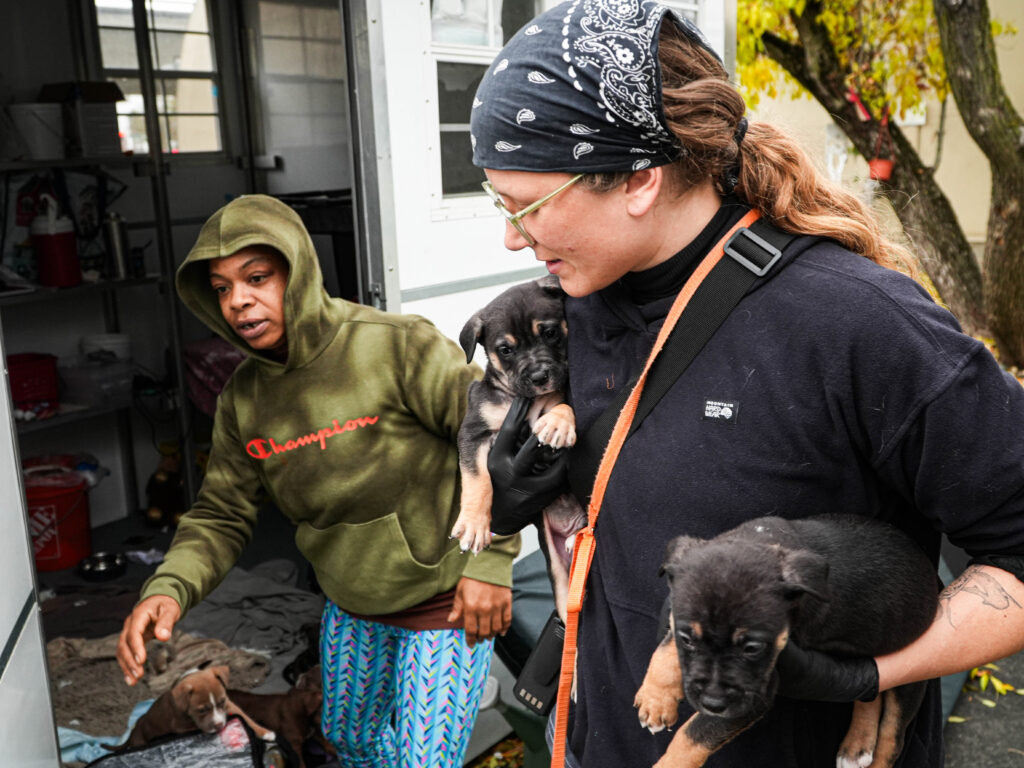
Inside the fenced area, the team found Favor Lukau, who has been bottle-feeding a litter of nine puppies since their mother died. Every few hours, her routine starts again — keeping the pups clean and helping them learn basic routines.
“She wanted to raise them herself before finding them homes,” Villegas explained.
“I’m blessed. I’m blessed,” said Lukau, holding two puppies named Faith and Hope.
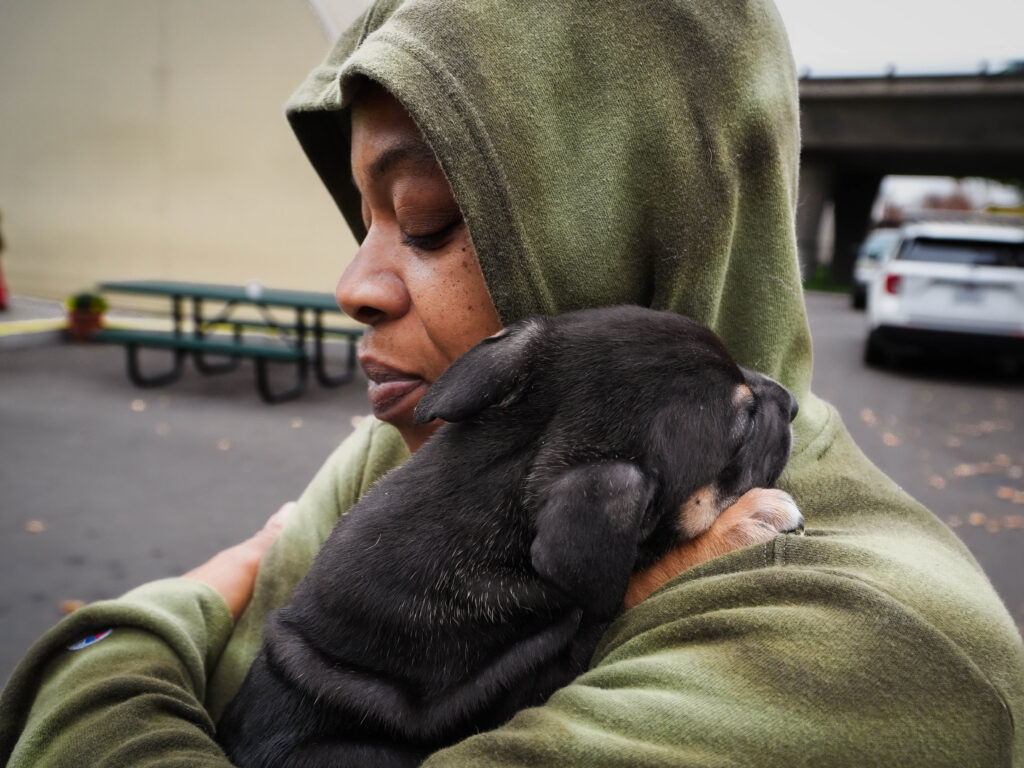
The team vaccinated the puppies, implanted microchips and checked their overall health. Nearby, other residents brought their pets forward — dogs with shiny coats and cats peering out nervously — greeting the HOAP staff like familiar friends.
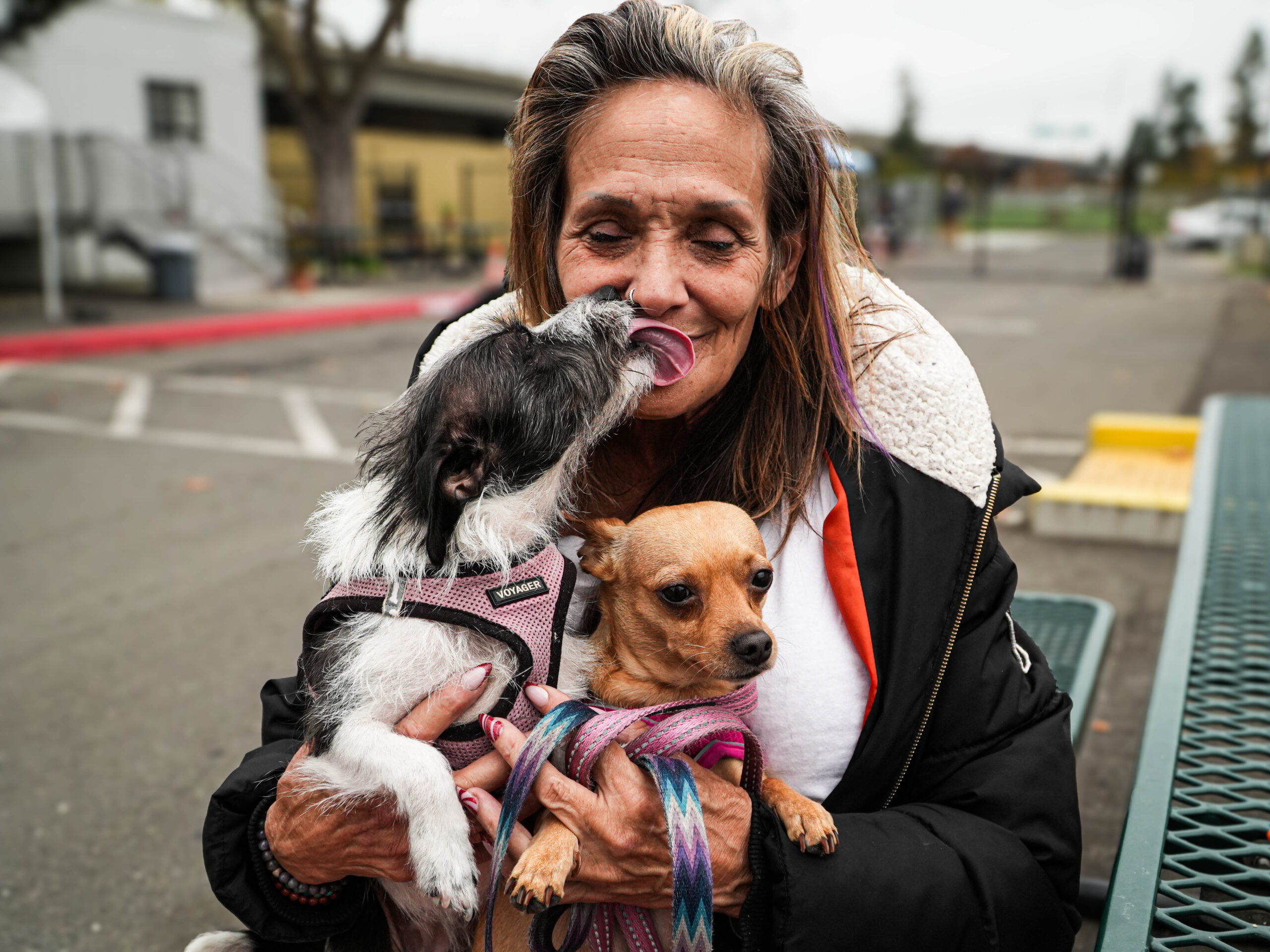
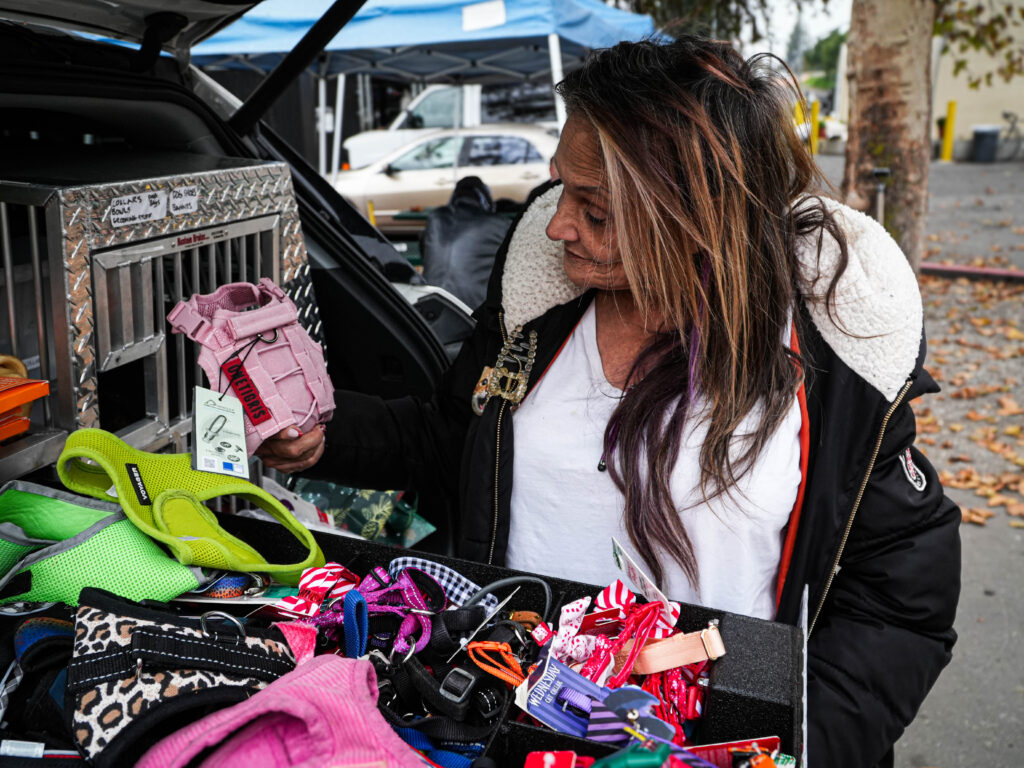
Michele Daedone hurried over to ask if they had a leash. Her dog’s had broken earlier that day. Topper opened the van and pulled one from a supply bin stocked with medical equipment, pet food and small essentials meant for moments like this. A simple leash can be the difference between keeping a dog safe or losing it altogether.
From pet care to human care
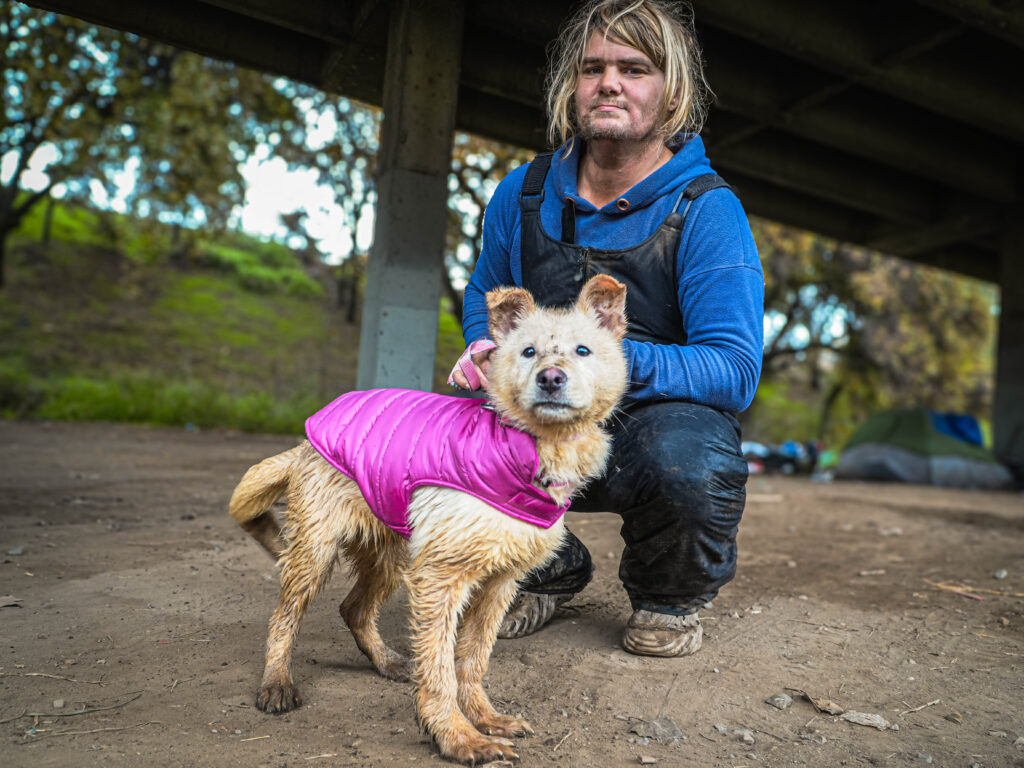
The second stop took the team under an overpass near the railroad tracks on Del Paso Boulevard, to visit with Athena, who was taking care of a dog named Cafe and well-behaved cat El Chapo. Both were in need of vaccinations.
Later, as the team worked near the railroad tracks on Del Paso Boulevard, an unhoused man nearby approached Topper with an unexpected human problem: intense pain in his ear, which he believed was caused by a spider. Topper radioed a nearby paramedic unit, which arrived quickly and removed the obstruction — a burdock burr lodged deep in his ear canal.
The moment captured something central to HOAP’s work. While the program exists to care for animals, the trust built through that care often turns the team into a point of connection, someone safe to ask for help when something goes wrong.
Small system change with big consequences
HOAP’s approach has also reshaped how animal-related calls are handled across the city.
In 2021, Front Street worked with the city to create a new 311 call category: OEH, short for owner experiencing homelessness. Any animal-related call can now be tagged with that designation, giving officers crucial context before they arrive.
“That helps officers understand how to show up in a way that best serves people,” Topper said. “A dog tethered in a backyard for months is different from a dog tethered by a freeway with their owner right there.”
Building trust through prevention
From the beginning, HOAP was designed for preventive care, spay and neuter services and relationship-building. Over time, that approach has expanded the program’s reach.
“We started to get a lot more medical cases and a lot more trust,” Topper says. People who initially sought help only for their pets began asking for assistance with their own medical needs — something many had avoided for years.
For people with trauma or long histories of negative experiences with institutions, the idea of signing up for services can feel risky. Getting flea medication for a beloved cat or treatment for an aging dog feels different.
“If it means their animal will get care, they’re more receptive,” Topper says. “That can be the opening door.”
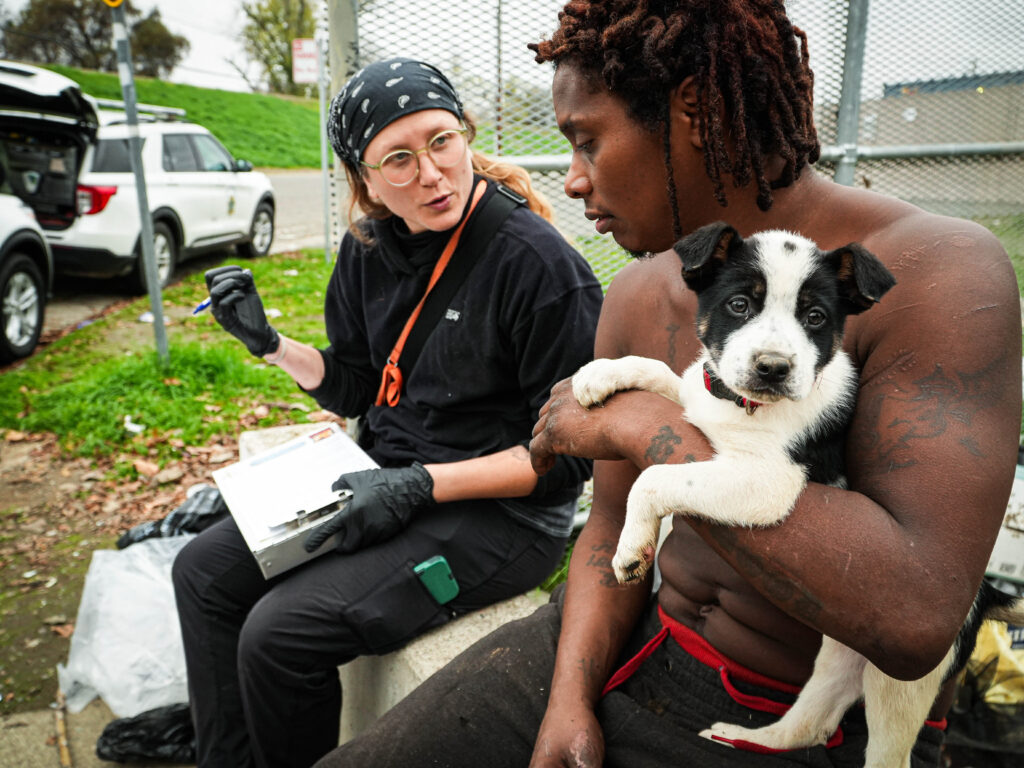
Crystal Sanchez, president of the Sacramento Homeless Union, has seen that dynamic firsthand.
“The HOAP team goes to places nobody wants to go, and they make sure the pets are OK,” Sanchez said. “It isn’t just about addressing a person or their pet. People are more apt to accept services when it comes as a package deal.”
Topper recalls one case in which a woman brought in a dog that had been brutally attacked. While the animal recovered, Topper worked with social-service agencies to ensure the woman’s safety — especially after losing the sense of protection her dog had provided.
After years of trying, the woman finally moved into housing. When her dog was healthy enough to be released, she wasn’t returning to a tent. She was going home.
Navigating sweeps through prevention
When encampment sweeps happen with little notice, Front Street can suddenly be flooded with animals — many of them clearly owned and deeply distressed. HOAP is rarely part of the decision-making around sweeps, but the team often responds in their aftermath.
Ahead of the closure of Camp Resolution, HOAP focused on harm reduction: updating vaccinations, explaining reclaim procedures, distributing crates and using bright orange collars to flag dogs that needed special handling.
“We focus on our circle of control,” Topper said. “Much of the decision-making is outside of it.”
Those relationships matter. When familiar animals arrive at the shelter after a sweep, staff can often identify owners quickly and help reunite them.
“When Camp Resolution was closed down, HOAP was there providing the emergency stuff for the pets,” Sanchez recalled. “They brought out crates, food and leashes — just to make sure our fur babies were okay.”
Pets as part of the solution
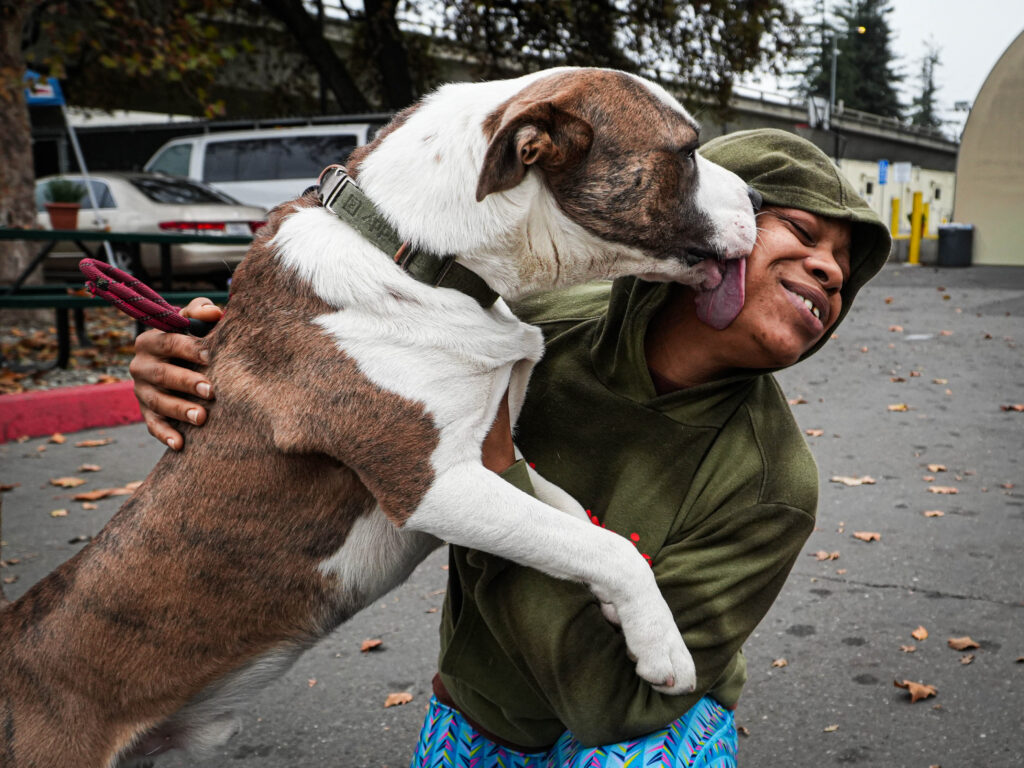
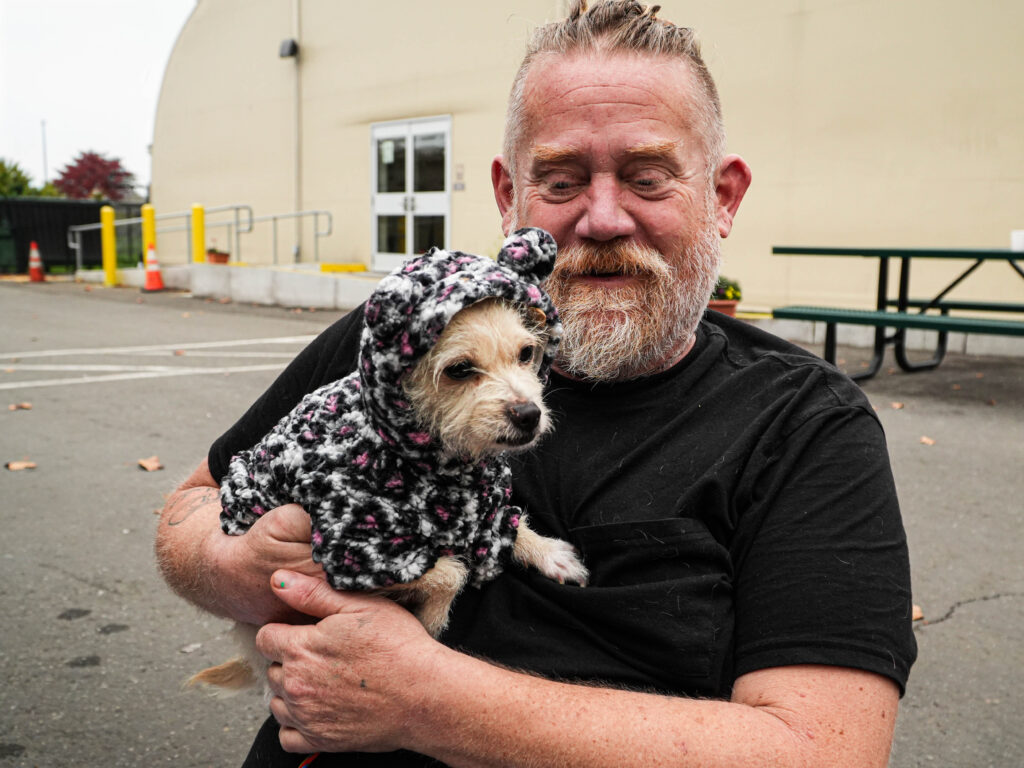
For people living outside, pets aren’t luxuries. They are family, protection, companionship and often the only source of unconditional stability in a chaotic world.
“Living on the streets is very dangerous,” Sanchez said. “The pets are their alarm system and often the first line of defense against harm. Pets are their family. It’s for mental health. It’s protection. It gives them something to care for — something that loves them back.”
Topper wears a shirt that reads, “Sacramento is for pet people.”
“I want Sacramento to explore the idea that when we start with pets, more people will be receptive to housing and services,” she said. “If we want pathways to housing that really work, we have to treat pets as part of the solution — not part of the problem.”
Daryl V. Rowland is a Sacramento-based freelance writer.