
The Abridged version:
- There is something at stake every time a driver picks up that call: control of an 80,000-pound machine, highway safety, and a commercial driving license that doesn’t come back easily if something goes wrong.
- Many truckers say being on the phone as they drive helps them take care of their mental health in a career marked by long hours alone. They say it helps them keep focus, too.
- However, some truckers are prohibited by their employers from talking while driving. They’re monitored with cameras in the cabs, too. “It’s against company policy,” said a driver as he walked through a truck stop near Sacramento.
This story was originally published by CalMatters. Sign up for their newsletters.
The calls started rolling in nonstop to Fresno trucker Gurinderjit Singh as he prepared for an out-of-state delivery earlier this summer. Some congratulated him on his son’s recent engagement while others were fellow drivers inviting him to join a conference call.
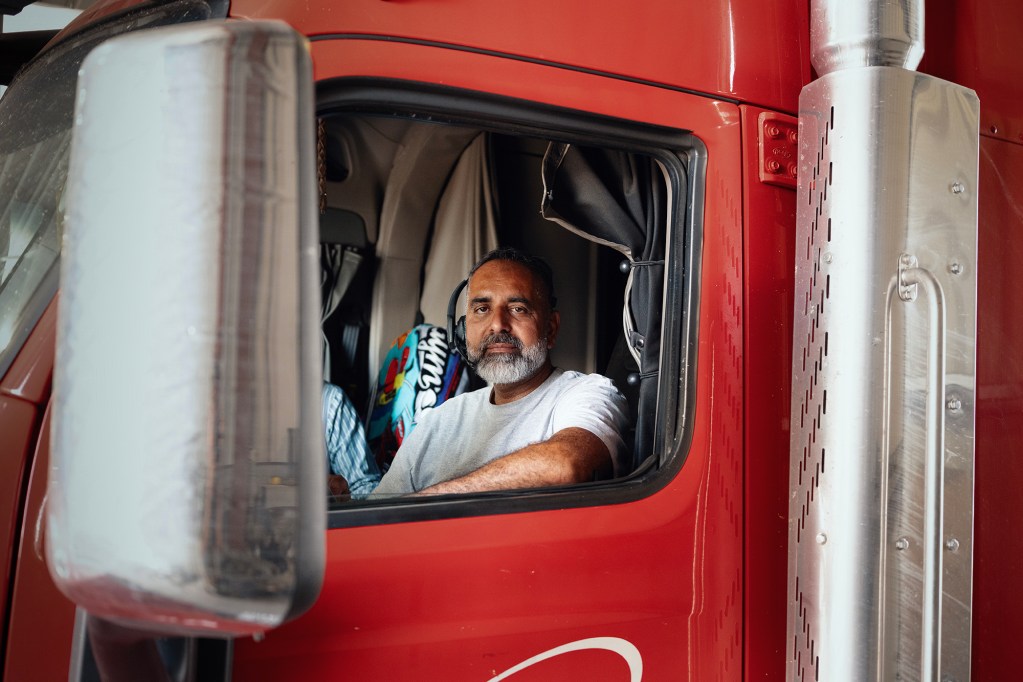
He climbed into his Peterbilt, clipped his headset, joined the call, and settled into an hourslong conversation with friends around the world.
Singh, an Indian origin trucker who is something of a social media influencer, spends at least eight hours a day on the phone while hauling freight, Monday to Saturday. He described the custom as a “call of empathy” — a ritual that gives him a jolt of positive energy and keeps him awake while behind the wheel.
It’s a habit that he and many other truckers share as they plug into conversations that cross continents and time zones, building a kind of rolling community that travels with them down the highway.
They say it helps them take care of their mental health in a career marked by long hours sitting alone in vehicles without access to exercise.
“There is a lot of stress on truck drivers in the United States,” Singh said. “I think the long call is a meaningful method that can reduce this level of stress, social isolation or loneliness in the truck by sharing feelings with others.”
Of course it’s illegal to drive while handling a cellphone and drivers make a point to keep one ear free on their headsets to comply with state laws. They are also aware that distracted driving can be deadly, and several of them told CalMatters they end their calls when they hit heavy traffic.
There is something at stake every time a driver picks up that call: control of an 80,000-pound machine, highway safety, and a commercial driving license that doesn’t come back easily if something goes wrong. The California Department of Motor Vehicles evaluates drivers’ physical and mental health during license renewals, and they can be suspended.
Yet, California has neither conducted a statewide study on truck drivers’ mental health, nor offered a program to support rehabilitation if a trucker faces mental health issues. They’re on their own to get an attorney and fight for a license renewal if an issue gets the state’s attention.
Lindsey Bryan is the health & wellness manager at Project 61, a nonprofit focused on truck drivers’ health. “We see that drivers face social isolation daily,” Bryan said. “They’re away from their loved ones, and also lacking many of the things that you and I might do on a day-to-day basis that help us reduce our stress.”
Academic researchers have found the solitude truckers experience makes them unlike other workers when it comes to social media and online communication. A 2016 paper, titled “Work Strain, Social Isolation and Mental Health of Long-Haul Truckers,” noted social media has been linked to feelings of isolation for online adults.
But not for truckers. Social media, such as WhatsApp and FaceTime, has the opposite effect for them while on the road, giving them a sense of community.
“These (social media) opportunities would provide truck drivers much-needed social connections during layovers, while waiting to load/unload their trucks, any other non-driving periods, or during emergencies,” the authors wrote.
‘Until she starts snoring’
The calls may sound like a distraction, but truckers say they often help drivers stay focused.
“The reason, even in my car today, I talk on my cell phone, via hands-free or bluetooth and it keeps you alert,” said Joseph Rajkovacz, a retired executive for Western States Trucking Association. “It’s no different than turning on your radio and singing along to a song you like. Even though nobody wants to hear your singing. So it does help keep you alert, too.”
That’s why Gerald Bailey, 53, says he spends 27 hours on the phone every week with his wife and brothers, chatting at all times of the day and night. It’s become a routine for him once he’s behind the wheel.
He was talking on the phone with his wife at a truckstop in Lodi earlier this summer while he waited for a mechanic to fix his truck’s air conditioning.
“I stay on the phone with my wife until she starts snoring,” Bailey said while smiling. “Then I let her have a well-deserved sleep and I don’t want to disturb her.”
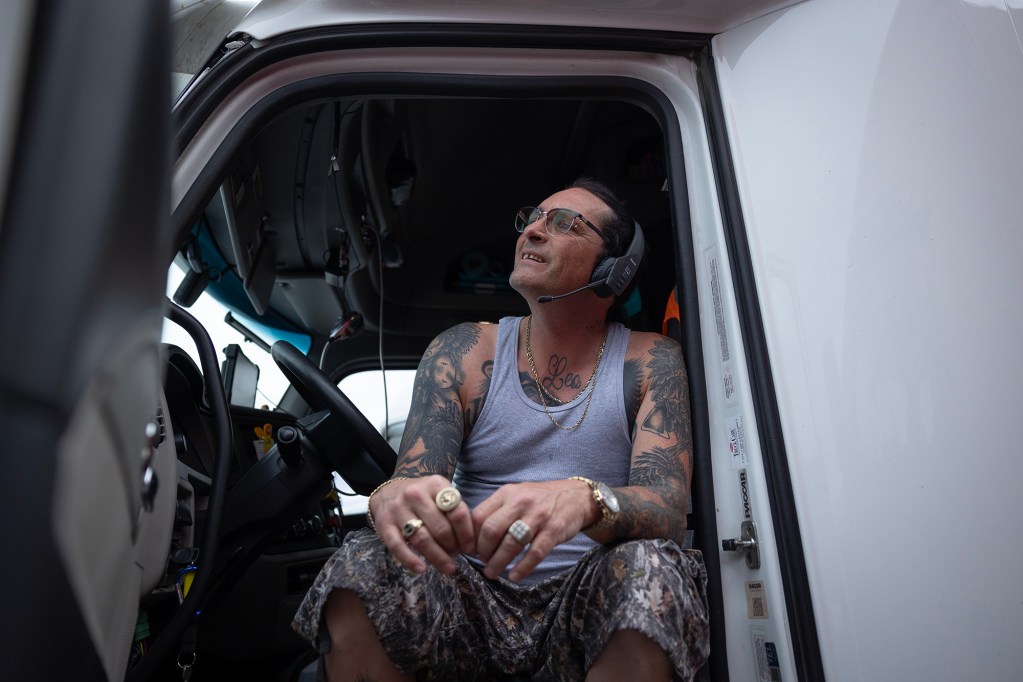
Some truckers, however, are prohibited by their employers from talking while driving. They’re monitored with cameras in the cabs, too.
“It’s against company policy,” said driver Peter Andrews, 62, of Texas as he walked through a truck stop near Sacramento. “I have to pull over the truck to call someone. They’ve put camera equipment with artificial intelligence right on my face, so I can’t use my phone.”
Health risks on the road
According to Project 61 data, 70% of truck drivers in the United States are obese — twice the rate of U.S. adult workers. They also experience heart disease and depression at twice the rate of the average U.S. worker, and diabetes at twice the rate of the general population.
Raman Dhillon, chief executive officer of the North American Punjabi Trucking Association, knows the toll personally. When he was driving the truck, he put on weight then learned he had diabetes and high blood pressure.
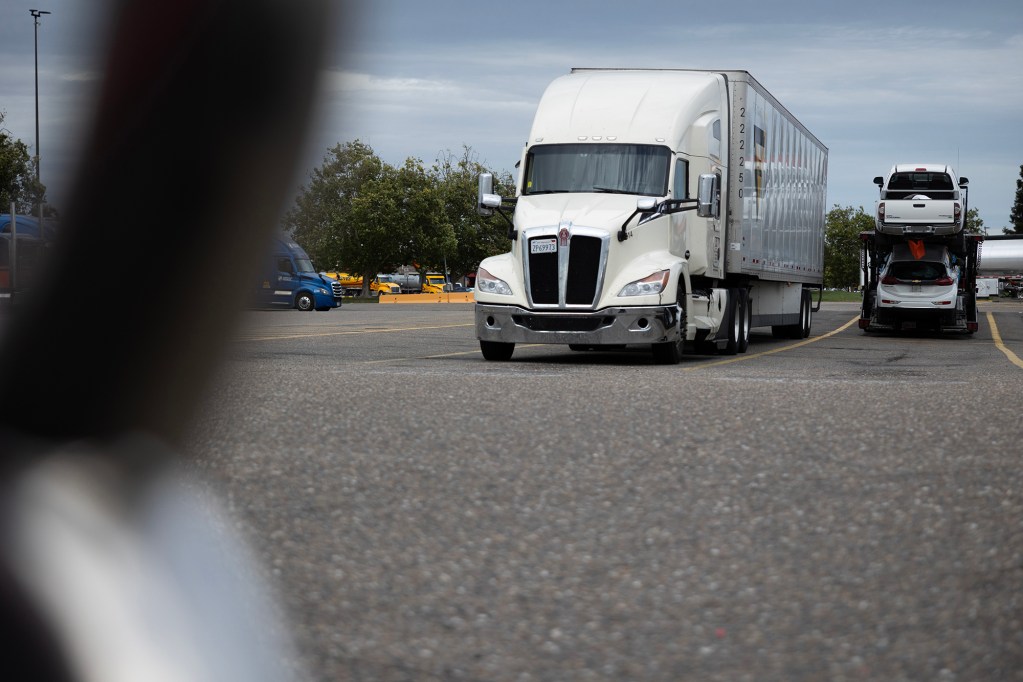
Truckers are “on the road. They are quarantining in that 10-by-10 cab, and loneliness at that time is intense,” Dhillon said. “You have 11 hours of driving, three hours of break, and 10 hours of sleep, and it’s constantly going on. I think a lot of drivers cope with this through phone calls.”
Singh, the Fresno driver, views those physical health risks as connected to mental health isolation. He notes that drivers feel more isolated when they eat poorly. That’s why his wife, Harjinder Kaur, a nurse, packs two or three delicious Indian curries, along with wheat breads, for his deliveries.
Truckers say they also endure what they describe as a kind of discrimination that weighs on them as they travel, including businesses denying them access to restrooms. The complaint reached Congress last year when a Republican lawmaker introduced legislation that would require retailers and warehouses to allow truckers access to bathrooms. The bill has not moved forward.
“They don’t allow us to use restrooms,” said Brenda Johnson, 58, who drives a truck out of Oregon along with her husband. “There’s no structure. And these companies where we deliver treat us as less than human.”
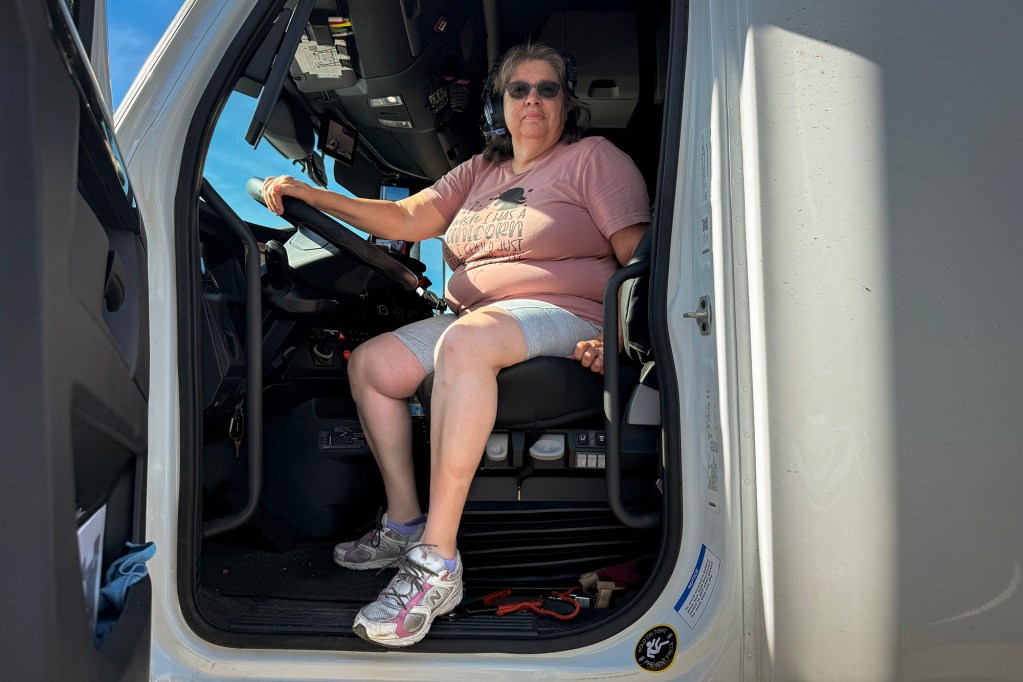
Exercise is its own obstacle. “We don’t really have any safe place to exercise,” Johnson said at a truckstop near Interstate 80 in Sacramento. Do you want to walk around a parking lot with trucks going in and out? You’re dodging all kinds of things. There’s no real safe place for exercise.”
Fighting loneliness
The constant companionship of her husband hasn’t solved Johnson’s loneliness. “Even though my husband rides with me and is constantly with me, I can still be alone and not be alone,” Johnson said, who has been driving since 2005. “Because we’re together all the time, we don’t really have anything to talk about.”
Johnson instead leans on her two girlfriends in the trucking industry, and some immediate family members. On a typical day, she may spend about an hour on the phone outside of company-related calls though that figure can swing sharply.
“My five hours would jump close to 25 hours in a week when I am in a good mood,” Johnson said. “When I’m depressed, though, I isolate myself. I don’t want to talk to anybody. I just don’t want to deal with anything.”
Long-haul trucker Jose Martinez, 50, was resting at a truck stop near Stockton when he described a similar rhythm. He has struggled with the guilt he feels for missing time with his family while he’s working. Now he calls family or friends whenever he feels lonely during a 10-hour shift.
“It’s basically the whole time, and it’s a positive thing to talk to people,” Martinez said.
Talking through emergencies
For immigrant drivers, the cellphone calls offer an immediate connection to their home country that wasn’t possible in the Citizens Band (CB) radio era.
The U.S. trucking industry has long benefited from immigrant labor. Between 2000 and 2021, the number of foreign-born truckers more than doubled, rising from 316,000 to over 720,000 drivers. Today, about 18% of U.S. truck drivers are foreign-born. According to North America Punjabi Trucking Association, nearly 35% of Punjabi truckers of Indian origin contribute to the California trucking industry.
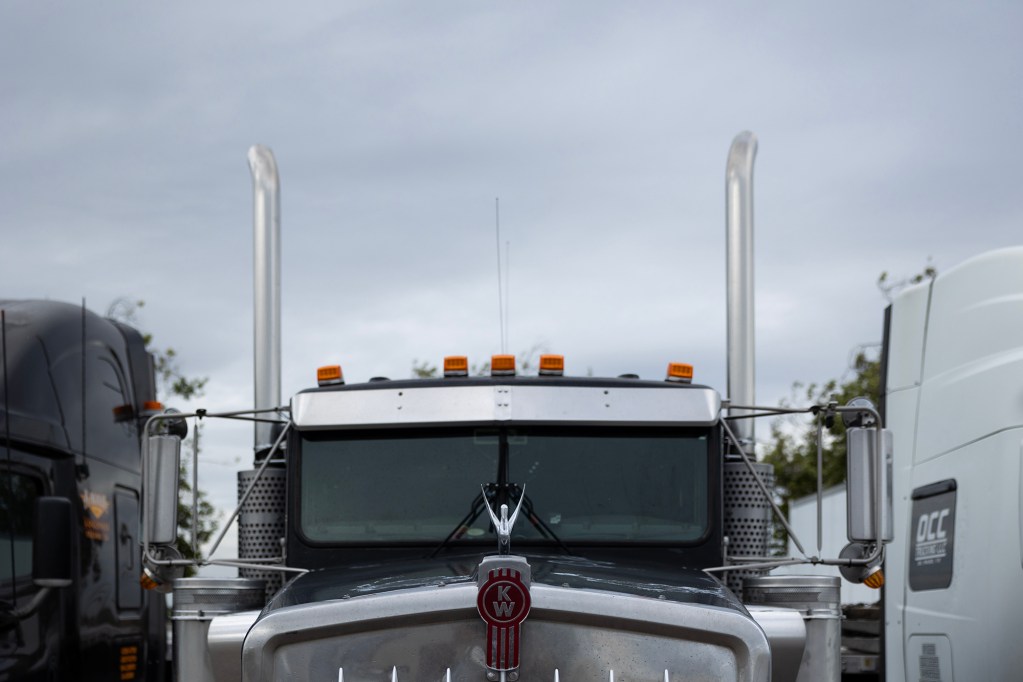
Singh, the Fresno driver, has a side hustle hosting a weekly TV show on Punjab politics. He’s publishing a book called “Ameriki Trucknama,” which translates to “American Truck Saga.” He also has 19,000 followers on Facebook, where people come for his political insights.
As he drove to Kansas City earlier this summer, his fellow Punjabi drivers asked his thoughts about who’d win in upcoming legislative assembly elections in Punjab, the northern Indian state that most of them call home.
Back on the highway, Singh points to more concrete benefits of the calls. They have helped drivers manage roadside emergencies.
Two years ago, he was on the phone with a friend when his friend’s truck’s fuel line burst somewhere in rural Texas. Panicked, Singh stayed on the call while his friend tracked down a local mechanic.
“Eventually, if he had not been on the call, we don’t know what (would have) happened,” Singh said.
This story was produced jointly by CalMatters & CatchLight as part of our mental health initiative.
This article was originally published on CalMatters and was republished under the Creative Commons Attribution-NonCommercial-NoDerivatives license.