The Abridged version:
- Wineries and breweries are embracing the experiences and atmosphere that draw customers as the culture around drinking shifts.
- People gravitate to venues where they can connect with others and engage with entertainment beyond what they find on phones and screens.
- Quality beer, wine and cocktails remain important, the front end of a simple formula: something good to drink and a reason to stay.
Americans are drinking less, and businesses built around beer and wine are feeling it.
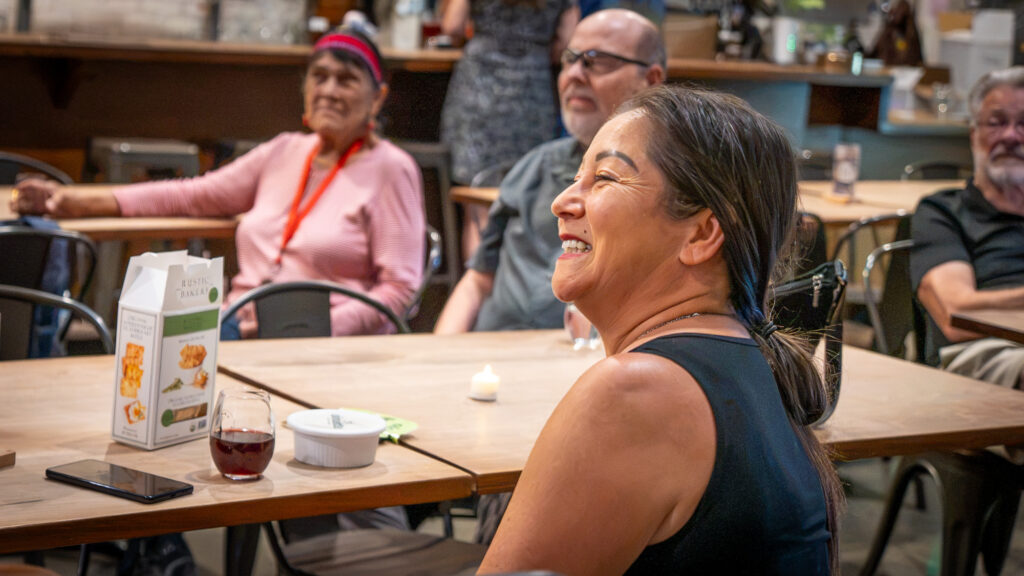
In 2025, 54% of U.S. adults told Gallup they consumed alcohol — the lowest share in nearly 90 years of polling. Yet some Sacramento-area wineries and taprooms are holding their own or even growing. Their approach: making the drink part of a broader experience, one that offers an escape from the digital and polished into something less predictable and more human.
In an age of algorithmically selected entertainment, AI-polished images and endless choices delivered through a screen, some establishments are making a virtue of what cannot be controlled. A small-lot wine tastes different from the last. A jam changes direction. A stranger joins the conversation. The experience is physical, local and unrepeatable — and that may be exactly the point.
A reason to stay
Chris Mora, owner and winemaker at Christopher Cellars in Elk Grove, sees a fundamental shift in what customers want. Before the COVID-19 pandemic, visitors might sample wine, buy a bottle and move on to the next winery.
“Consumers now want to go to one venue and stay for multiple hours,” he said. “The idea of just doing wine tasting is no longer enough.”
Sign Up for the Morning Newsletter
The Abridged morning newsletter lands in your inbox every weekday morning with the latest news from the Sacramento region.
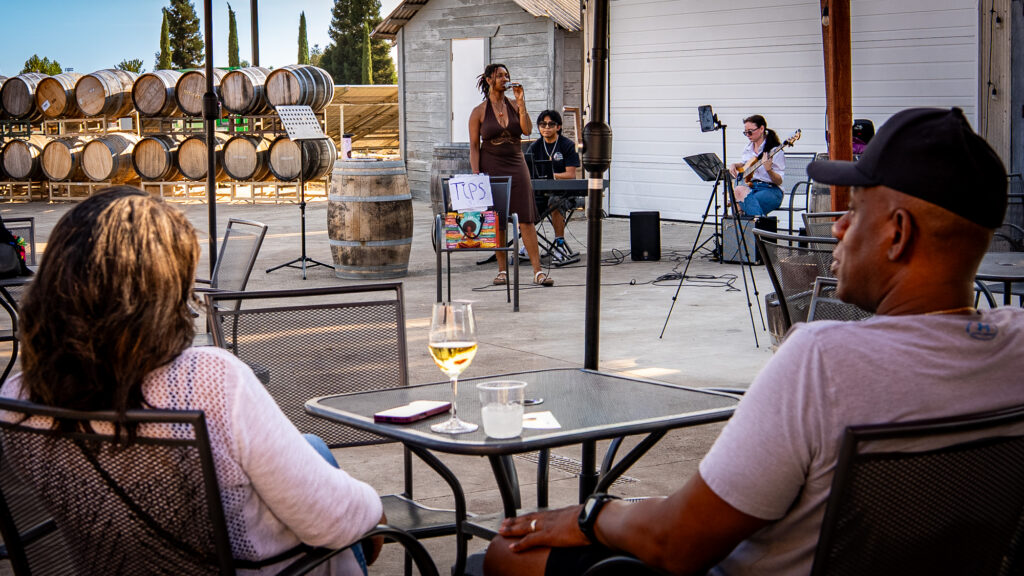
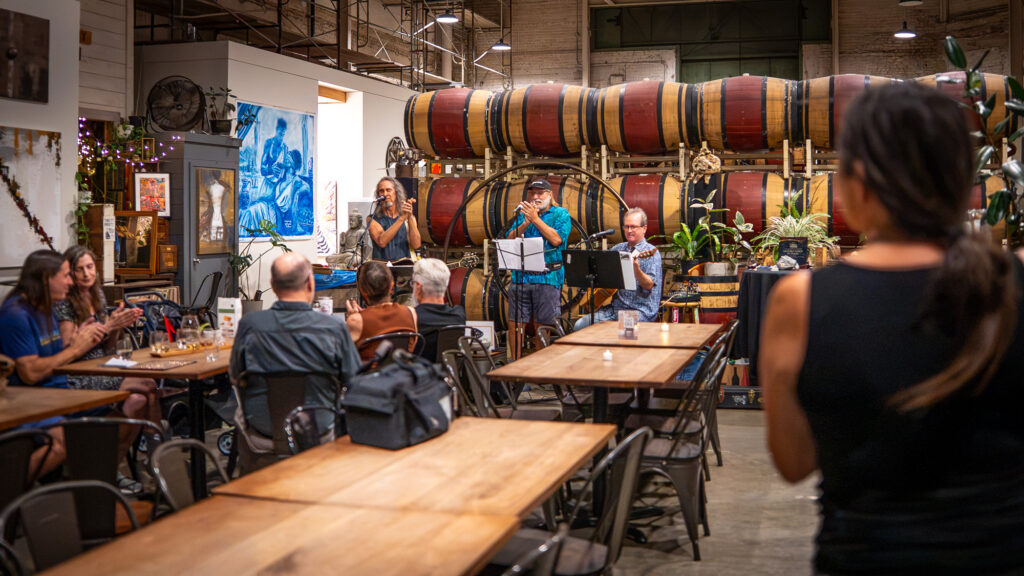
So Christopher Cellars gives nearly every night its own personality. Tuesday brings tacos and wine cocktails. Wednesday is jazz, Thursday is bingo and Friday pairs local musicians with food trucks, sometimes drawing up to 150 people. Visitors might order a glass, try one of about 22 small-lot wines or discover a new release while settling in for the evening. The evening unfolds through taste, sound and conversation rather than a sequence of content selected by an algorithm.
The entertainment does not replace what is in the glass.
“You still need to have exceptional wine,” Mora said.
It is the formula more businesses have adopted: something good to drink and a reason to stay.
Making wine more approachable
The experience begins with hospitality. Mora believes many younger customers are not rejecting quality wine so much as the stiff rituals and insider language that can make it intimidating.
“Just because you wear something really fancy and use really big words, that doesn’t make you high hospitality,” he said. “You have to bring wine to the people in a way that they can understand.”
Christopher Cellars sells many bottles in the $35 to $50 range, but the atmosphere is informal and personal.
“We make wine accessible and relatable and approachable,” Mora said. “That doesn’t mean we dumb it down.”
Kevin Luther, founder and winemaker at Lucid Winery on R Street, followed a similar instinct. He designed Lucid to feel “more like a brewery or event center than a winery” — comfortable enough for an after-work drink, lively enough for a night out and classy without feeling “stuck-up.” Alongside familiar wines are uncommon grape varieties, mead, wine-beer hybrids and wine-based cocktails.
Luther said younger customers will still spend money on wine when they see value, authenticity and a connection to the producer.
“People have to restructure for the new reality,” he said. “Let’s create something that has real value for people.”
At Christopher Cellars, that connection can mean Mora moving from table to table during a pairing seminar, answering questions and telling the imperfect stories behind the wine — how the grapes were handled, what happened in the cellar and even the accidents along the way.
The appeal of the unpredictable
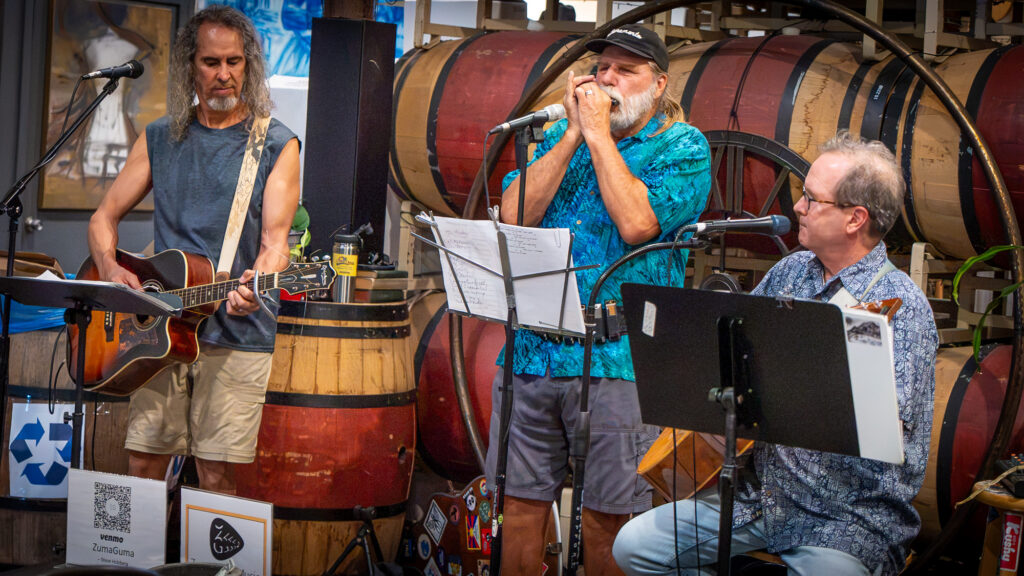
At High Hand Brewing in Loomis, Wednesday nights offer something no Spotify playlist can: musicians working without a net. A player steps onto the low stage, calls a song and people who may never have performed together fall in behind. The music can move among rock, country, blues, funk and originals. There is no edit, undo button or promise that the next eight minutes will work. Neither the musicians nor the audience knows exactly what will happen next.
Andrew, High Hand’s entertainment booker and sound engineer, compares the jam to a box of chocolates. One night, a Russian drummer arrived with prepared tracks, sat down at the house drum kit and launched into a solo that “brought the house down.” On other nights, musicians who first appear at the jam impress Andrew enough to leave with a weekend booking.
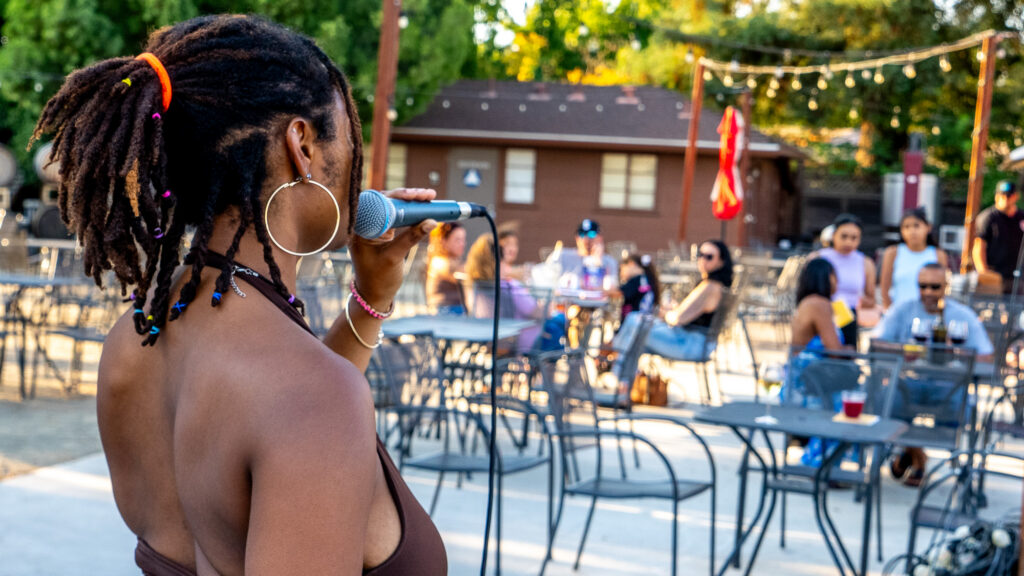
Singer and co-host Melissa Nunley likes that High Hand can feel lively without becoming anonymous.
“Certain places just have a vibe,” she said. “If a place is too big, people don’t get that feeling of intimacy that lets them feel free.”
For Nunley, that physical exchange is precisely what screens and recordings cannot reproduce.
“It’s hard to get a real experience these days with real people,” she said. “I think we isolate ourselves a lot because of those boxes” — phones, computers and televisions. “I love my box, too, but music makes me feel alive.”
Nunley grew up singing with her sister while their father played guitar.
“Music started with one guitar and three voices,” she said.
That still shapes what she seeks onstage: people looking at one another, listening for where their voices meet and making sound together in real time. “I love the sound of banging on actual things in the room,” she said. “I don’t care if it’s a bag of coins or whatever it is — it makes real noises.”

The no-cover jam lowers the stakes of trying something unfamiliar. “You don’t have to belong to our club,” Nunley said. “You don’t have to buy anything big or spend a lot of money.”
The approach has produced measurable results. Andrew said early music crowds of roughly 60 to 100 grew to 200 or 250 within months, with some events reaching about 400. He calls entertainment “a clientele builder.” Bands bring followers who discover the beer, food and venue, then return when the whole visit works.
SacYard Community Tap House in East Sacramento has developed its own musical identity. Wednesday jazz is the fixed genre; later in the week, the outdoor stage may host R&B, country, swing, a Beatles cover band or one of the Grateful Dead-oriented groups favored by co-owner Dan Thebeau, who once followed the Grateful Dead around.
“As the quality of the bands improved, people began coming out specifically to see those bands,” Thebeau said. A popular weekend night may draw about 200 people, while a particularly strong act can push attendance above 250, he said.
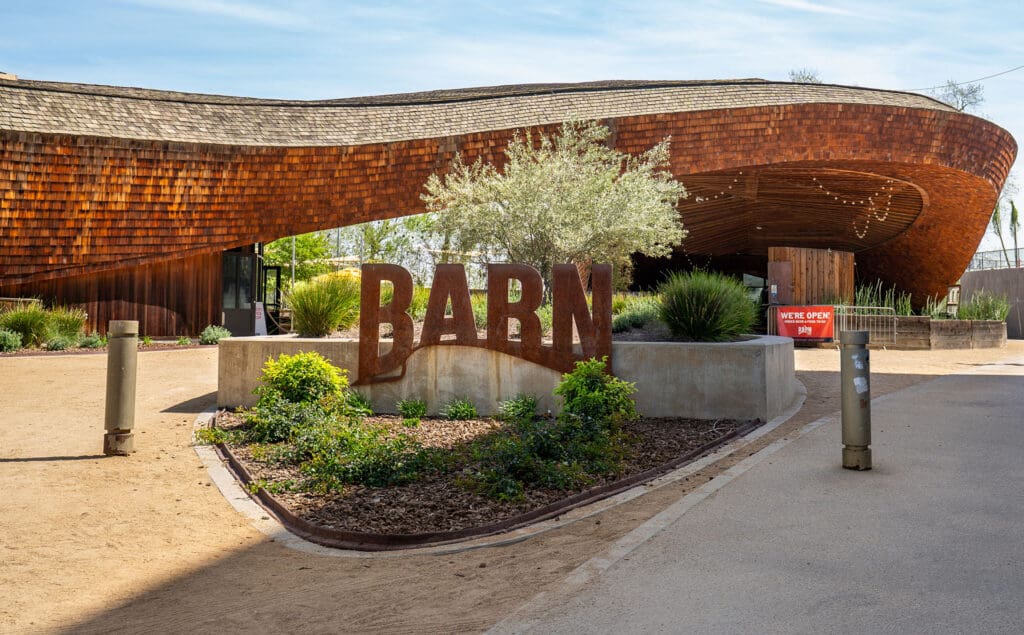
On a larger scale, Drake’s: The Barn in West Sacramento turns a 2-acre riverfront beer garden into a concert lawn and gathering place built for hundreds. Its calendar includes regular live music, festivals and the free, family-friendly Rhythm on the River concert series. With more than 40 taps, pizza and rotating food vendors, fire pits and lawn games, The Barn can feel less like a bar than a small open-air town square — one where a crowd gathers under its enormous curved wooden canopy to hear music in the physical world.
Experiences of all kinds
The same principle extends beyond music. Lucid also hosts trivia, chess, cooking classes, paint-and-sip events, makers’ markets and nonprofit fundraisers. Guests might knead pasta dough, paint a planter and add a succulent, move a chess piece or talk directly with the person who made something for sale. On one night, visitors might find a fundraiser in the book-lined back room, a party in the middle and local jazz or R&B near the bar.
Many artists, instructors, vendors and nonprofits use the space without paying rent or commission. They keep their revenue and bring their audiences; Lucid gains customers and promotion. “People think we’re social-media gurus,” Luther said. “We do almost nothing.” Hundreds of organizers publicize their own events, he said, and the marketing has “really become a community effort.”
Luther reports that Lucid has grown roughly 25% to 40% in each of its five tasting-room years. He attributes the momentum to the people who use the winery as their own gathering place.
SacYard offers a similar weekly rhythm: trivia Monday, a Fleet Feet run that begins and ends at the taproom Tuesday, jazz Wednesday and varied music later in the week. Runners cover 3 miles together, then many return sweaty and thirsty for a beer. Its 24 rotating taps emphasize independent Western craft beer, with wine and nonalcoholic choices for people who want something else.
A place to belong
The feeling of the place is, in the end, the most consequential amenity. SacYard’s outdoor beer garden was designed for dogs, children, parents and grandparents. Cornhole boards and lawn games can give way to an informal children’s play area. Thebeau and his staff learn customers’ names and introduce regulars to one another.
“Then, when they come in, they know a lot of people,” he said. “We have a ton of regulars, and I think that’s because they feel comfortable there.”
Christopher Cellars puts out sidewalk chalk for children, then washes the drawings from the concrete at night so the canvas is blank again the next day. Water bowls and treats welcome dogs.
Lucid welcomes customers whether or not they consider themselves wine drinkers — and intentionally has no televisions. Luther accepts losing sports crowds because screens would change the atmosphere. “It is a place where people can actually be around people, talk at the bar and meet someone new,” he said.
Andrew believes remote work and digital saturation have made that contact more valuable. “People want to get close to other people again and try to feel like a part of humanity,” he said. “What better way to do that than music, food and drink?”
What they’re really selling
No schedule of events can compensate for poor drinks, weak service or an uncomfortable room. Mora argues that product and hospitality must reinforce each other.
“You can have great wine, but if you’re not having amazing hospitality, I don’t think you’re going to do well,” he said. “I think you have to have both.”
What these businesses share is a focus on putting people in the same physical space for pleasures that resist digitization and polish: a wine that exists only in a small lot, a song that changes direction, pasta shaped by hand, a conversation with a stranger, children covering concrete with chalk while several generations share a table.
None of it is as frictionless as a feed. The weather may turn, the band may miss a cue and the wine may require a question or two. Those imperfections are not glitches to be edited out — they’re grain, the texture only something unfiltered can have.
The drink still matters. But so does the possibility that something unscripted and genuinely human might happen around it.
At High Hand, Andrew described a good night as a few hours when “everybody forgets the rest of the world and gets along.”
In a contracting market, that is the one thing these businesses have learned to pour.