

The Abridged version:
- This year, Yolo County’s general fund deficit was nearly $40 million.
- Each of the last four years, the deficit has grown.
- The challenges the county faces are long-standing and structural, meaning one-time fixes are insufficient to remedy the problem.
- Supervisors and staff are discussing how to resolve the structural deficit, including raising some kinds of taxes and pursuing development on county land.
When the Yolo County board of supervisors passed this year’s budget, it came with a warning from county staff.
“The budget you see in the recommended action today is balanced. That doesn’t mean it came easy,” said Michael Webb, chief administrative officer for Yolo County, as he submitted it to the board for approval in mid September.
Through a painful process of financial gymnastics and dipping into county reserves, officials managed to avoid major program cuts while balancing a budget that started the year tens of millions of dollars in the red. But that’s not a given next year. Or the year after.
“Under these conditions, and with the knowledge that we are facing perhaps years of unknowns at both the state and federal levels, the County continues to experience cost pressures that are greater than the gains in forecasted revenues,” said the staff report that Webb submitted alongside the budget.
“The hard work after adopting the final budget for this year is already underway,” Webb said.
That’s because Yolo County is contending with a severe and growing structural budget deficit in its general fund, meaning it is bringing in less than it is spending. According to the county’s department of finance, the initial budget gap in 2022-2023 was just under $10 million, a number that rose to over $20 million the following year, more than $30 million last year, and close to $40 million this year.
To fill those gaps, staff and supervisors have relied on short-term solutions, including things like salary savings, one-time pots of money and reserves. But this time around, staff stressed that those fixes are not sustainable, and the county will have to figure out ways to increase its revenue if it wants to crawl out of its compounding deficit.
“Fundamentally, it’s just an issue of more expenses than revenues,” said Yolo County Supervisor Lucas Frerichs in an interview on Thursday.
Insufficient revenue
As things like inflation and the need to maintain competitive employee compensation put pressure on the budget, Yolo County’s ability to raise revenue has been hamstrung in a handful of ways.
First, Yolo County relies heavily on property taxes as a primary source of income, but it only actually receives 8% of the taxes paid locally. After the passage of statewide property tax reform in the 1970s, an allocation system was set up for property taxes that was based in part on rates that were in effect at the time. Yolo County’s tax rate was relatively low compared to other counties.
“We are 57 out of 58 counties in California in terms of our percentage of property tax share,” Frerichs said. “So we are at the very bottom in terms of percentage of property tax that Yolo County receives out of every single dollar.”
That’s compared to 14% in Sacramento County, 19% in San Joaquin County, 15% in Sutter County and 22% in El Dorado County, Frerichs said.
“Since the late 70s, that has already kind of put us way behind the eight ball,” he said.
Adding on to the challenge is what amounted to a paperwork error in the 1990s.
During that time, the state was facing a multi-billion dollar budget deficit, and one of its solutions was to use county, city and special district property taxes to help pay for schools. The program, known as the Educational Revenue Augmentation Fund, hit statewide county coffers hard, and Yolo was no exception.
In fact, when the state was originally setting its formula for how much Yolo County would contribute, it attributed some of newly incorporated West Sacramento’s funds as the county’s. Because ERAF responsibility is calculated by revenue, Yolo County was then responsible for a disproportionate share, amounting to between $3 million and $4 million annually.
“We basically have been shorted now for 30 years,” Frerichs said. “It has never been fixed.”
That is a meaningful amount of money for a county that struggles with revenue.
“If we had $4 million more per year, that would be huge,” Frerichs said. “That is an issue that we’re very, very focused on and trying to have fixed by our state Legislature.”
This isn’t the first time county officials sounded the alarm. In 2011, then-Assemblymember Mariko Yamada presented a bill that would address some of Yolo County’s ERAF and property tax challenges. Legislative analysis referred to previous attempts to remedy the issue, which is tied to West Sacramento incorporation in 1987.
“Yolo County has supported and sponsored, over the last 15 years, a number of bills to
address the county’s low property tax problems,” the analysis said. “Under the present ERAF formula, Yolo County has been paying ERAF on funds it has not had since 1987.”
The bill eventually died in the appropriations committee. No successful attempt has been made.
Frerichs said that state Sen. Christopher Cabaldon and Assemblymember Cecilia Aguiar-Curry have said they’re willing to help. The two did not respond to request for comment on this issue.
Land-use choices
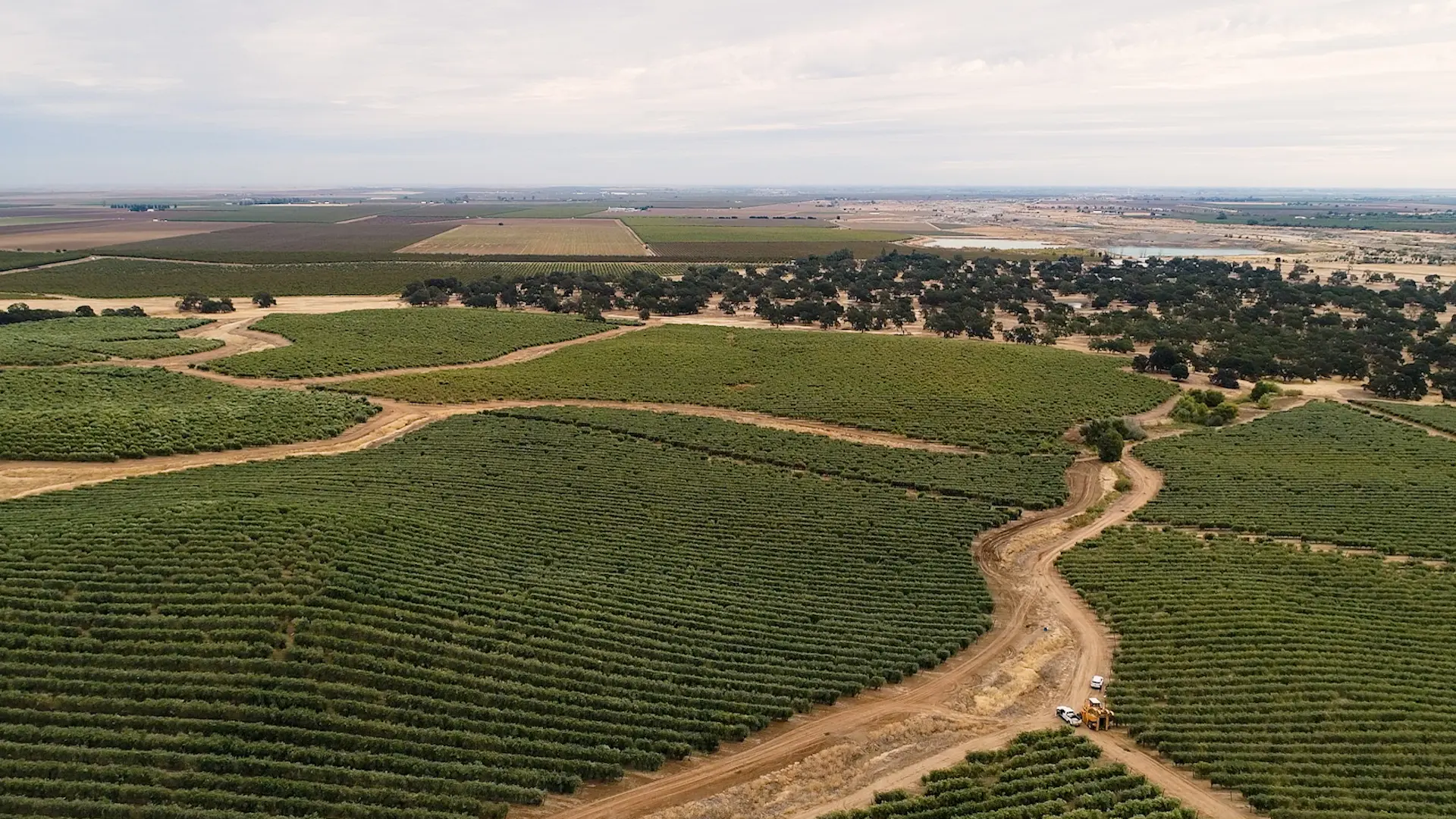
Another challenge for raising revenue is that Yolo County has long focused development efforts in its urban areas and worked hard to preserve agricultural land.
“The county has made been very intentional for 50 years at least, but probably longer, of directing our growth into the four cities,” Frerichs said.
That decision has minimized sprawl and maintained the county’s agricultural heritage, but it has also meant less development on unincorporated county land, which is one of the ways to bring in revenue.
“It doesn’t chew up and totally destroy this amazing, world-class ag land. At the same time, it has just resulted in less money,” Frerichs said. “If the development is happening in the cities — West Sacramento and Davis or wherever — then those cities are the ones benefiting financially from that development, that growth.”
Laura Galindo, associate management analyst in the county administrator’s office, agreed with that assessment.
“According to our finance team, Yolo County’s fiscal challenges stem in part from having a relatively small tax base due to long-standing land-use policies that preserve agricultural land and focus development within the cities,” she said in an emailed statement.
Moving ahead
As they look to address the ongoing budget issue, the board of supervisors and city staff are considering a host of options to increase the county’s income.
At the Nov. 18 board meeting, staff presented supervisors with a list of new potential revenue streams.
Along with exploring more economic development on county land, the options included trying to get voter approval for increased sales taxes, a parcel tax and a tax on sale of tickets for entertainment, including A’s games at Sutter Health Park. In addition, some supervisors expressed interest in renegotiating the county’s tax sharing agreement with West Sacramento, though the city would have to be on board.
Some combination of those options, along with recapturing misallocated ERAF funds could put the county in a much better fiscal position moving forward.
“We’re not like, ‘oh we need to go find like $50 million or $100 million.’ We just need that kind of cushion of 10, maybe at the very most $20 million per year to make everything totally work and pencil out,” Frerichs said.
Susan Shelley, vice president of communications for the Howard Jarvis Taxpayers Association, said that increasing taxes isn’t the only way to address a deficit.
“The one thing they did not have on their list was to cut spending, which when you have a structural deficit is a really good idea,” Shelley said. “Maybe we’re just raising a lot of money but spending too much.”
Regardless, it’s a problem that must be addressed sooner rather than later.
“There are not a lot of really easy, simple choices,” Frerichs said. “I think we’re just at a necessity point for the county where this long-standing issue has to be dealt with.”
Daniel Hennessy joins Abridged from the California Local News Fellowship. He’s a reporter covering Yolo County.
Correction: A previous version of this story misstated who presented the budget to the board of supervisors. County staff presented the budget. The article was updated on Dec. 9 at 9:16 a.m.