
The Abridged version:
- For weeks, parents have raised the alarm over proposed renovations to the Crocker Riverside Elementary School play area — specifically plans to replace the grass field with artificial turf.
- Trustees and administrators met with families Tuesday evening to share more information and answer questions.
- Officials listened to a variety of concerns, making no guarantees either way. The school board will weigh in on the project’s advancement during a May meeting.
Controversy over a proposed plastic grass field at Crocker Riverside Elementary School reached a boiling point Tuesday, as administrators met with families to address a laundry list of health and environmental concerns.
Officials from the Sacramento City Unified School District said if they stop the project now, there is no guarantee when they would be able to return to make a suite of repairs to the school’s play area.
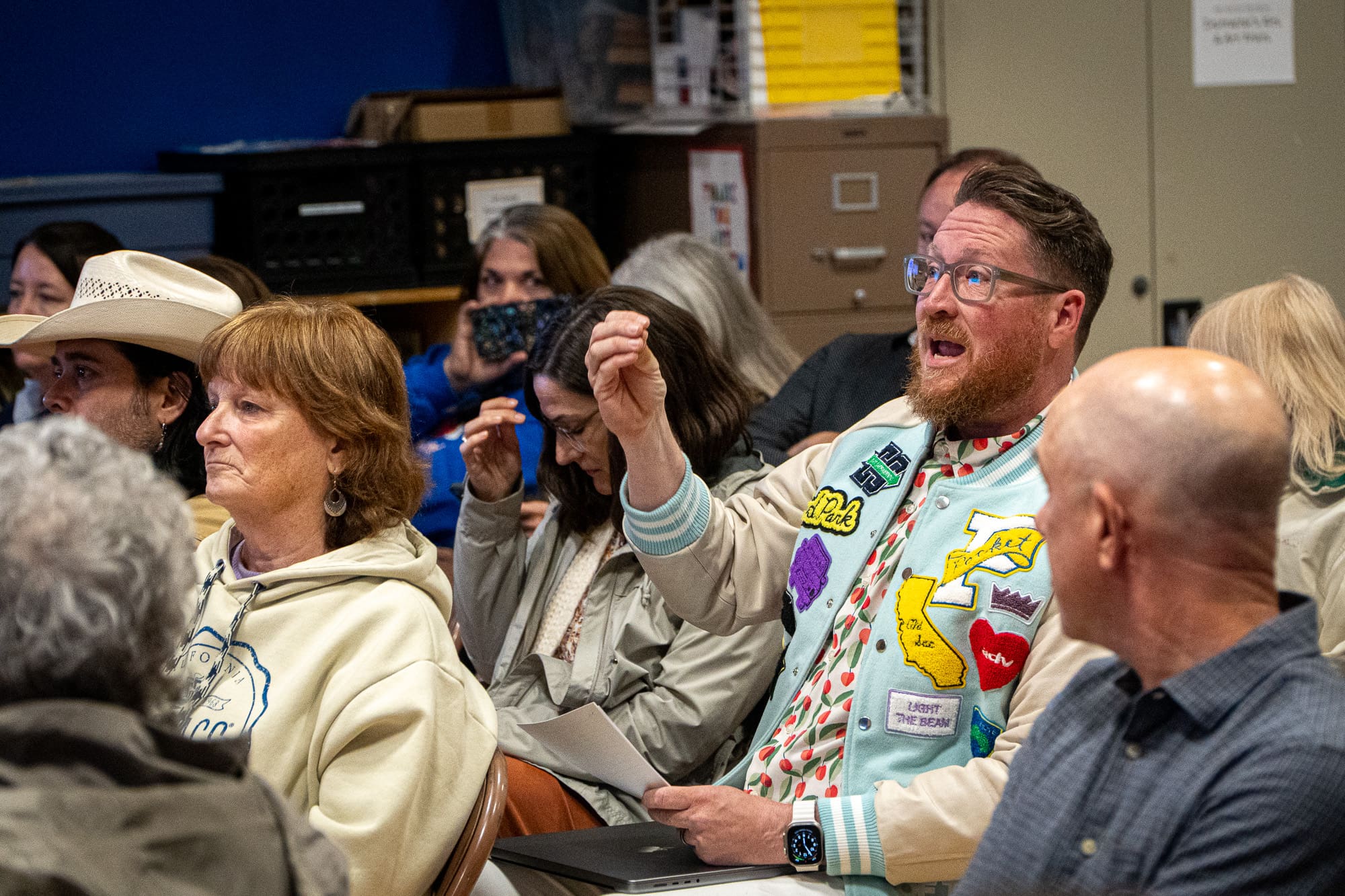
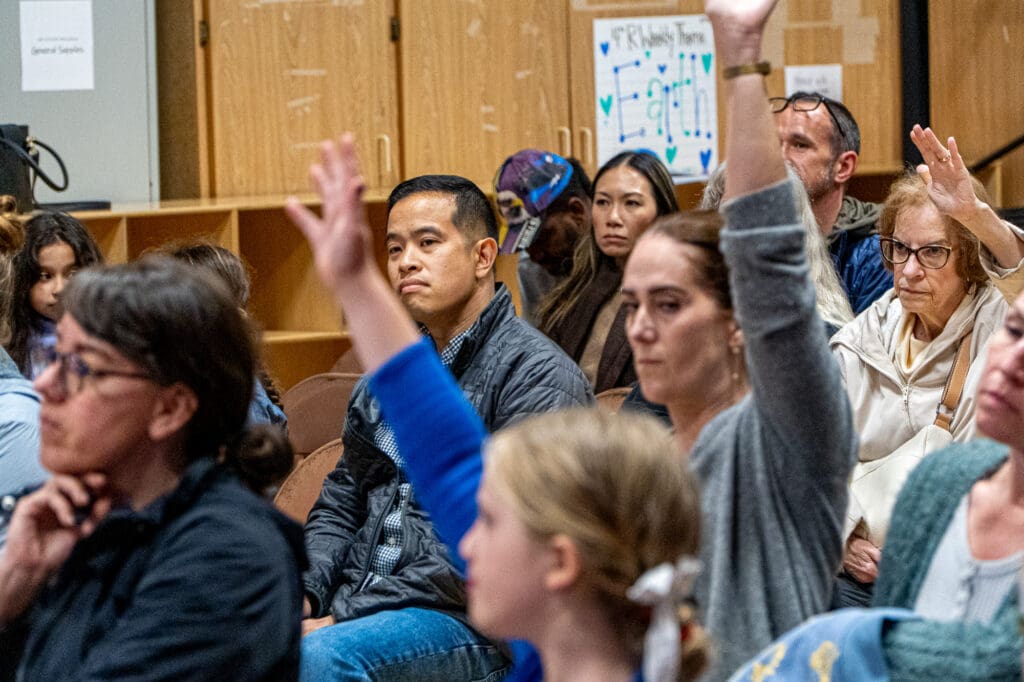
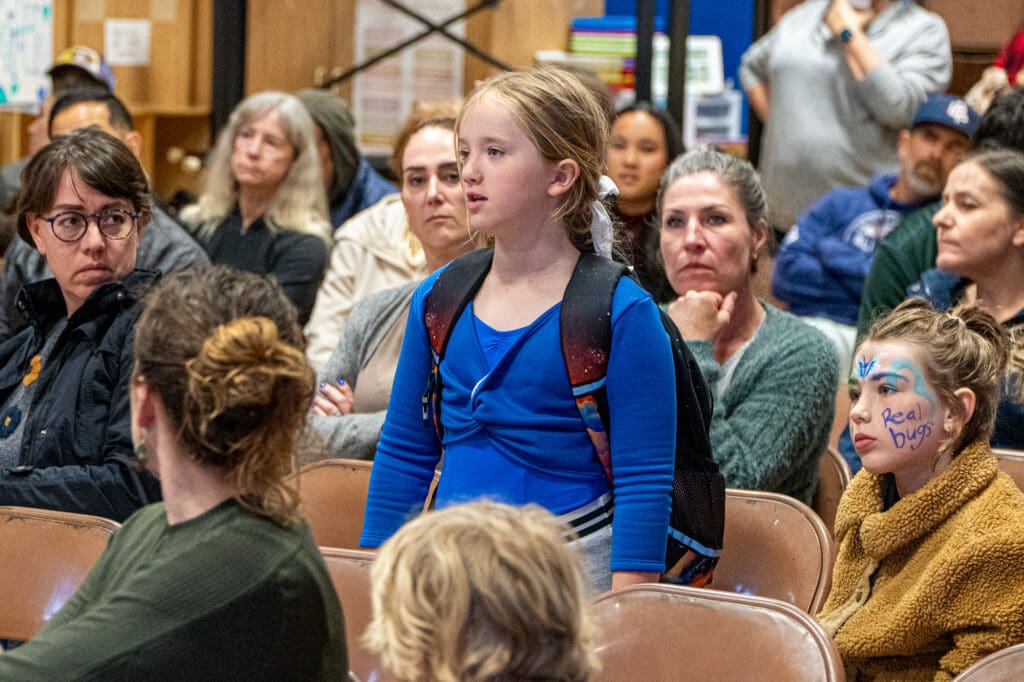
More than 50 students, parents and grandparents gathered for the evening meeting in the Crocker Riverside auditorium. School board members, three of whom were present Tuesday, will vote on the project’s progress next month.
The Land Park neighborhood school would follow six other elementary campuses with artificial turf. Other K-6 schools in the district with artificial turf are William Land, Nicholas, Bowling Green, Hollywood Park, Oak Ridge, and César Chávez Elementary Schools.
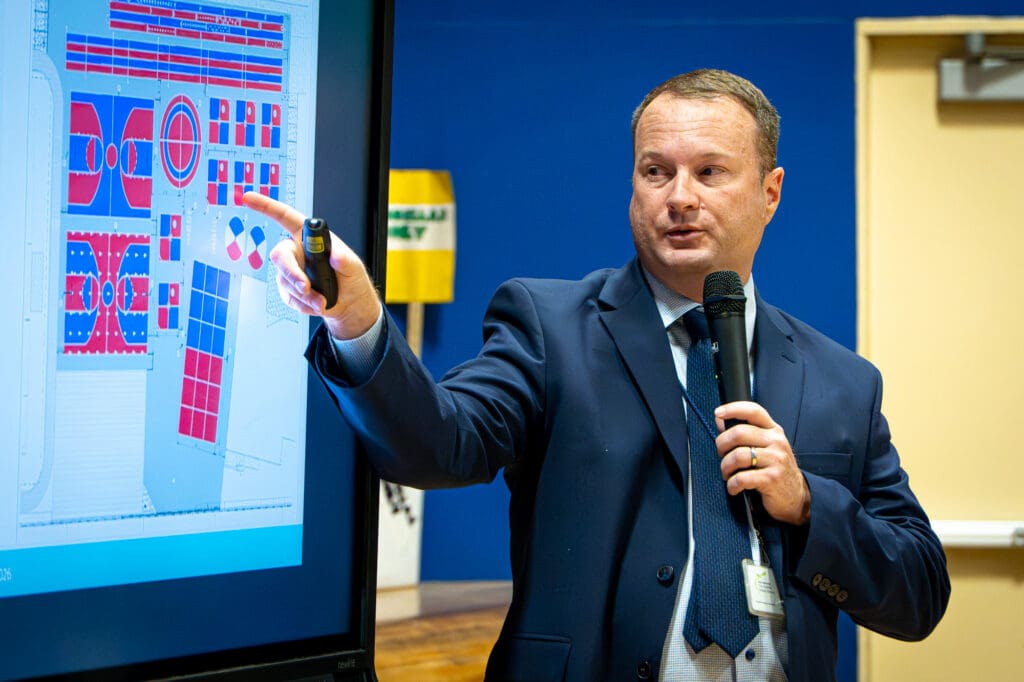
Chris Ralston, assistant superintendent of facilities for Sacramento City Unified, said the district doesn’t have the resources to maintain a natural field. “We are a school district that is financially struggling even more than we usually do,” Ralston said.
What are the worries with artificial turf?
Parents have pointed to a number of apparent flaws with a faux field, spanning health effects to environmental impacts.
Chief among the worries is the higher surface temperatures associated with artificial grass.
Ralston said the field at Crocker Riverside would use olive pits instead of the typical rubber crumbs in between the plastic grass blades. “It is not your old school AstroTurf,” he told parents.
Sign Up for the Morning Newsletter
The Abridged morning newsletter lands in your inbox every weekday morning with the latest news from the Sacramento region.
With a different material, Ralston said he expects temperatures to be more akin to asphalt — lower than some other artificial fields, still higher than natural grass.
Other meeting attendees took issue with potential consequences to the environment, including the resident of a home directly behind the school. She and other homeowners are worried about possible chemical runoff, she told Ralston.
Many parents said they simply want their children to have access to a natural environment to play in and explore.
Two-sided debate
But not all parents were against the project.
“Is my top choice grass? Sure,” said Cristin Walters. “But I understand that in this case that might not be practical.”
Walters, mom of a current Crocker Riverside kindergartener, said she wants to see a new play space ready in time for her toddler-aged child to use in a few years.
She and a handful of parents at the meeting said they would rather the project move forward than see renovations at the school be put on pause.
“The existing conditions are quite poor,” said Dana Kennedy, another kindergarten parent.
If not now, when?
Artificial turf is not a given, Ralston said repeatedly. But if the district does go back to the drawing board on the field turf, he said the entire project would be halted for at least a year.
And he could not guarantee his team would be able to pick it back up next summer, he said.
Sacramento City Unified has a lengthy to-do list of facility upgrades, fueled by taxpayer-funded bond measures. Crocker Riverside is not on any bond-related project list.
This summer is relatively quiet for the district facility team, Ralston said. In following years, they may have their hands full with other sites.
The school board will weigh in during either May 7 or May 21 meeting, by considering a construction contract for Crocker Riverside. Board President Tara Jeane was at the meeting, with two other trustees, to listen to concerns.
Still, some parents said they are worried the meeting’s conversation may fall on deaf ears.
“I’m really nervous we made this huge effort,” Bianca Vargas told Abridged, “and they’re still going to conclude that, unfortunately, turf is the best option.”
Savannah Kuchar is a reporter covering education. She came to Sacramento to be a part of the Abridged team and contribute to a crucial local news source.