
The Abridged version:
- Standardized tests are a longstanding measuring stick for academic success. However, many homeschoolers do not sit for the state assessment.
- Some families in the Sacramento area who educate at home said they track success more subjectively and enjoy the flexibility in curriculum.
- Critics say the lack of oversight and regulation means a greater risk of some students falling through the cracks.
From public to private to home schools, parents and teachers say they want to see their students succeed.
But what that looks like exactly varies from family to family.
Standardized testing is one of the most well-known and well-used measuring sticks. Educators say, despite flaws, these tests can be one of the most effective barometers of student progress.
Many homeschoolers, though, opt out of a traditional classroom structure — including the tests — making measuring academic progress more complicated.
Sign Up for the Homeroom Newsletter
A weekly email with news and insights into Sacramento area schools and how it impacts your students.
Instead of quantitative grades or test scores, some parents said they preferred more subjective markers, like an observed love for learning. Others note that it’s ultimately up to the parents to prioritize academics at home.
Critics say a lack of oversight on homeschooling means some students may miss pieces of their education.
‘The best thing we’ve got’
In California, the California Assessment of Student Performance and Progress, or CAASPP, tests for math and English language arts in third through eighth grade and again in 11th grade. Science aptitude is gauged in fifth and eighth grade and once in high school.
Statewide tests have long been criticized as ill-fitting, often favoring students from more resourced backgrounds and stifling more creative thinking.
“It’s not great,” said Caroline Digman, a second grade teacher at Albert Schweitzer Elementary School in Carmichael. “But it’s the best thing we’ve got.”
Digman said despite the gaps, standardized testing remains one of the best indicators of student progress.
“It’s always going to be CAASPP,” she said.
Many homeschoolers don’t test
Testing is required for the majority of students across the state — except for many homeschoolers.
Private schools do not have to give standardized tests (though they can if they want). That exclusion extends to the thousands of homeschooled families who fill out a private school affidavit form, essentially registering their house as a private school.
The differences make direct comparisons difficult. What limited data there is belongs to homeschooling charters.
At Visions In Education, a mostly online provider across Northern California, half of students across grade levels met or exceeded English language arts standards in 2024-25. That was on par with the statewide amount of 49% and just above the 40% at San Juan Unified, the school district that charters Visions.
In math that year, 37% of Visions students met or exceeded standards, compared to the same percentage statewide and 28.13% in San Juan Unified.
The Coalition for Responsible Home Education, though, has pushed back on tying higher scores to universally better outcomes. Often, the advocacy group writes, test results are also influenced by factors like socioeconomic status.
Apples to oranges
Comparing public school and home school outcomes is generally “apples to oranges,” Digman said.
Sometimes it comes down to what works best for an individual student and their preferred learning style.
During the height of the pandemic, Digman was teaching elementary school students remotely. When each student was separated in their individual home, away from a combined classroom, she said she noticed a lack of incidental learning.
Where before kids might trade books or fun facts in the process of socializing, there was less opportunity for students to learn from each other.
Cultivating curiosity
The exemption from state assessments, many homeschooling families say, gives them freedom to teach not to a test but in a way that best fits their children.
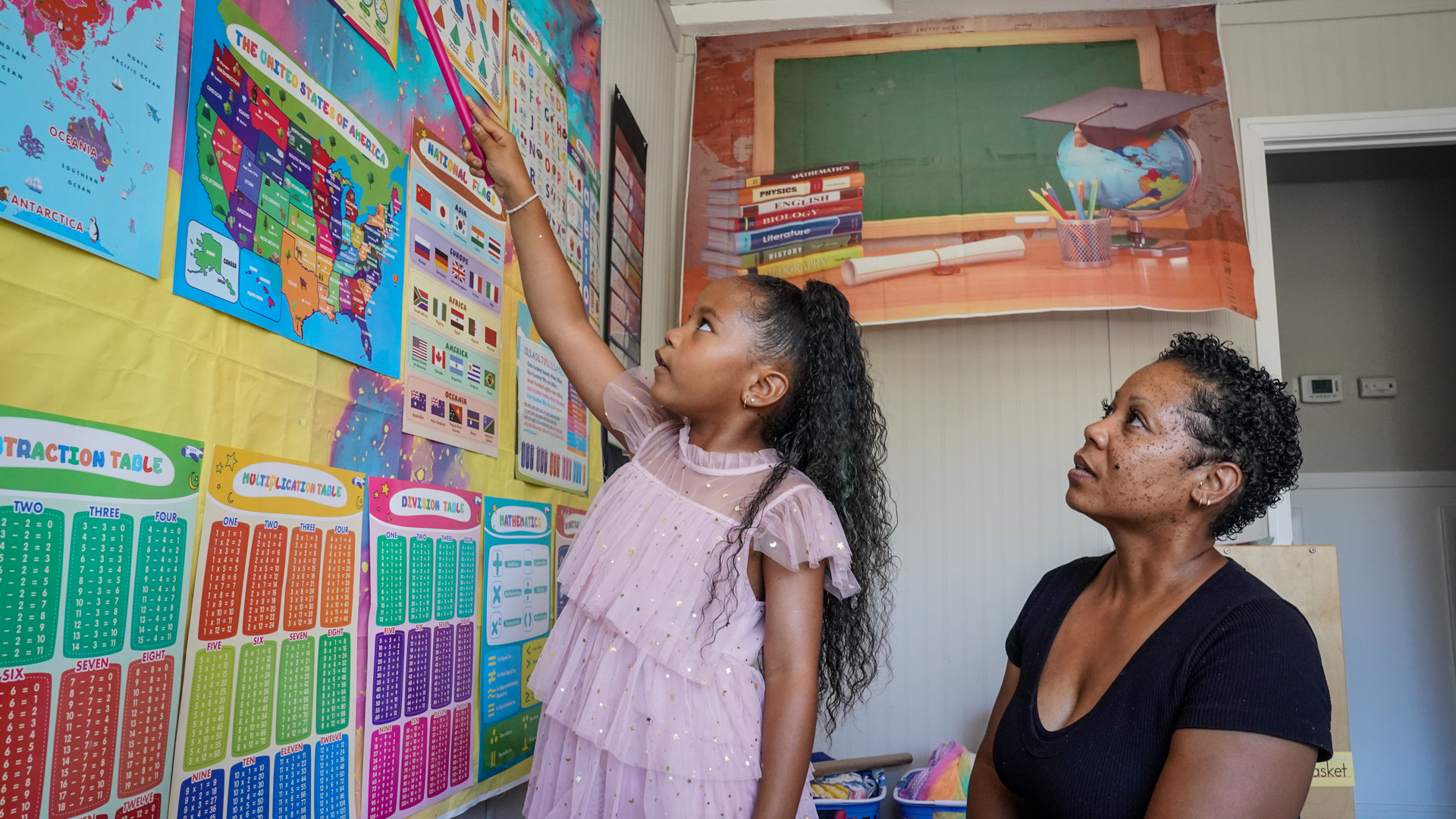
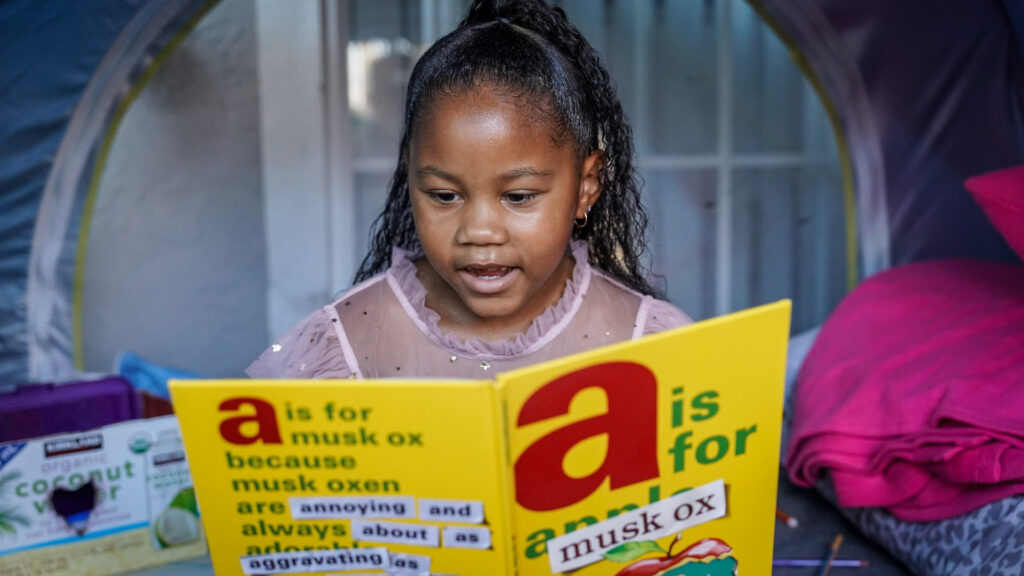
Yawna Lee’s daughter Reign has been learning at home all her life. Lee, a licensed childcare provider, said home school was always the plan and that she was researching curriculum while pregnant.
Reign, now 6, is acing her vocabulary and surpassing standard math benchmarks for her age.
“I was even kind of surprised to know she was as far as she is,” said Lee, who was also homeschooled growing up.
Sarah Bailey taught her three now-adult children at home for most of their education. In doing so, she said her family developed a genuine curiosity that served them going into college and beyond.
Bailey recalled once when her oldest daughter, then a teenager, stopped dating a boy after he said he was bored.
“She was like, ‘If he is bored, life is way too exciting to be bored,'” Bailey said. “And I just thought, ‘Oh, OK, I’ve succeeded.’ Because my kids know what to do. … They’re not bored because they know what to do with their time.”
Little regulation
But critics of and even some participants in homeschooling point out that flexibility also means a higher risk of falling through the cracks.
In general, homeschooling in California is thinly regulated. Once families file the private school form, they are essentially on their own, with no oversight, assessment or inspection from state education officials.
“If there are allegations of misconduct at a private or home school, that is the purview of the local authorities,” Scott Roark, a spokesperson for the California Department of Education, said in a statement.
Depends on priorities
Student outcomes are often tied to parents’ efforts and priorities.
In talking with other homeschooling families, Lee said she notices some are more focused on athletics or extracurricular activities, sometimes at the expense of academics.
It’s on the parents, she said, to emphasize learning.
“I try to teach Reign to be the best she can be, not necessarily better than anyone,” Lee said.
“I’ve instilled in her early that education is the foundation,” she added.