The Abridged version:
- The city of Davis is having trouble keeping up with the maintenance needs of its tree canopy.
- As the city’s budget has struggled, costs for tree care have increased, leaving some parts of the urban forest at risk.
- The City Council is considering options to help fill the gap, including shifting the maintenance responsibility for some city-owned trees to residents.
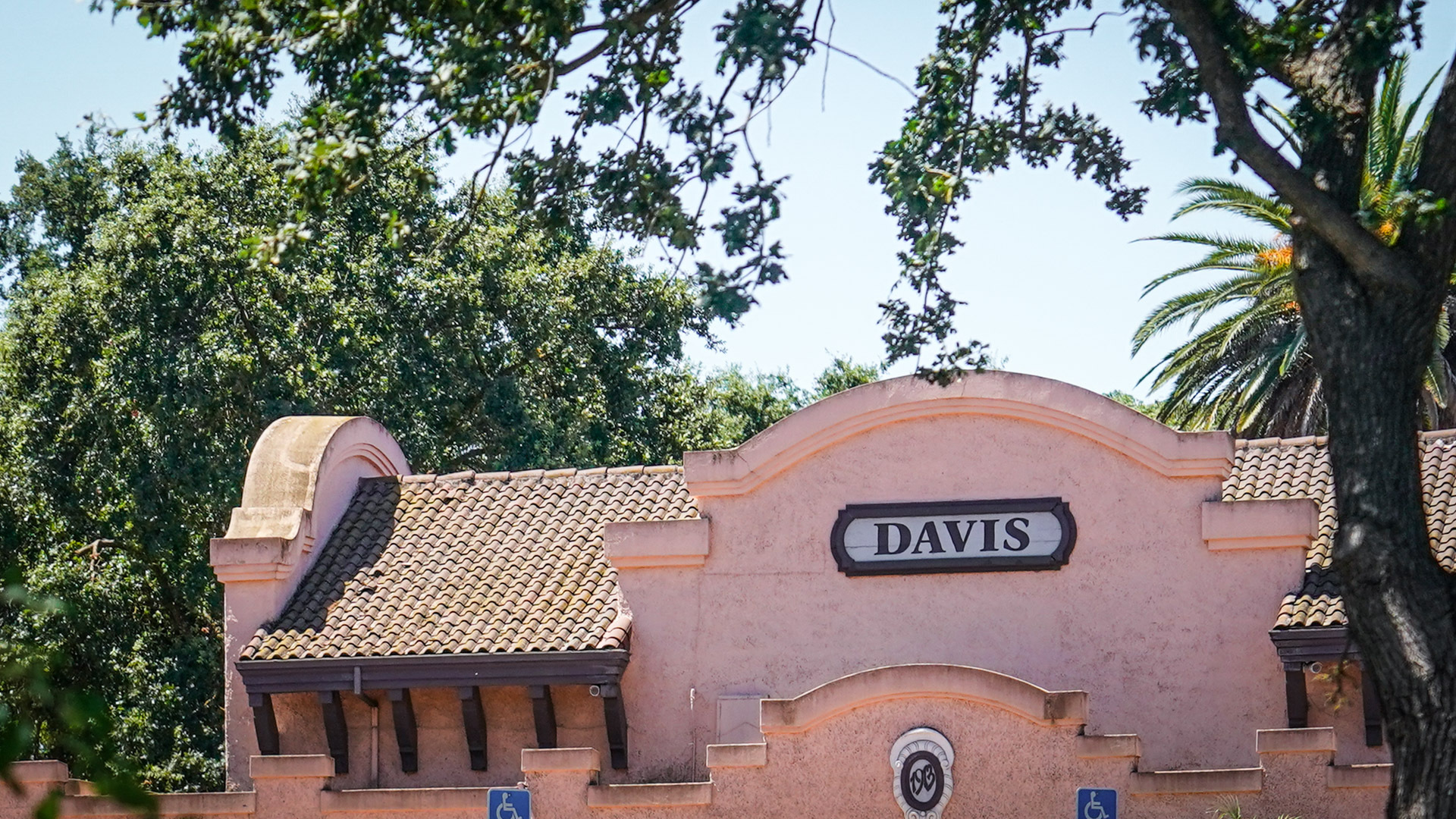
Take a walk in Davis, and you will likely find yourself shaded by mature oaks, redwoods, elms, cedars, citrus trees and the like.
Developed over decades, the city’s tree canopy has become central to its identity.
“The only thing that this community loves more than bikes is trees,” Councilmember Gloria Partida said last week during the Davis City Council meeting.
For a long time, many of the trees that make up Davis’ urban canopy have been maintained by the city, even ones that sit on private property. That is because city workers take responsibility for trees that sit on a 10-foot easement near the street.
“Roughly 35% of our trees are the trees that we’re discussing that are on private property,” said Assistant City Manager Stan Gryczko.
But as Davis continues to struggle with a sagging budget, municipal tree care has fallen behind, leaving parts of the canopy at risk.
Sign Up for the Yolo County Newsletter
Stay in-the-know on all things Yolo! Weekly email with stories and insights from Yolo County reporter Daniel Hennessy.
“While Davis still has some beautiful tree shading in our city, holes in the canopy continue to expand,” said Tree Davis board member Chuck Belk during the meeting. “Trees just aren’t being replaced as quickly as they’re being removed or they’re dying.”
Because of that, officials are considering ways to fill the gap, including shifting responsibility for care of trees on private property to residents.
Although that could only happen as trees are removed or replanted, staff and advocates warned that it could eventually lead to less consistent and lower quality care overall.
“Without city ownership, you could ultimately see less canopy in the community,” Gryczko said.
A well-established tree canopy
Davis residents have long understood the value of a healthy tree canopy. After establishing a program for planting and maintaining street trees as early as the 1960s, the city has been recognized by the National Arbor Day Foundation dozens of times for the management of its urban forest.
The canopy “helps cool neighborhoods, lower energy costs, absorbs rainfall, reduces stormwater runoff, cools asphalt streets and prevents them from cracking due to extreme heat,” Marc Hoshovsky said at the meeting.
As the climate warms, droughts become more extreme and trees age, the thousands of trees that were planted decades ago require more maintenance.
The City Council and public works department have tried to keep up, raising the budget for tree care from under $2 million in 2022 to almost $3.5 million in 2026.
But staff said that still leaves a gap of roughly $1.5 million per year that is needed to meet program goals.
“We’re only talking maintenance,” Gryczko said.
On top of the financial concerns, a civil grand jury report from 2022 said that a number of city-owned trees on private property were not being maintained properly. The report found that although the city takes responsibility for tree maintenance, it requires property owners to water them.
In some cases that was not happening, in part because some property owners were not aware that it was up to them to water the trees.
A new subcommittee
For now, council members have decided to establish a subcommittee that will continue to study ways to improve the city’s tree management.
That could eventually include shifting responsibility for tree care to private residents, but some members have expressed concern about the inconsistent quality of care that may result.
“We don’t have the money right now to take care of our entire stock, that seems very clear,” Councilmember Bapu Vaitla said. “It also seems clear that we can expect a deterioration in the care of the trees that are in the hands of private property owners.”
Whether that shift happens, the City Council asked for more clarity on maintenance responsibilities for property owners.
“It is confusing as to what can happen or not,” Councilmember Linda Deos said. “I’ve got two city trees on my property, and I’ve heard two different things, I’ve actually heard about five different things about what I can do with those two trees.”