
The Abridged version:
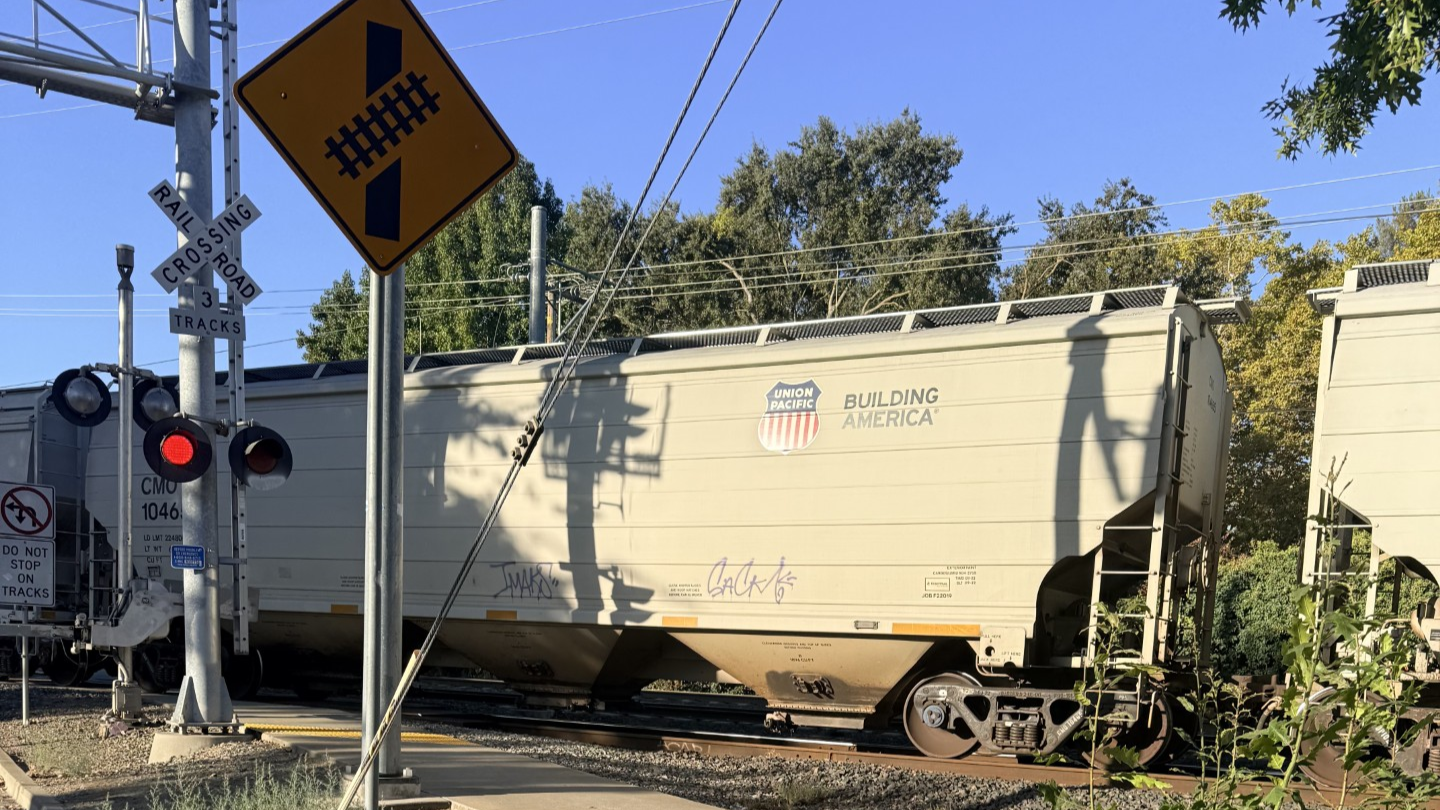
- A stopped Union Pacific freight train caused delays Thursday morning for some Sacramento drivers and McClatchy High School students.
- Union Pacific operates two major freight rail tracks in Sacramento, with more than 20 crossings throughout the city.
- Sacramento’s police and fire departments can respond to blocked crossings if they create a safety or serious traffic issue, but otherwise cannot force the trains to move.
A stopped train blocked multiple crossings for over an hour Thursday morning, stalling drivers and delaying the start of the school day at McClatchy High School.
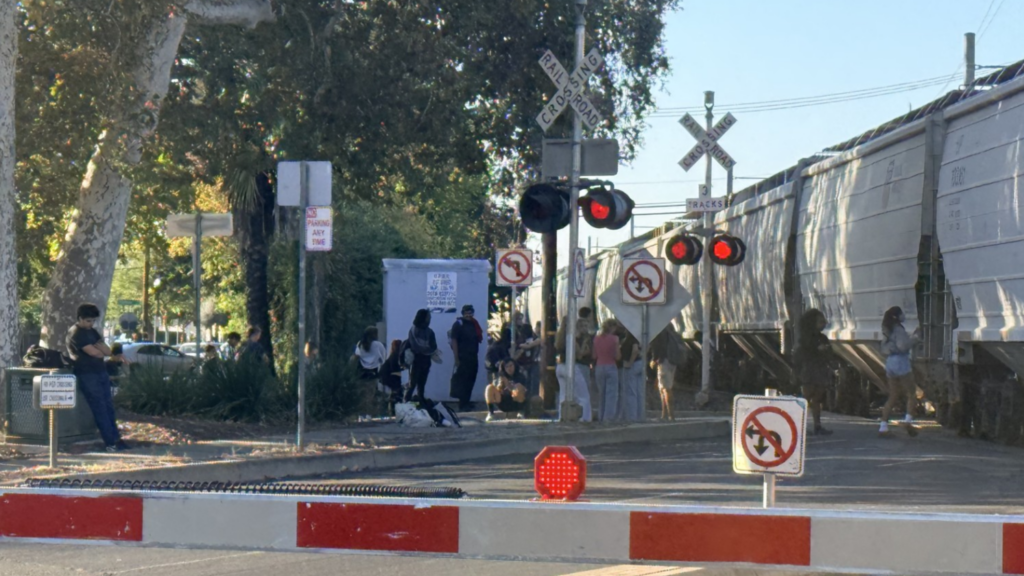
The incident disrupted many morning commutes, leaving some vehicles and pedestrians stuck on either side of the tracks south of downtown or detouring around the blockade.
Several freight trains, sometimes stretching more than 100 cars, run through Sacramento daily. A passing train might hold up traffic for several minutes. But a stopped train could disrupt a whole morning in the city, causing missed appointments, showing up late to work or, as seen Thursday, postponing a significant chunk of school time.
“Staff and students were stuck on the other side of the tracks and it was right at drop-off, so the domino effect was vast,” said Juan Valdes, assistant principal at McClatchy High School.
Sign Up for the Morning Newsletter
The Abridged morning newsletter lands in your inbox every weekday morning with the latest news from the Sacramento region.
Valdes said the stopped train led classes to be pushed back by about an hour. A colleague reached out to him at 7:45 a.m. and said they were stuck on the other side of the train, which Valdes said started moving again around 9 a.m.
The assistant principal waited near the crossing to make sure students wouldn’t try to get in between the train cars, which took him off campus for an hour. He said students listened to instructions and remained calm while they waited for the train to clear.
Tripling commutes
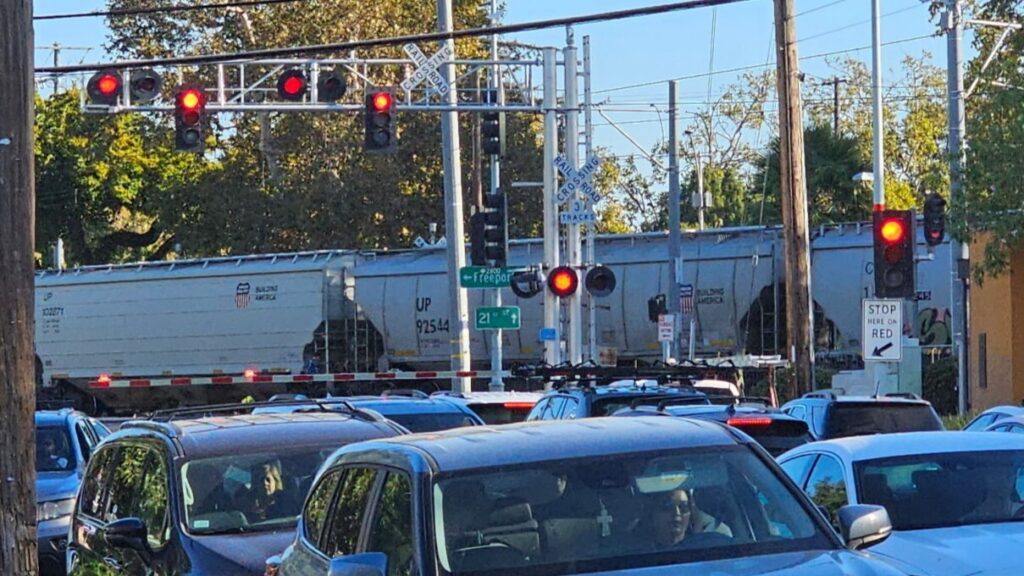
Eric Ruth was on his regular route to drop off his son, a sophomore at McClatchy, at about 8:15 a.m. when he noticed the stopped freight train at the intersection of 21st Street and 2nd Avenue.
He said the train stopped for more than an hour, leaving crossings on Freeport and Broadway boulevards and W and X streets blocked, frustrating many drivers in the area.
Ruth’s usual 15-minute commute took 45 minutes after he and other drivers re-routed to Franklin Boulevard and Sutterville Road.
“Sutterville was a complete mess,” Ruth said. “People were doing U-turns in the middle of the road, McClatchy kids were trying to cross over the tracks and were just sitting there not knowing what to do.”
Ruth said he called Union Pacific’s emergency number and left a voicemail about a train blocking an intersection in Sacramento and shared his concerns about the trains’ schedule, which he finds to be inconveniently timed around peak morning and evening commute times.
“It would be nice if they could at least run the trains in the middle of the day and not during prime commuting hours when people are trying to get in and out of midtown and downtown,” Ruth said.
Some residents have called for Sacramento to raise its railroad tracks or put them underground, but both options would take a significant amount of money and time.
Late for class
Bella Ochoa, a junior at McClatchy High School, said she and a few other students decided to walk around the train to get to school. Several were late to class, but Ochoa said the school excused late arrivals that morning.
“I had to go all the way around because there was a ton of traffic, it was horrible and I was late for first period,” Ochoa said. “I’m happy they excused everyone because it would’ve been rough if they didn’t.”
Winnie Ng, a junior, said the stopped train also delayed her walk to school, and that some students may have passed through it to get to the other side.
“I went all the way around to (Sacramento) City College, it took a while to get here,” Ng said. “I heard that some people who were behind the train went on top of it or under it to get through.”
Union Pacific spokesperson Mike Jaixen said the company could not comment specifically on what happened to cause the incident Thursday.
“There are a number of variables that can lead to blocked crossings, such as unplanned weather events that cause track blockages/damage, signal malfunctions, trains operating under reduced speed restrictions or mechanical issues,” Jaixen said in an email Friday.
He said the company aims to keep trains moving safely and efficiently, and strongly encouraged anyone experiencing issues to file a report on the Union Pacific website.