
The Abridged version:
- Multiple trains have rumbled through Midtown Sacramento every day for decades, pulling hundreds of freight cars — and in a few years — passengers. They cause delays that disrupt urban mobility and sometimes frustrate motorists.
- Moving the tracks outside the central city, or putting them underground or overhead, has been pondered for generations.
- Reno built a downtown trench to underground its trains 20 years ago. Such an approach in Sacramento would be expensive.
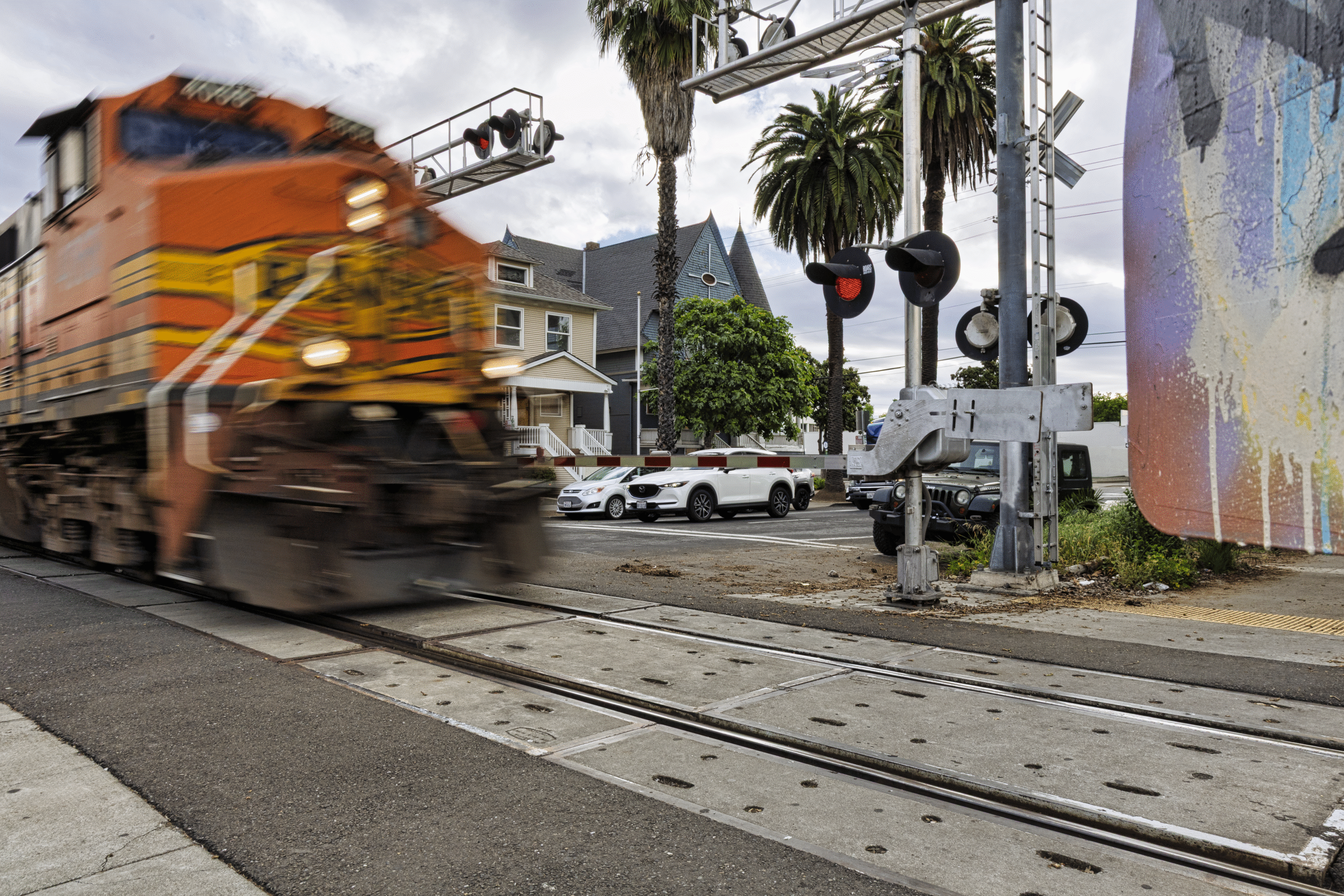
It seems to happen at the worst time: You’re driving through Midtown Sacramento, late for an appointment, when you get stopped at the 20th street railroad crossing as a freight train rumbles through.
And you wait and wait. And wait.
Several minutes and dozens of cars later, the same thought always seems to surface: “I’m in the heart of a decent-sized city. Can’t they reroute these trains or put them over or under the street?”
Sign Up for the Morning Newsletter
The Abridged morning newsletter lands in your inbox every weekday morning with the latest news from the Sacramento region.
Passenger trains scheduled to join the freights
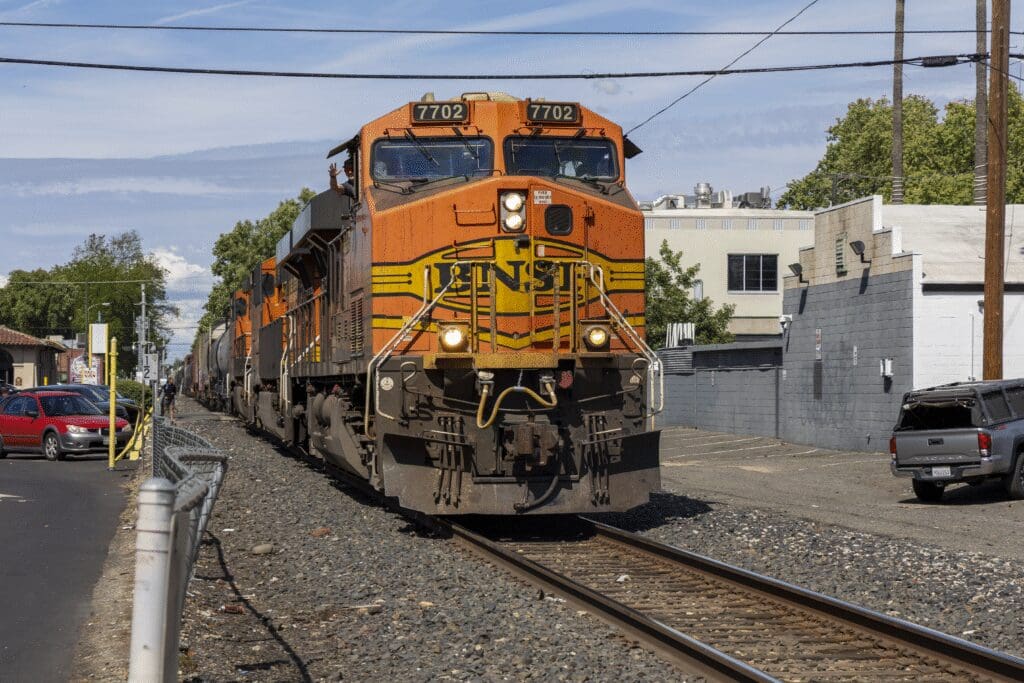
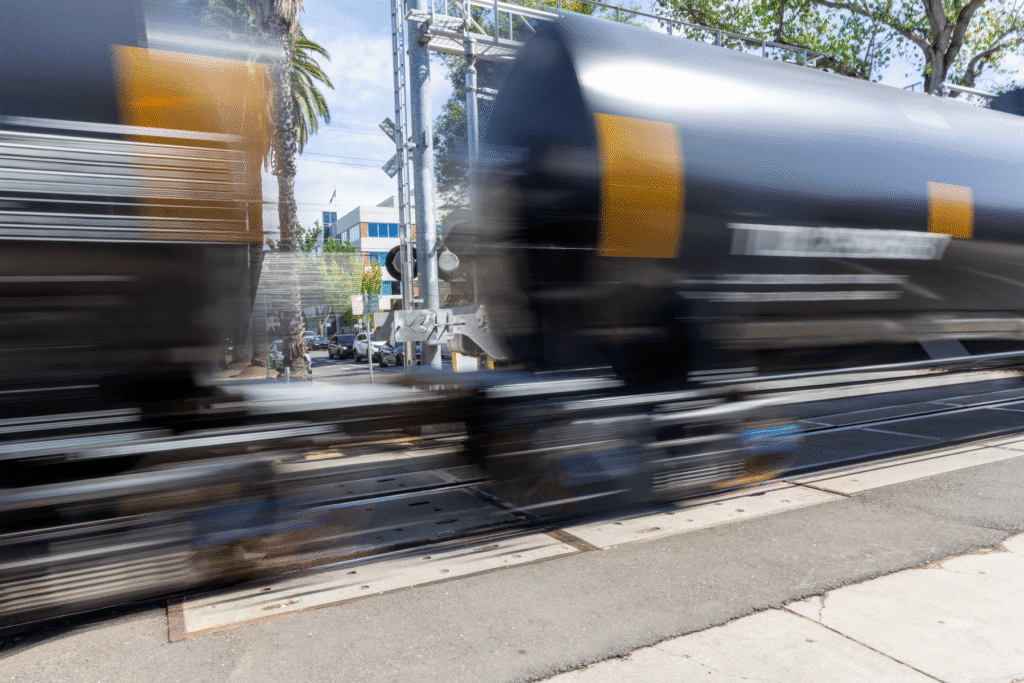
For those who live or toil in the central city, it’s not a once-in-a-while thought. In addition to the much shorter SacRT light rail trains that have their own tracks, five to 10 freight trains, which can include more than 100 cars each, run through Midtown daily.
And in a few years, they will be joined by passenger trains, stopping at a new station scheduled for construction at Q Street. The San Joaquin Rail Commission has approved that plan and hopes Amtrak trains begin rolling through — and stopping — by 2031.
Wait. It’s Sacramento’s identity
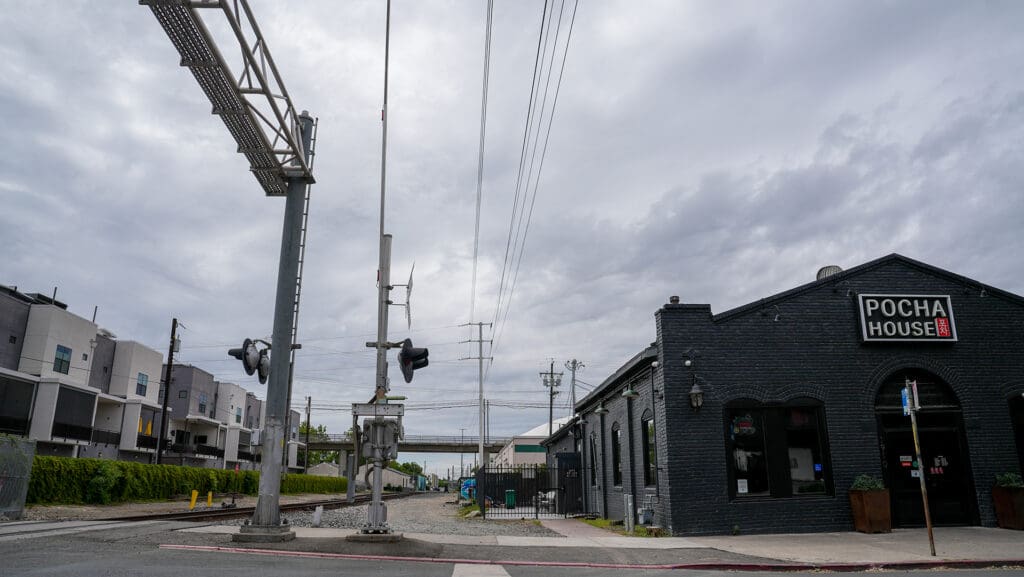
In many ways, Sacramento’s identity can be attributed to the railroad, as an early example when rail lines were built through the heart of cities to serve expanding urban centers — a common practice into the early 20th century.
“The thing that’s interesting about Sacramento is that it has such a strong rail history,” said Sacramento City Councilmember Roger Dickinson, a former county supervisor and state assemblyman. He served on the Regional Transit board for 20 years, is a founding board member of Sacramentans for Metro Area Rail and Transit and serves on the Capitol Corridor board.
“A lot of people don’t realize that Sacramento was the terminus of the transcontinental railroad,” Dickinson added. “It wasn’t San Francisco, it was Sacramento, just as it was with the Pony Express. This was the place where you got to the West.”
Relief is not on the way
While sometimes annoying, trains splitting Sacramento’s Midtown core won’t change anytime soon. It’s a vast and complicated network of tracks that run through and around the city, with the Union Pacific Railroad operating the tracks for passenger and freight trains, and SacRT, which was built in 1987, operating light rail.
With all of that coming and going, there are limited opportunities to run both freight and passenger trains on the same track through a certain time and space, called slots, Dickinson said. This means making any changes to existing tracks extremely difficult, as well as costly.
Can I get a free drink?
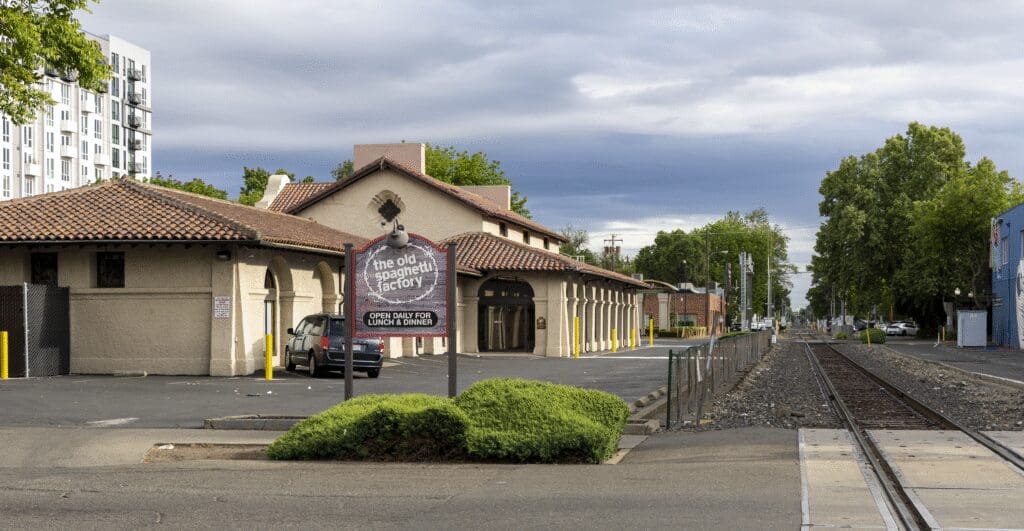
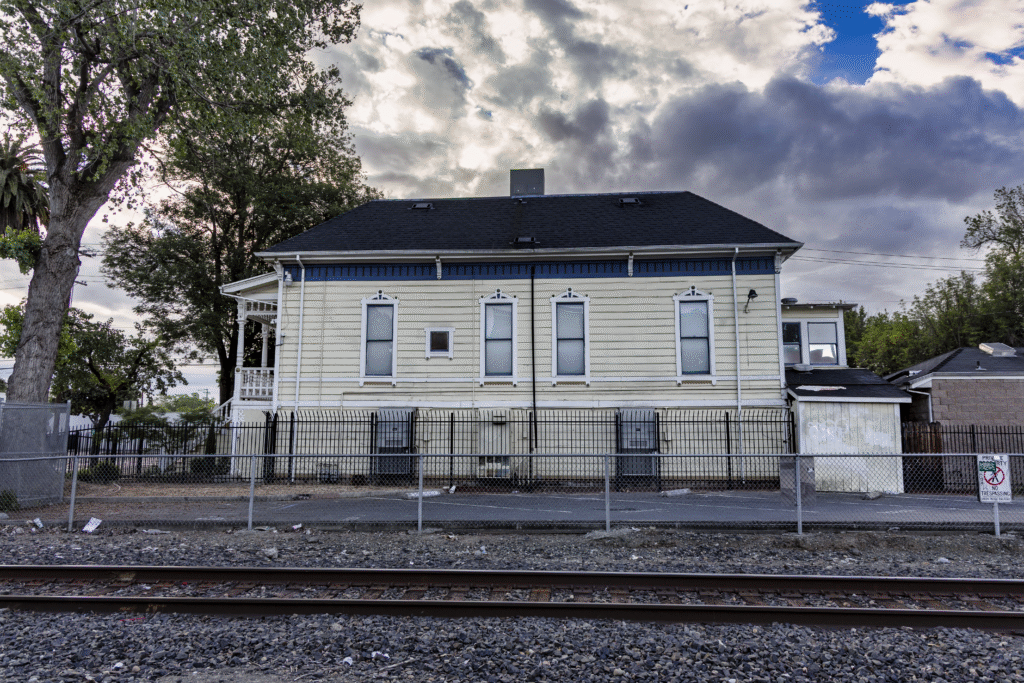
Trains are a constant presence for businesses close to the tracks, such as the Old Spaghetti Factory at 19th and J streets (which was an actual Western Pacific train depot) or the Mercantile Saloon, an historic Victorian building located just feet away from the tracks at 19th and L streets.
At the Mercantile, patrons at the bar have grown accustomed to the rumble and screech of the trains, said manager Pedro Cervantes, who has worked there for 20 years.
Cervantes said patrons can watch the trains from the saloon’s back patio and often feel the building shake when a train roars by. “Some will ask for a free drink (because of the disruption),” he said, laughing. He recalled that on his first day on the job at the Mercantile, he was late for work because of a train delay.
The whistle doesn’t blow
Alternate route scenarios have probably been debated since the horse-and-buggy days, when the railroad system was first developed with lines running through the city and surrounding areas in the late 1880s, creating the first main hub of the transcontinental railroad.
There have been recent changes made to trains going through the city regarding noise. Midtown Sacramento is now considered a no-horn zone, and train engineers must lay off the whistles.
Sacramento Fire Department spokesman Justin Sylvia said the department has to make sure to launch emergency response from the correct side of the tracks. He said the department knows that the trains transport toxic cargo through a heavily urbanized area and has prepared to respond if a problem occurs.
Alternative Western Pacific routes were considered in the 1950s during that key era of Sacramento development, said local historian William Burg, who has written several books about Sacramento’s urban history. But no detailed analysis has ever really been done for around 75 years, he said.
“The last time there were any analyses and studies would have been the 1950s, and that’s when they were still talking about demolishing the entire central city,” Burg said.
Reno threw money at its problem
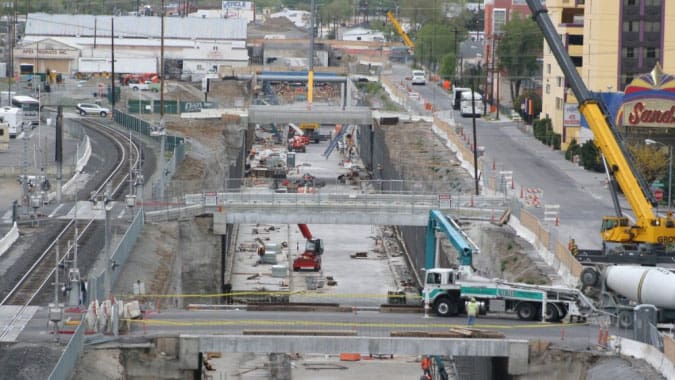
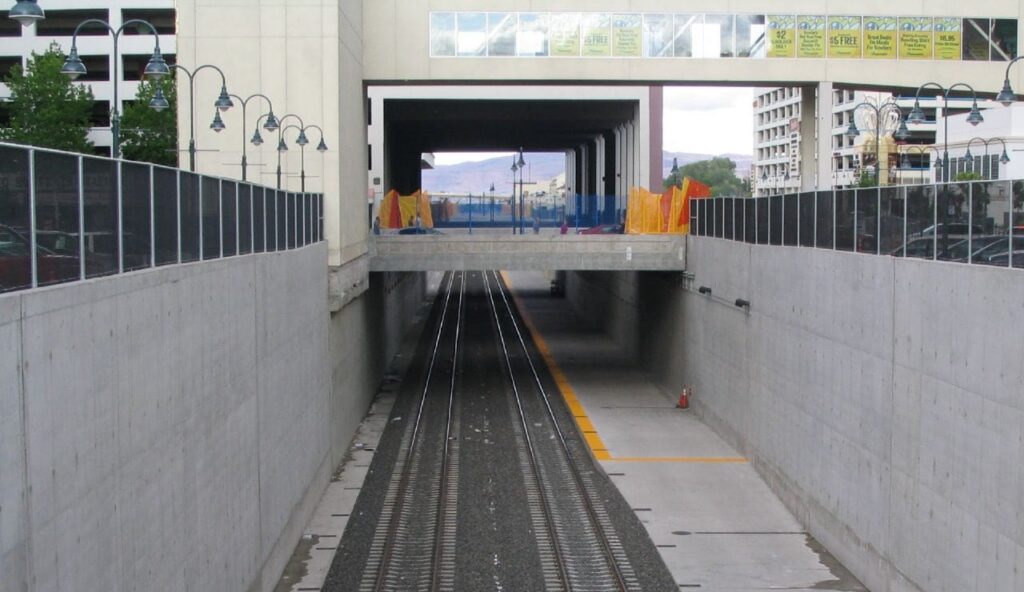
Putting trains in an underground tunnel or trench provides one alternative that Sacramento drivers ponder regularly, and local officials have discussed the issue on occasion. The “Biggest Little City in the West” — Reno — actually successfully accomplished it 20 years ago.
Project ReTRAC was Reno’s largest ever public works project, costing close to $300 million when it opened in 2005. Federal grants and the Union Pacific Railroad paid the tab, with most funding coming from Reno through loans and bonds.
The trench put trains underground through the center of downtown Reno along a 2.3-mile stretch, with the goal of improving public safety, reducing noise and helping drivers avoid lengthy traffic delays.
‘Eye-wateringly expensive’
Sacramento would face different issues were it to undertake a similar project. If a trench through Sacramento had the same goals as in Reno, the project would stretch around five miles and include the corridor stretching to the City College/Curtis Park neighborhood, going through highly trafficked intersections like Broadway, P, L, J and I streets.
Burg said such a trench would deny train riders the chance to see Sacramento as they passed through town. The route also has a higher water table than Reno, equaling a higher flood risk, and more historic infrastructure, which would make construction more complex and disruptive.
It would also be “eye-wateringly expensive,” he said.
Hurry up and wait?
Does that mean Sacramento drivers will just have to accept that trains might possibly disrupt their workday but could learn to enjoy their historical significance?
“I would just want people to know, when we think about cars and planes and all this stuff, that trains are such an important part of our past,” Dickinson said. “Both our present and our future.”
Steve Martarano is a Sacramento-based freelance journalist whose father, Carmen, worked for the Southern Pacific Railroad in San Jose and Sparks for 35 years.