
The Abridged version:
- Voters who live in the Sacramento City Unified boundaries will decide on Measure M, the school district’s proposed parcel tax.
- Revenue from the tax, estimated at roughly $10 million a year, would go toward the district’s special education costs, specifically its new early intervention efforts.
- The tax would start at $95 per piece of property per year, with the district having the option to raise the rate by up to 3% annually.
Rising special education costs confound districts across the area and state. In Sacramento, a cash-strapped school district is asking residents for assistance.
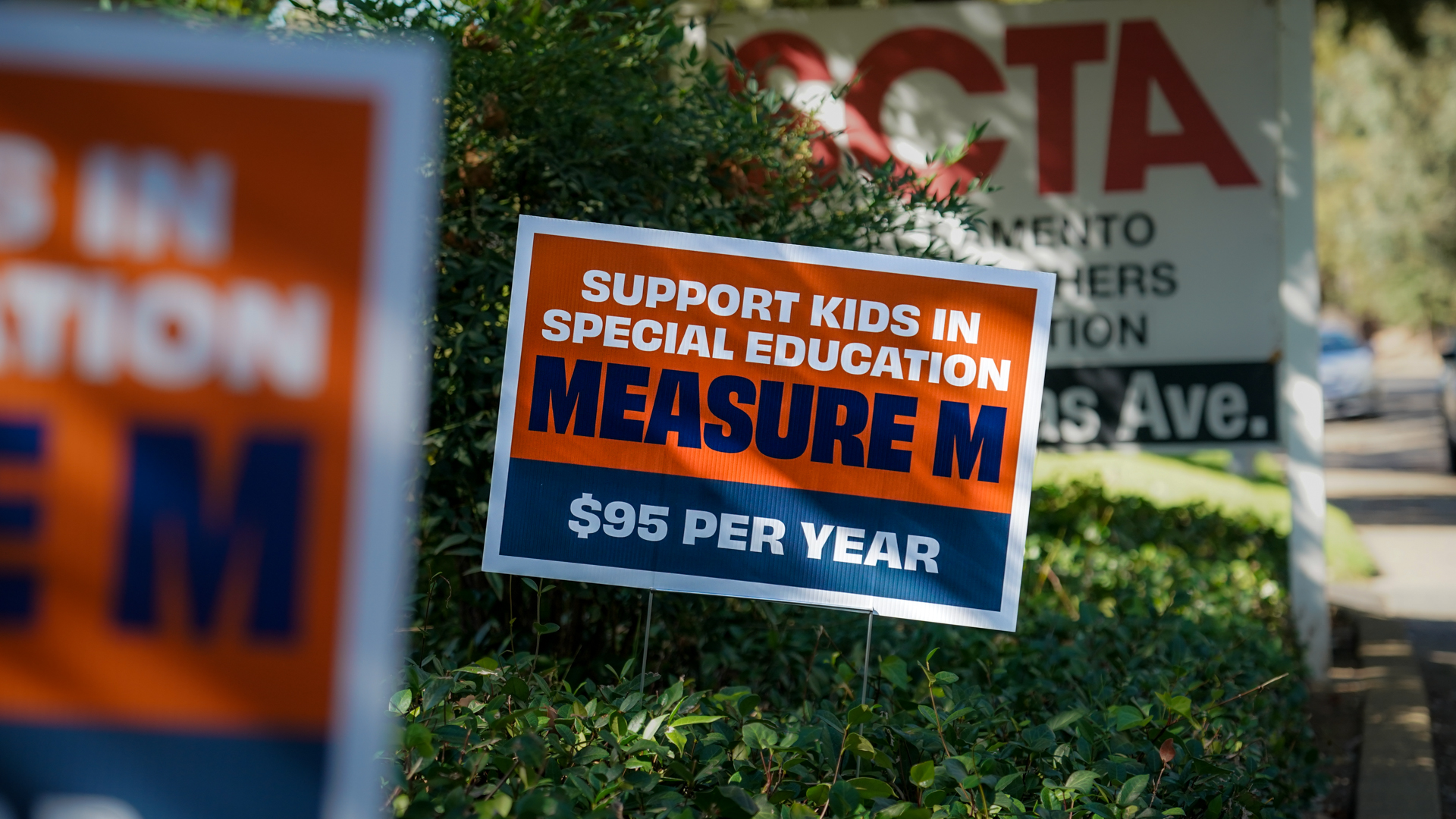
Voters who live within Sacramento City Unified School District borders will see on their ballots Measure M, a proposed tax of $95 per property. The money raised — expected to be about $10 million a year — would go toward special education costs.
The pitch to voters comes as Sacramento City Unified leaders continue grappling with a multimillion-dollar crisis.
After more than a year of trying to rein in the deficit, officials have said they are back on track to stay above water and dodge a dreaded state loan. Still, through the months of uncertainty, many parents have expressed concerns about whether school officials can effectively manage the district’s finances.
The parcel tax needs at least two-thirds approval to pass.
Sign Up for the Homeroom Newsletter
A weekly email with news and insights into Sacramento area schools and how it impacts your students.
Cost and uses of district’s proposed tax
Parcel taxes are different from property taxes.
A workaround to the 1978 Proposition 13, which set strict limits on property taxes, a parcel tax is a uniquely Californian method to raise funding for schools.
Instead of paying a tax based on the real estate value, each property owner would pay based on a custom formula. Most often, and as is the case in Sacramento City Unified, this rate is a flat amount per piece of land. Parcel taxes can also be based on factors like square footage or property use.
The Sacramento City Unified tax proposal would cost each property owner $95 a year, in perpetuity. Residents 65 and older, and some Social Security recipients, would be exempt.
The money raised may go toward a wide range of education expenses.
Sacramento City Unified leaders said they plan to invest the tax revenue into new early intervention efforts, such as diagnosing and getting services to students at a younger age. District spokesperson Brian Heap said the money would pay for more social workers, psychologists and nurses, and more training opportunities.
Filling funding gap
The measure is not meant to be a bailout for the ongoing budget crisis, Heap said.
“We would be doing this regardless of our financial situation,” he said. “It’s the right thing to do for our students.”
Leaders from the Sacramento City Teachers Association, which has taken point on campaigning for the parcel tax, highlighted consistent state and federal shortfalls when it comes to special education funding. Money raised by the parcel tax, they said, would plug some of that hole.
“When special education services aren’t adequately funded, students slip into the cracks,” Princess Moss, president of the National Education Association, said at a September campaign event with the local teachers union.
“When budgets are shifting, the money doesn’t come from nowhere,” Moss said. “It comes out of the art teacher’s budget, the counselors, the library. That’s not special education versus everybody else. It’s a broken promise in Washington, D.C.”
Will voters go for it?
Some residents, though, are not buying in.
“The proponents say Washington failed. Local families should not cover that failure with a permanent tax,” four parents wrote in an official objection to the ballot measure.
Many school districts include a specific duration for a parcel tax, ending it automatically after a few years. In Sacramento, if the tax goes into effect, voters can petition for its removal with a simple majority vote at any time.
Another dissenting group, made up of two retired teachers and a former school board member, criticized the lack of an expiration date, pointing out that district officials can raise the tax annually by up to 3%.
“Every child deserves a good school and the help they need,” the three objectors wrote. “Yet Sacramento City Unified School District wants more money before it fixes its budget.”
The district’s financial instability could underscore the need for more funds, said Kevin Gordon, education expert and president of the consulting group Capitol Advisers. Or the controversy may have broken trust with the community, he said.
“How is all this landing in the minds of parents and voters?” Gordon said. “If they fail miserably, there’s a message to district leaders … there’s no confidence.”