
The Abridged version:
- For the first time, the Auburn City Council is considering intervening on the question of Flock Safety cameras in the city, governing how the police department uses Flock through official city policy.
- The city’s contract with Flock has stirred debate in the community, with supporters arguing it protects public safety and opponents contending that it violates civil liberties and privacy.
- After reviewing an Auburn police report on Flock and hearing arguments from the public this week, the City Council voted to continue consideration at later meetings and launch a community survey.
Following widespread debate among community members, the Auburn City Council is stepping in on the issue of Flock Safety cameras in the city.
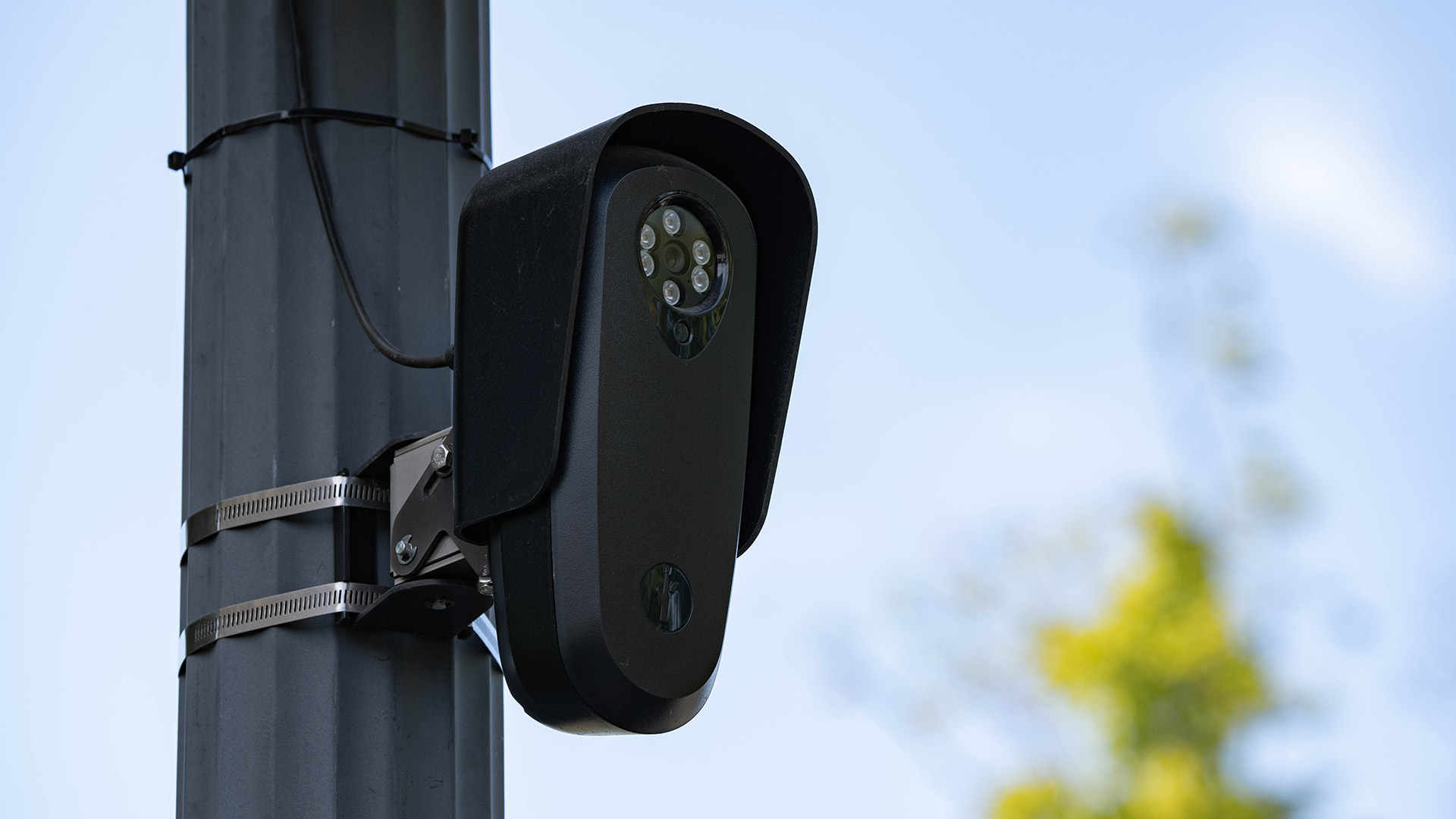
Until now, decision-making on the use of Flock surveillance cameras — automated license plate reader technology that has drawn criticism across the country for data-sharing practices and documented incidents of misuse — has been left to the Auburn police department, which entered into a contract with the company in 2022.
The City Council’s choice to intervene on Flock comes weeks after a contentious town hall where most attendees expressed opposition to its use.
Sign Up for the Placer County Newsletter
Coming soon: A weekly newsletter focused on the stories that matter to Placer County.
Though City Council members opted to delay making a decision on Flock use at their Monday meeting, they said they are looking to determine a path forward with more information and review. Council members also said they will launch a community survey to assess popular sentiments.
“I want to sit here and keep our community as safe as we can be,” Councilmember Sandra Amara said. “With that being said, I certainly hear about the abuses … that’s an issue that we do have to address by way of a committee, an advisory group, or a strong ordinance.”
A new city policy?
Currently, Auburn lacks an official city policy on the use of automated license plate readers, with the police department’s policy serving as the default. If the city opts to continue using Flock cameras, City Council leaders say they will pursue policies directly governing the use of the technology. Council members also said they support instituting a city advisory committee that would include community members.
A staff report sent to the City Council by Auburn police chief Bryan Morrison requested that the city “provide direction on creating a City policy to guide the use of the Automated License Plate Reader system.” Morrison identified that a city policy could include regulations on authorized and prohibited uses of the technology, data collection and storage, third-party data-sharing and oversight.
Alternatively, the city could choose to terminate its contract with Flock or allow police to continue using the technology without any new regulation.
City Council members questioned Morrison on several community concerns related to Flock, including its effectiveness at preventing and solving crime, the scope of access to Auburn’s data by outside agencies and their ability to retain data shared in Flock’s network.
Months ago, the Auburn community discovered through public records that the police department’s data was being shared with outside agencies despite the department opting out of this. Because the department was unaware of the outside access until then, Morrison said at the September town hall, the department had been unintentionally allowing outside agencies to access local data for years.
The department has since moved to successfully opt out, but it’s left some community members and officials skeptical.
“It changed our sharing. We didn’t know it until it was a PRA, and that is unacceptable,” city council member Alice Dowdin Calvillo said. “If we are to continue with the cameras, that cannot happen again.”
Auburn’s Flock contract
A clause in Flock’s contract with Auburn police says that if any provisions of the contract are breached, the city may sue or terminate its relationship with the company, or both.
Councilmember Rachel Radell-Harris said that community distrust makes the choice to continue using Flock, a privately-owned and governed technology company, difficult.
“It’s just hard for me to want to continue working with a company that has so much negative connotation and has lost the public trust,” Radell-Harris said. “How do we make sure there’s not another update that does things wrong? We can’t. Flock is completely in control of that.”
Council members opted to continue discussing the Flock question as they continue to research the technology and pursue further conversations with police and community members with differing opinions.
Three Auburn City Council seats are up for election this year, including those held by Davis and Bridget Powers, who are running for reelection. In Abridged by PBS KVIE’s voter guide questionnaire, Powers demurred on whether she supports the use of Flock cameras, but stated that their use must be reviewed through the public process before decisions can be made. Davis has not yet shared her answers to the questionnaire.
Candidate Stephanie McKenzie wrote that while she recognizes the utility of Flock cameras for law enforcement, she has concerns about privacy implications and will continue to do her research before coming to an official position. Erik Robb, another candidate, is unilaterally opposed to the use of Flock cameras and automated license plate readers.