

The Abridged version:
- The California human resources department filed paperwork claiming that Service Employees International Union Local 1000’s planned one-day strike is unlawful.
- The state claimed the strike, set for Oct. 21, puts unfair pressure on mediation between the two sides over stalled contract negotiations, and would put Californians at risk by not exempting health and safety workers.
- Local 1000, which represents nearly 100,000 state workers, hit back with its own claim that the state didn’t cooperate adequately in identifying which health and safety workers must still report to work amid a stoppage.
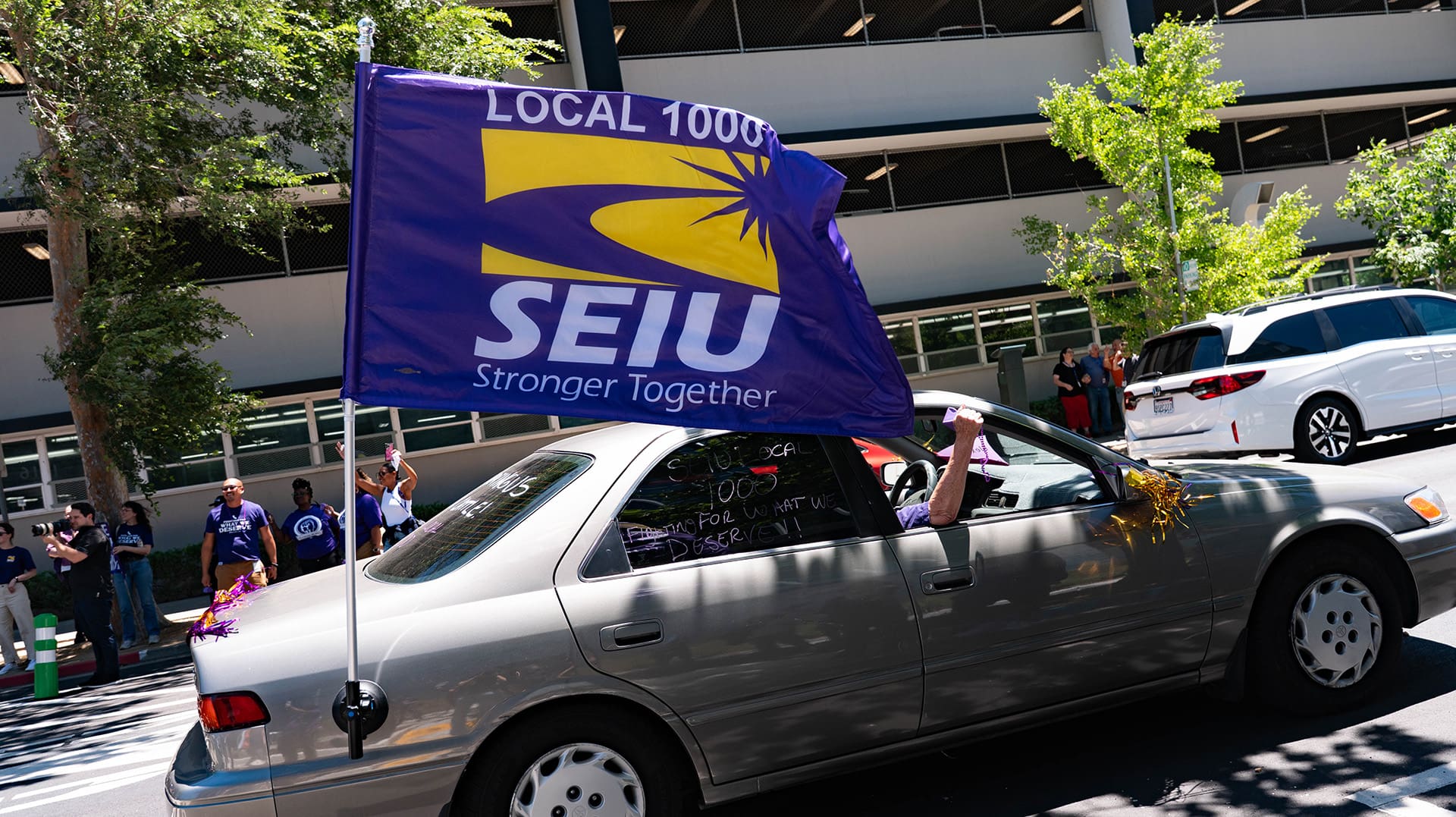
Gov. Gavin Newsom’s administration is working to halt a planned one-day strike by state workers, arguing the union didn’t exempt health and safety workers from striking and is therefore endangering Californians.
Meanwhile, the union says the administration would not work with them to determine which health and safety workers must remain on the job.
Both California’s human resources department and Service Employees International Union Local 1000 — the state’s largest public employee union, which represents nearly 100,000 state employees across multiple agencies — filed complaints known as unfair practice charges with the California Public Employment Relations Board on Friday, The Sacramento Bee first reported.
Each side accused the other of using unreasonable tactics in the ongoing, increasingly combative negotiations for Local 1000 members’ new three-year labor contract. In its charge, the Newsom administration asked a judge to halt the strike altogether.
Sign Up for the Morning Newsletter
The Abridged morning newsletter lands in your inbox every weekday morning with the latest news from the Sacramento region.
Local 1000’s plans for one-day strike
Local 1000 announced the planned strike last week, saying nearly 100% of union members who voted on whether to strike were in support — though it wouldn’t say how many members had cast votes.
The planned stoppage is what’s known as an unfair practice strike, building on a previous charge of illegitimate negotiation tactics the union filed against the state in July.
Conflicting claims
In their latest charges against each other, both sides agree that they’d been in talks about which essential employees wouldn’t participate in striking as far back as September, copies of the documents show. Local 1000 members began voting on whether to strike in early September.
For its part, the Newsom administration claims that in the days before Local 1000 announced the one-day strike, it told the union it would be tough to know which health and safety workers must remain at work without knowing how long the strike would last.
The administration pointed to California Highway Patrol officers, prison hospital workers, Caltrans employees and others whose absence could particularly endanger the public.
When Local 1000, on Oct. 8, informed the administration of the strike and that it would last one day, the union didn’t exempt health and safety workers, the administration claimed.
But that’s not how union leaders recall those events, Local 1000’s charge shows.
Instead, they say they expected the administration to refine its proposals for which health and safety employees must work after Local 1000 announced how long the strike would last.
But the administration canceled Oct. 8 and 9 meetings for discussing the essential employee issue, the union’s charge claims.
“The Union at all times remained prepared to provide line passes for bargaining-unit employees actually necessary to avoid an imminent and substantial threat to public health or safety,” Local 1000 said.
“CalHR instead elected to terminate those negotiations.”
Local 1000 spokesperson Amber Rich didn’t return a request for further comment.
Newsom administration takes issue with timing
Beyond claiming that the union hadn’t exempted essential workers from striking, the Newsom administration also argued that announcing a strike so close to planned mediation talks between the two sides was unfair. Mediation is set for Thursday, the administration’s charge states.
“SEIU’s impending strike is a calculated coercive tactic aimed at frustrating mediation by tilting the negotiating table in its favor,” the charge stated.
The labor board sent the sides to mediation after deciding earlier this month that bargaining had reached an impasse.
Bargaining has been going on since before June, when Local 1000 workers’ last contract with the state expired.
In Friday’s filing, the Newsom administration argued that striking before mediation is akin to striking before the labor board has declared an impasse, which generally is not allowed.
But the strike Local 1000 has planned is what’s known as an “unfair practice strike,” which doesn’t require negotiations to have come to a standstill.
What happens next?
Now, the ball is in the court of the Public Employment Relations Board’s lawyers, who will decide whether to recommend that the board seek a judge’s order halting the strike, according to Joe Eckhart, the board’s interim general counsel.
The lawyers have 120 hours from when the administration filed its charge to decide what they’ll recommend, Eckhart said.
That would put the deadline Wednesday afternoon — but the lawyers won’t say publicly what they’re recommending, he said.
Then, the labor board has however long it needs to decide whether to ask a judge for an injunction, he said.
Last time Local 1000 voted to authorize a strike was a decade ago. Back then, the sides reached an 11th-hour deal after the labor board partly agreed with a plea for injunction halting the strike — but before the board actually requested one from a judge, he said.
“There ended up being a tentative agreement for a successor contract between CalHR and SEIU before we actually went to court,” Eckhart said.