
The Abridged version:
- California Assembly members questioned utility executives, insurance experts, consumer advocates and others in recent hearings on who should pay for wildfire destruction.
- The deliberations follow a failed deal among the Assembly, Senate and Gov. Gavin Newsom on new regulations on the issue.
- Utilities want to limit their liability, insurers want to chase payouts and wildfire victims want to be made whole. But communities don’t want their utility bills to skyrocket.
Camp Fire survivor Tina Rezler shared a message for residents of the state’s fire-prone regions, especially Placer and El Dorado counties: “They should be paying attention.”
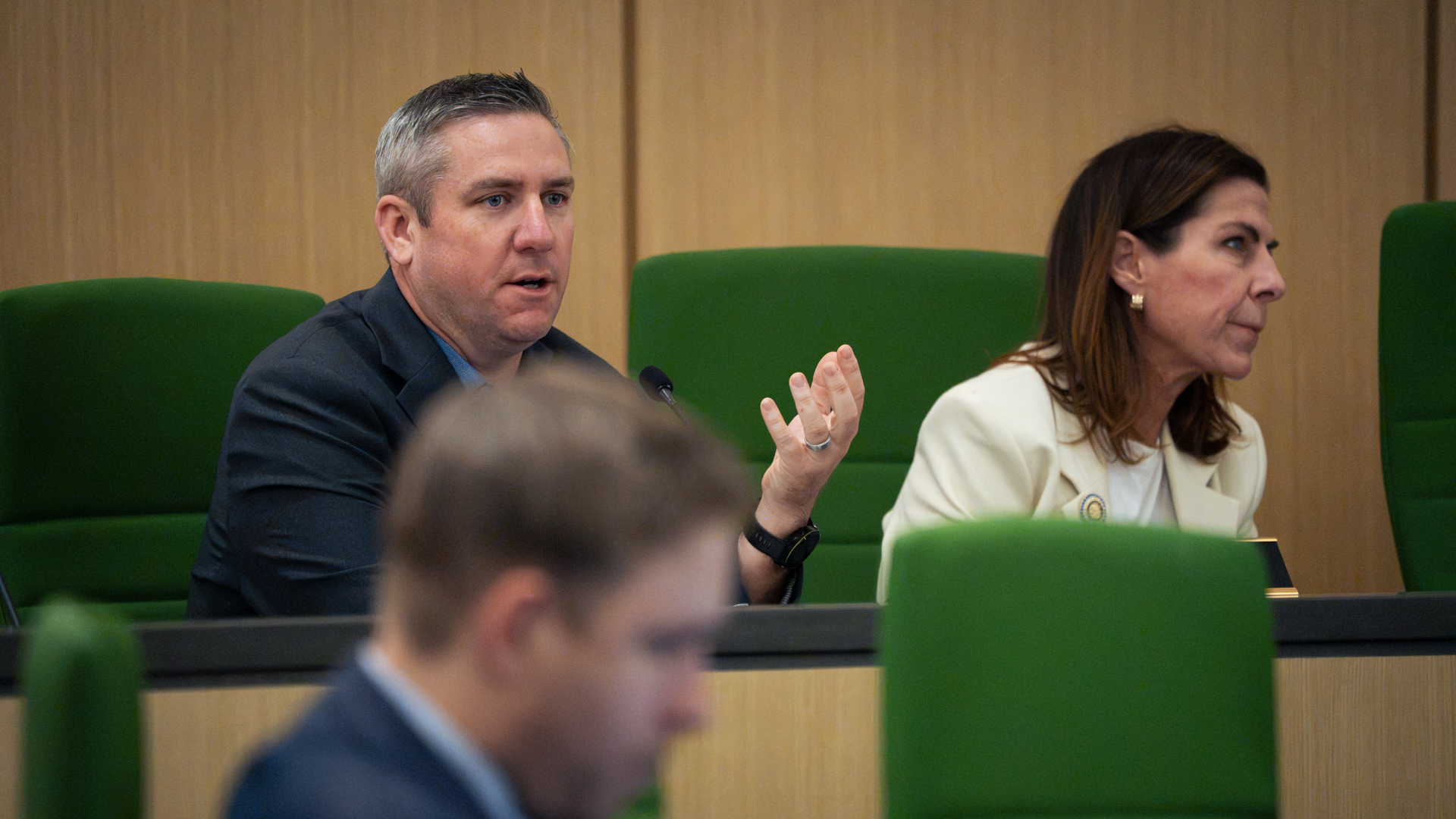
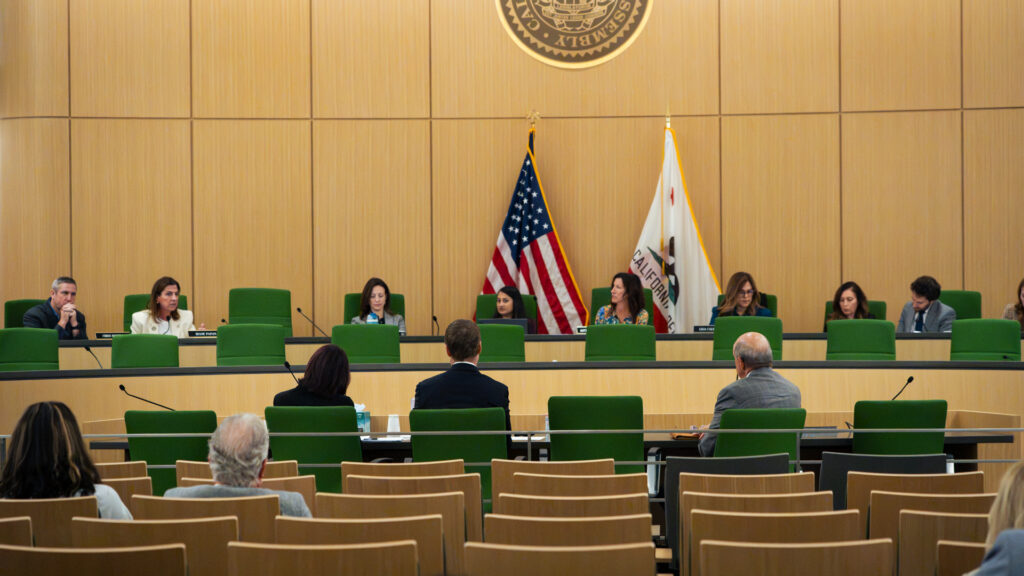
Rezler had just left the California Assembly’s hearing chambers in Downtown Sacramento, where lawmakers questioned a utility reform advocate, the director of the state’s utilities regulator and the Vice President of Pacific Gas & Electric about who should be financially responsible when Californians lose everything in catastrophic wildfires.
Three times in two weeks, members of the Assembly’s Utilities and Energy Committee and Insurance Committee have convened executives and experts to discuss the cost of fires.
The hearings mark a reopening of the topic after a deal between the Assembly, Senate and Gov. Gavin Newsom that would’ve limited utility executives’ compensation after their company’s equipment sparks a fatal wildfire fell through at the end of the legislative session about two months ago.
Sign Up for the Morning Newsletter
The Abridged morning newsletter lands in your inbox every weekday morning with the latest news from the Sacramento region.
The deal would’ve also banned the sale of victims’ wildfire claims to private equity firms and started a Wildfire Relief Fast-Pay Program. It didn’t include Newsom’s earlier proposal to cap utility companies’ financial liability for wildfires their infrastructure cause.
Utility and insurance companies are maneuvering for a new deal as lawmakers deliberate.
Communities in fire country should be watching all parties involved, Rezler said.
“This is about liability, and what (the utilities) are saying is, ‘We are going to cause more fires,'” she said.
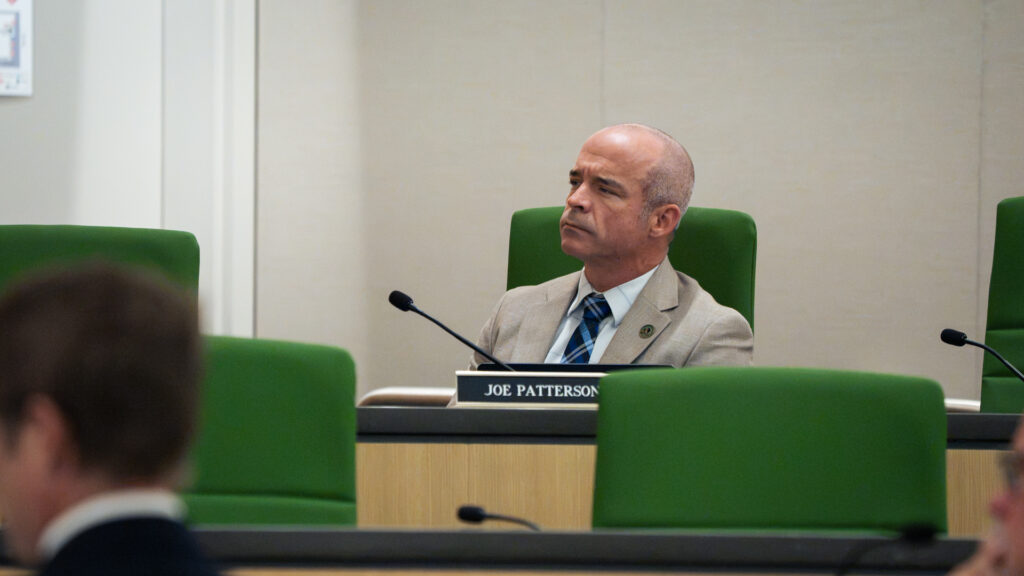
The Legislature is on recess, and several members of both the utilities and insurance committees didn’t appear for the recent hearings, including some Sacramento-area lawmakers.
Vice Chair of the utilities committee Assemblymember Joe Patterson, R-Rocklin, didn’t attend two of the three hearings, and his spokesperson didn’t provide a reason. Insurance Committee members Assemblymembers Maggy Krell, D-Sacramento, and Stephanie Nguyen, D-Elk Grove, didn’t attend the hearing their committee was involved in. Neither lawmaker’s spokesperson provided a reason for her absence.
Newsom hasn’t ruled out calling lawmakers to a special session to forge an agreement. Here are three core questions they’re investigating:
How much wildfire risk do utility companies pose?
Over the past seven years, utility companies have improved how they model fire risk and tackle fireproofing the electrical grid, Utilities and Energy Committee staff said in a background report provided to lawmakers.
But existing processes for judging utility infrastructure’s fire risk “value risk differently, track inputs more than outcomes, and can rate a utility well in the same year it starts a catastrophic fire,” the report found.
This is partly because a catastrophic fire may still occur even when risk is low.
“Each measure of success has limits,” the report said. “Weather drives yearly totals, catastrophic fires are too rare to show a statistical trend, risk models change from one filing to the next, and overlapping mitigations make it hard to credit any single program.”
In short: “This is a harder question to answer than it seems,” the report found.
Utilities warn of higher rates. Is there another way?
Institutions that track how strong of an investment various companies represent have lowered their confidence in PG&E multiple times over the possibility it could face large wildfire payouts.
These calculations may feel distant and abstract, but they’ve hit ordinary Californians in the form of higher power bills, utilities and regulators say.
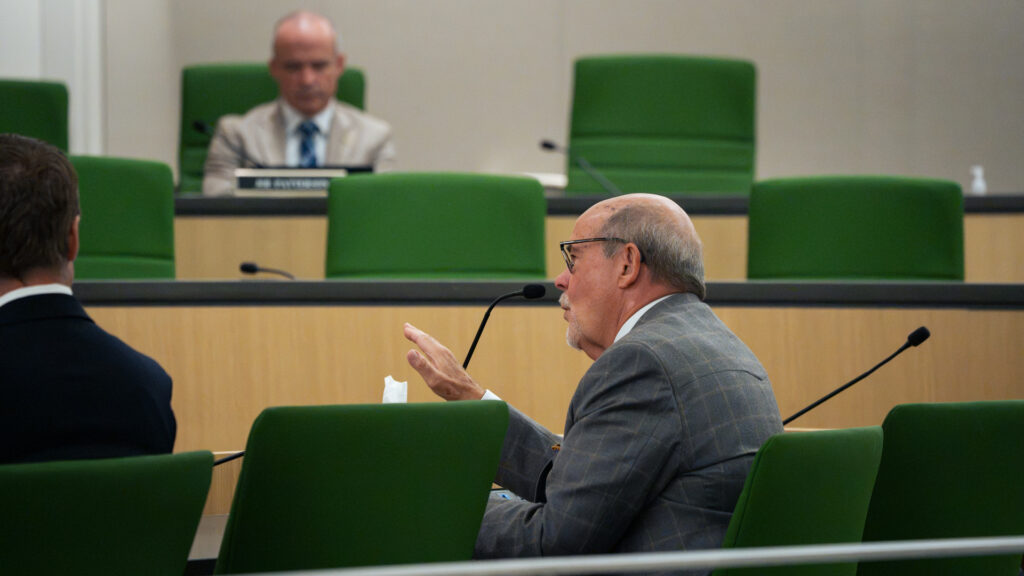
“Uncapped utility liability of a wildfire event, or risk of one even … puts utilities at risk of credit rating downgrades,” Leuwam Tesfai, executive director of the Public Utilities Commission, explained to Assembly members.
“Credit rating downgrades negatively impact ratepayers because they increase utility borrowing costs that are (then reflected) on customer bills.”
Utilities often borrow money to cover construction and repair costs. When their credit is bad, their loan rates go up, according to Mari Becker, a vice president and treasurer at PG&E.
“Left unaddressed, those challenges are also going to make it harder for us to do the work that’s expected for California on the timeline that our customers would like,” she told Assembly members.
This argument likely won’t be popular with Californians facing high power bills.
“It creates an impossible choice for people who cannot afford their rates,” said Assemblymember Pilar Schiavo, D-Chatsworth. “And I think it’s a really difficult pill to swallow that your rates are tied to the credit rating of your utility provider.”
If the Legislature chooses to shield utility companies from some liability, will it shield power customers too?
“If we’re going to have a cap on shareholder liability, I understand that … but I also want to see a cap on ratepayer liability,” Mark Toney, executive director of The Utility Reform Network, said.
“So the question of course (becomes), who pays over the cap? … That is the hard question.”
Would limiting lawsuits help?
To help reduce their liability for wildfires, utilities want to stop insurance companies from suing them for payouts after the insurers cover fire victims’ expensive losses.
How would eliminating this change the equation for victims — and for your energy and insurance bills?
When insurance companies give insured victims payouts for utility-caused wildfires, then effectively step into the victim’s shoes to sue the utility for compensation, that’s called “subrogation.”
Assembly members dedicated an entire hearing to the practice Thursday — and to the question of what rippling effects attempting to limit it as part of a broader wildfire cost solution could have.
“When a utility’s equipment sparks a wildfire, Californians pay for it twice over,” Utilities and Energy Committee Chair Assemblymember Cottie Petrie-Norris, D-Irvine, explained.
“They pay through their electric bills, which fund utility settlements in (California’s) Wildfire Fund; and they also pay through their insurance premiums, which fund the claims that insurers pay out after the fire. In all cases, these are the same households,” she said.
Subrogation “sits right where these two systems meet.”

Utility companies want to limit the practice, but the insurance industry argues it allows wildfire victims to avoid the legal costs of suing themselves, and leads to insurance investigations that help pinpoint wildfires’ causes.
“We do not want this to be a food fight between industries,” Petrie-Norris said. “When two elephants are fighting, it’s the grass that suffers.”