

The Abridged version:
- The Yolo County Department of Agriculture has a dog named Berty who works at shipping facilities to detect potentially harmful organic materials in packages.
- Berty is one of 13 dogs in the state who work to combat invasive pests and diseases.
- So far this year, Berty and her handler have identified around 300 potentially harmful pests trying to make their way into California.
Each day, millions of packages from around the globe come to the United States Postal Service’s 870,000-square-foot sorting facility in West Sacramento. Most of the time, the parcels, which are processed and distributed across Northern California, are harmless.
But every once in a while, something strange, and potentially dangerous, arrives.
Officials have found exotic pets, illegal fish, produce from overseas and two severed bear paws in packages that can be difficult to differentiate from the stacks and stacks of nondescript boxes.
Some of these items carry pests and diseases that threaten the health of California’s crops and wildlands. If allowed to get through, a severe outbreak could depress trade, cut into farmers’ livelihoods, undermine ecosystems and hinder food access nationwide.
Luckily, there’s someone working hard to make sure that kind of worrisome future doesn’t come to fruition. The price, a few treats and a scratch behind the ear (only while off duty, of course).
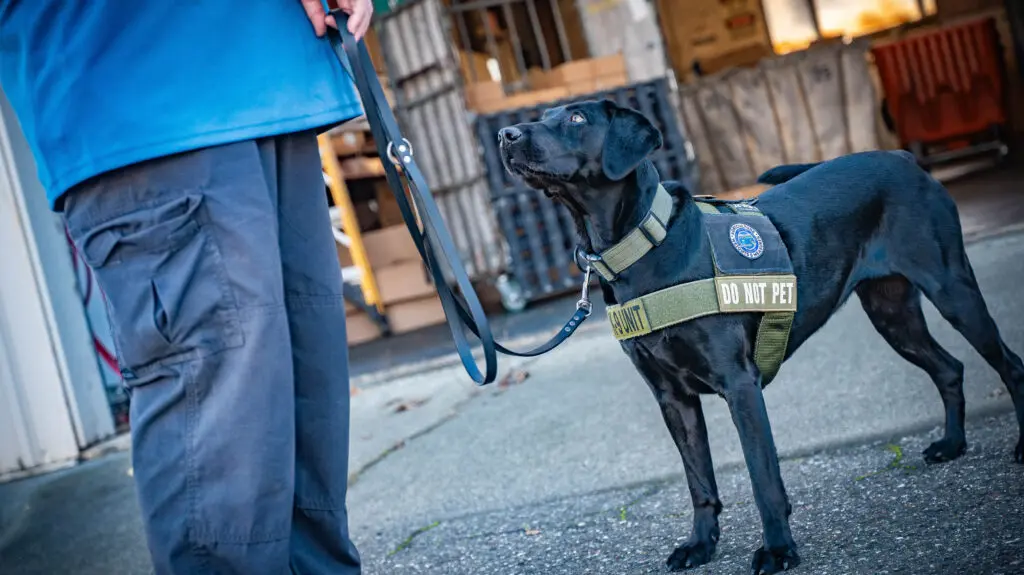
A dog with a job
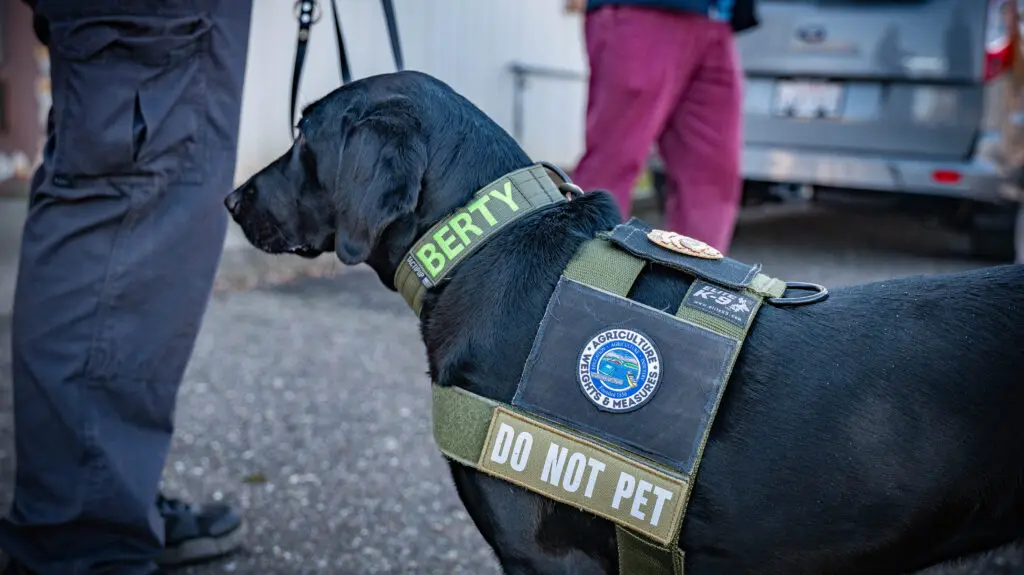
Since April 2024, the Yolo County Department of Agriculture has employed Berty, a 4-year-old. medium-sized black labrador retriever with a big job. In a state with a multi-billion-dollar agricultural industry under constant threat from imported pests and diseases, she stands, and sniffs, on the front line.
“California produces all kinds of fruits and vegetables that are central to food security,” said Humberto Izquierdo, agricultural commissioner for Yolo County. “This program does protect agriculture and natural lands.”
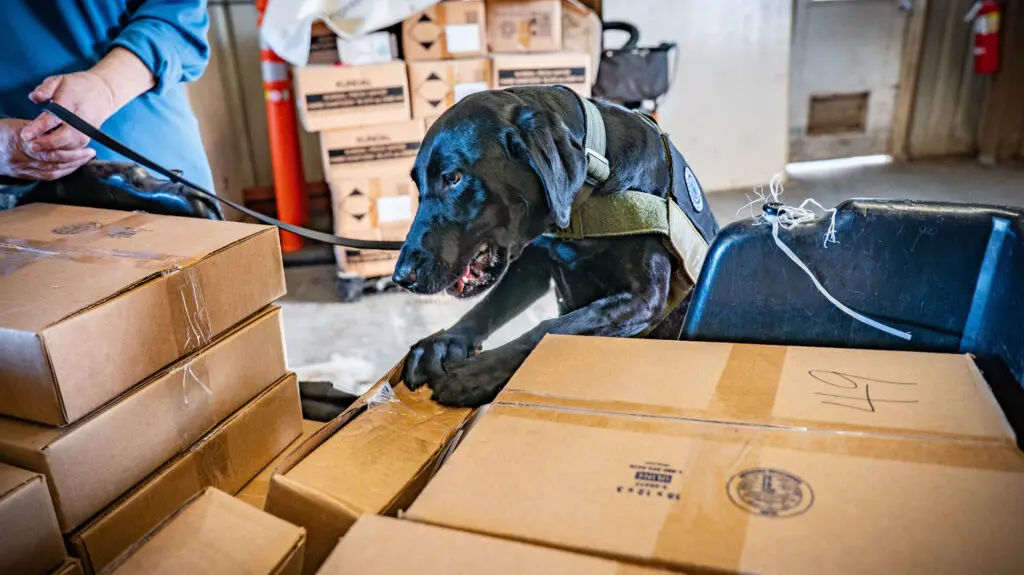
Berty, along with a dozen other dogs in the state, has been trained by the United States Department of Agriculture to detect and alert handlers to packages being shipped with uncertified organic material. They spend their days patrolling shipping facilities like the one in West Sacramento with their handlers. When the dogs identify a package of interest, it’s up to human team members to test, identify, keep and quarantine harmful organisms.
Izquierdo said the stakes for this work are high. He pointed to the American chestnut tree, which was widespread on the East Coast a little over a century ago and is now effectively decimated. The tree had supported wildlife and human populations in the region for millennia, dominating forest canopies and supplying hardwood lumber to a growing country.
In 1904, a blight fungus brought over on trees from Asia was identified in New York City. By 1950, almost all American chestnut trees were gone.
“Something like that could happen here,” Izquierdo said.
Flies, pests and disease
These days, officials are mainly concerned with a variety of fruit fly species that make their way to California in packages sent from tropical places like Florida and Puerto Rico.
One example is the Caribbean fruit fly, a tiny native of tropical islands and Florida that lays its eggs under the skin of ripe fruit. In California, infestations have been found in apples, avocados, bell peppers, carambolas, citrus, date palms, guavas, kumquats, loquats, mangos, papayas, peaches, pears, pomegranates and tropical almonds. According to the California Department of Food and Agriculture, those crops combined represented more than $4 billion in gross value in 2024. Serious infestations of the Caribbean fruit fly could reduce that.
“Flies are very troublesome because they can have very broad host ranges,” he said. “When you get pests like that, that’s when the trade issue really picks up,” Izquierdo said.
Once invasive flies have been identified and reported to the USDA, trading partners may be less willing to buy infected crops.
In addition to that, efforts to control the invasive population can be difficult and cumbersome. Izquierdo said officials first have to set up traps to identify how wide the infestation has spread. Once they’ve done that, they need to contain the spread and wipe out invaders using tools like sterile male fruit flies that will mate with females and make their eggs unviable.
All of that requires time and resources, along with the potential loss of valuable crops.
Nature and nurture
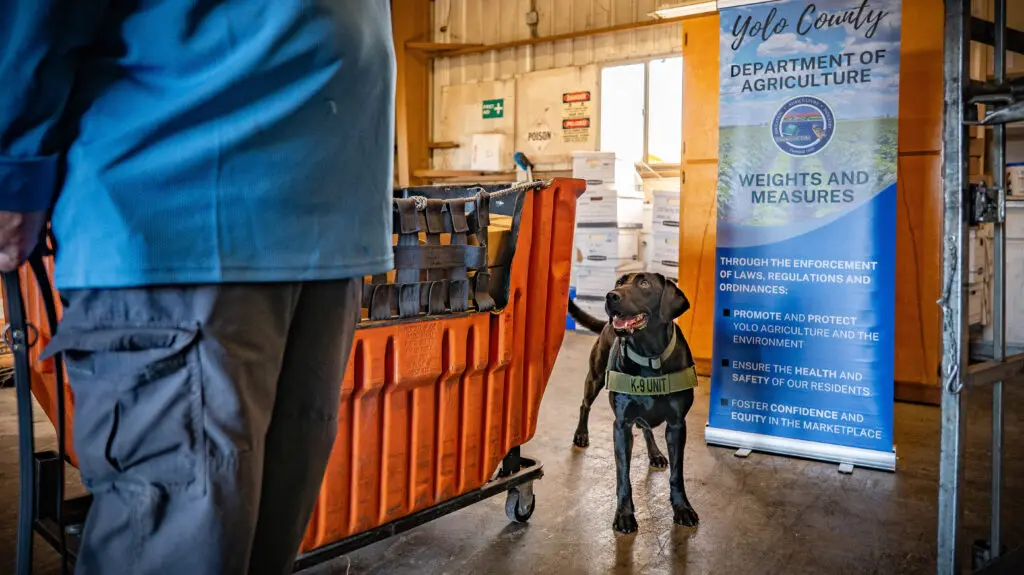
To catch pests before they’re able to cause damage, Berty leans on both her training and her nature.
Originally bred to be hunting dogs in South Carolina, Berty and her sister were selected by the USDA for their high food drives and intelligence. They both went through an eight-week training program at the USDA National Detector Dog Training Center in Georgia, where they learned to identify five initial scents — citrus, apple, stone fruit, guava and mango.
“Those are just the beginning,” said Chris Tyler, canine handler and inspector for the Yolo County Department of Agriculture.
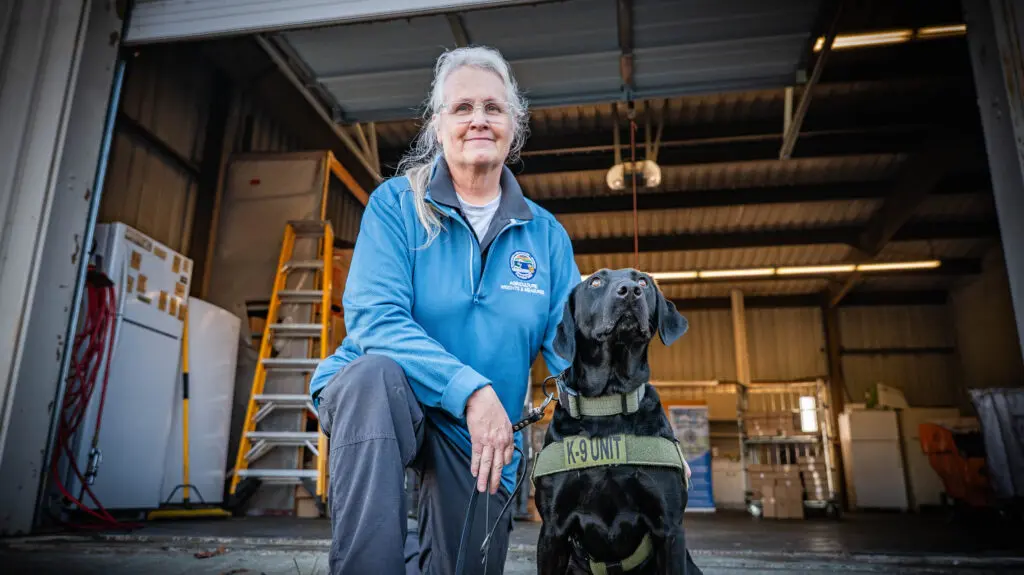
With those scents as a baseline, Berty has been able to expand her range and identify other organic material. Tyler said she has even alerted on plants and fruit she had never smelled before.
“Now it’s in her little mental database,” Tyler said.
Once they’re in her database, Berty keys in on packages that give off the target scent, letting her handler know that the parcel includes organic material that needs to be inspected.
Despite this remarkable natural ability, Berty doesn’t do her job alone.
“It falls to me to make sure she is 90% accurate when she goes into the post office,” Tyler said.
The two train constantly and spend almost every waking hour together. Tyler said that if they were to slack off, it would be obvious at statewide detector dog meetups, where handler and dog teams show off their skills to peers (including Berty’s sister, Everest, who works in Santa Clara County).
But if the numbers are any indication, the Yolo County team isn’t at much risk of that. In 2025, they have had around 300 pest finds together.
That’s a very good year, Izquierdo said.
Berty still has five or six working years before she retires. If she keeps up the pace, she will have stopped thousands of potentially dangerous packages before they could make their way into California’s food systems.
Off the clock
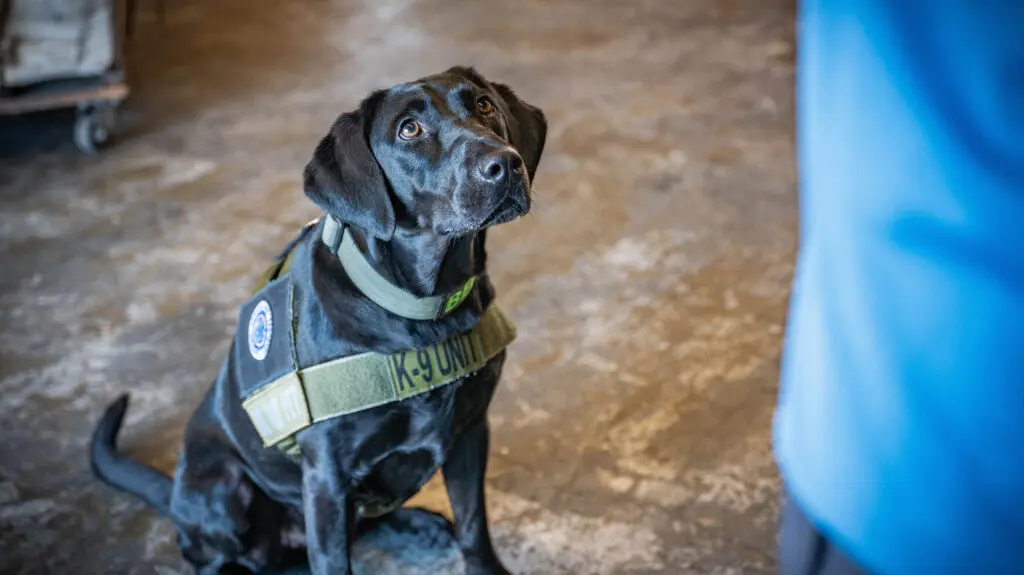
When Berty gets off a long shift at the distribution center in West Sacramento, she often makes her way to Folsom Lake for a swim. Once there, she sheds her vest, adorned with a Yolo County Department of Agriculture badge, and jumps in the water.
Especially in the summer months, swimming is a way to cool off, exercise and decompress after another day of work.
Mostly, though, it’s an opportunity to chase a ball.
After all, Berty is a professional, but that doesn’t mean she doesn’t get to be a dog.
Daniel Hennessy joins Abridged from the California Local News Fellowship. He’s a reporter covering Yolo County.