

The Abridged version:
- Sacramento Food Bank & Family Services raised the most money during last week’s Big Day of Giving.
- CEO Blake Young said the donations to the food bank will help provide 1.2 million meals.
- Big Day of Giving raised a record $15.4 million across the Sacramento region.
This year’s Big Day of Giving raised $15.4 million for 909 nonprofits in the Sacramento region — more money than ever before.
“Our region showed up with heart,” said Kerry Wood, CEO of Sacramento Region Community Foundation.
At the top of the fundraising totals this year was the nearly $420,000 donated to the Sacramento Food Bank & Family Services.
“With that kind of money we can produce for 1.2 million meals,” said CEO Blake Young. “If you think about the impact, 1.2 million meals are so much more than a win. Since the events’ inception, we’ve been pretty high up on the list. I think people believe that a basic human right is for people to be nourished.”
Recognition is the reward
Young believes the Big Day of Giving recognition matters most because of what it says about the community.
“For us, it’s really not about winning,” he said. “It’s about looking at the number of people that valued our work that day and gave donations.”
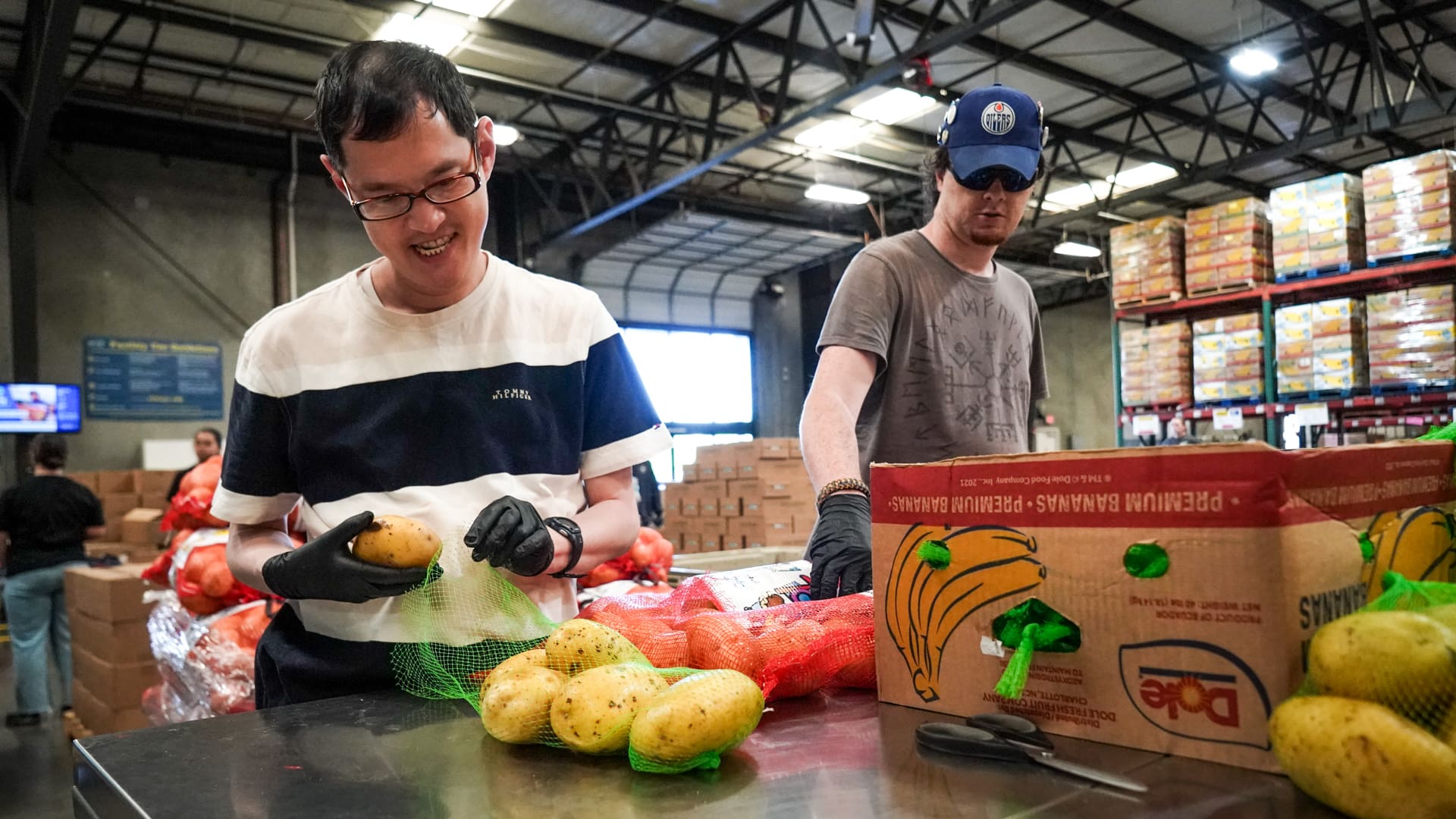
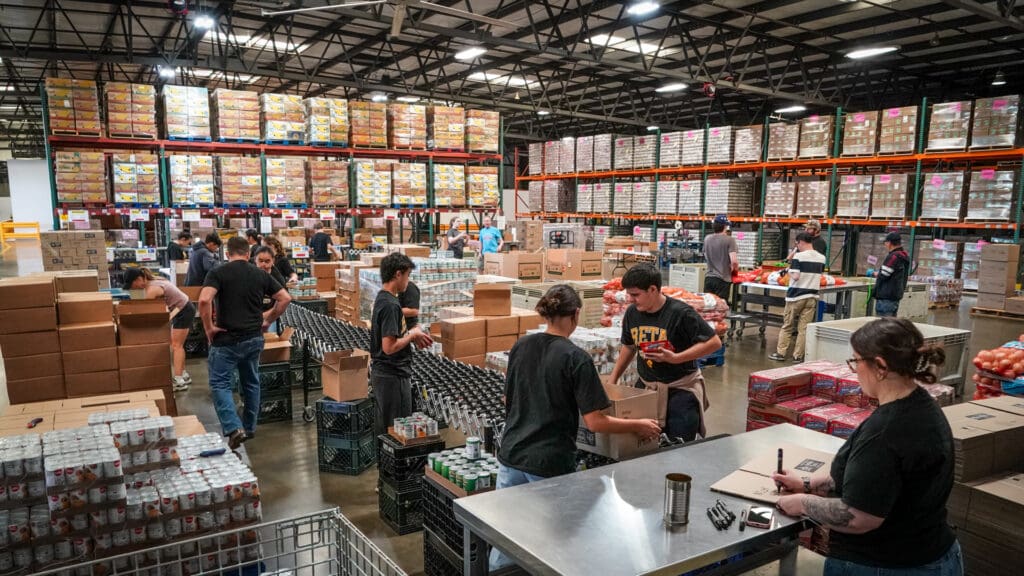
The organization helps provide food to about 335,000 people each month through a network of 112 partner agencies at more than 200 sites in Sacramento County. It is the largest hunger relief organization in Sacramento County with an annual operating budget of $20 million.
“All of the charities in Sacramento County that you know of that provide food to people, they get their food from us,” Young said.
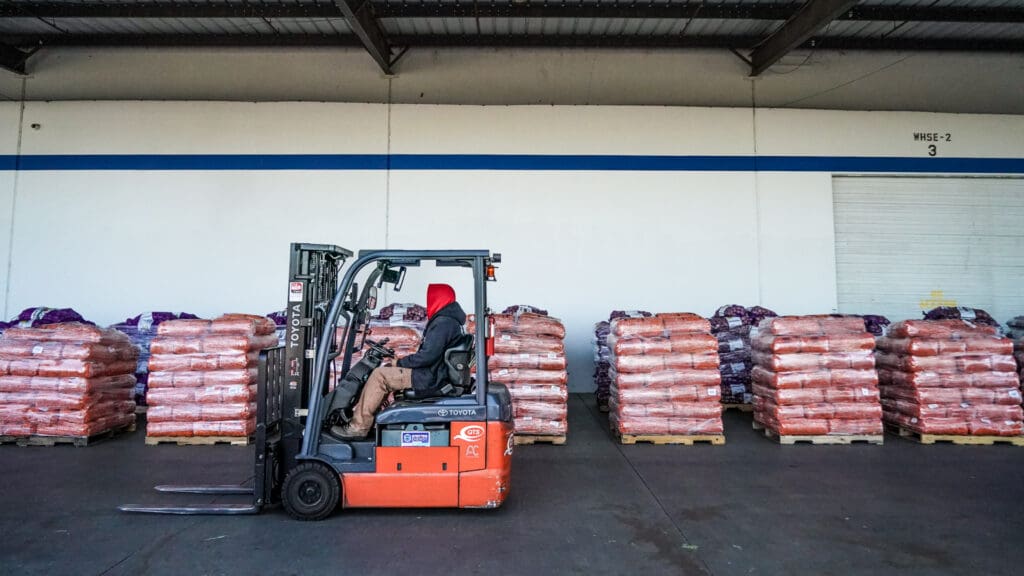
The organization purchases about 40% of the food it distributes. About 40% of all food distributed is fresh produce, with 90% from California farms.
“We’ve really tried the last 15 years to focus on nutrition,” Young said.
‘There’s a misconception’
Young says many people still misunderstand people who rely on food programs.
“There’s a misconception that people abuse the system,” he said. “Not true.”
Sign Up for the Morning Newsletter
The Abridged morning newsletter lands in your inbox every weekday morning with the latest news from the Sacramento region.
He talks about parents working jobs and still not making it through the month and seniors trying to stretch fixed incomes. Many times, Young is face to face with families struggling with layoffs or medical emergencies.
“The idea that people don’t want to work or don’t work that are coming to food programs is just simply not true,” Young said.
Young points to data to explain. About 25% of the people served are children. Another 25% are seniors. The remaining 50% are adults, many considered “the working poor.”
“The fastest growing population of the people that need our services are seniors above the age of 65,” Young said.
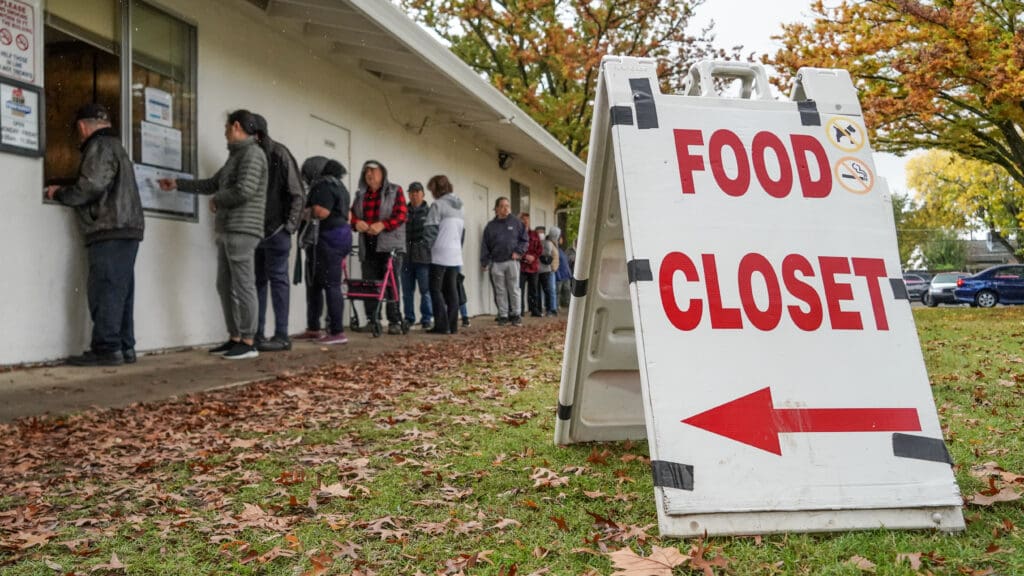
He said many are making impossible decisions when it comes to eating or not.
“They are barely making it and choosing between buying medication, paying their rent or having food in the refrigerator,” he said.
Young called hunger “the silent problem.”
“There’s people right next door to you that may be skipping meals to make sure their children have food,” he said.
Young says that one out of four people in California struggle with hunger and that the number of donations shows people care.
“I have to believe that at the very core of this, people really believe folks should not have to struggle with this just basic need,” Young said. “People that are well nourished and better fed are higher performers are more productive. They feel better. And I just have to believe that people really value that.”
The pandemic and beyond
Young saw firsthand how the pandemic changed the way many people saw food insecurity.
“After the pandemic struck, recognition for food banks in general across our country really rose to the top,” he said.
Young says most people only come when they truly need help.
“It’s meant to be an emergency service and something to help them get through this, and many of these folks rely on CalFresh benefits which as you know took a big hit this last year,” Young said.
Young said the impact of the pandemic — combined with CalFresh cuts — put a larger spotlight on people who are hungry.
“There’s been a real highlight on food insecurity, and to our benefit, to the benefit of Yolo Food Bank and to Meals on Wheels, I just think a lot of people have been exposed to the work,” Young said.
The organization is also focusing more on education and awareness. The Sacramento Food Bank has a Food Finder on its website that allows people to enter their address or ZIP code to find local food distribution programs.
‘I stood in the food lines with my mom as a kid’
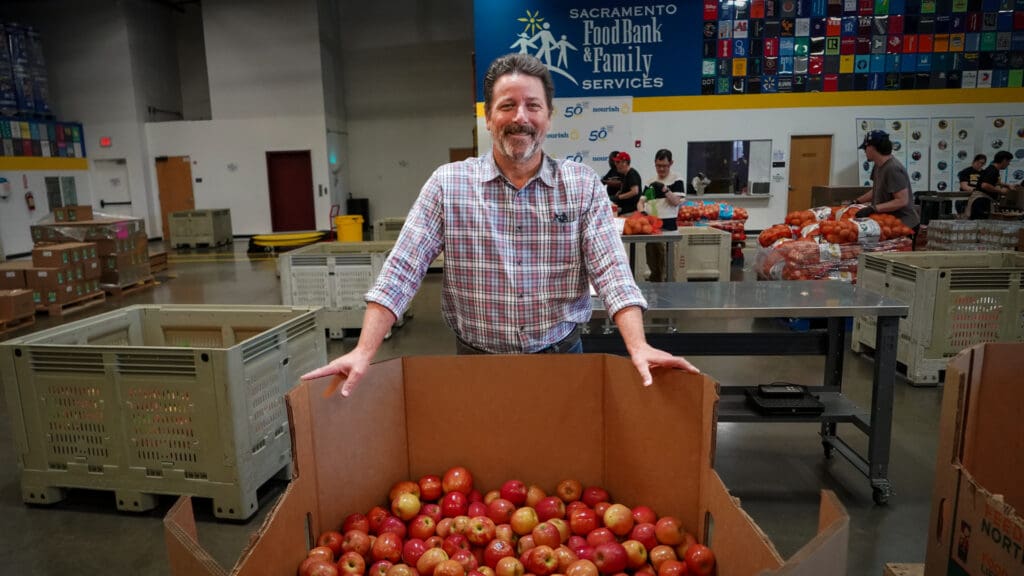
Young grew up in Bakersfield and was raised by a single mother. He knows what it is like to stand on the receiving side of food banks.
“It’s kind of ironic that I’m a CEO of Sacramento Food Bank,” he said. “There were occasions where my mom didn’t have enough food,” he said. “There’s no question I stood in the food lines with my mom as a kid.”
More than 30 years ago, Young started volunteering with Sacramento Food Bank founder the Rev. Dan Madigan.
At the time, the organization was feeding roughly 15,000 people each month. That number has risen more than 2,000%.
“Our journeys are a twisted road,” Young said.
He said many people coming through food lines are embarrassed to be there.
“I’ve seen some of the most beautiful people come through our food lines,” he said. “And they don’t want to be there.”
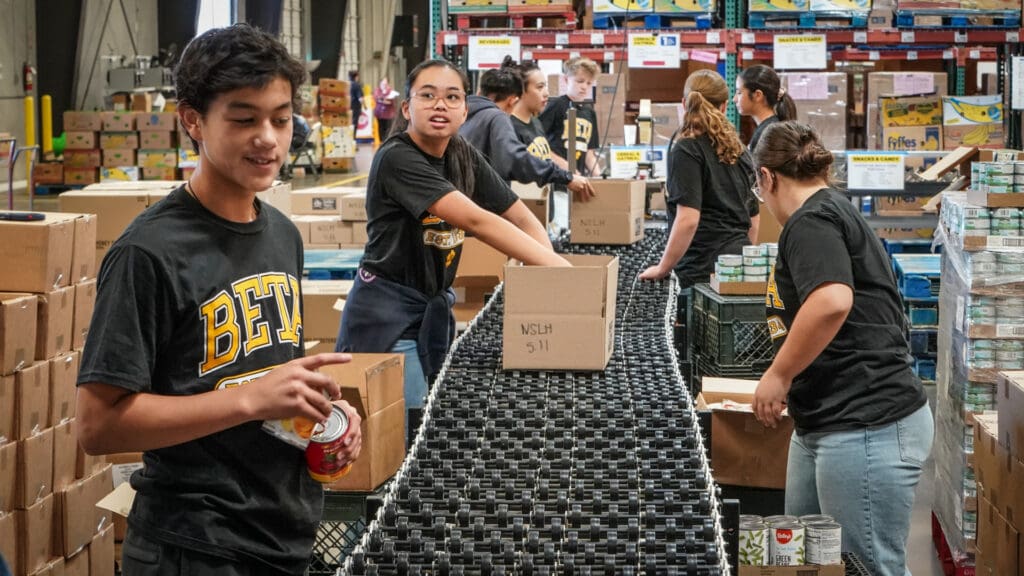
The organization now operates with 85 staff members and more than 12,000 volunteers.
“We always want volunteers,” Young said. “That’s the backbone of the organization.”
Young has an invitation for anyone who doubts the impact of the food bank.
“Come for a visit. I’ll show you how not only is the system not abused, but these are beautiful people who have just fallen on hard times,” Young said.
What stays with him
There are faces Young will never forget.
“I can tell you stories that’ll make your toes curl up,” Young said. “Mom is with children, the father died of cancer and they’re in a bad place. You know, father loses a job. Seniors on fixed income barely making it and making very difficult decisions between buying medication, paying their rent or having food in the refrigerator.”
One of the hardest parts of the work is knowing the need continues to grow.
“I don’t see an end in sight, unfortunately, particularly in California,” he said.
But he also said the support from the community keeps him going.
“What gives me an amazing, heartwarming feeling is that it is absolutely incredible how generous the community is,” Young said. “And we have a ton of people that value and donate to us and all of the food organizations because they know it makes a difference. And so, I see great heartbreak, but I see a lot of heart warm in the support side.”
He said the moments he remembers most are usually quiet ones, like people approaching him at an event or volunteers pulling him aside to say they, too, were once just like him. In need.
“My favorite thing about my job is people that come up to me and they say, ‘Hey, I used to get food from you, and now I’m proud that I can give back.’ There’s nothing better than that,” Young said.
Rob Stewart is a senior correspondent and host for PBS KVIE and reports for Abridged.