

The Abridged version:
- A Sacramento family lost their husband and father, Michael Kropp, 54, to colorectal cancer. Now, they are on a mission to educate others with “Big Mike’s Bottom Line.”
- “Everyone poops,” Michael Kropp’s son said. “Understanding what’s normal matters. Not knowing can kill you.”
- Many people are too embarrassed to discuss symptoms like persistent changes in bowel habits, unexplained weight loss, abdominal cramping, anemia, fatigue and rectal bleeding.
- A UC Davis doctor cautions people in their 30s and 40s not to brush off warning signs.
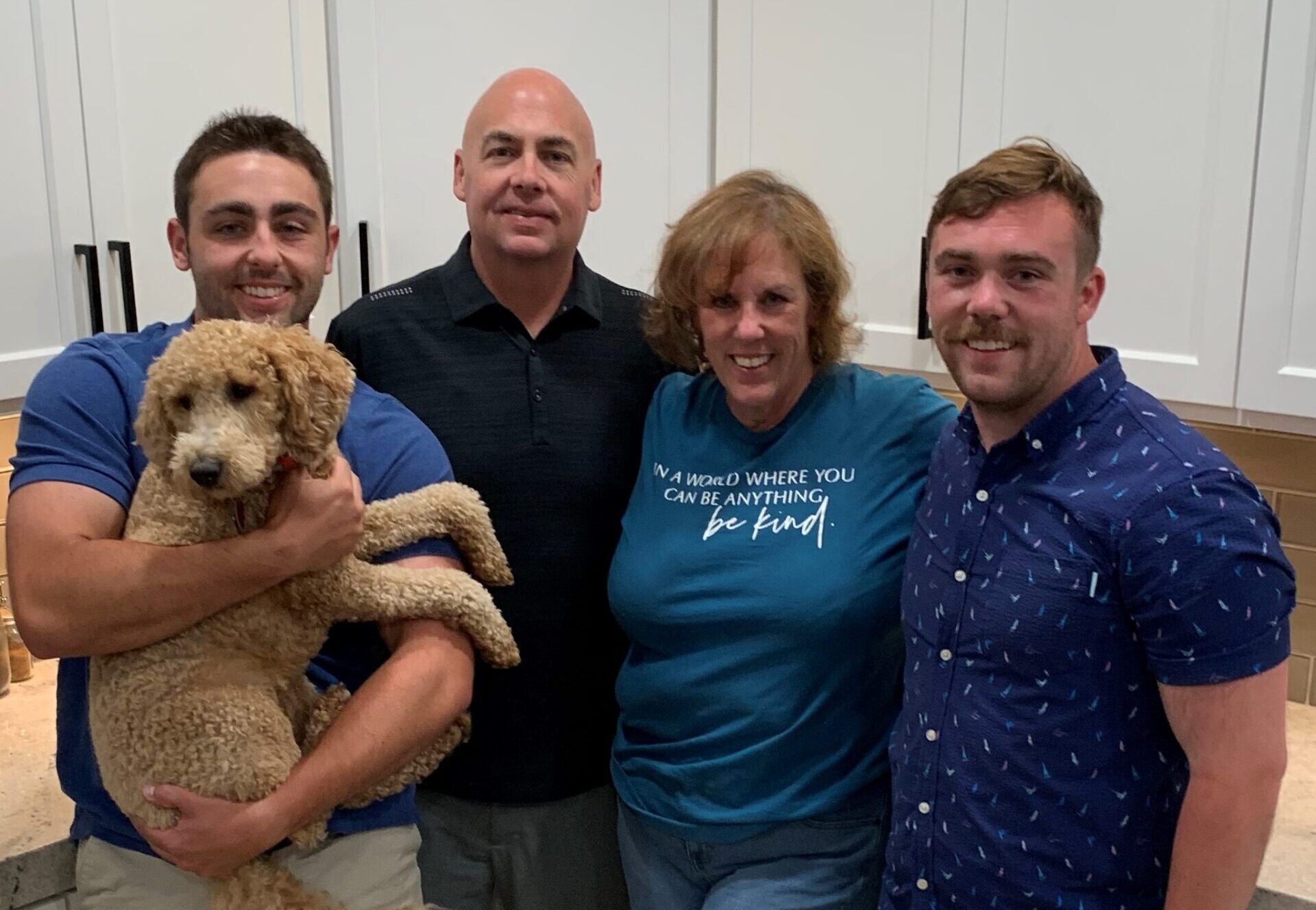
Please listen to Mary Beth Kropp. The Sacramento mother of two sons is sounding an alarm you may feel uncomfortable hearing. That’s because it’s about a bodily function most people don’t want to talk about.
“Get over it — so you don’t have to go through what we’re going through,” Kropp said. “This cancer lives in the part of the body people don’t want to talk about. We’ve got to talk — right now, and I’m not stopping until people can truly listen.”
Colorectal cancer is now the leading cancer killer of people between the ages of 25 and 50.
It is highly preventable and often curable when caught early.
And still, for many families, it arrives without warning, cloaked in silence, embarrassment and delay.
For Mary Beth Kropp, that silence cost her husband his life.
“I, along with my boys, don’t want any other family to experience this,” she said. “The pain. The loss. The emptiness. The loneliness that comes with losing your best friend, the father of your children. Because of how preventable this cancer can be, it makes us want to do everything we can to make sure no family goes through what we did.”
Michael “Big Mike” Kropp died two days before Christmas in December 2021. He was 54. He died from complications following a surgery intended to remove what doctors believed was finally the end of a disease.
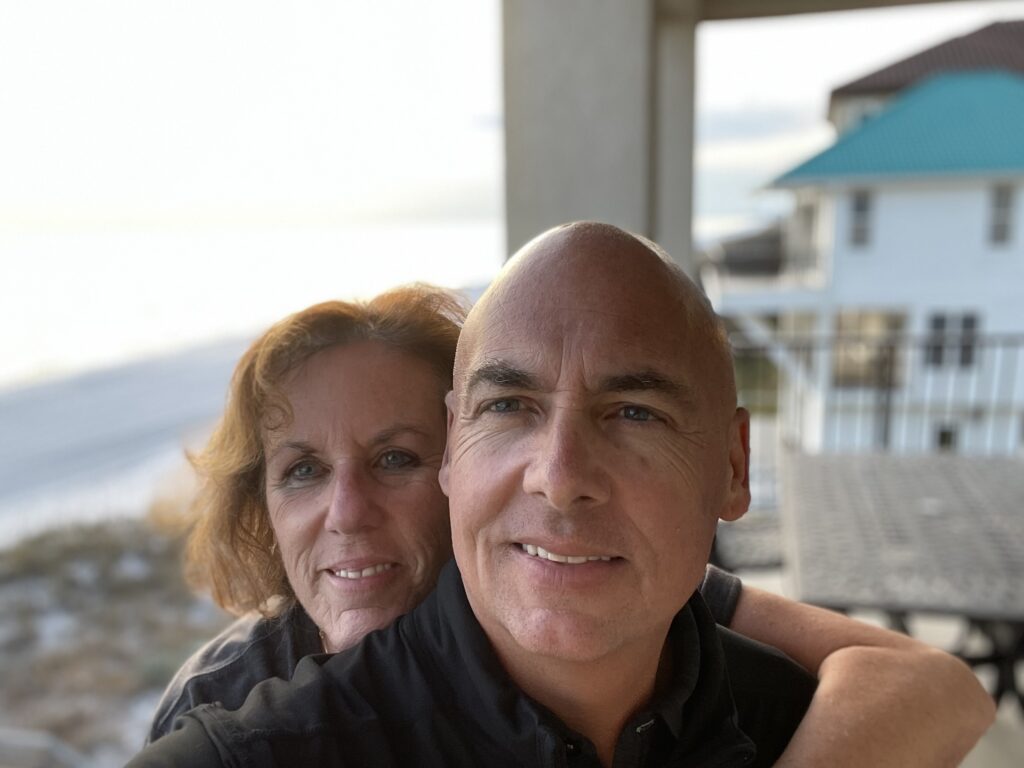
Today, from her South Sacramento home, Mary Beth Kropp is leading a growing grassroots movement called Big Mike’s Bottom Line, determined to make colorectal cancer impossible to ignore.
“This cancer thrives when people don’t talk about it,” she said. “We’re done being quiet.”
A cancer that arrives too young
For decades, colorectal cancer was considered an older person’s disease. Screening guidelines reflected that belief, previously recommending routine colonoscopies starting at age 50. But the reality has changed faster than public awareness. Today, a colonoscopy is recommended for average-risk people at the age of 45.
Colorectal cancer is rising sharply among younger adults, with cases increasing 2% to 5% each year in people under 50. It has surpassed projections that once suggested it would become the leading cancer killer in this age group by 2030.
It is already there.
One in five colorectal cancer patients is now between the ages of 20 and 49.
Don’t ignore early signs
Dr. Erik Noren, a gastrointestinal oncologist and surgeon at UC Davis Comprehensive Cancer Center in Sacramento, cautioned younger adults not to brush off warning signs that used to be waved away.
“If you are a younger person in your 30s or 40s and you’re having rectal bleeding, it’s really not appropriate anymore just to say it’s probably just hemorrhoids and ignore it,” Noren said.
Symptoms are often attributed to stress, diet, hemorrhoids or irritable bowel syndrome. By the time a correct diagnosis is made, the disease is often far more advanced. That delay is often fatal.
“A lot of changes in diet over the last 40 to 50 years have happened,” Noren said. “People who are in their 30s and 40s now were being exposed to a different diet pattern in the ’80s and ’90s than the prior generation was.”
Get to know your doctor
Having a good relationship with your doctor is key, especially when researchers have not pinpointed exactly what is causing more colorectal cancer cases.
“I have certainly treated young patients in their early 30s with fairly advanced colon and rectal cancers, and they’re healthy otherwise. And they have good diets. They exercise, they do yoga, they don’t smoke. It is frustrating,” he said. “There does not seem to be a genetic cause that we can find, because most of these younger patients do not have a family history of colorectal cancer.”
For those who do have a family history — a parent with colorectal cancer — the recommended age of screening drops from 45 to 35.
The difference between early detection and late diagnosis is huge
“One of the most powerful predictors for how you ultimately do when treating a colorectal cancer is the stage at diagnosis, so how early we diagnose it,” Noren said. “Colonoscopies are the gold standard. They are very good at detecting colon and rectal tumors.”
“As far as answering the question of why we’re seeing so many more young people with diagnoses of cancer, there’s a lot of people doing some very, very good work to try to answer that question. But it’s a hard thing to study because it’s so amorphous,” Noren said.
“It’s not anything that we’ve been able to nail down to a simple smoking gun. Quite honestly, I think my own sense of it is that it’s going to be multifactorial. It’s going to be a combination of ultraprocessed foods in the diet, environmental exposures, alterations in the gut bacteria.”.
Michael Kropp’s story
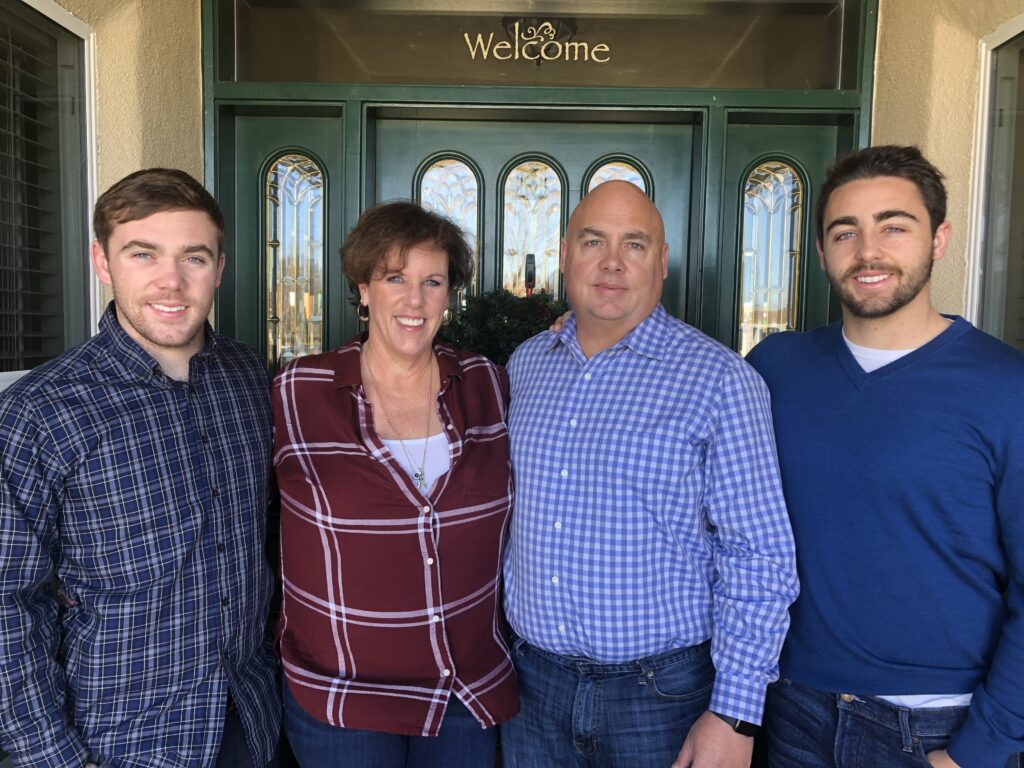
Michael Kropp was 43 when he was diagnosed in 2012. Like many people his age, colorectal cancer was not on his radar. Neither was early screening.
“He ignored symptoms for years,” Mary Beth Kropp said. “Not because he didn’t care, but because he didn’t know. And because talking about bowel habits is still so uncomfortable.”
When Michael finally underwent a colonoscopy, doctors found cancer. Surgery followed quickly. Chemotherapy was not recommended.
“We were told not to look things up online because it would scare us,” Mary Beth Kropp said. “So we trusted the system.”
For years, Michael Kropp underwent routine surveillance through colonoscopies. In 2019, he was declared cancer-free.
“We thought life was going to be fine,” she said.
The cancer had spread
Then, in June 2020, a routine blood test showed elevated liver enzymes. A cascade of scans followed. The result was devastating.
Stage four metastatic colon cancer. It had spread to his liver.
“This cancer didn’t just appear overnight,” Mary Beth Kropp said. “It had been growing for years. It was missed.”
Michael responded extraordinarily well to aggressive treatment. Tumors shrank. Doctors were optimistic. He became eligible for surgery intended to remove what remained.
“He did everything right,” his son, Michael Kropp Jr., said. “His body did everything it wasn’t supposed to be able to do.”
But Michael never left the hospital.
After 16 days in the ICU, he died from complications related to earlier surgeries and extensive internal damage.
“He died cancer-free,” Mary Beth Kropp said quietly. “That’s all he wanted. He just wanted to live.”
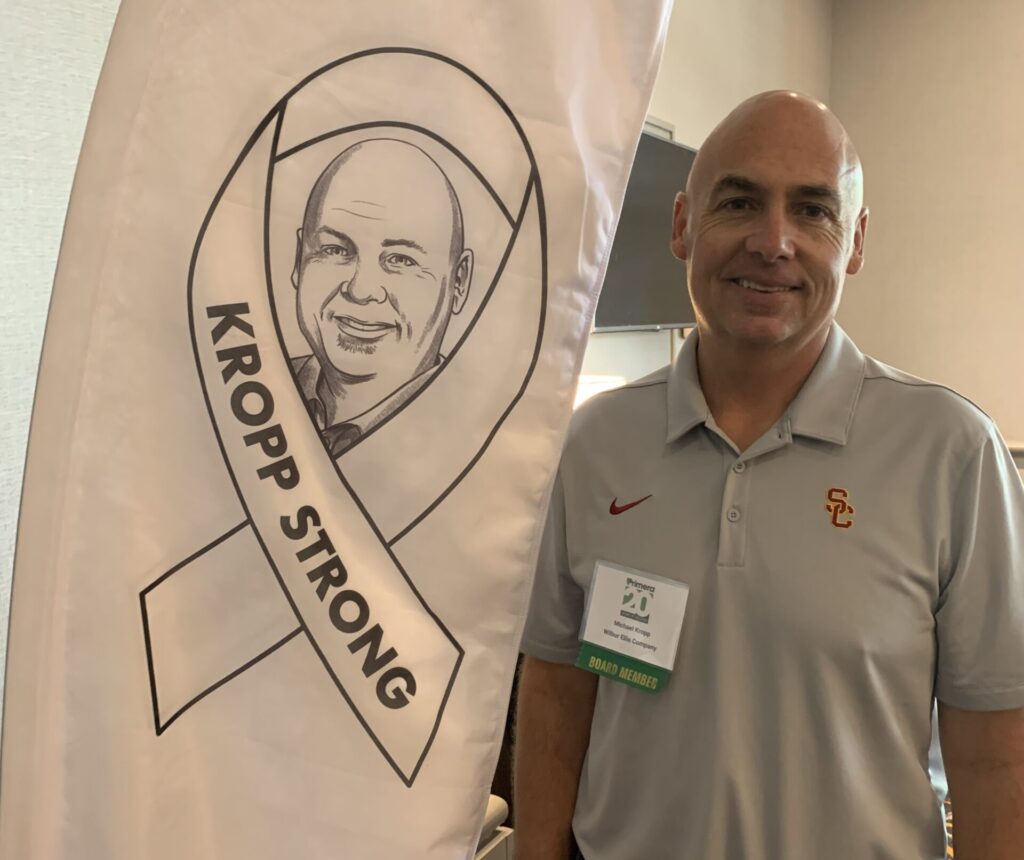
‘It didn’t have to be this way.’
Mary Beth Kropp does not speak with anger. She speaks with urgency.
“We lost eight years because we were told not to ask questions,” she said. “We didn’t know what we didn’t know.”
That belief fuels Big Mike’s Bottom Line.
“This cancer is preventable, treatable and curable when caught early,” she said. “But people have to know what to look for. And they have to be willing to talk about it.”
That includes symptoms many people avoid discussing like persistent changes in bowel habits, unexplained weight loss, abdominal cramping, anemia, fatigue and rectal bleeding.
“Blood in the stool is not something you ignore,” Mary Beth said. “Even if you think it’s hemorrhoids. Especially if it doesn’t go away.”
Michael Jr. was 18 when his father was diagnosed.
“I thought he was joking at first,” he said. “That’s how unthinkable it was.”
Now 31, Michael Jr. and his brother, Alex, are at increased risk themselves.
“My dad likely had precancerous polyps 10 years before he was diagnosed,” Michael Jr. said. “That means he could have been in his early 30s.”
Big Mike’s Bottom Line
Big Mike’s Bottom Line began with a clear mission.
“We’re not a research organization,” Michael Jr. said. “We’re not doing recovery care. We’re focused on prevention. On education. On helping people never reach that stage.”
The name itself is intentional.
“It’s uncomfortable,” he said. “But that’s the point. So, we make you talk about it.”
Their mantra is simple: ACE:
- Alleviate stigma
- Communicate symptoms
- Educate people early
From bathroom-door ‘Peek at your Poop’ stickers with QR codes linking you the Bristol Stool Chart Basics to community conversations and even golf classics, Big Mike’s Bottom Line is designed to meet people where they are, including restaurants, bars and community centers throughout Northern California.
“Everyone poops,” Michael Jr. said. “Understanding what’s normal matters. Not knowing can kill you.”
When grief becomes purpose
Mary Beth Kropp does not describe herself as brave. She describes herself as unwilling to let another family suffer.
“I can’t imagine the rest of my life without my husband,” she said. “But I can imagine helping someone else not lose theirs.”
She speaks openly about grief in hopes of helping.
“There are hard days,” she said. “But when someone tells me they got screened because of Michael’s story, it turns into joy. That’s how I survive.”
Her sons see it, too.
“This started as something to help my mom keep going,” Michael Jr. said. “Now it’s something that could save lives.”
Alex Kropp agrees.
“This is the most preventable cancer we face,” he said. “Stage one has over a 90% survival rate. Stage four drops to about 14 percent. That gap is education.”
‘We owe them better’
Michael Kropp talked openly about his disease. He wanted people to learn from it.
“One of the last things he said was that no matter what happened, someone needed to learn from his experience,” Alex said.
Mary Beth believes families and friends should routinely talk about symptoms and concerns and use Michael’s story to break the ice.
“This didn’t have to be this way,” she said. “And that’s the hardest part.”
Today, Big Mike’s Bottom Line continues to grow — driven not by grief alone, but by resolve.
“This is about saving lives,” Mary Beth said. “It’s about making March as visible as October. October is pink, March is blue for colorectal cancer. Light it up.”
She is advocating to light the California State Capitol in March to raise awareness.
She paused, but was clear when saying, “If talking about poop saves a life, then we should be talking about it all day long.”
Colorectal cancer by the numbers:
- Colorectal cancer is the No. 1 cancer killer of people ages 25–50.
- 1 in 5 colorectal cancer patients are between 20 and 49.
- Cases in people under 50 are rising 2-5% each year.
- When caught early, colorectal cancer is up to 90% survivable.
- Most colorectal cancers start as precancerous polyps that can be removed.
- Many early cases show mild or no symptoms.
- Screening now begins at age 45, earlier with family history or symptoms.
Rob Stewart is an executive producer with PBS KVIE and reports for Abridged.