

The Abridged version:
- The Sacramento Municipal Utility District, the region’s largest electricity supplier, is looking into one “large load” data center project over 50 megawatts and three other projects over 20 megawatts.
- The sprawling “hyperscale” data center projects that have received heavy environmental criticism across the country are sized around 200 to 300 megawatts and higher.
- At least 24 smaller data centers currently dot the Sacramento region, some of which have been in business since 2000.
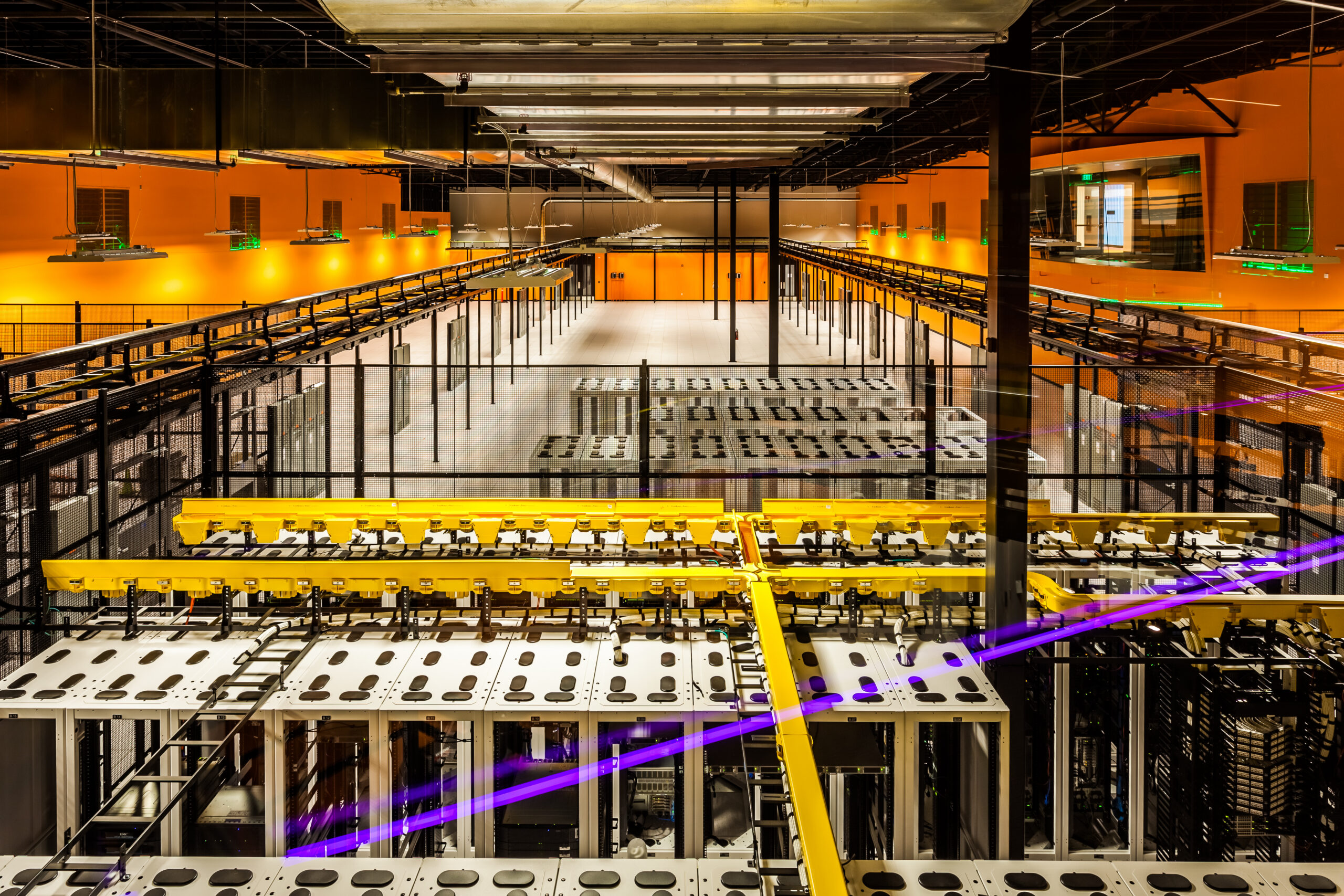
Everything about artificial intelligence and data centers is gargantuan. Buildings the size of football fields, energy demands that outmatch entire cities and the economic consequences connected to new artificial intelligence tools — all big.
In the Sacramento region, the biggest topic around data centers may be the emotions they conjure. With companies eyeing the region for new data centers, the prospect of these campuses is increasingly fueling hopes — and deep anxieties — for local communities.
Barry Broome, CEO of the Greater Sacramento Economic Council, said that interest from tech companies looking to expand their artificial intelligence and data center-related business is mounting in the region.
“We have tens of billions of data centers talking to us,” Broome said, referring to the dollars of capital investment companies are considering for the region.
Despite the interest, Broome has “mixed feelings” about data centers.
“They take down too much energy, too much water, and they don’t produce enough jobs,” he said. “But, the practicality of it is, we live in an AI world and it’s coming fast.”
Sign Up for the Morning Newsletter
The Abridged morning newsletter lands in your inbox every weekday morning with the latest news from the Sacramento region.
Though the region is home to a growing tech scene, multiple local leaders and tech executives told Abridged that Sacramento is unlikely to become a hub for sprawling data centers.
Katie McCammon, executive director of environmental organization 350 Sacramento, said she’s treating the concept of data centers “like a virus,” which she’s worried the region doesn’t currently have policies to protect against.
Similar fears have stirred on local social media pages. Last month, a Reddit post brimmed with concerns about a possible hyperscale data center planned in Roseville.
The city of Roseville refuted the concerns, and stated that the city’s electric grid “is not designed to allow for a hyperscale data facility.” Project documents reviewed by Abridged do not include any references to data center uses or show power infrastructure that would be required for a large data center.
At least 24 data centers already in the region
Across the Greater Sacramento region, there are at least 24 data centers currently operating. That includes hubs that provide data infrastructure and security for telecommunications companies, banks and hospitals, and other centers act as working labs to test out new technology that can be eventually deployed in large-scale data centers.
Industry publication Data Center Maps notes 17 data centers across the Sacramento region, including five in Rancho Cordova. Rancho Cordova’s current count of data centers within the city is 12, according to city manager Micah Runner.
The region’s data centers currently range 3 megawatts in size to 26 megawatts, according to Data Center Map.
The broader “hyperscale” data centers currently sprawling across Nevada and Texas are sized in the 200- to 300-megawatt range and higher.
That range is similar to the power needs of the city of Roseville, which has a peak electrical demand of 370 megawatts for its entire population of 167,000 residents, according to the city. Most of the Downtown Sacramento grid is powered by a 60-megawatt substation, according to SMUD.
One expansion project nearly doubling the size of a data center near McClellan Airport is currently underway.
Prime Data Centers is currently adding another 18-megawatt data center to McClellan Park, for a data center campus that would total 44 megawatts between two buildings. According to marketing materials, the site is dedicated to “enterprise” data storage, which can include data-backup storage for companies and backend information technology support.
Representatives for Prime Data Centers did not respond to requests for comment on their Sacramento locations.
Four SMUD data center projects on the horizon
The Sacramento Municipal Utility District is also seeing interest from prospective tech companies looking to build data centers.
While local cities and counties are tasked with land-use approvals for data centers, SMUD handles electrical infrastructure and its publicly-elected board oversees policies around major projects like data centers.
The utility is currently looking into four different “inquiries” for data centers. Those include one project over 50 megawatts, and three over 20 megawatts, according to spokesperson Gamaliel Ortiz.
The utility declined to provide details on the proposed site locations or the companies behind the projects.
“We have one data center that we consider a large load,” said Tracy Carlson, director of customer success at SMUD, referring to the 50-megawatt project.
Carlson declined to detail where the project is planned or which local government will oversee approvals for the proposed data center, citing a need to ensure “confidentiality for our clients.”
For the project, SMUD is preparing a transmission study, which could be done by this fall, according to Carlson.
“It’s not something that happens overnight, it definitely happens over time,” Carlson said.
Carlson added that while Silicon Valley utilities are seeing up to half of their electrical load now dedicated to AI and data centers, she doesn’t predict that will be the case in Sacramento.
“We are not seeing a situation where we would see huge growth,” Carlson said.
Rancho Cordova plants flag for AI businesses
When it comes to AI and smaller-sized data centers, Rancho Cordova’s leaders have said the city is open for business.
“I think we see it as an opportunity to do it smartly and correctly. Not just saying ‘No,’ but leaning in because it’s part of … our future hopes for the region,” said Runner, the city manager.
Last September, the city signed a $5 million contract with Nvidia to boost the AI and robotics workforce in Rancho Cordova. The city is also home to multiple companies and startups that develop products that support data centers or research products that make them more energy-efficient.
Runner said the city is also in talks with SMUD for a new project in the 20- to 50-megawatt range, but there are no plans for “a specific project at the moment.”
He also anticipates that data center companies currently in the city may not increase their footprint, but could seek projects with higher electrical demand.
“We’re gonna see applications or people interested in growing their current power … but it’s not going to be the big hyperscale,” Runner said.
Data centers in Sacramento since 2000
The Sacramento region has been home to data centers dating back to at least 2000. The region’s first data center company, RagingWire, started providing disaster recovery services for companies that year.
At the time, Sacramento was desirable because it was close to the Bay Area, but in a more seismically safe region, said Bruno Berti, senior vice president of global product management with NTT Data Centers. Japan-based NTT Group acquired RagingWire in 2018.
Today, NTT Data Centers operates the region’s largest data center, with a 52.7-megawatt campus between three buildings near Natomas and North Sacramento.
The company works with more than 400 different clients, ranging from data storage for hospitals to webpage backups for small businesses. NTT Data Centers also advertises its Sacramento campus as being fueled by “green energy.” That includes purchasing renewable energy sources from SMUD, Berti said.
Berti has been with the company in Sacramento since 2013 and watched the AI boom cast a shadow over data centers. Some of that criticism comes from public perceptions of data centers as “secretive,” he said.
“Customers haven’t necessarily wanted people to know where they put their core computing … we don’t want people to know where the data centers are because they’re a target,” Berti said.
“We don’t want to be secret anymore,” he added.
Felicia Alvarez is a reporter for Abridged by PBS KVIE covering accountability. She’s called Sacramento home since 2015 and has reported on government, healthcare and breaking news topics for both local and national news outlets.