

The Abridged version:
- The percentage of people in the Sacramento region working from home declined for the third year in a row last year.
- The trend has caused an uptick in traffic and a flattening of office vacancy rates.
- Still, only San Francisco saw a higher proportion of people working from home last year.
- State workers maintained the highest work-from-home percentage — 31% — more than twice the rate for employees of for-profit companies.
Fewer people in the Sacramento region are working from home, a trend that is pushing traffic volumes toward prepandemic levels but also lowering office vacancy rates.
Like elsewhere, Sacramento saw a work-from-home boom following the pandemic. In 2021, about 23% of workers in the four-county region usually worked at home, up from 8% in 2019, census data shows.
The region maintains a strong work-from-home culture, largely thanks to state workers. Among the 10 most populated metros in California, only San Francisco saw a higher proportion of people working from home last year, according to census data.
But the “return to office” movement is picking up steam. Fewer than 17% of workers in the Sacramento region usually worked at home last year, the third consecutive annual decline.
Proponents of forcing employees to return to the office argue that it is easier to instill an organizational culture and keep track of worker productivity when people are physically present. Opponents of the trend note research showing high turnover following mandates to return to the office, especially among women, senior employees and highly skilled workers.
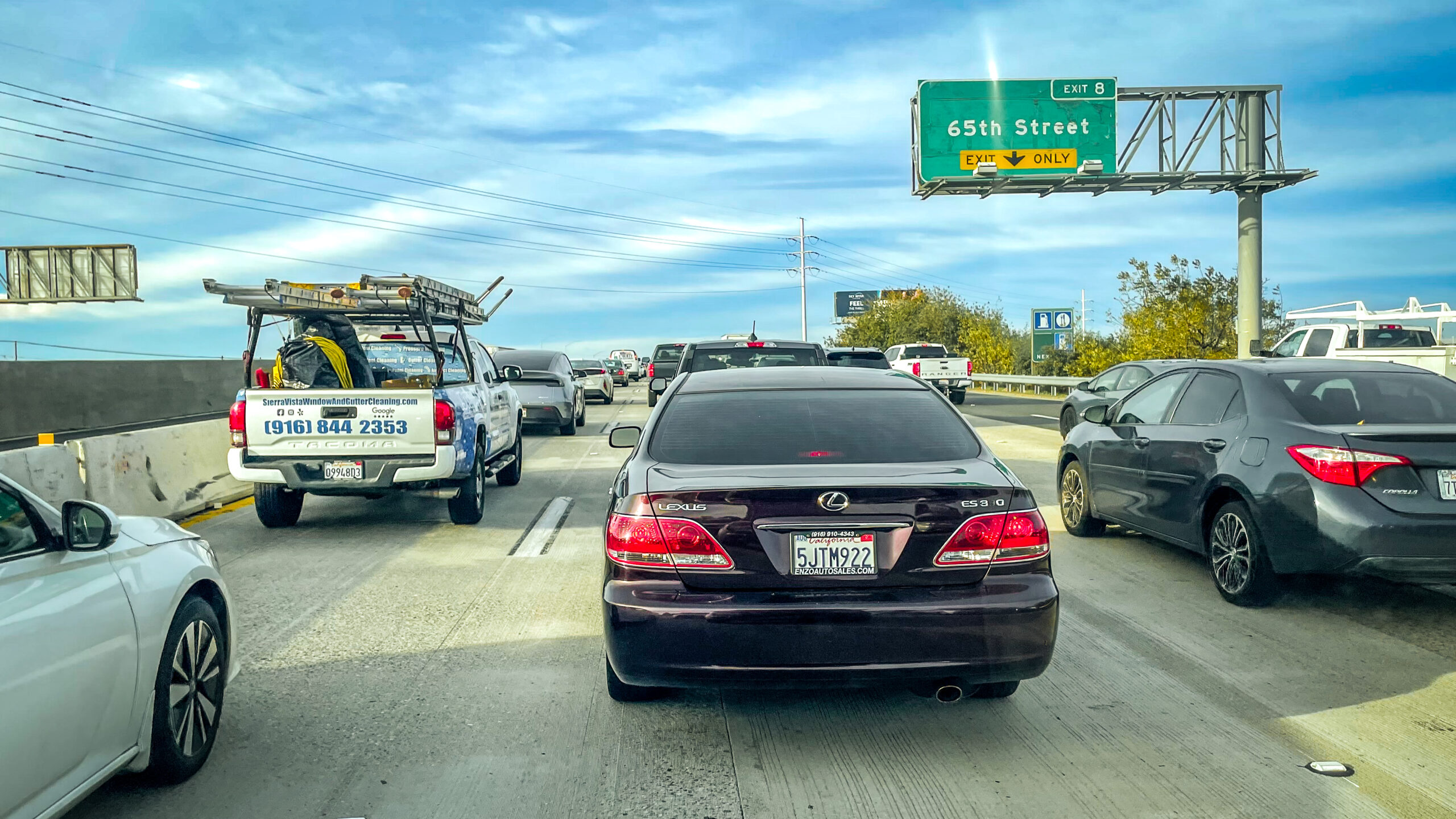
Traffic approaching prepandemic volumes
As more people have returned to the office in Sacramento, traffic has increased.
Sacramento commuters will spend an average of 14 hours of extra time in traffic jams during busy commute periods this year, based on annualized data through June. That’s up from seven hours wasted in traffic jams in 2020 — and almost equal to the 15 hours of extra time in traffic delays seen in 2019, according to data from NPMRDS Analytics shared with Abridged by officials at the Sacramento Area Council of Governments.
“We’re getting pretty close to where we were in prepandemic levels,” said Garett Ballard-Rosa, data and analysis principal at SACOG.
Ballard-Rosa said the trend is mitigated by the fact that vehicle traffic is spread throughout the day today more than it was before the pandemic, reducing the possibility of traffic jams.
“It is now less concentrated in the AM, PM peaks,” he said, adding that more people are running errands during the work day.
SACOG Executive Director James Corless said ridership on the region’s public bus lines has bounced back and returned to healthy levels.
“What has not bounced back is light rail,” he said.
A SACOG analysis of figures from the National Transit Database found that light rail ridership was down by about a third in 2024 as compared to 2019. Corless said the high rate of state workers at home drove the trend.
Office vacancy rate remained higher than 2019
The work from home trend contributed to a hollowing of office buildings throughout Sacramento, a trend that may be receding now that many are returning to the office.
A host of restaurants, shops and businesses rely on office workers to keep them afloat, particularly in the downtown area, which was hit hard by rising vacancy.
By the end of 2024, the office vacancy rate in the Sacramento region stood at roughly 22%, up from around 14% in 2019, according to research from Colliers, a real estate management firm.
“Right before the world shut down, Sacramento’s office market was doing really, really well,” said Bob Shanahan, Colliers’ research director for Sacramento and Reno. “Then everything changed, and since then, we’ve seen our vacancy rate jump almost 10 percentage points over the last five-plus years.”
The rise in vacancy was due to work-from-home patterns, a push by the state to move from leased to owned space and the withdrawal of several large employers from existing office space.
Vacancy rate has begun to flatten
But the vacancy rate has flattened this year, even falling a little.
Shanahan said many businesses realized they “overcorrected” when they abandoned too much space. Some have also made strategic choices to bring workers back to the office.
“A lot of companies that went fully remote might have kind of rethought that strategy and are looking at hybrid work — three, four days in the office,” he said.
The trend represents at least a pause in rising vacancy rates — if not a complete turnaround.
“It’s encouraging because we’re not seeing a lot of big new vacancies come online,” Shanahan said. “So I think that we are starting to see some stabilization. However, we’re still not seeing the appropriate amount of leasing activity that would indicate that a prolonged recovery is underway.”
What if state workers return?
The return-to-office trend could accelerate soon.
State workers are much more likely to work from home than workers in the private sector, census data shows. About 31% of state workers in the Sacramento region spent most workdays at home in 2023, compared to about 21% of workers in the nonprofit sector, 15% of workers in the for-profit sector and 9% of workers in the local government sector.
Gov. Gavin Newsom initially ordered state workers to return to the office at least four days a week by mid-2025. After outcry and negotiations, that mandate was largely delayed until mid-2026. A report from the California State Auditor released earlier this year concluded that remote work could generate savings for the state.
If state workers return to the office en masse in July, it will change the region overnight, potentially putting tens of thousands of additional people into office chairs and car seats.
“They’re going to need office space to do that,” Shanahan said.
Corless said a return of state workers to the office could lead to more traffic jams — unless many workers decide to take mass transit. He said SACOG and transportation agencies are making plans to incentivize state workers to choose light rail or a bus instead of their cars.
“We’d like to see more people taking transit and figuring out how to make that work,” he said.
Phillip Reese is a regular contributor, writing Numbers Matter for Abridged.