

The Abridged version:
- The Sacramento City Council voted in favor of expanding the Railyards district’s future tax revenue that will be used to pay back developers for infrastructure and fund some affordable housing.
- Primary asks from unions and community groups have included increasing a requirement for affordable housing in the Railyards.
- While affordable housing is at the forefront of the conversation, Strong SacTown wants to also bring attention to a $63 million parking garage.
Nancy Williams, a resident of the Railyards, was one of about 60 people who spoke Tuesday night before the Sacramento City Council.
She, like many of the other speakers, wanted the city to hold off on a decision to finance development that is overhauling her neighborhood.
“You hold my future in your hands without pausing this vote,” she said. “You’re making a decision about my life.”
After hours of comment, the City Council voted to move forward with an expansion of the financing district for the Railyards development and billboard leasing agreements, deals that will finance the development long underway in Sacramento beside the Interstate 5 corridor.
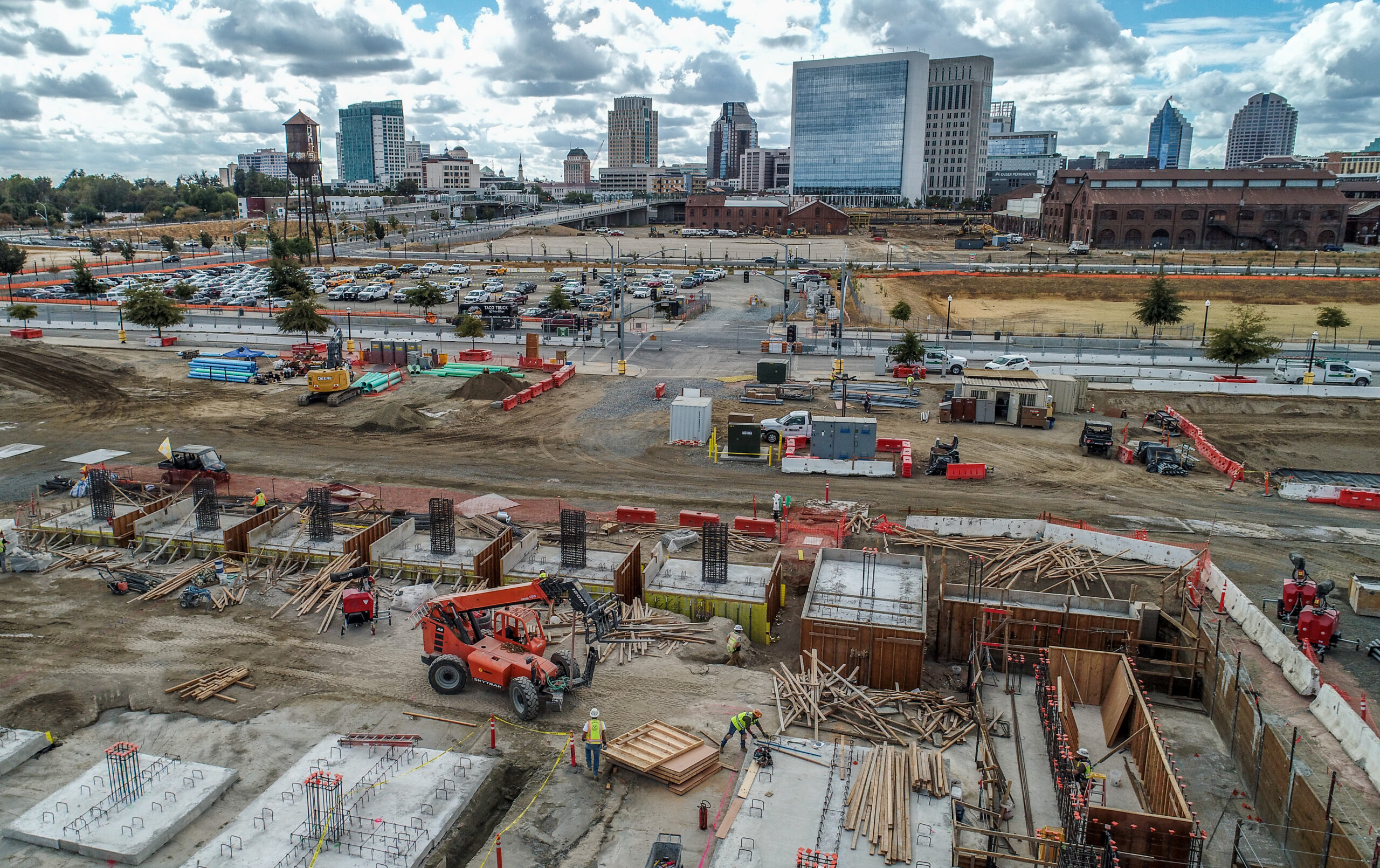
Construction in the Railyards has taken shape over the past decade and now includes the early stages of a Sacramento Republic FC stadium, a Kaiser hospital and a Sacramento County courthouse. With the approvals Tuesday night, the City Council covered two of the city’s primary means of financing the infrastructure enabling that construction, including the Enhanced Infrastructure Financing District.
The financing district provides tax revenue from the Railyards that would pay for the infrastructure supporting the growth of the area planned for entertainment, housing and commerce. A portion of the tax revenue will go toward affordable housing. The city has estimated that the district will generate about $800 million over its 50-year lifespan, with $180 million to be for affordable housing, according to a city staff report.
Railyard residents and members of Unite Here Local 49 urged the City Council to delay the votes and negotiate a better deal, citing their concerns surrounding affordable housing, a lack of well-paying jobs and the absence of an anti-displacement policy.
Meanwhile, supporters said the economic development benefits will make the financial arrangement worthwhile, and pushed to advance the project.
“The Railyards is our region’s most catalytic opportunity that we have in front of us,” said Denton Kelly, the CEO of lead developer LDK Ventures. “Our shared goal has always been to deliver and ensure the railyards realizes its full potential as Sacramento’s most dynamic and vibrant urban neighborhood in the region.”
A decade in the making
Project advocates argue that expanding the financial district and the investment in developing the neighborhood will allow for $325 million of immediate private upfront investment, creating over 13,000 regional jobs.
“You’ve heard about the economic impacts, the jobs created, the dollars this project will bring into this region,” said Wilton Rancheria chairman Jesus Tarango. “And those are reasons enough to support it.”
A central piece of the updated Railyards vision is the expanded sports and entertainment venue for Sacramento Republic FC, which grew from an initially planned 12,000-seat facility to a 20,000-seat stadium. Backed by Wilton Rancheria, Republic FC leadership and tribal leaders said that the venue will boost Sacramento tourism with major international soccer matches, national concert tours and large-scale outdoor events.
Beyond the commercial development, supporters highlighted public infrastructure like 23 acres of planned parks, riverfront open space and pedestrian trails.
“We believe economic growth doesn’t happen by accident,” said Robert Heidt, president of Sacramento Metro Chamber of Commerce. “It requires thoughtful planning, strong public, private partnerships and the courage to make strategic investments.”
The case to postpone the vote
Unite Here Local 49 members urged council members to postpone the vote, asking for the city to up the percentage of affordable housing and other concessions for the neighborhood.
While the city projects $180 million generated for affordable housing in the long run, experts caution that affordable housing can be directed toward a wide variety of people struggling.
“Affordable housing fundamentally means that a person doesn’t pay more than 30% of their household income toward housing costs, including rent and utilities,” said Monica Davalos, a senior policy fellow at the California Budget & Policy Center who focuses on affordable housing and homelessness. “Affordable housing is only affordable if it’s affordable to that specific person’s income.”
Without explicit income targets written into local agreements, lower-income Sacramentans, including seniors on fixed benefits and incomes or workers making minimum wage, can still be priced out of units labeled as affordable.
According to data from the California Housing Partnership, Sacramento County faces a deficit of over 50,000 affordable homes for low-income renter households, with average asking rents requiring a single worker to make nearly $35 an hour — more than double the state’s minimum wage.
Strong SacTown also wrote a letter ahead of the meeting discouraging the EIFD to fund a $63 million parking garage in the Railyards.
Troy Sankey, a Strong SacTown board member, noted that utilizing tax increment revenue for large-scale parking infrastructure risks diverting vital funds away from other infrastructure amenities like streets, trees, pedestrian lighting and affordable housing.
During the hearing, city economic development staff clarified that while the infrastructure financing plan’s land-use assumptions include a 1,200-stall garage, the plan merely establishes eligibility for future reimbursement rather than committing an immediate dollar amount or triggering an upfront general fund expenditure.