The Abridged version:
- Two months after it was expected to reopen, the Nimbus Fish Hatchery visitor center is still closed.
- State and federal officials are working out a new lease for the site, and there is no expected reopening date yet.
- American River Chinook salmon are starting to make their way into the hatchery now.
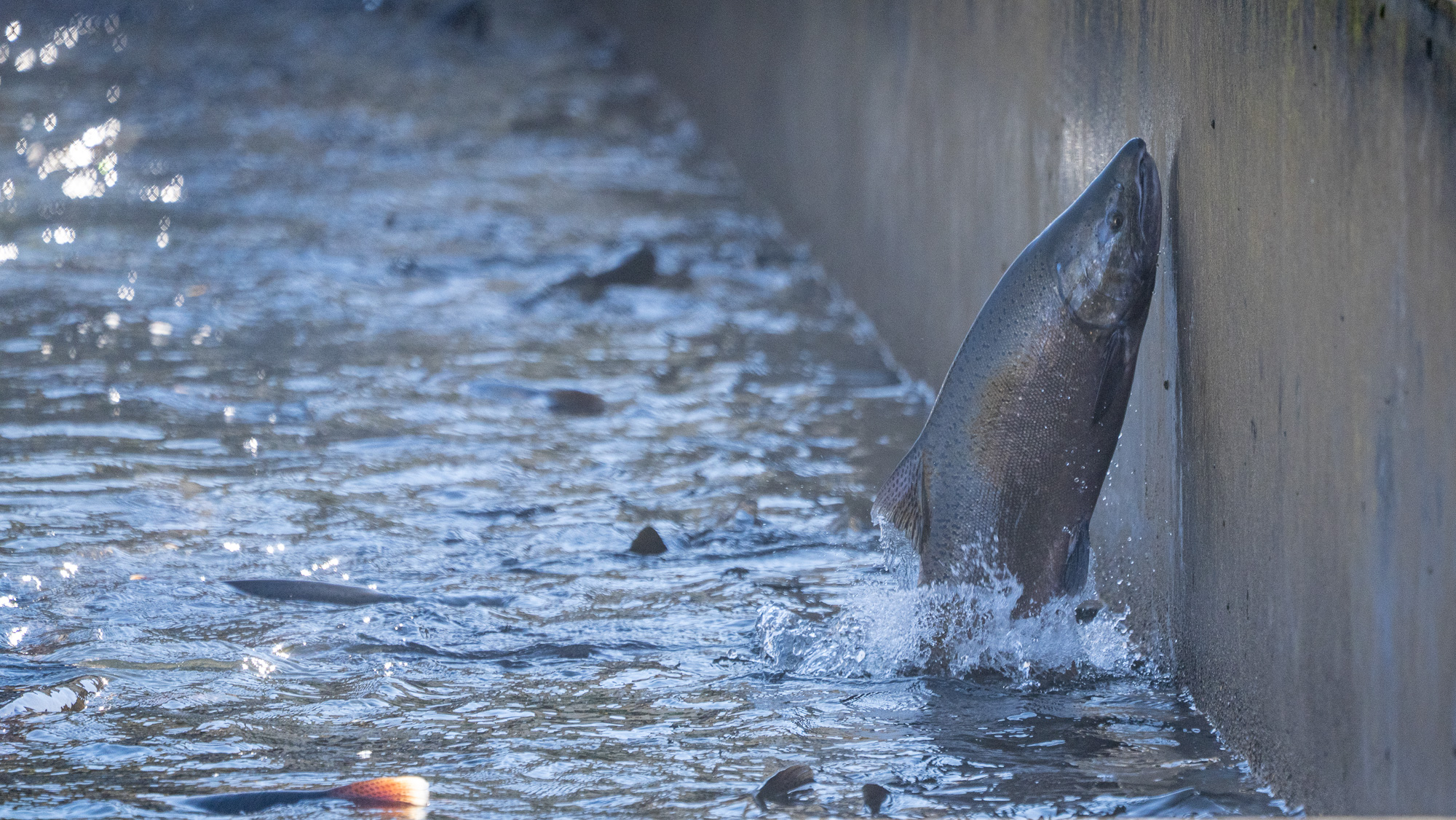
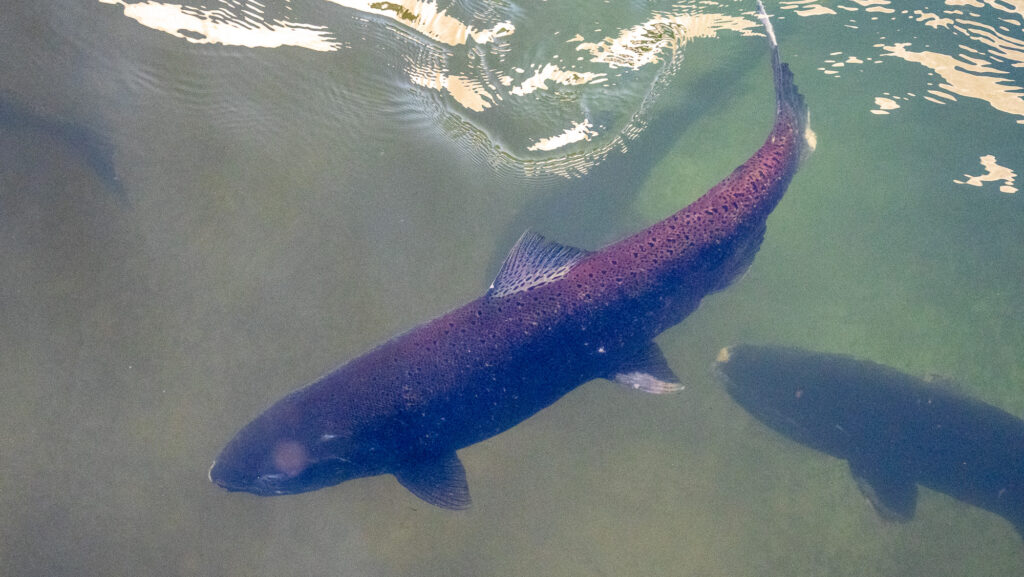
The section of the American River that runs past the Nimbus Fish Hatchery is roiling with life. Every few moments, large, snaggle-toothed Chinook salmon leap from the water or disturb its surface with their fins.
The fish are returning to the place of their birth, as they do every fall. But this year, they will likely have fewer human spectators.
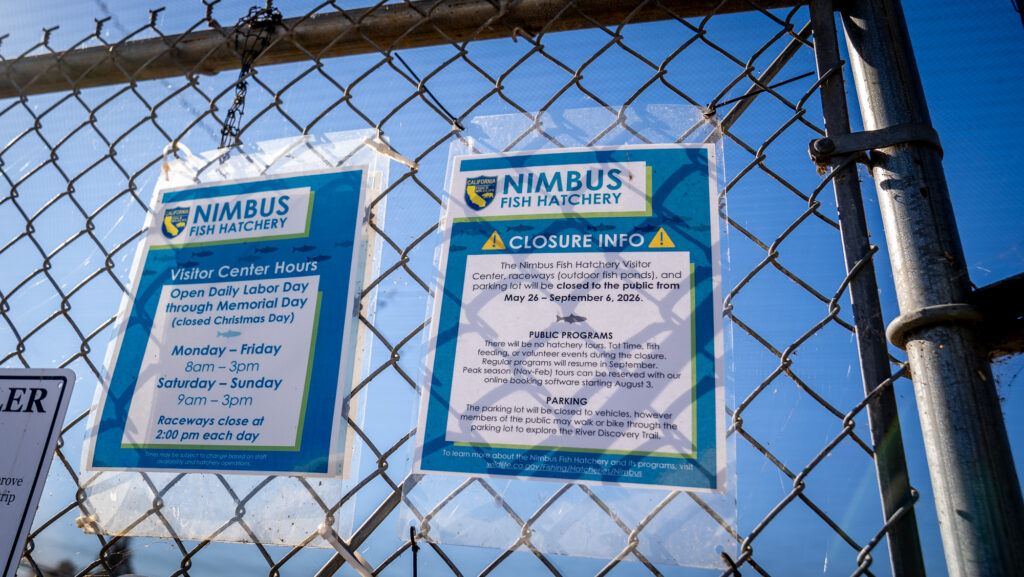
That’s because the hatchery’s visitor center and large parking lot remain closed to the public roughly two months after they were scheduled to reopen.
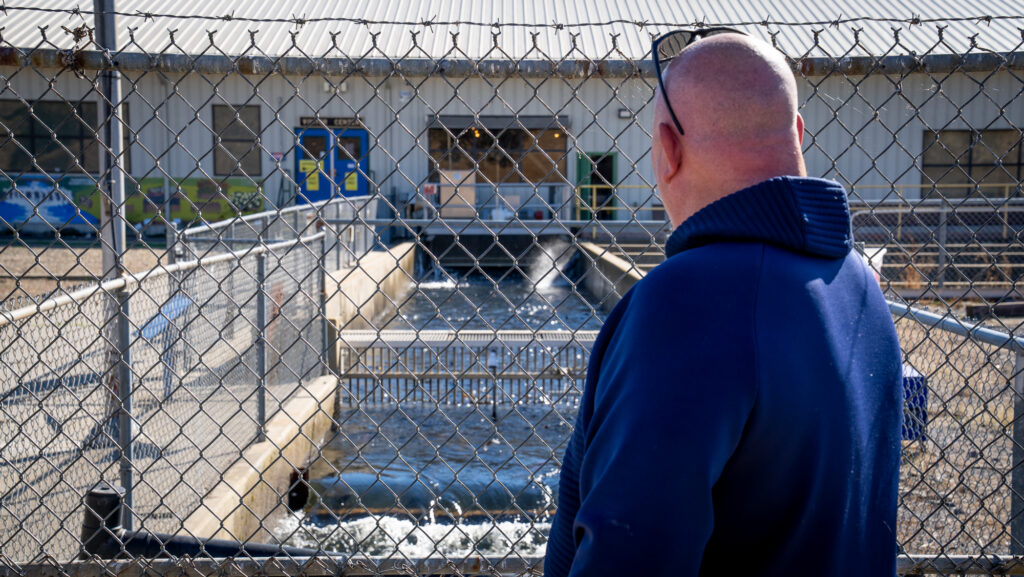
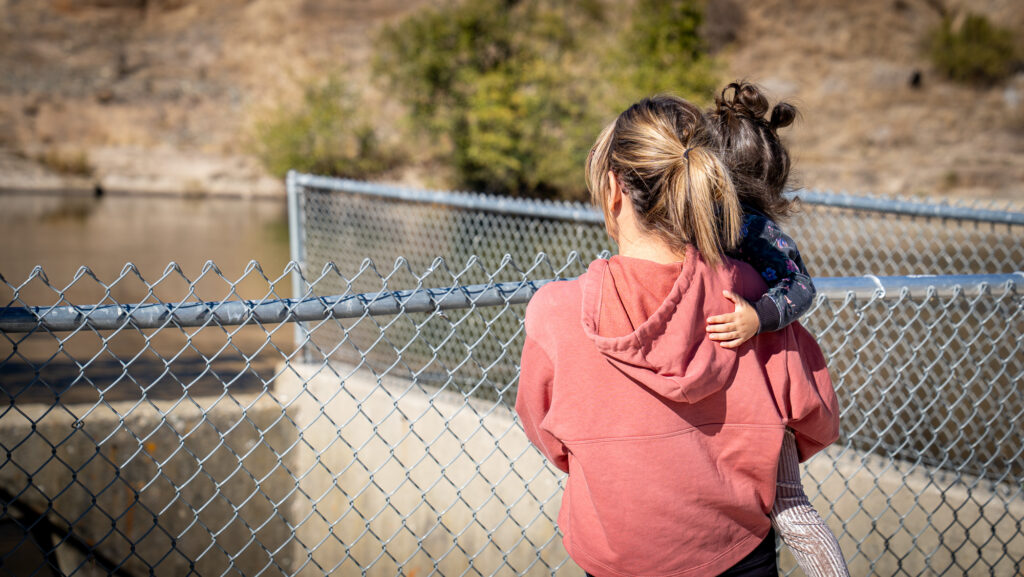
“We brought our granddaughter to check out the fish,” said Frank Patalano, a longtime resident who was observing fish from an outside walkway Tuesday. “We didn’t know it was closed.”
The closure, which is extending into a time of year when the hatchery is usually packed with schoolkids, parents and local residents, is due to ongoing lease negotiations between the California Department of Fish and Wildlife and the United States Bureau of Reclamation.
“Although the Visitor Center is located on the Nimbus Fish Hatchery grounds, Reclamation owns the property and CDFW operates the facility,” said Mary Lee Knecht, Bureau of Reclamation spokesperson, in an email. “The agencies are actively working through the remaining lease details. Finalizing the lease is a key step toward reopening the Visitor Center.”
As it stands, there is no planned reopening date.
A crucial part of salmon survival
When the Nimbus Dam was built in the late 1950s, salmon and steelhead were cut off from their spawning grounds in the upper reaches of the American River.
To account for that loss, the Nimbus Fish Hatchery was opened, providing a place for anadromous fish to be born, reared and to spawn.
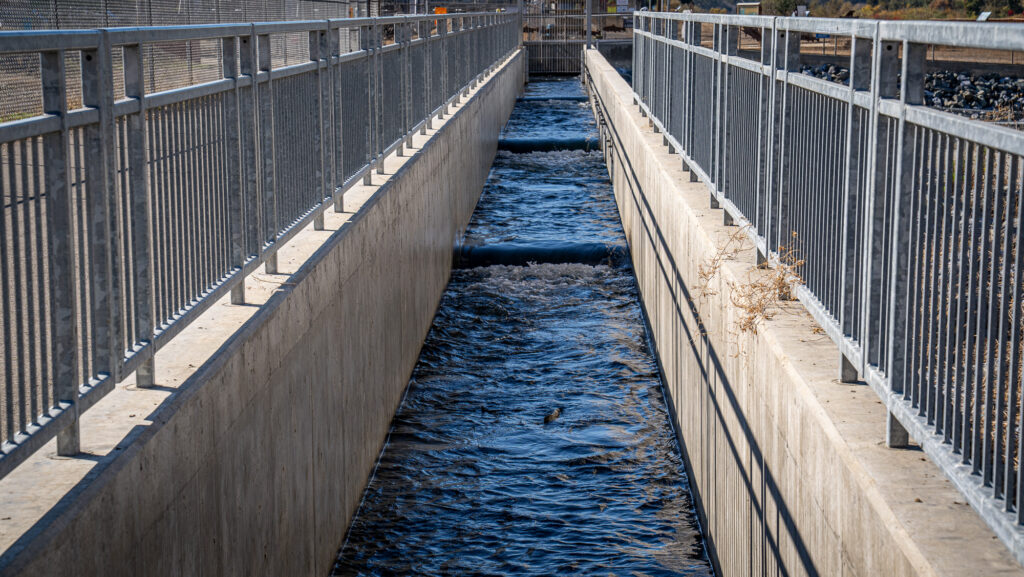
As they make their way from the ocean, the fish pass beneath Tower Bridge, round the corner into the American River and stack up at the gates of the hatchery. To get inside, they swim up a fish ladder surrounded on all sides by viewing platforms that provide up-close views of the sizeable travelers in the final stages of their lives.
In typical years when the visitor center is open, attendees can feed juvenile fish in holding tanks and receive tours from CDFW staff. School fieldtrips often bring large groups of kids, and passersby line up to learn about the lifecycle of embattled California salmon.
Patalano said the hatchery grounds could get busy.
“There’s a lot of people,” he said.
But this year, the hatchery was closed over the summer and into the early fall. CDFW officials planned to reopen in September but released a notice Sept. 4 that it would be delayed indefinitely.
“Due to recent changes in the operations and maintenance of Nimbus Fish Hatchery Visitor Center, which is owned by the federal Bureau of Reclamation, CDFW is unable to open the Visitor Center until further notice,” the department said in a social media post.
“A reopening date has not yet been established. Once the lease agreement is finalized and executed, CDFW will determine the timeline for reopening the Visitor Center,” Knecht said.
CDFW did not respond to a request for comment.
Ongoing funding problems
This is not the first time that operations at Nimbus Fish Hatchery have been disrupted.
Last summer, the hatchery closed for two months, followed by an announcement from CDFW that it would halve its fish production in response to insufficient funding from the Bureau of Reclamation.
At the time, CDFW said that funding cuts and rising costs had left the hatchery with a budget gap of $660,000 — from $3.2 million down to $2.5 million.
After commercial fishing for California Chinook salmon was closed for three years, the population rebounded enough for the season to open in the spring, bringing wild caught salmon filets back to grocery store shelves in the region.
But fish populations are far from full strength, and hatchery operations are crucial for bolstering overall numbers.
For now, they’re still making their way to Nimbus Fish Hatchery in the hundreds. But those who wish to see them will have to do so from outside the closed gates.