
The Abridged version:
- TANA — Taller Arte del Nuevo Amanecer — began 16 years ago as a partnership between UC Davis and the Yolo County Housing Authority, and provides free space and materials for artists.
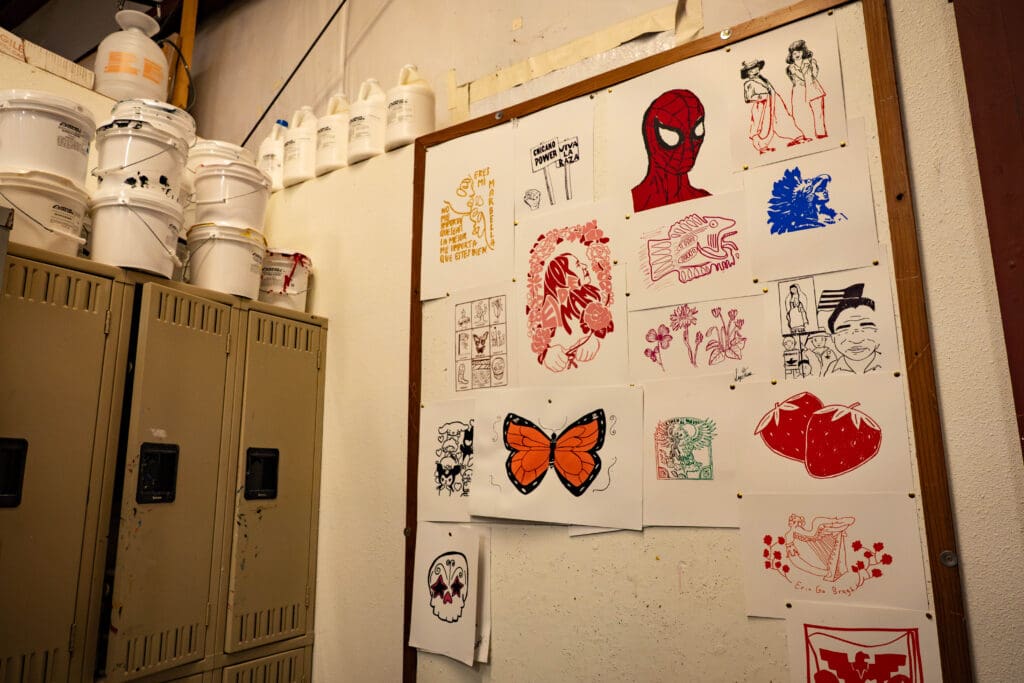
- The work focuses on screen printing and murals, a reflection of TANA’s roots with an early member of the Royal Chicano Air Force art collective, Malaquias Montoya.
- The Woodland workshop is open four days a week and offers drop-in hours and workshops aimed, in part, at high school students seeking after-school space to create.
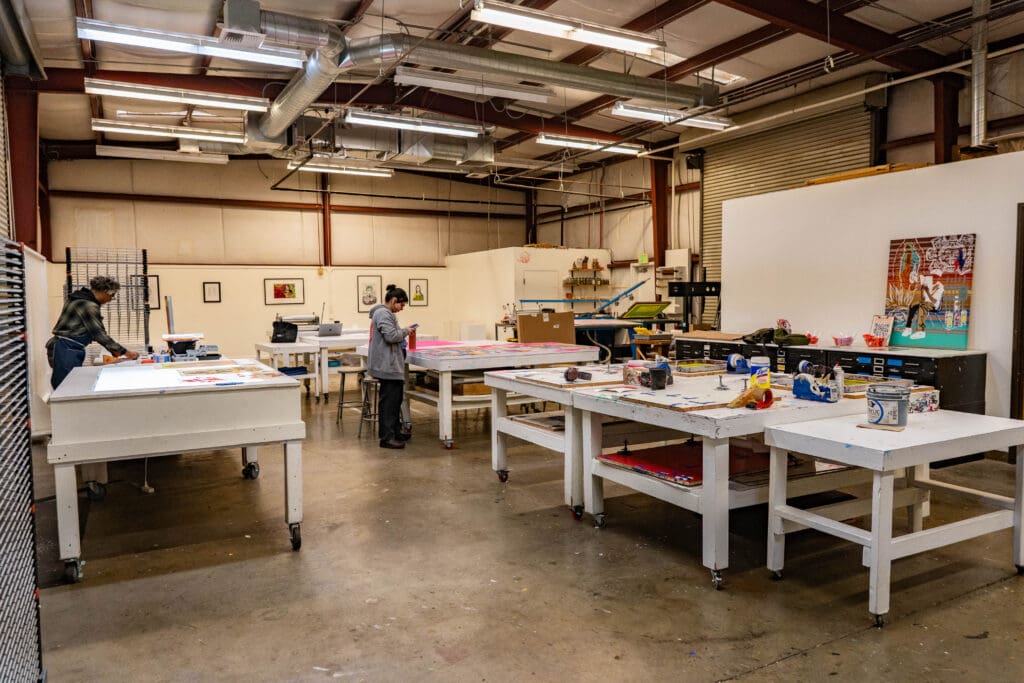
On a recent Saturday, a metal industrial building just outside of downtown Woodland was buzzing with activity.
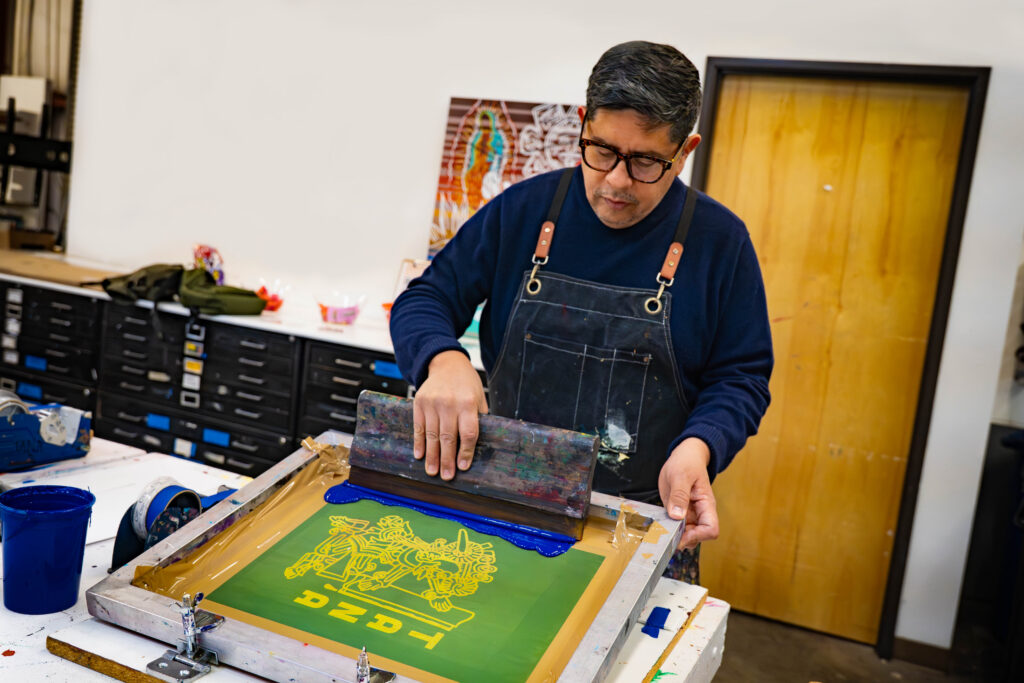
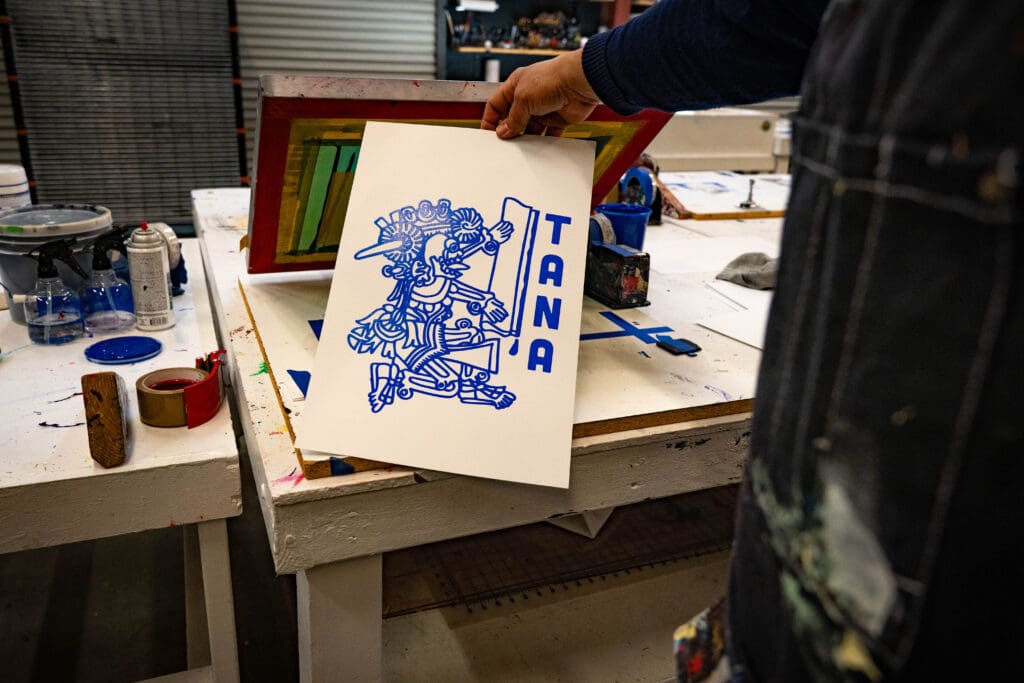
The morning featured a screen printing workshop for area schoolchildren. By afternoon, a crowd of nearly 60 people ranging in age from 5 to 80-plus learned a selection of printmaking techniques demonstrated by studio manager Ed Lampkin.
The warehouse is home to Taller Arte del Nuevo Amanecer, more commonly referred to as TANA.
“Taller,” Spanish for workshop or studio, is the second brainchild of its kind by artist, activist, muralist, and community builder Malaquias Montoya. An early member of the Royal Chicano Air Force (RCAF) art collective, Montoya has been organizing workshops and activist groups and establishing community studio spaces since the 1960s.
Sign Up for the Yolo County Newsletter
Stay in-the-know on all things Yolo! Weekly email with stories and insights from Yolo County reporter Daniel Hennessy.
Montoya’s first taller, Taller de Artes Gráficas, was founded in Oakland in 1973 and operated until 1981. Similar to TANA, Taller de Artes Gráficas served as a community center and art studio, providing a platform for community members to create screen prints outside of an academic setting. TANA represents a unique fusion of Montoya’s experiences, combining his background in the University of California system, first at Berkeley and then Davis, with his desire to establish a taller rooted in community participation.
RCAF’s impact on display
The RCAF is currently the subject of a massive, regional celebration, exploring the roots of the movement and the legacy the group’s activism and advocacy efforts have had throughout Northern California. The group is considered one of the most important artist activist groups in the Chicano liberation movement and is credited with the establishment of numerous community programs and institutions, including community centers, bookstores, festivals and other art studios.
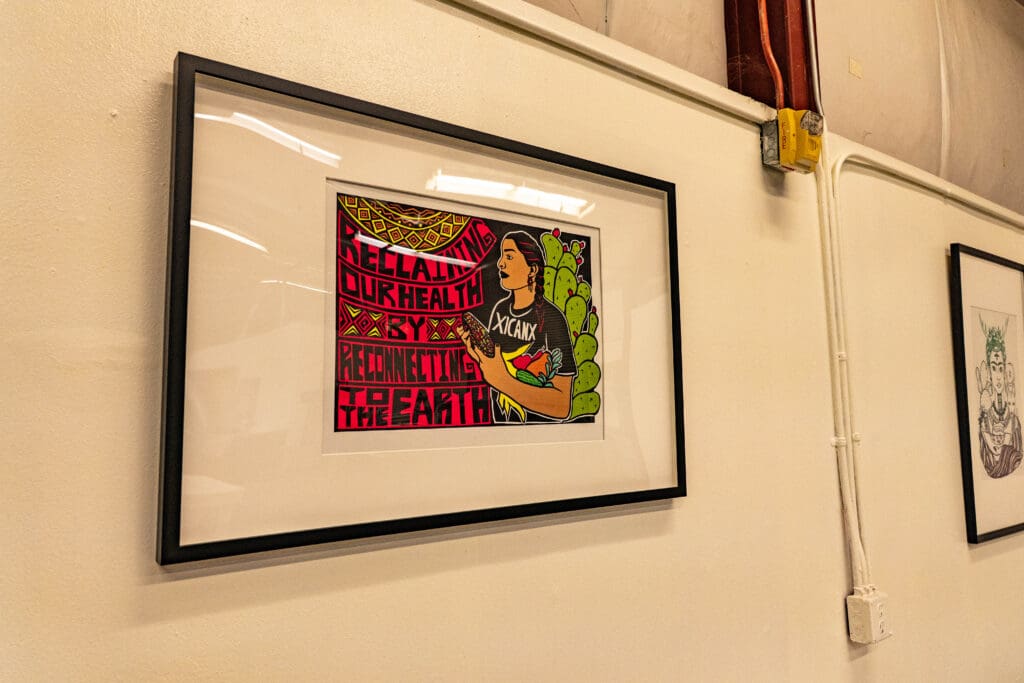
Screen-printed posters and murals were the primary vehicle for disseminating the group’s message in the community, and TANA is an extension of this legacy.
“TANA carries on the tradition of Chicano art collectives such as the Royal Chicano Air Force and the Mexican American Liberation Art Front (MALAF), providing community-based art workshops, exhibitions and events in hopes of empowering the people through the arts,” said Manuel Fernando Rios, a regional artist, curator and educator. “During these hard economic times, a place where a facility provides free art materials, instruction and space to create original screen prints is absolutely unheard of.”
Established as partnership with UC Davis
TANA was established 16 years ago as a partnership between the Yolo County Housing Authority and the University of California, Davis, where Montoya taught Chicano studies with a focus on screen printing and mural painting. The university continues to provide support to the center.
TANA’s co-founder, Carlos Jackson, studied with Montoya as a Master of Fine Arts student at UC Davis. He helped to identify possible locations and ultimately secure their building. Fellow UC Davis MFA Jose Arenas took over as TANA’s director eight years ago following Jackson’s departure to Michigan, where he now serves as the dean of the Penny W. Stamps School of Art and Design.
In addition to directing TANA, Arenas also teaches UC Davis’ Mexican and Chicano Mural Workshop, producing murals in Woodland, Knights Landing and other parts of Yolo County. Murals, like screen printed works, are intended to reach the broadest cross-section of the community possible.
“It’s a medium rooted in community storytelling existing in public spaces that are part of Latino neighborhoods that are more community-facing and community-engaged,” said Arenas. Existing in public for all to see, the messages on the murals produced by TANA artists are an extension of the Chicano legacy of murals as storytellers, with community members informing the content and often contributing to the mural’s execution. In addition to Arenas and his students, Malaquias and his son Maceo have also produced a number of murals for the Yolo County community.
Drop-in hours, workshops reach students
Like all thriving community centers, TANA produces a multitude of programs on a weekly, monthly and annual basis, the most consistent of which are their drop-in hours. Designed to coincide with times when high school students are seeking after-school opportunities, TANA’s drop-in hours take place Tuesday-Thursday and Saturday. All materials are free during these times, with Lampkin, TANA’s studio interns and assistants available to provide support to the students.
In addition to drop-in services, TANA offers workshops related to specific printmaking techniques on a regular basis. Because TANA is an extension of UCD’s Chicana/o/x Studies program, many of the interns and studio staff are university students, enabling them to mentor Woodland High School students and provide them with road maps for what higher education can look like.
An artist reconnects
Ruby Chacon, a regional artist, activist and educator, has experienced TANA’s impact firsthand. Chacon relocated to the area from Salt Lake City about 13 years ago after helping found Mestizo Arts and Activism (MICA), a collective of researchers, artists, and activists focusing on issues related to the Chicano community in Utah.
After six years with MICA, Chacon was ready to reconnect with her own art-making practice. Arriving in Northern California left Chacon seeking community as she began a new chapter in her life.
“I didn’t really have a community in Sacramento until Malaquias called me up and invited me there, and then I would go there every single Friday on my bike to do print making with them. It’s been a really good sense of community for me as an adult, let alone the community in general, like youth and above.”
Chacon is now an art teacher at Woodland High, where her students benefit from on-site printmaking demonstrations led by TANA. Students are also invited to participate in TANA’s annual Day of the Dead exhibition in their community gallery space.
“As a high school teacher, I would say that TANA gives the community a voice,” Chacon said. “Every time I’ve gone down there, I’ve seen young people come and create things that gave them a little bit of voice, through the arts. And I think that’s really important, especially during these times.”
‘TANA is for the community’
Montoya said the most important element of TANA is that “it’s a community center with art at its core. TANA is for the community.”
When asked if TANA has met his expectations and his aspirations for the space he said, “TANA has exceeded my expectations, now I just want to see a lot more people using the studio.”
TANA is located at 1224 Lemen Ave, Woodland, and is open four days a week for drop-in hours, with studio assistants and materials offered free of charge. Workshops, poetry readings and musical performances occur on an ongoing basis and are also free to the public.
Liv Moe is a Sacramento freelance writer.
This story was updated at 10:42 a.m. Feb. 22, 2026 to clarify that Malaquias Montoya was an early member of the Royal Chicano Air Force.