The Abridged version:
- Gov. Gavin Newsom’s office wouldn’t answer questions about Wednesday’s state worker strike, including about whether he hopes to reach a new deal before leaving office.
- His office says he’s silent because of the ongoing negotiations between SEIU Local 1000 and the state.
- Newsom may have little incentive to speak on state worker issues before terming out, an expert said.
As California state workers picketed in Downtown Sacramento for their one-day strike Wednesday, Gov. Gavin Newsom’s face was everywhere — on protest signs, stickers, paper-maché effigies and even piñatas.
The governor was the focus of some workers’ anger over what their union, Service Employees International Union Local 1000, says have been unfair tactics by his administration during the last several months of negotiating over the workers’ next contract.
But those awaiting Newsom’s reaction to Local 1000’s first-ever strike may be disappointed.
The governor’s office says Newsom won’t comment while negotiations are ongoing.
Sign Up for the Morning Newsletter
The Abridged morning newsletter lands in your inbox every weekday morning with the latest news from the Sacramento region.
On Thursday, the governor’s office redirected questions about Newsom’s response to the strike to CalHR, the agency that negotiates with labor on the administration’s behalf.
Questions included whether the strike would change his administration’s approach in negotiations; why he believes negotiations have lasted so long; what changes to Local 1000’s positions he thinks are necessary to reach a deal; and whether he hopes to secure one before leaving office in January.
In her response on Newsom’s behalf, CalHR Deputy Director of Communications Angela Musallam didn’t answer Abridged’s questions individually.
“CalHR is moving through the impasse procedures and participating in good faith in mediation with SEIU with the goal of securing a fair and responsible agreement for California’s state workforce,” Musallam said in a statement.
A one-day strike
Bargaining over the union’s next contract started in April, and has been stalled for months. This month, California’s labor board held that the sides were at an impasse, and the sides are in mediation.
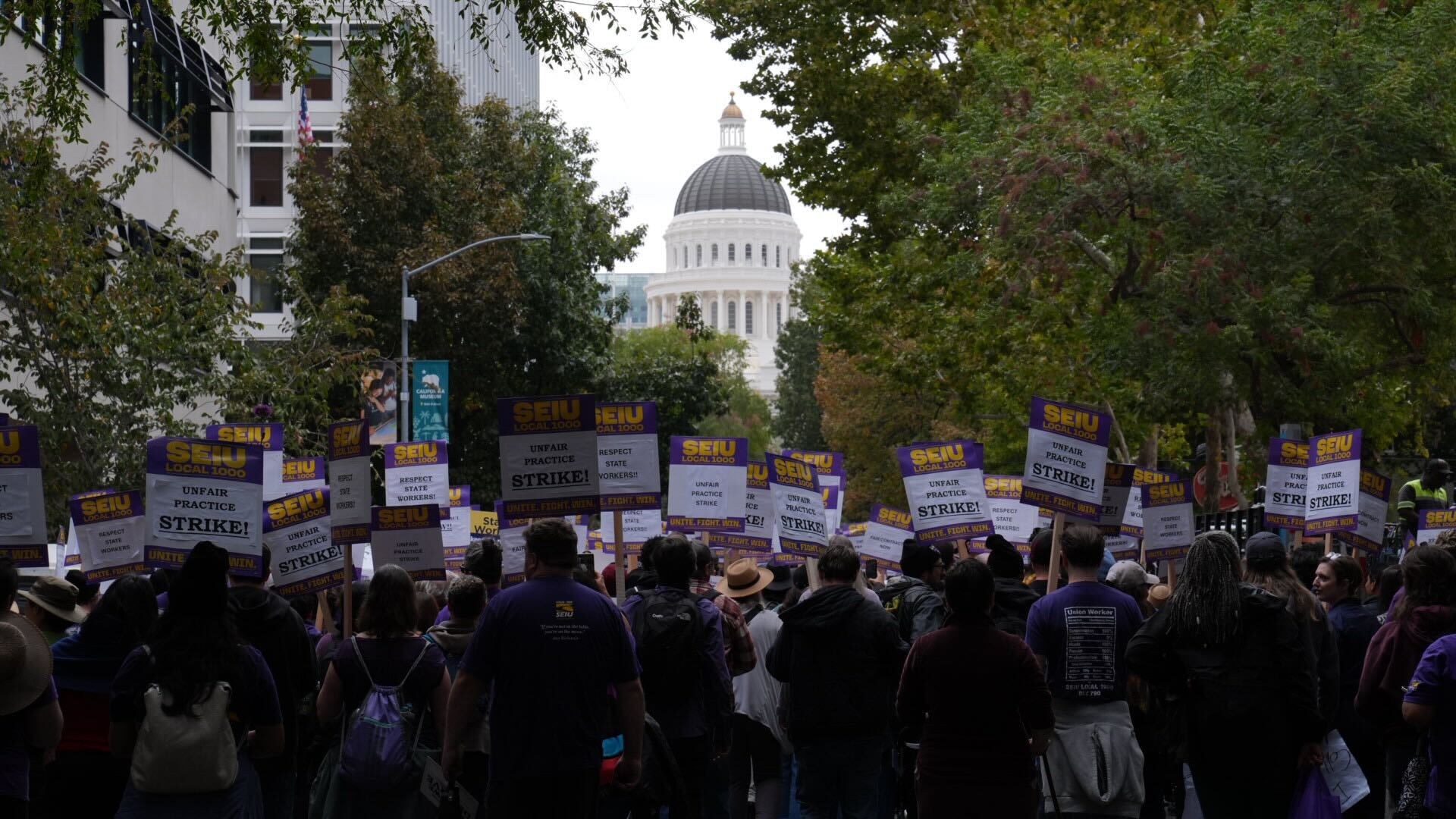
During Wednesday’s strike, thousands of state workers flooded Downtown to picket state office buildings and march around the Capitol and lawmakers’ offices on O Street.
Demands at the forefront of some picketers’ minds included raises and more flexibility in allowing state workers to telework.
Newsom has made his stance on telework in particular clear, in large part through his executive order last year requiring state agencies to require workers to be in-office at least four days a week, with exceptions decided case by case.
In September, the governor also vetoed a bill that would’ve required departments to provide written justifications when requiring employees to work in the office.
Whether to weigh in
With just over two months left in his term, the governor has little incentive to weigh in on labor battles, said Wesley Hussey, a political science professor at Sacramento State.
“I don’t think there’s any benefit for Newsom to respond. If he’s termed out, he doesn’t want to have conflicts with unions,” Hussey said.
In Hussey’s view, Newsom may even leave forging an agreement with Local 1000 to his successor, he said.
“I can’t imagine a last-minute labor deal that’s going to tie the hands of a governor of the same party,” he said, referring to predictions that US Health and Human Services Secretary and one-time California Attorney General Xavier Becerra is likely to win.
In fact, while many picketers’ frustration — and protest art — was focused on Newsom, from the organizers’ perspective the next governor may have been the intended audience for the labor action.
“I think this a strike more so to the next governor than the current governor,” Hussey said.
What will the next governor do?
An Emerson College poll released Wednesday found that Becerra, a Democrat, holds a 27-point lead over Republican opponent Steve Hilton.
Becerra’s campaign didn’t immediately respond to questions about the candidate’s view of the strike, and about how he’d approach bargaining with Local 1000.
The former state attorney general has weighed in on telework in the past.
“What should drive state policy on Return to Office is the goal of ensuring the highest performance, productivity and resilience of our state workers,” he said in a statement, The Sacramento Bee reported in March.
Even if Newsom leaves a deal with Local 1000 to the next governor, in Hussey’s view, the agreement may not come immediately, he said.
“If we don’t see anything about negotiations with unions in the January budget, that would make sense, because Becerra has just gotten the budget from the Newsom administration,” he said.
Often, a new governor’s priorities start emerging later, in their first May revisions of earlier budget proposals, he said.
“The first year of the new governor is really the previous governor’s budget. But by the May revise, there is a little bit more of the personality of the new governor,” he said.