
- New CalFresh food benefit restrictions went into effect on April 1, according to changes laid out in the federal “Big Beautiful Bill,” or H.R.1. Non-citizen groups who are no longer eligible for monthly food benefits include refugees, asylees, humanitarian parolees and trafficking survivors.
- In Sacramento County alone, approximately 30,161 non-citizen immigrants will lose CalFresh coverage.
- The changes to eligibility went into effect earlier this month, but participants will not be deemed ineligible until they go in for their annual recertification.
At Shams Market in Arden Arcade, the bakery turns out sheet after sheet of thin, warm Afghan bread.
Customers, many of whom have newly arrived in the United States, come from the surrounding neighborhoods to buy large quantities of the product to use on a near nightly basis.
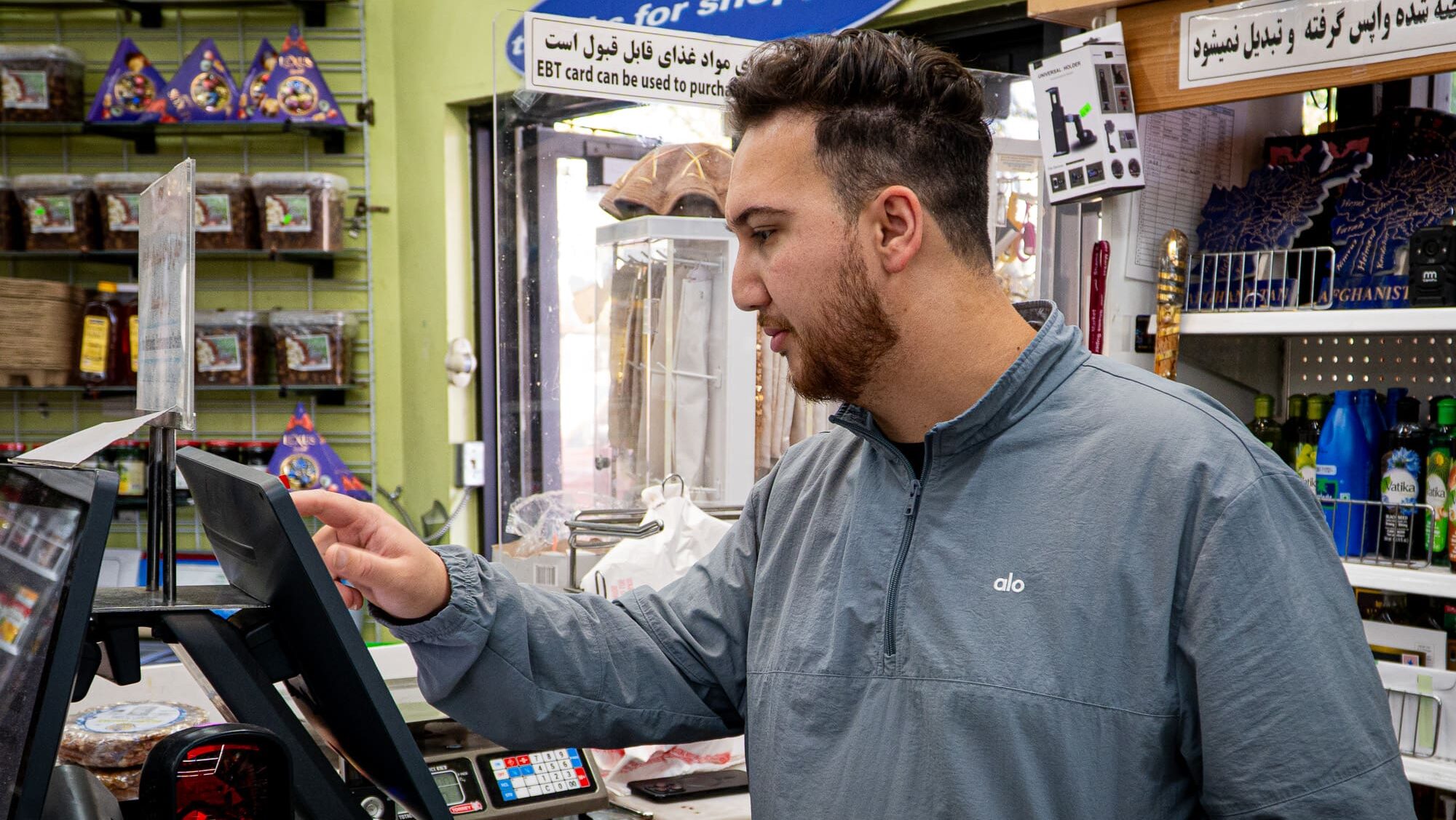
“It’s like our utensils,” Shams Amin, owner of the market on Auburn Boulevard, said from behind the register.
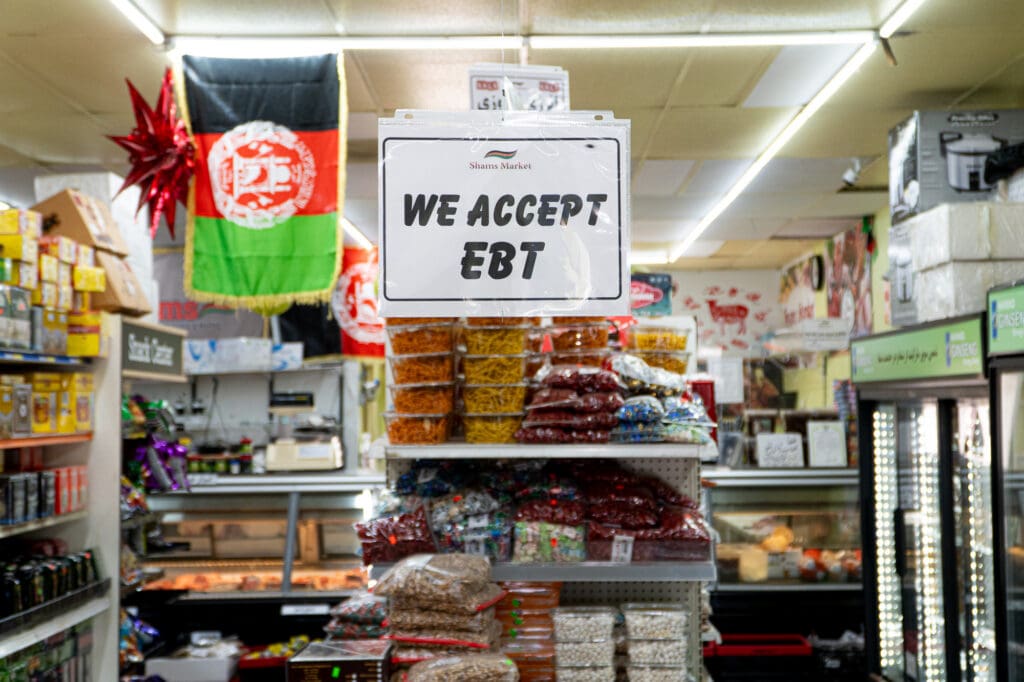
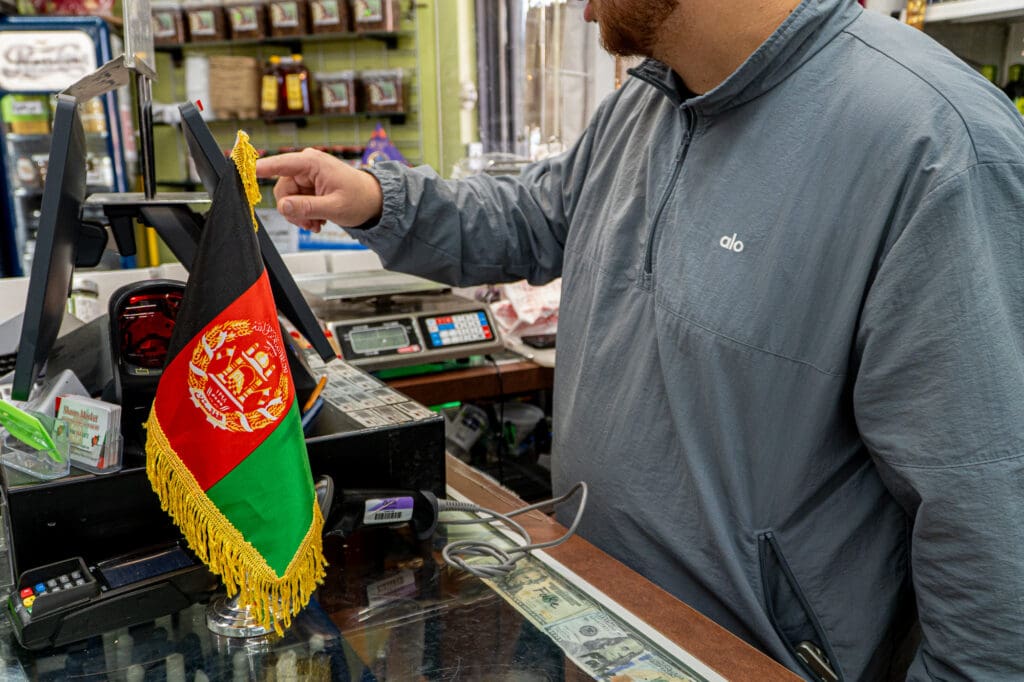
The bread, along with other staples of Afghan cuisine like rice and sweet cream, is one of the culturally important foods that can be bought at Shams Market with CalFresh food benefits. Amin estimates that nearly 40% of the store’s overall business is through CalFresh, which allows recipients to buy their own food with money that is preloaded onto debit cards each month.
But the beginning of April — and the “Big Beautiful Bill” President Donald Trump signed into law last year — brought drastic changes to the eligibility rules for the benefits program, and many of Amin’s customers are set to lose hundreds of dollars each month in money for food.
According to new rules set forth by H.R. 1, CalFresh, which is the state program that administers federal SNAP benefits, is no longer allowed to serve certain legal non-citizens, including refugees, asylees, humanitarian parolees and trafficking survivors. In Sacramento County alone, that means that approximately 30,161 people, including 13,634 kids, will automatically lose CalFresh coverage the next time they try to recertify their benefits.
Amin, whose store caters to Afghan residents, is already having difficult conversations with customers.
“A lot of these people are newly arrived,” and many don’t have legal status to work, he said.
As a result, Amin sees people, some of whom served alongside the United States military as interpreters in Afghanistan, who are trying to figure out how to feed their families. They sometimes ask for loans or the opportunity to buy food on credit, he said, but that would put a significant strain on Amin’s business.
“It’s really hard to plan for,” he said.
A ‘rolling crisis’
Jims Porter, director of external affairs for Sacramento-based refugee resettlement agency Opening Doors, said that the change in CalFresh eligibility has created what will likely be a “rolling crisis.”
“At least for the next year, the rest of ’26, we’re going to be having to really scramble to support families as those benefits expire,” he said.
Porter said that most of the 4,700 people that Opening Doors supports rely on CalFresh benefits. When federal benefits are cut like this, it forces the organization to focus on immediate crisis intervention instead of long-term integration.
“Losing these benefits is going to have a big impact on the most vulnerable folks, the families that are seeking safety, seeking opportunity and really just trying to rebuild their lives here,” he said.
The impact, Porter said, will be felt across the region, including at local food banks that are bracing for a rush of new clients.
“We can’t realistically scale up to fill this massive gap,” he said.
The result, Porter said, is families that his organization works with face eviction and food insecurity.
“Many of them are in very, very difficult situations,” he said.
Sacramento’s demographics
Although these changes are being implemented statewide, Sacramento County will be uniquely impacted because of its large share of the state’s refugee and asylee population. According to a report released by the UC Davis Labor and Community Center about CalFresh, roughly half of the state’s lawfully present non-citizens who will lose benefits live in the Sacramento region.
“Sacramento County has a fairly large population that fits the parameters of people that were going to be at risk of losing CalFresh. There’s a fairly large Afghan population here in the county, there’s a fairly large Ukrainian population, Syrian population. These are all folks who are going to be losing access,” said Marcos Lopez, co-author of the report.
Lopez said this change comes as the number of people in the region who receive CalFresh has steadily increased in recent years. According to his study, the region saw an increase of nearly 100,000 CalFresh recipients in the last five years.
That trend is in part due to diminishing affordability.
“The affordability issue runs across the four different age populations that we look at in the study,” he said. “Affordability is a systemic issue, because when we speak about this, what we’re really referring to is that the cost of things is not being met by the amount of earnings that people have.”
Stalled solutions
Austyn Smith, a senior advocacy advisor for the International Rescue Committee, said the organization has been working on recommendations for mitigating the impacts of the bill’s CalFresh changes since last year.
“What can we change in the immediate future? Is it regulatory? Can it be done by, perhaps, state agencies or the governor’s office?” she said. “Or do we have to introduce something into law or propose something at the state legislative level?”
One of the main things that IRC identified as a potential solution was a CalFresh transitional bridge provided by the state.
“We wanted to work alongside the government to be able to mitigate these impacts,” she said.
IRC’s hope was that the state would provide three to six months of transitional coverage for CalFresh. Smith said that would allow families to have an off-ramp as they try to avoid further food insecurity with the loss of benefits starting April 1.
But that recommendation, along with a list of other proposals designed to bolster the state’s CalFresh system, hit a roadblock.
Smith said that as the federal government was deciding whether or not refugees and asylees without legal permanent status would be included in the food benefit eligibility changes, California faced a daunting budget.
“We were running into a lot of discussion about the budget deficit within California and the extent of cuts to federal pass-through dollars that were affecting state agencies that we would be making these asks from” she said.
Without a structured fix, the responsibility will fall to local communities.
“It is truly communities coming together and pulling whatever resources that they can for each other,” she said. “Which is awful and it’s disappointing.”
As customers of Shams Market lose their CalFresh benefits, it will be difficult to replace important cultural foods at local food banks. Though they may offer some, Amin says the options can be “very limited.”
For many, things that have been familiar comforts in a new land — sweet cream, rice and fresh, warm Afghan bread — will be that much harder to afford.
Daniel Hennessy joins Abridged from the California Local News Fellowship.