

The Abridged version:
- Refugees and U.S. military allies from Afghanistan have resettled in California and the Sacramento area for years, forming the largest Afghan community in the country.
- Executive orders signed early into the second Trump administration closed pathways for refugees to enter the country, separating some families and leaving many stranded.
- Just 19 Afghan refugees used federal benefits to come to California on special immigrant visas from January through April of this year, compared to about 1,000 during the same period in 2025.
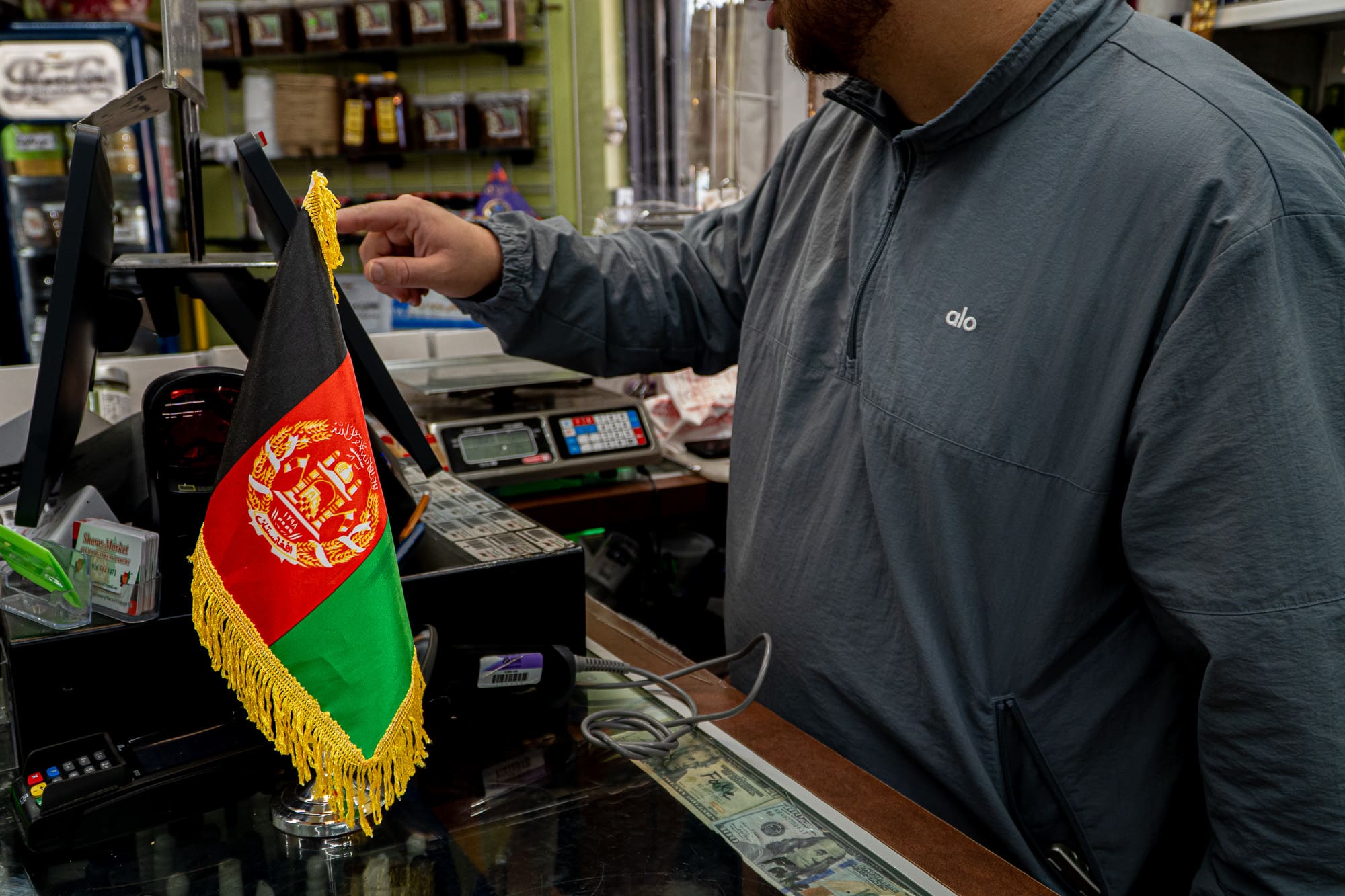
The flow of Afghan refugees into the country has largely stopped, leaving many families in the Sacramento area worried that their loved ones will not be able to join them.
Thousands of people who helped the United States during the war in Afghanistan resettled in Sacramento County during each of the last several years, creating the largest Afghan community in America.
But the number of Afghan refugees coming to Sacramento — or anywhere in California — using federal resettlement benefits has dropped to almost zero this year, following policy changes instituted by the Trump administration, the latest federal data shows.
“Everybody’s hopeless,” said Jafar Wahidi, an Afghan community leader based in Sacramento. “They don’t have any hope.”
Wahidi worked as an interpreter for Americans in Afghanistan. He came to the United States with his wife and children about a decade ago and founded Afghan Hope Community Development, a Sacramento nonprofit that helps refugees.
Families divided
Many Afghan refugees living in Sacramento arrived using special immigrant visas for interpreters and other workers who assisted the United States during two decades of war. They fled the Taliban, a repressive, fundamentalist regime that often enacts retribution on its enemies.
The Trump administration has not issued any special immigrant visas in 2026. Most Afghanistan natives are otherwise banned from obtaining new visas to travel to the U.S.
Wahidi relayed the story of one woman here on a work permit who is having trouble obtaining a green card, while her husband is stuck in Afghanistan. Such problems are increasingly common.
“Half of the families live in Afghanistan and half of them lives here,” he said.
Wahidi said there is little he can tell families seeking help, other than to wait for policies to change.
“They come every day,” he said. “We receive calls from them and they come into our office, and we don’t have any response for them.”
No exemptions
About 43,000 Afghan natives used the special immigrant visa program and federal benefits to resettle in California from 2016 through 2025 — and Sacramento was the leading destination.
By 2024, over 20,000 Afghan natives called Sacramento County home, a significantly higher number than any other county in the nation.
The administration largely suspended entry into the U.S. from 19 countries, including Afghanistan, last June. The order exempted refugees with special immigrant visas.
In November, authorities say that an Afghan national shot and killed a National Guard soldier in West Virginia and critically wounded another. The Trump administration then issued a new proclamation which expanded immigration restrictions and did not provide exemptions for Afghans with special immigrant visas, according to #AfghanEvac, a nonprofit working to relocate Afghan refugees.
Around that time, U.S. Immigration and Customs Enforcement agents reportedly detained and arrested several Afghan nationals in the Sacramento region, creating fear throughout the community.
A federal judge in February ordered the Trump administration to continue processing special immigrant visa applications. The Trump administration is going through the motions of reviewing applications, #AfghanEvac officials say, but not actually issuing visas and allowing Afghan refugees to come to America. The judge later said the administration had “woefully failed to meet their obligations” and set benchmarks for processing the applications.
‘Totally frozen’
The latest U.S. State Department data shows that just 19 Afghan refugees used federal benefits to come to California on special immigrant visas from January through April of this year, compared to about 1,000 during the same period in 2025 and about 3,000 during the same period in 2024.
A few hundred people who already had their special immigrant visas approved last year continued to arrive in Sacramento during recent months, often using their own money to get here instead of federal resettlement funds, said Jims Porter, external affairs director at Opening Doors, a nonprofit that helps immigrants and refugees. But that flow will soon abate as the government stops issuing new visas.
“Essentially, the pipeline for Afghans to get to the U.S. is totally frozen,” Porter said.
New immigration policies announced in May would require foreigners to return to their home country before applying for a green card. Afghan families in Sacramento cannot safely return to Afghanistan and, even if they could, there are no consular services in the country, according to #AfghanEvac.
The new policies have left many in limbo, with Afghan family members stuck in an unfamiliar country. For instance, the Trump administration recently considered sending hundreds of Afghans stuck in Qatar to the Democratic Republic of the Congo, a nation that has since seen a horrific Ebola outbreak.
“There’s Afghans in 90 countries around the world waiting to come here, like 20,000 in Pakistan,” said Shawn VanDiver, president of #AfghanEvac. “There’s the 1,100 that are stuck on the base in Qatar. All those people need protection.”
Unlikely to change
Unless policies change or court decisions force the Trump administration to reverse course, more Afghan refugees are unlikely to resettle in Sacramento anytime soon.
“Not having a program like this means that families are not able to reunite,” said Jordane Tofighi, executive director of the International Rescue Committee in Sacramento and Turlock. “A lot of these families were promised a new life based on their service of supporting the U.S. government in their country.”
Tofighi said Afghan families in Sacramento continue to need help accessing food, jobs and healthcare. As it becomes more difficult for refugees to enter the country, she also worries about federal cuts to food stamp programs and Medi-Cal making it harder on those already in Sacramento.
“A lot of these families have experienced a significant amount of trauma, so they continue to need mental health services,” she said.
Phillip Reese is a regular contributor, writing Numbers Matter for Abridged.